
Table of Contents
In late 2025, stablecoin supply sits in the hundreds of billions, with USDT and USDC leading by a wide margin.
At the same time, bridge throughput remains meaningful at the category level: DefiLlama’s bridge tracker shows roughly $18.8B in total bridge volume over a recent 30-day window (volumes fluctuate daily).
That combination (large stablecoin balances + persistent cross-chain activity) is the reason bridge selection matters heading into 2026: the best bridge depends on whether you need native stablecoins, broad chain coverage, lowest latency for L2s, or multi-VM interoperability, and how much trust you are willing to assume.
In practical terms, stablecoin bridging is not only about speed. It is about ensuring you receive the correct stablecoin representation on the destination chain, avoiding avoidable custody and smart contract risks, and matching the bridge’s design to your operational requirements (for example, whether you need auditable reporting, repeatable treasury policies, or high-frequency DeFi rebalancing).
Key Takeaways
- Cross-chain stablecoin bridging is not one workflow; it varies by asset type, destination chain, liquidity conditions, and trust assumptions.
- The most important first check is whether you will receive a native stablecoin or a bridged representation, because that impacts acceptance, redemption, and risk.
- Fast bridging often means the destination balance is credited quickly while final settlement completes later, so you should define what “done” means for your use case.
- Bridge costs are not only a visible fee; total cost can also include gas, route spreads, liquidity constraints, and execution slippage-like effects.
- Security evaluation should focus on the bridge’s trust model, upgrade and key management, and historical incident lessons, not just branding or TVL.

What A Cross-Chain Stablecoin Bridge Means In 2026
A stablecoin bridge is not just a bridge that can move USDC/USDT. In practice, a stablecoin transfer has extra constraints:
- Asset integrity: receiving native USDC is operationally different from receiving a bridged representation.
- Liquidity and redemption path: a stablecoin is only “useful” if it is accepted by apps/venues on the destination chain and can be redeemed/off-ramped reliably.
- Risk profile: bridges have historically been a major attack surface; Chainalysis estimated $2B stolen across 13 bridge hacks by Aug 2022 and noted bridge attacks dominated a large share of stolen funds at the time.
In 2026, stablecoin bridging also increasingly intersects with payments and business workflows (for example: payouts, cross-border settlements, and treasury rebalancing). Those use cases tend to tolerate less uncertainty than typical DeFi activity.
That is why the bridge decision is often really a decision about trust boundaries: who is responsible for issuance, who can finalize transfers, and what happens if one part of the system fails.
So in 2026, selection should start with what you must receive (native vs bridged) and what trust model you can tolerate.
The Four Bridging Models You’ll See (And Why They Matter For Stablecoins)
1. Burn-and-mint (native transfer rails)
This model destroys (“burns”) the stablecoin on chain A and mints the same stablecoin on chain B. The main advantage is no wrapped token risk for that stablecoin route.
CCTP V2 is the headline example for USDC. Circle positions V2 as the canonical version, with V1 moved to legacy status and a phase-out starting July 31, 2026.
From an operational perspective, burn-and-mint rails are easiest to reason about because the user ends with the issuer’s stablecoin on the destination chain (where supported). This reduces the need to evaluate separate bridge-issued token contracts and can simplify downstream acceptance in applications that prefer canonical assets.
2. Liquidity/pool-based bridging
The bridge maintains liquidity pools or routing liquidity so users can swap into the destination asset quickly. The advantage is speed and broad asset coverage; the tradeoff is you depend on liquidity health and the bridge’s mechanism.
Stargate markets native stablecoin bridging (USDC/USDT) across 80+ chains.
Liquidity-based designs can be excellent for day-to-day transfers, but you should always think about “edge conditions”: sudden liquidity drain, caps, or unusual spreads during market stress. If your transfer is large or time-sensitive, it is worth checking pool depth and typical fill behavior before committing.
3. Intent / relayer-based bridging
Instead of the bridge holding large pooled liquidity, third parties (relayers) compete to fill your transfer quickly, then settle later. The advantage is often fast UX and good costs on common routes; the tradeoff is you’re relying on the protocol’s design to keep settlement safe under stress.
Across is the key stablecoin example in this category and reports large processed volumes in 2024.
The practical takeaway is that “fast” often means the user is filled promptly, while the protocol’s settlement proceeds in the background. For most users, that is fine; for businesses, it is essential to define what “final” means in your internal controls and accounting processes.
4. Messaging + ecosystem routing (interoperability layers)
These systems focus on cross-chain messaging and let apps move assets via standardized pathways, sometimes with multiple token standards and representations.
Wormhole and Axelar are widely used interoperability layers, often embedded into wallets/apps rather than used only as a “bridge UI.”
Messaging layers can be powerful because they enable application-level workflows beyond simple token transfer (for example, cross-chain deposits, cross-chain instructions, or interchain program logic). The tradeoff is that users may encounter more representations and more route-level nuance, which increases the need for disciplined verification.
The 2026 Evaluation Framework (Use This Before You Pick Anything)
1) Asset quality: native vs bridged representation
- If your priority is to receive native USDC, burn-and-mint rails generally win. Circle’s CCTP is explicitly built for this purpose.
- If you are fine receiving a representation, you must understand its backing and redemption.
For example, Axelar describes axlUSDC as a wrapped representation backed 1:1 by USDC locked in an Axelar gateway.
To make this actionable, always answer these questions before bridging:
- Will I receive an issuer-native stablecoin contract, or a bridge-issued contract?
- If it is a representation, what is the redemption path, and who controls it?
- Do the destination apps (DEXs, lending markets, payment tools) accept this exact token contract?
2) Security and trust assumptions
- Bridges have been repeatedly targeted; even well-known systems have suffered major incidents (e.g., Wormhole’s 2022 exploit reported at roughly 120,000 ETH / ~$325M at the time).
- Your job is to map: Who can finalize messages? What are the failure modes? What happens if a validator/guardian set is compromised?
A simple way to reason about this is to separate:
- Protocol risk (smart contracts, design assumptions)
- Operational risk (upgrades, key management, emergency procedures)
- Ecosystem risk (wallet integration, front-end routing, user error)
3) Liquidity and route reliability
- Pool/liquidity bridges can be excellent until liquidity is thin, caps are hit, or volatility spikes.
- For business flows, test normal and stressed conditions: weekend liquidity, high gas periods, and large tickets.
Reliability is not only if the bridge works once. It is whether it works consistently across repeated transfers, whether fills degrade with size, and whether the protocol has predictable behavior during congestion.
4) Latency and operational workflow
- Many fast bridges are fast because the front-end UX is filled quickly while settlement finality happens later (common in intent designs).
- For compliance or treasury ops, define what done means: on-chain confirmation, credited balance at destination, or spendable in a downstream venue.
This is especially important for teams that report balances or perform time-based payouts. If your receive time differs from your final settlement time, you need internal policy for how to log, reconcile, and approve transfers.
5) Chain coverage and ecosystem fit
- If you live on Ethereum + L2s, you want the strongest rails there.
- If you need Solana or Cosmos reach, you need different infrastructure and standards (and different operational risk).
Coverage is also about maintenance. A bridge that supports a chain today may deprecate it later, change routing, or alter token standards. For long-term product integrations, prefer bridges with clear support policies and stable integration primitives.
The Best Cross-Chain Stablecoin Bridges For 2026 (Listicle Comparison)
1) Circle CCTP V2
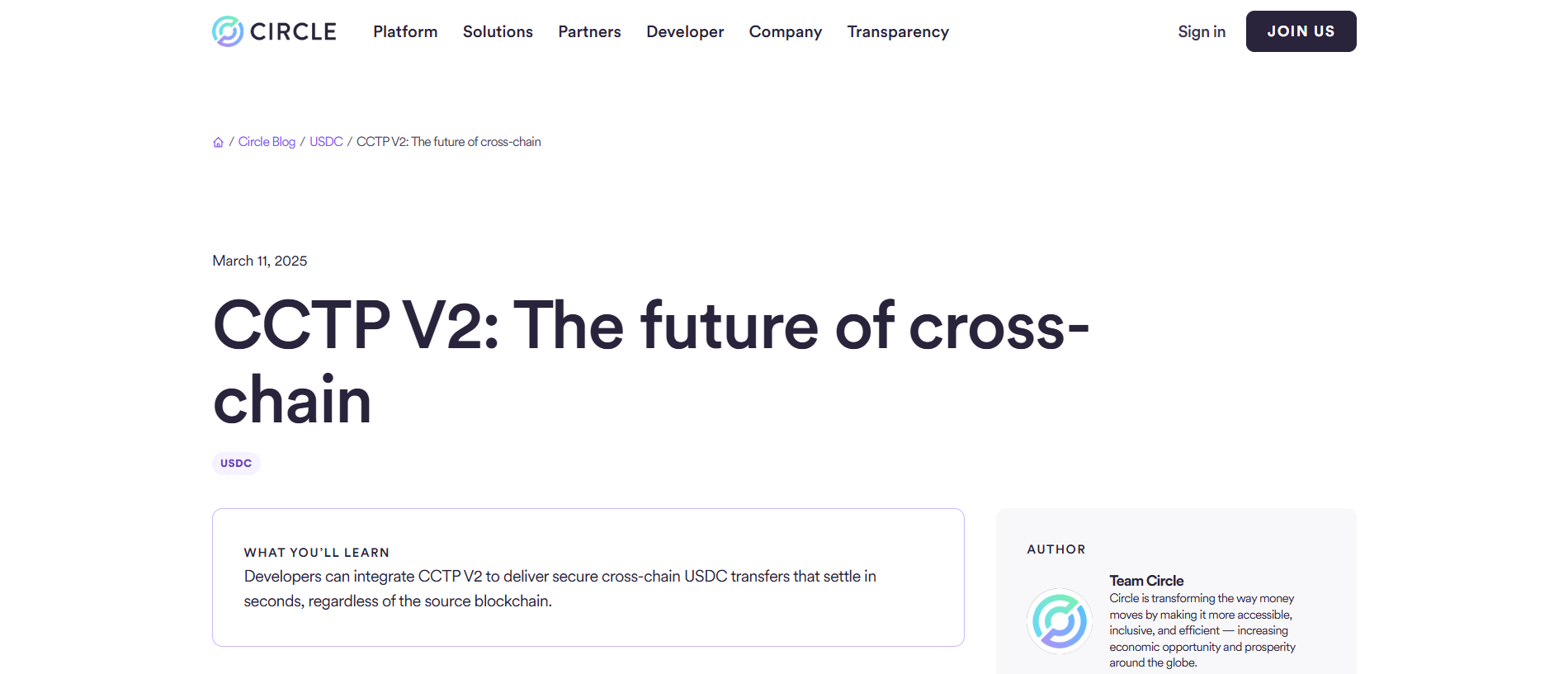
- Best for: Native USDC transfers when you want to avoid wrapped USDC risk.
- How it works: Burn USDC on the source chain and mint USDC on the destination chain (Circle-managed protocol and contracts).
Why it’s a top 2026 pick:
- Circle has positioned CCTP V2 as canonical, with CCTP V1 moved to legacy status.
The stated migration/deprecation timeline matters operationally: Circle indicates phase-out actions start July 31, 2026.
Tradeoffs:
- It is purpose-built for USDC; if you need USDT or non-USDC stablecoins, you need other routes.
Use it when: You need predictable USDC quality across chains (treasury, payments rails, DeFi positions that require native USDC).
Additional diligence tips for CCTP-style rails:
- Confirm that both the source and destination chains are supported for the rail you intend to use.
- Confirm whether your route is using the latest version (V2) rather than legacy pathways.
- If you are integrating into an application, define operational handling for delayed finality, reorg assumptions, and monitoring.
2) Stargate
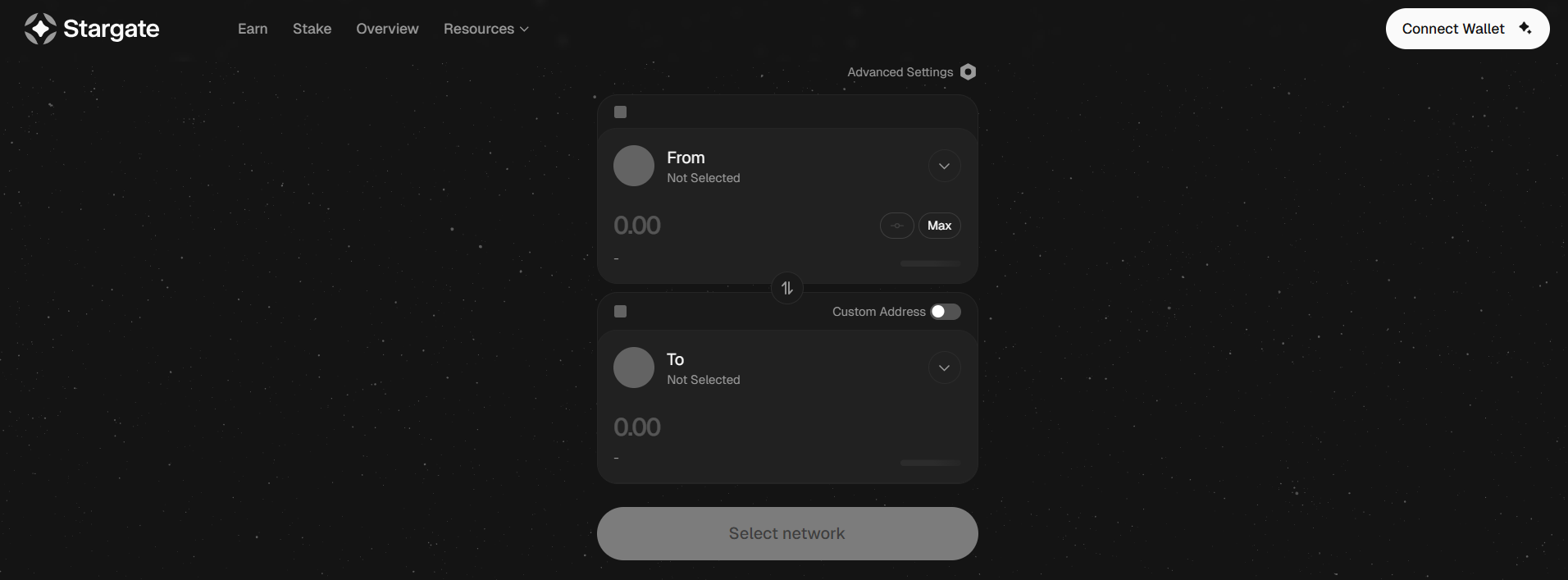
- Best for: Broad routing of stablecoins across many networks, especially when chain coverage is the priority.
- How it works: Liquidity-based bridging with an interoperability layer; users bridge supported assets via Stargate’s pools/routes.
What’s provable from public claims:
- Stargate advertises bridging of native USDC and USDT across 80+ chains.
Tradeoffs to understand:
- Liquidity bridges can introduce route-specific constraints (pool depth, caps, slippage-like effects depending on design and conditions).
Use it when: You need wide chain access and want a default “coverage-first” option for stablecoin movements.
Operational guidance for liquidity-based routing:
- If you are bridging meaningful size, break transfers into tranches to reduce sensitivity to pool conditions.
- Check whether the route has caps or throttles that could delay completion.
- Validate the destination token contract and the stablecoin representation you will receive.
3) Across

- Best for: Ethereum ↔ L2 stablecoin transfers where speed and cost discipline matter.
- How it works: Intent/relayer-based fills; relayers front liquidity and later settle.
Hard stats you can cite:
- Across reported $2.92B bridge volume in 2023, plus 1.38M transfers (including aggregators) and 142,768 new users in that year.
- Across states it processed $11.6B in bridge volume in 2024, and also claims “without a single security incident” that year.
Tradeoffs:
- Like other intent designs, you should understand the settlement mechanism and what conditions could cause delays or partial fills.
Use it when: Your stablecoin flows are primarily within the Ethereum ecosystem (L1 + L2s) and you want a design optimized for that reality.
Practical advice for intent bridges:
- Treat “received quickly” and “settled finally” as separate concepts in your mental model.
- If you are moving funds for time-sensitive operations (liquidations, collateral top-ups), define a buffer so you are not relying on perfect bridge performance.
- Monitor route health and typical completion times rather than assuming constant performance.
4) deBridge (DLN)
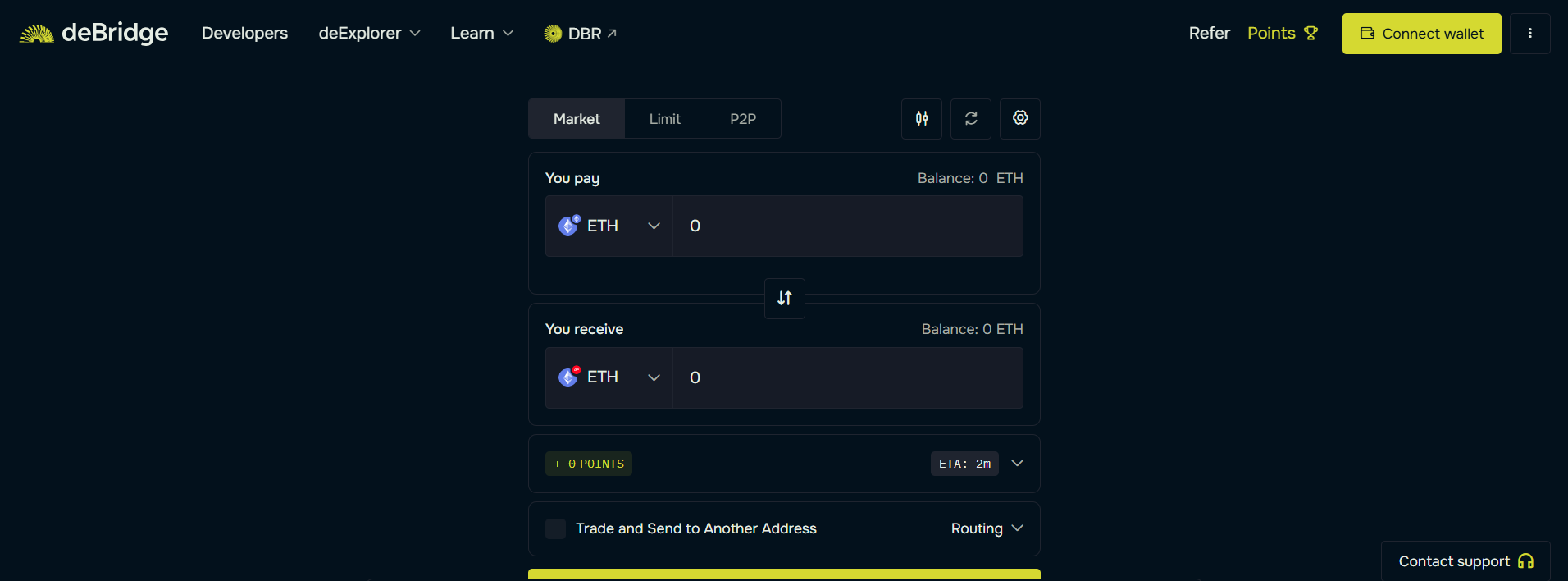
- Best for: Execution-style cross-chain stablecoin moves (often feels like a “trade” that settles cross-chain), and broad routing within supported ecosystems.
- How it works: deBridge’s DLN design is commonly described as “cross-chain trading / execution,” with routing and settlement handled by its network and integrators.
Hard stats available from deBridge publications:
- deBridge reported (Points Season tracking) over $12.5B bridged volume over 63 weeks, 5.6M transactions, and nearly 1M new users.
- In an earlier season snapshot, deBridge reported 2.3M transactions and ~250,000 new users over the season, and >$2B volume over ~15 weeks.
Tradeoffs:
- “Execution” UX can hide complexity; your true cost is route-dependent (gas, integrator spread, and protocol fees).
Use it when: You want flexible routing and a user experience optimized for “get me stablecoins on chain B” rather than “bridge this exact token representation.”
How to evaluate execution-style bridging:
- Compare total received amounts across two or three routes for the same transfer size and timing.
- Treat fees holistically: gas, implied spread, and any route surcharge.
- Verify the output stablecoin contract on the destination chain before you proceed with large transfers.
5) Wormhole
- Best for: Multi-VM interoperability and ecosystem integration, especially when you need infrastructure embedded across apps and chains.
- How it works: Interoperability and messaging layer used by many applications; supports cross-chain connectivity at scale.
What you can ground in credible sources:
- Messari describes Wormhole as connecting 40+ blockchains (as of 2025 reporting).
- Wormhole has also published support-change timelines and deprecations for certain networks, which matters if you depend on a specific chain being supported long-term.
Security note (why it belongs in the evaluation):
- Wormhole’s 2022 exploit is widely documented at roughly $320M–$325M at the time.
Use it when: You need broad ecosystem reach (including non-EVM environments), and you are comfortable doing deeper diligence on routes, token representations, and operational controls.
Practical guidance for multi-VM bridging:
- Be explicit about what you are bridging: a stablecoin, a wrapped stablecoin, or a routed swap result.
- Prefer routes that end in the most widely accepted stablecoin contract for that ecosystem.
- For integrations, ensure your application can handle “token address variance” across chains.
6) Axelar

- Best for: Cosmos ↔ EVM connectivity, token distribution, and interoperability workflows that aren’t limited to one VM family.
- How it works: Axelar positions itself as secure cross-chain communication based on proof-of-stake, with tooling to connect many chains.
Grounded claims you can cite:
- Axelar markets deployment across 80+ blockchains (positioned for token/stablecoin distribution).
- Axelar’s axlUSDC is explicitly described as a wrapped representation backed 1:1 by USDC locked in an Axelar gateway.
Tradeoffs:
- If your requirement is “native USDC everywhere,” a wrapped representation may not meet that requirement.
Use it when: You need interoperability across ecosystems (including Cosmos), and you can manage representation risk with policy and monitoring.
Operational guidance for Axelar-style representations:
- Document whether your treasury policy allows wrapped representations and under what limits.
- Confirm how your downstream systems treat the representation (for example, risk scoring, collateral eligibility, or payment acceptance).
- For larger programs, establish monitoring for peg behavior, liquidity depth, and redemption constraints.
Side-By-Side Comparison (Practical Buying Criteria)
| Option | Best for | Stablecoin model | Chain coverage (high-level) | Key tradeoff |
|---|---|---|---|---|
| Circle CCTP V2 | Native USDC transfers | Burn-and-mint | Only where CCTP is supported | USDC-only focus; coverage depends on Circle support |
| Stargate | Coverage-first routing | Liquidity-based | Advertises 80+ chains | Liquidity/routing constraints under stress |
| Across | Ethereum ↔ L2 flows | Intent/relayer | EVM (Ethereum + L2 focus) | Must understand settlement/relayer dynamics |
| deBridge (DLN) | Execution-style bridging | Execution/routing | Broad, route-dependent | True cost and route assumptions vary |
| Wormhole | Multi-VM integration | Messaging/interoperability | Reported 40+ chains | Route diligence and historical security lessons |
| Axelar | Cosmos ↔ EVM + distribution | Interoperability + representations | Markets 80+ chains | Wrapped representation risk (e.g., axlUSDC) |
To use this table correctly, treat it as a “shortlist reducer,” not a final decision engine.
You still need to validate the exact route you intend to use, because many bridges support multiple pathways that differ by chain pair, token, and representation.
Which Bridges Are “Best” For 2026 (Actionable Recommendations)
If you force a single ranked list, you usually mislead the reader, because “best” changes by requirement.
A more useful 2026 answer is:
- If you must receive native USDC: start with CCTP V2 and treat it as your default where supported.
- If you need coverage across many chains and stablecoins like USDT: Stargate is typically the coverage-first candidate.
- If your world is Ethereum + L2s and you care about speed/cost: Across is purpose-aligned and has published large, recent volumes.
- If you want a cross-chain execution/trade experience: deBridge is a primary example with substantial published activity metrics.
- If you need multi-VM interoperability at ecosystem scale: Wormhole remains a major choice, but your article should explicitly teach readers how to evaluate route and representation risk.
- If you need Cosmos ↔ EVM and distribution tooling: Axelar is typically the shortest path, with axlUSDC specifically documented as a wrapped representation.
A good 2026 workflow is to choose two candidates per use case (a primary and a fallback). That reduces operational fragility when a single route is congested, capped, or temporarily degraded.
Step-By-Step: How To Bridge Stablecoins Safely
1. Confirm the exact asset you will receive
- “USDC” can mean native USDC, bridged USDC, or a wrapped representation. Your downstream integrations may not treat them equally.
- Always verify the token contract address on the destination chain after the transfer, especially if you are using an aggregator or a routed execution path.
2. Verify destination acceptance
- Before bridging size, check whether major venues/apps on the destination chain accept that exact stablecoin smart contract.
- This matters for lending protocols, payment processors, and centralized venue deposits where only specific contracts are recognized.
3. Run a small test transfer
- This is the cheapest way to catch wrong-network mistakes, unsupported tokens, or unexpected representations.
- Treat this as a policy, not a suggestion, especially when bridging to a new chain pair for the first time.
4. Define your completion condition
- “Confirmed” on chain A is not the same as “spendable” on chain B in all designs.
- For business operations, define when a transfer is allowed to be re-used (for example, only after it is credited to a destination wallet and confirmed as the correct asset contract).
5. For large transfers, split and monitor
- Bridges are probabilistic systems under congestion. Splitting reduces operational risk and gives you a live read on conditions.
- Tranching also reduces the impact of any single failure mode (routing halt, delay, or liquidity shock).

Conclusion
In 2026, the “best” stablecoin bridge is the one that matches your required outcome and minimizes unnecessary assumptions.
Use CCTP V2 when native USDC is non-negotiable, use Stargate when coverage is your primary constraint, and consider Across or deBridge when your priority is fast, practical execution on common routes.
For broader interoperability, Wormhole and Axelar remain key infrastructure choices, just be explicit about token representations and route-level risk.
If you want a single repeatable rule, it is this: Prioritize native stablecoin rails when they exist, and when they do not, choose the bridge whose trust model and liquidity behavior you can explain clearly enough to put into a policy.
Read Next:
- Best Stablecoins for Cross-Border Payments in 2025
- The Role of Stablecoins in Monetary Policy Transmission
- The Neobank Transition Report
FAQs:
1. What Is The Safest Way To Bridge USDC In 2026?
If your priority is native USDC (not wrapped), CCTP V2 is purpose-built for that outcome where supported. In general, native rails reduce the number of intermediaries and representations you need to trust for USDC transfers.
2. What Is The Difference Between Native USDC And Bridged USDC?
Native USDC is issued as USDC on that chain’s canonical USDC contract. Bridged/wrapped versions are representations backed by custody/locking mechanisms or bridge designs, which can affect redemption and integration. Practically, native USDC tends to have broader acceptance and clearer issuer accountability where it exists.
3. Which Bridge Is Best For Ethereum To L2 Stablecoin Transfers?
Across is commonly selected for Ethereum↔L2 routes and has reported significant volumes (including $11.6B in 2024, per Across). For Ethereum and major L2s, you generally prioritize consistent fills, predictable costs, and well-understood settlement behavior.
4. Which Bridge Is Best When I Need Many Chains?
Stargate advertises native stablecoin bridging across 80+ chains, making it a typical first stop for coverage. If your primary constraint is “this destination chain must be supported,” starting with a coverage-first bridge is usually the fastest approach.
5. How Do Intent-Based Bridges Work For Stablecoins?
They often have relayers compete to fill your transfer quickly (fronting liquidity), then settle the transfer later. This can be fast, but you should learn the settlement guarantees and failure modes. For operationally sensitive flows, it is also important to define how you record transfers before final settlement completes.
6. Is Wormhole Still Relevant After The 2022 Exploit?
Yes, Wormhole is still widely referenced as multi-chain infrastructure (Messari described 40+ connected blockchains in 2025), but the historical exploit is an important case study for diligence. The right takeaway is not “never use it,” but “evaluate route-specific risk, representations, and operational controls.”
7. What Is axlUSDC On Axelar?
Axelar describes axlUSDC as a wrapped representation backed 1:1 by USDC locked in an Axelar gateway. That means it can be useful for cross-ecosystem connectivity, but it is not identical to receiving issuer-native USDC on every chain.
8. How Do I Reduce The Chance Of A Failed Or Stuck Stablecoin Transfer?
Use small test transfers, confirm token contracts on the destination chain, avoid bridging during peak congestion, and split large transfers into tranches. Also keep a fallback route (a second bridge) for the same chain pair, so your operations do not depend on a single pathway.
Disclaimer:
This content is provided for informational and educational purposes only and does not constitute financial, investment, legal, or tax advice; no material herein should be interpreted as a recommendation, endorsement, or solicitation to buy or sell any financial instrument, and readers should conduct their own independent research or consult a qualified professional.