Table of Contents
Bitget Wallet launched Assetback globally on August 1, 2026, an asset cashback program that converts card spending rewards into Bitcoin, tokenized gold, or tokenized US equities instead of fiat or points. The launch coincides with an increase in the cashback rate to 3%, and stablecoins remain available as a reward option alongside the investment assets.
Cardholders select a preferred reward asset in advance, and eligible purchases automatically route cashback into that asset. Options include Tether Gold, Bitcoin, and tokenized stocks and ETFs such as NVIDIA, Tesla, Alphabet, and the S&P 500, delivered through xStocks, Payward's tokenized equity framework.
The program is live in more than 50 markets across Europe, Latin America, Africa, and Asia-Pacific, with the card accepted worldwide through Visa and Mastercard networks.
The base cashback rate is 2%, with new users or those meeting a monthly spending threshold unlocking the 3% tier.
Key Takeaways
- Assetback went live globally on August 1, 2026, converting card cashback into investment assets rather than fiat.
- Reward options include Bitcoin, Tether Gold, and tokenized equities via xStocks, with stablecoins as an alternative.
- Cashback rates run 2% base and 3% for qualifying users, routed automatically into the pre-selected asset.
- Available in 50-plus markets across Europe, Latin America, Africa, and Asia-Pacific through Visa and Mastercard.
- Crypto card spending hit $656 million monthly in May 2026, more than double the $271 million a year earlier.
What Launched
Assetback restructures how a crypto card pays rewards. Rather than returning cash or loyalty points, the program automatically converts qualifying cashback into a user-selected investment asset at the point the reward is issued, which removes any decision-making at checkout.
The asset menu spans three categories. Bitcoin covers the crypto allocation, Tether Gold provides tokenized commodity exposure, and xStocks delivers fractional positions in US equities and ETFs including NVIDIA, Tesla, Alphabet, and the S&P 500. Stablecoins remain available for users who prefer stable value rewards.
The rate structure rewards volume. A 2% base rate applies broadly, with new users or those meeting a monthly spending threshold unlocking 3%, which is competitive against traditional card programs that typically return 1% to 2% in fiat.
Geographic reach is broad but not universal. The program covers more than 50 markets across Europe, Latin America, Africa, and Asia-Pacific, and the underlying xStocks products carry geographic restrictions, including unavailability to US persons.
Why This Matters for Stablecoins
The Bitget Wallet Card runs on stablecoin payment rails, so every Assetback transaction is a stablecoin transaction at the settlement layer. The program does not replace that plumbing, it adds a reward layer on top, which makes spending stablecoins more attractive without changing how the payment itself works.
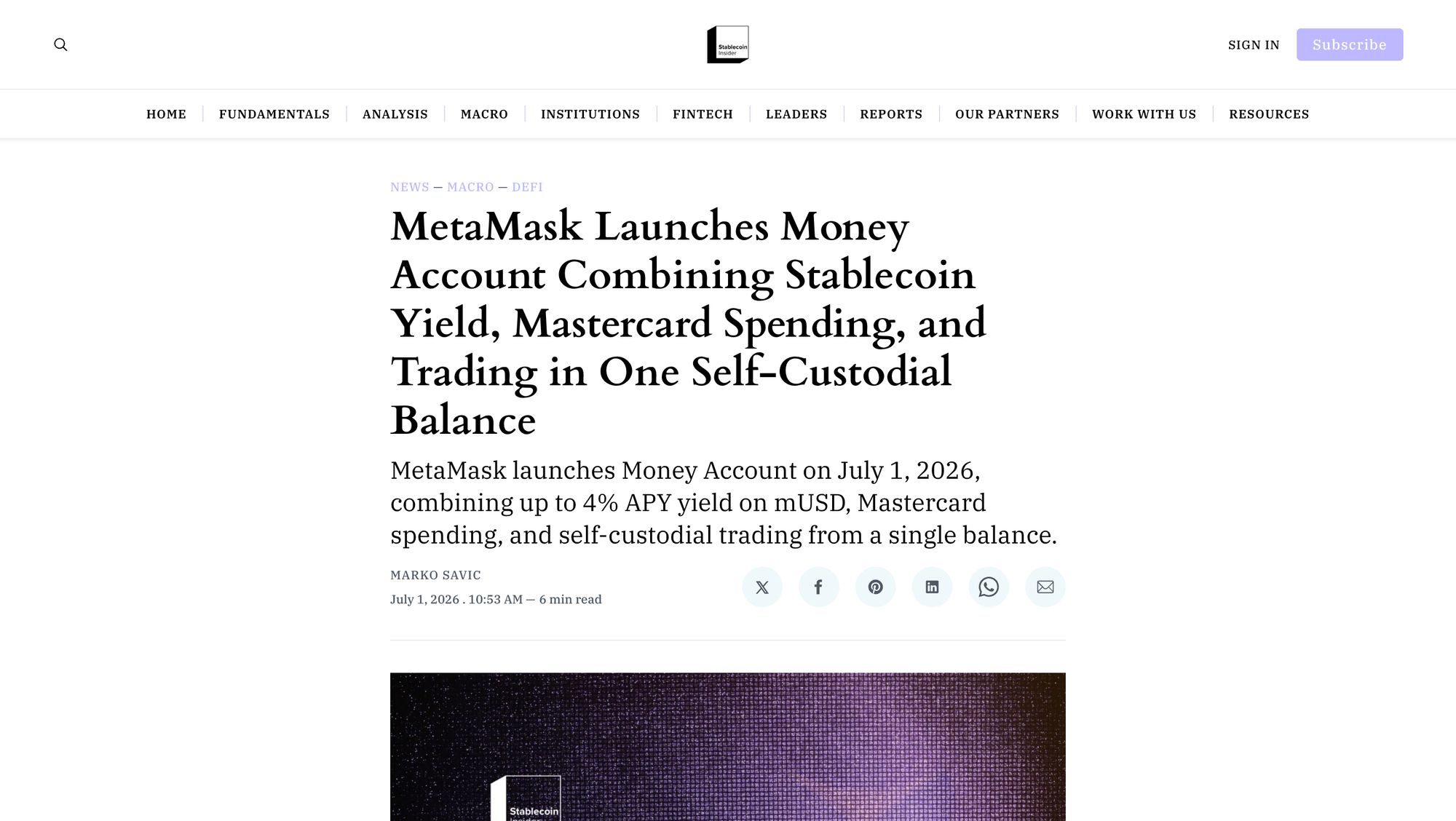
This fits a pattern where stablecoin card products compete on what happens around the payment rather than the payment itself. The same logic drives the yield and spending combination in our MetaMask Money Account coverage, where a self-custodial balance earns while remaining spendable.
The velocity implication is worth noting. Rewards that convert into assets give users a reason to spend stablecoin balances rather than hold them, which aligns with the broader shift toward stablecoins as high-turnover payment instruments rather than parked capital.
Market context supports the timing. Crypto card payment volume reached $656 million monthly in May 2026, more than double the $271 million recorded a year earlier, and Bitget Wallet says its own card spending nearly tripled in the first half of 2026, part of a wider push to make stablecoins usable in everyday settings alongside protocol-level work like our DigiDollar UTXO stablecoin coverage.
Tokenized Assets Reach Consumer Rewards
The more interesting signal is where tokenized real-world assets are showing up. Tokenized equities and commodities have largely been institutional and trading products, and routing them into consumer cashback is a distinctly different distribution channel.
xStocks makes the mechanics work. The framework issues fully collateralized, one-to-one backed tokens representing US stocks and ETFs, and because those tokens move between exchanges, self-custodied wallets, and onchain applications, they can be delivered as a reward without a brokerage account.
That fractional delivery is the practical unlock. A user accumulates small positions in NVIDIA or the S&P 500 through ordinary spending, with no separate investment app, account opening, or minimum purchase, which is a materially different on-ramp than tokenized equity products have had.
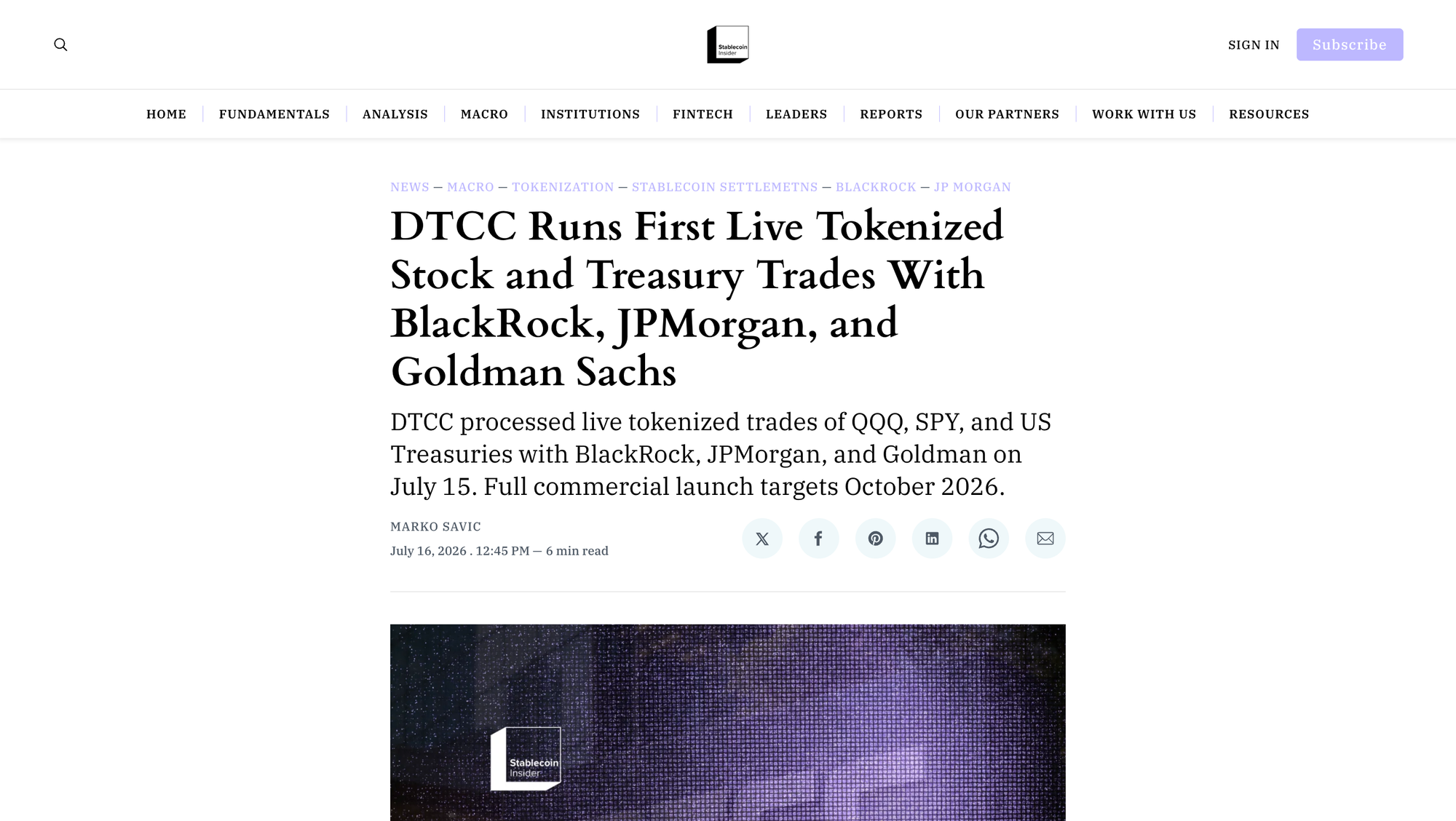
It also connects to the tokenization infrastructure buildout more broadly. Institutional venues have been racing to make tokenized assets tradable and compliant, as in our DTCC tokenized trades coverage, and consumer rewards are the retail-facing end of that same pipeline.
Conclusion
Assetback is a rewards program, not a protocol change, but it lands at an interesting intersection. Stablecoins handle the payment, tokenized assets handle the reward, and the user experiences neither as crypto, which is roughly the end state the industry has been building toward.
The competitive logic is sound. Crypto cards have largely competed on fees and acceptance, and shifting to asset accumulation gives Bitget Wallet a differentiator that traditional card issuers cannot easily copy without tokenized asset infrastructure.
The caveats are ordinary consumer-product caveats. Rewards paid in volatile assets can lose value, geographic restrictions limit reach including exclusion of US users from xStocks, and whether a 3% rate holds after the launch period will determine if this is a durable model or an acquisition promotion.
FAQ:
1. What is Bitget Wallet Assetback?
Assetback is an asset cashback program launched globally on August 1, 2026 that converts Bitget Wallet Card rewards into investment assets rather than fiat or points. Users select a preferred asset in advance, and eligible purchases automatically route cashback into Bitcoin, Tether Gold, tokenized US stocks and ETFs, or stablecoins.
2. What cashback rate does Assetback pay?
The base rate is 2%, with new users or those meeting a monthly spending threshold eligible for a 3% tier. The rate increase coincided with the August 1 launch, positioning it above the 1% to 2% typical of traditional fiat cashback card programs.
3. Which assets can you earn as cashback?
Options include Bitcoin, Tether Gold, and tokenized US equities and ETFs delivered through xStocks, including NVIDIA, Tesla, Alphabet, and the S&P 500. Stablecoins are available as an alternative for users who prefer stable value rewards over volatile assets.
4. Where is Assetback available?
The program is live in more than 50 markets across Europe, Latin America, Africa, and Asia-Pacific, with the Bitget Wallet Card accepted worldwide through Visa and Mastercard networks. The xStocks tokenized equity products carry their own geographic restrictions and are not available to US persons.
5. How does this relate to stablecoins?
The Bitget Wallet Card settles payments using stablecoins, so Assetback adds a reward layer on top of existing stablecoin payment rails rather than replacing them. By making stablecoin spending more rewarding, it encourages balances to circulate rather than sit idle, reflecting the broader shift toward stablecoins as high-velocity payment instruments.
Disclaimer:
This content is provided for informational and educational purposes only and does not constitute financial, investment, legal, or tax advice; no material herein should be interpreted as a recommendation, endorsement, or solicitation to buy or sell any financial instrument, and readers should conduct their own independent research or consult a qualified professional.