
Table of Contents
In a bold move to bridge the gap between cryptocurrency and everyday finance, Walme.io has unveiled its highly anticipated Walme Card, a virtual Mastercard that promises seamless crypto-to-fiat conversions for global spending.
As Web3 adoption accelerates, this launch positions Walme as a frontrunner in decentralized banking, allowing users to top up with USDT and pay instantly via Apple Pay or Google Pay.
Drawing from the platform's non-custodial wallet ecosystem, the card addresses long-standing barriers to real-world crypto utility, with early activations already underway at events like Web Summit Lisbon.
Key Takeaways
- Walme Card enables instant USDT (TRC20/ERC20) top-ups for fiat spending, eliminating the need for manual exchanges and reducing transaction friction.
- As a virtual Mastercard, it supports global acceptance at millions of merchants, with easy addition to Apple Pay and Google Pay for contactless payments.
- Built on a secure, non-custodial framework, the card emphasizes user control, with features like end-to-end encryption and straightforward KYC for compliance.
- Integrated into Walme's broader Web3 platform, it unlocks rewards through the $WLM token, including staking, reduced fees, and premium analytics.
- The launch follows milestones like wallet connections and messenger features, with partnerships such as NOWPayments enhancing crypto-fiat bridges.
How Walme Card Works: From Top-Up to Transaction
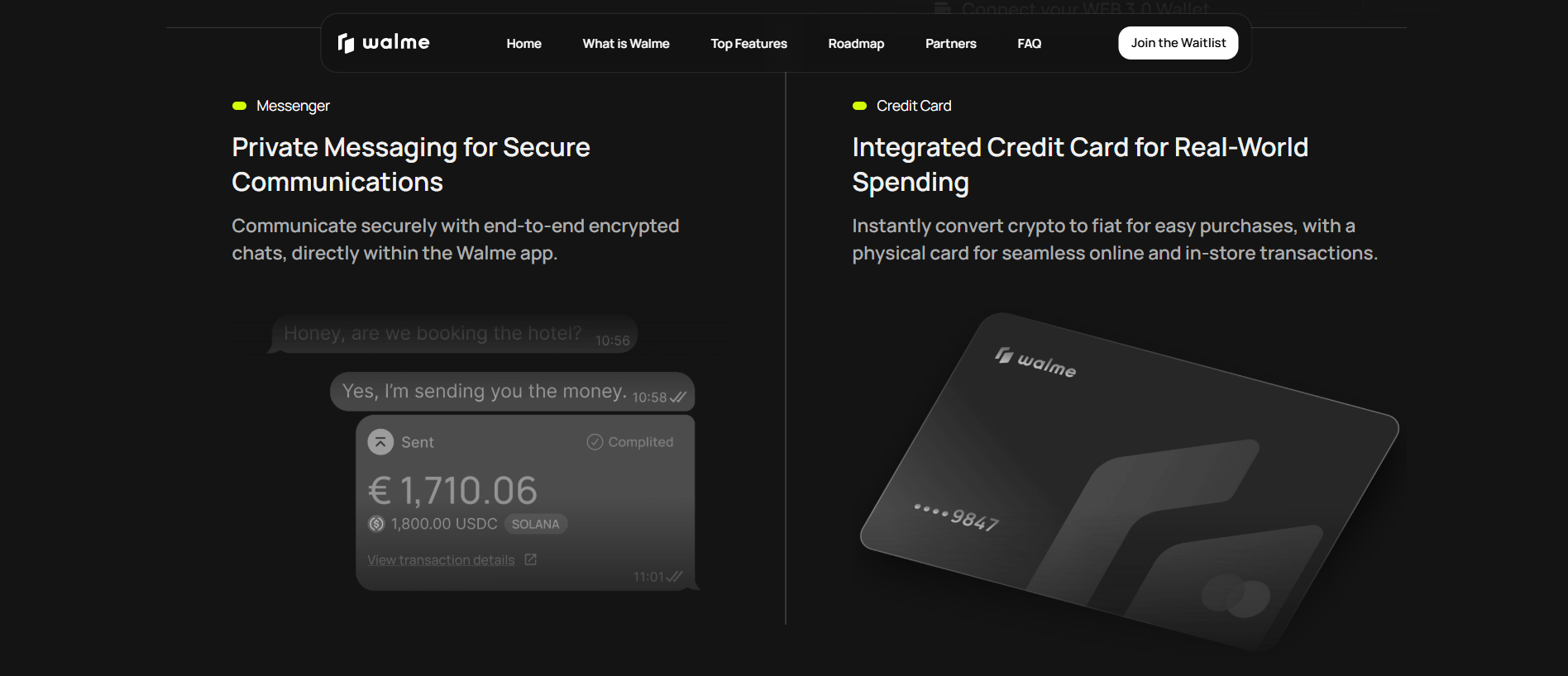
Getting started with Walme Card is designed for simplicity, catering to both crypto novices and seasoned users. After signing up on the Walme app via email or social media, users complete a quick KYC process to activate the virtual Mastercard.
Top-ups are handled directly from compatible wallets, supporting USDT on TRC20 or ERC20 networks for instant conversion to fiat currencies like USD or EUR.
Once funded, the card integrates effortlessly with Apple Pay and Google Pay, enabling one-tap payments online, in-store, or via POS systems worldwide.
Security is paramount: Non-custodial storage means users retain private keys on their devices, bolstered by two-factor authentication (2FA) and fraud monitoring.
Compared to traditional crypto cards, Walme offers lower fees, potentially reduced further via $WLM staking, and faster processing, with limits up to $10,000 per transaction for e-commerce and $5,000 for ATM withdrawals.
The Broader Impact on Crypto Adoption
Walme Card arrives at a pivotal moment for cryptocurrency, as global adoption surges amid regulatory clarity and institutional interest.
By enabling direct USDT-to-fiat spending, it tackles volatility concerns, making crypto viable for daily use, ideal for freelancers receiving payments in stablecoins or travelers avoiding exchange fees.
At Web Summit Lisbon earlier this month, dozens of attendees activated cards on-site, highlighting strong demand for practical Web3 tools. This mirrors industry trends, such as Mastercard's expansions into crypto remittances, but Walme stands out with its decentralized focus.
However, challenges remain: Users must navigate KYC requirements, and market fluctuations could affect top-up values.
Experts see it as a catalyst for mass adoption, potentially onboarding millions into Web3 finance.
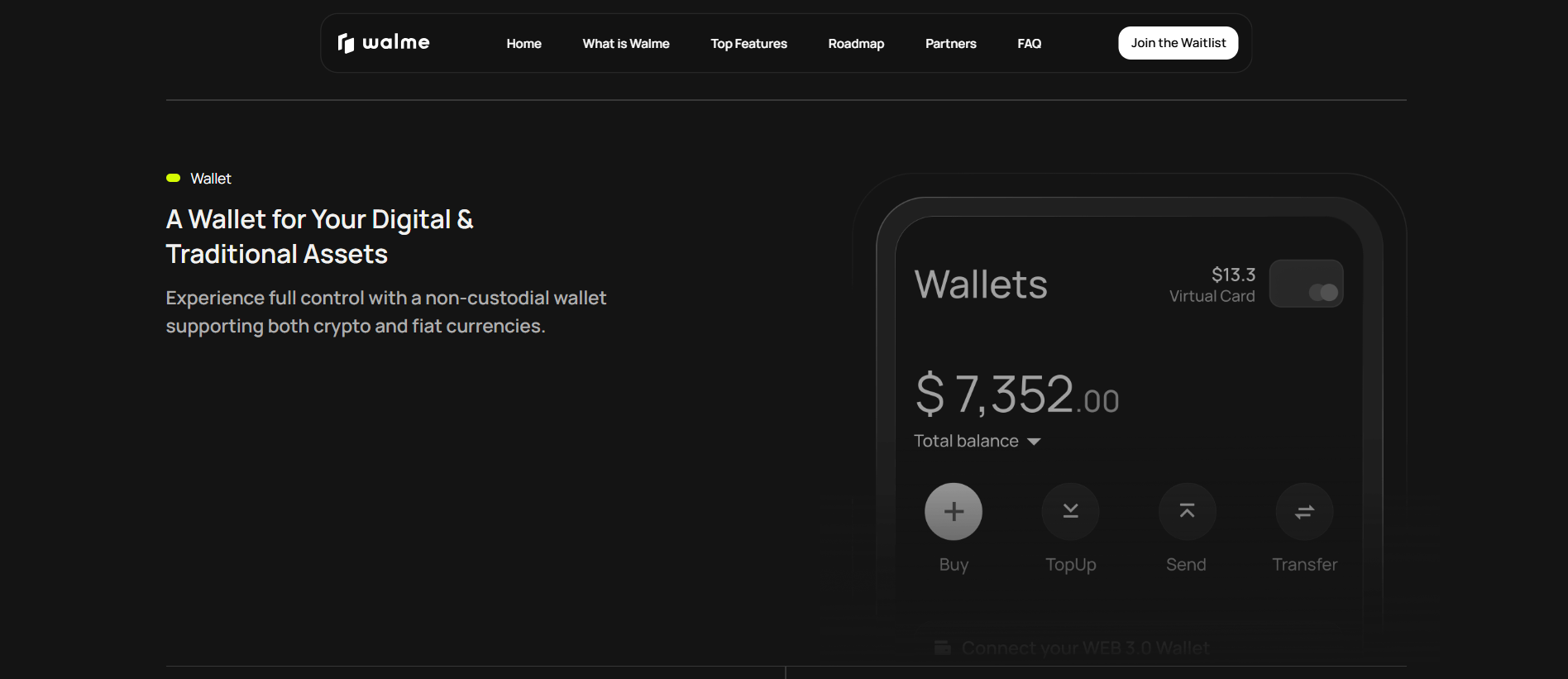
Walme's Ecosystem and Future Roadmap
Beyond the card, Walme functions as a comprehensive Web3 bank, blending non-custodial wallets for assets like Bitcoin, Ethereum, and SOL with a secure, E2EE messenger for in-chat transactions.
Recent updates include wallet connections for Solflare and Phantom, paving the way for features like XP rewards convertible to $WLM tokens. The $WLM token, currently in presale stages with bonuses up to 30%, fuels the ecosystem, offering staking yields, fee discounts, and access to AI assistants for transaction analysis.
Partnerships with entities like 1inch for swaps, Coingecko for data, and Solana for grants underscore its robustness.
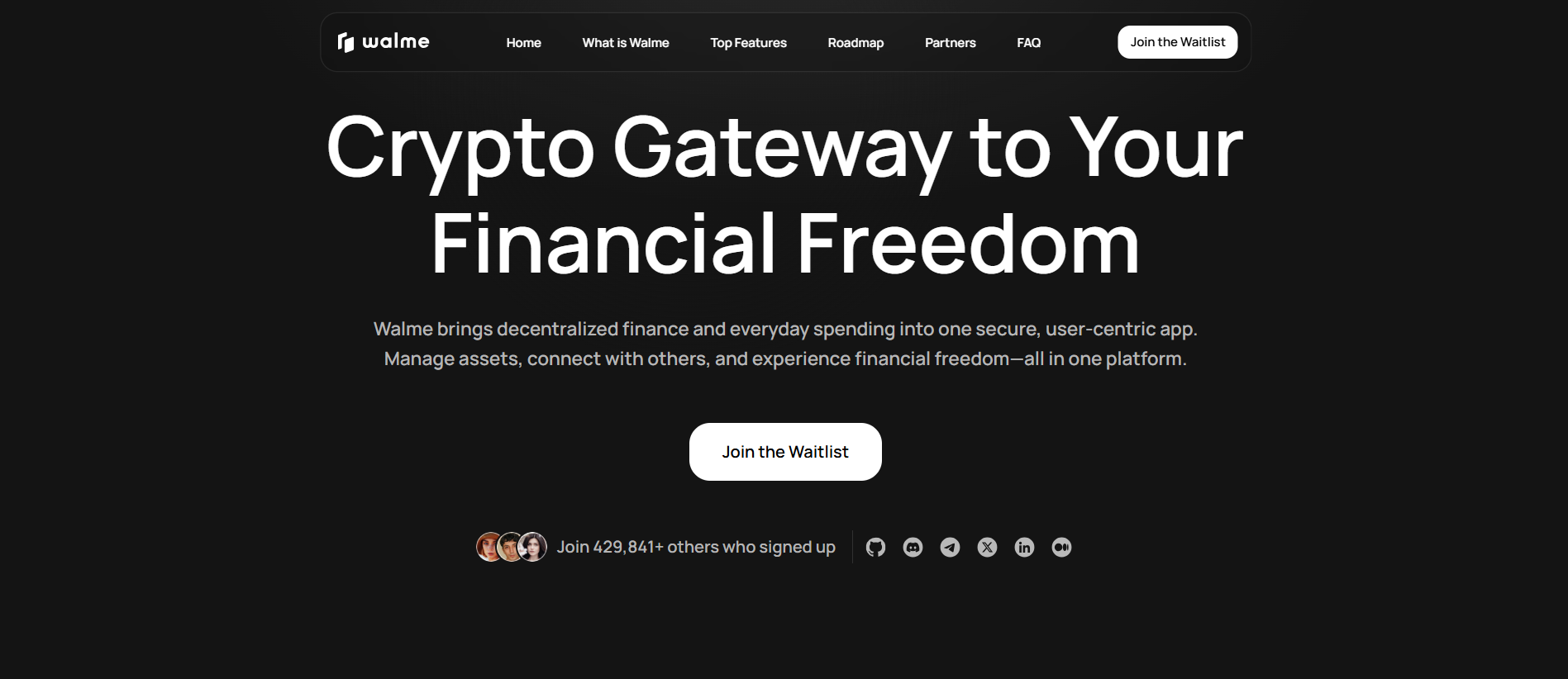
Looking ahead, Walme's roadmap includes loans, mini-games, and full TGE by Q4 2025, with over 400,000 users already on the waitlist signaling explosive growth.
Conclusion
As Walme Card rolls out, it heralds a new era where crypto isn't just an investment but a practical payment tool.
By seamlessly integrating USDT top-ups, virtual Mastercard functionality, and mobile wallet support, Walme is democratizing Web3 finance.
With a user-centric ecosystem and strong community backing, the platform is poised to drive broader adoption.
Interested users can join the waitlist at walme.io for early access and explore how this innovation could transform their financial habits.
Read Next:
- GOP's 2025 Regulation: Blocking CBDCs to Empower Private Stablecoins in Digital Finance
- Stablecoins vs. CBDCs
- Best Strategies for Converting Fiat to Stablecoins in 2025
- How to Integrate USDC into Your E-Commerce Platform with Stripe
- Best Crypto Cross-Chain Bridges in 2025
FAQs:
1. What is Walme Card and how does it bridge crypto to fiat?
Walme Card is a virtual Mastercard that lets users top up with USDT (TRC20/ERC20) for instant fiat conversion, allowing seamless spending without traditional exchanges.
2. How do I integrate Walme Card with Apple Pay or Google Pay?
After KYC and activation in the Walme app, add the virtual card to your Apple or Google wallet for instant, contactless payments at global merchants.
3. Is Walme Card secure for USDT top-ups and transactions?
Yes, it leverages non-custodial wallets, E2EE encryption, and device-stored private keys, ensuring user control and protection against breaches.
4. When is Walme Card launching and how can I get started?
The launch is underway, with activations at events like WebSummit; sign up at walme.io, complete KYC, and top up with USDT to begin using it immediately.
5. What makes Walme Card different from other crypto cards?
It offers deep Web3 integration, including $WLM rewards, in-chat transactions via messenger, and partnerships for enhanced utility, all in a decentralized ecosystem.