
Table of Contents
Stablecoins have grown into on-chain “cash rails” used for settlement, exchange liquidity, collateral, and treasury operations.
That shift is the foundation for stablecoin yield:
Yield exists when there is persistent demand to borrow stablecoins, trade against them, or route them through protocols that charge fees.
USD1 is positioned as a USD-pegged stablecoin with monthly reserve reporting via BitGo’s attestation framework, and the issuer represents it as 1:1 redeemable and “100% backed.”
Practically, USD1 yield strategies are not about price appreciation; they are about accessing consistent cashflow (interest, fees, and sometimes incentives) while managing liquidity and smart-contract risk.
Key Takeaways
- USD1 yield is typically earned through lending interest, DEX fee capture, and sometimes incentive rewards tied to liquidity programs.
- Lending yields are primarily driven by utilization (borrowed ÷ supplied); higher utilization can mean higher yield and weaker withdrawal flexibility.
- “Staking” for stablecoins usually means vault deposits or incentive programs, not proof-of-stake staking.
- Risk is concentrated in three places: protocol contracts, liquidity/withdrawals, and stablecoin-specific operational integrity.
- A repeatable approach beats chasing APY: verify listings, quantify exit liquidity, separate organic yield from incentives, and diversify exposures.
What Is USD1 Stablecoin (And What You Need To Verify)

USD1 is presented as a reserve-backed, USD-pegged stablecoin. For yield strategies, the technical label matters less than the operational reality. Your diligence should focus on four “yes/no” questions that determine whether USD1 is usable and how risky it is in practice.
1) Can you reliably exit?
If you cannot redeem directly with the issuer, your exit is secondary-market liquidity. That can be fine, but it turns “redemption risk” into “market liquidity risk,” which behaves differently during stress.
2) What is the reporting cadence and scope?
Monthly reserve reporting is materially better than sporadic reporting, but it is still point-in-time. You want to understand what the report covers (reserves and liabilities), which date it references, and whether the methodology is consistent.
3) Where is USD1 supported on-chain?
Stablecoin yield is venue-dependent. A well-documented token with shallow DeFi support can have fewer opportunities and more fragile liquidity dynamics than an older, broadly integrated stablecoin.
4) What is USD1 used for beyond holding?
If USD1 becomes widely used as trading collateral, settlement liquidity, or treasury cash, borrow and swap demand can become more consistent, supporting more stable yield.
A tactical takeaway:
Treat USD1 as “on-chain cash with conditions.” Your job is to identify those conditions upfront before you deploy capital.
How Stablecoin Yield Is Generated (The Mechanics)
Stablecoin yield in DeFi is not magic. It is a set of transparent cashflows that typically fall into three categories. Understanding which category you’re in is the difference between a durable strategy and a temporary yield spike.
1) Borrower-Paid Interest (Organic Yield)
In lending markets, suppliers deposit stablecoins and borrowers pay interest to access that liquidity. The supplier’s yield is usually a function of:
- borrower demand,
- protocol interest-rate models,
- fees/reserve factors.
This is the most “cashflow-native” form of stablecoin yield because it is funded by borrowers who want stablecoins for leverage, arbitrage, trading, or liquidity needs. If borrower demand falls, the yield compresses.
2) Fees From Market Activity
Liquidity providers (LPs) in DEX pools earn fees when traders swap through the pool. Fee yield depends on:
- trading volume,
- fee tier,
- your share of pool liquidity.
For stablecoin pools, fees can be relatively stable when volume is steady, but they can also drop sharply if volume was incentive-driven or temporary.
3) Incentives (Subsidized Yield)
Protocols may pay additional rewards to:
- bootstrap liquidity,
- deepen stablecoin pools,
- encourage lending supply.
These rewards can boost APY, but they are frequently discretionary and can be reduced. The tactical approach is to treat incentives as a “bonus layer,” not the foundation of your expected return.
The Primary Driver In Lending: Utilization
Utilization is the one metric you should memorize:
Utilization = Borrowed ÷ Supplied
- Higher utilization often increases rates because liquidity is scarce.
- Very high utilization can reduce your ability to withdraw quickly.
- Lower utilization often means easier withdrawals but lower yield.
This is why two users in the same protocol can have very different experiences depending on the market’s utilization at the time they enter.
Ways To Earn Yield With USD1 In 2025
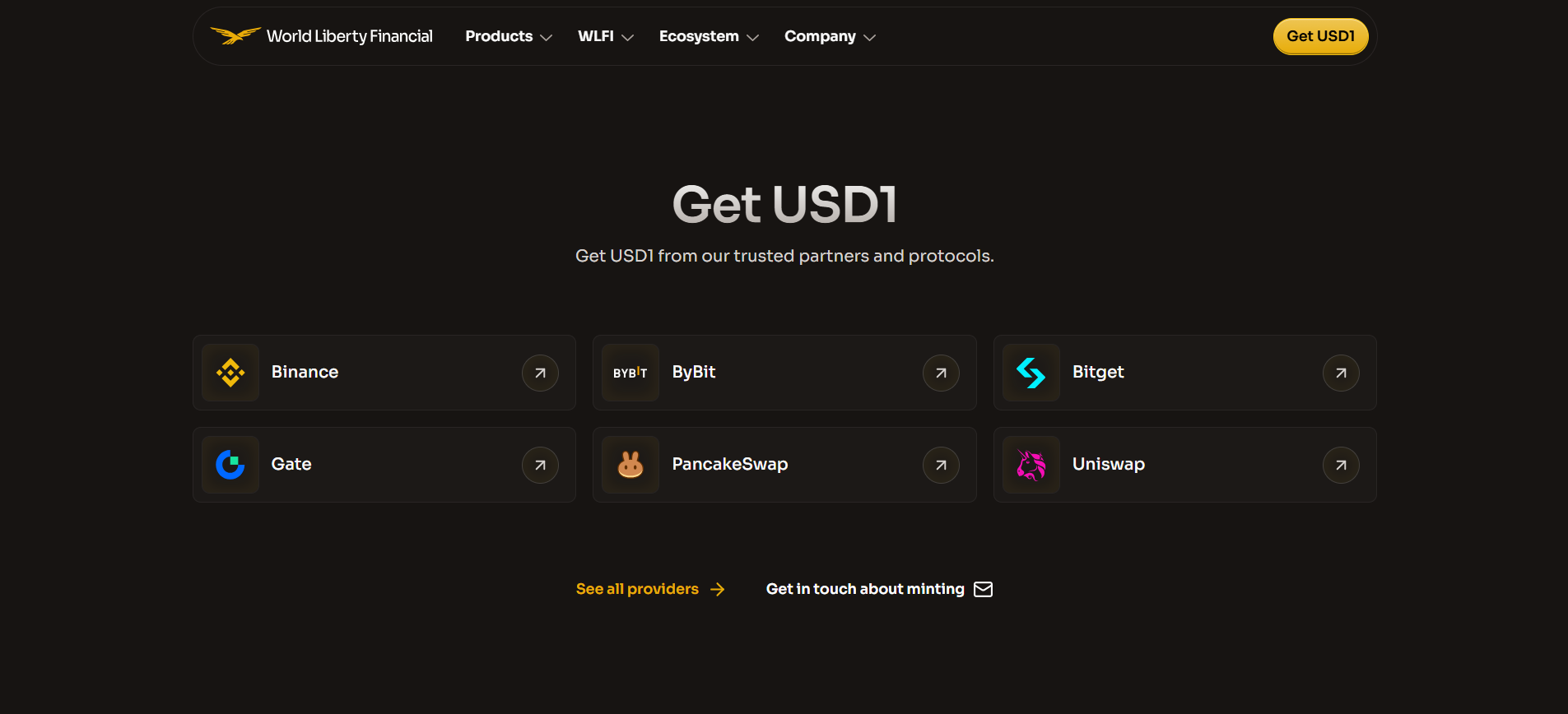
The practical reality is that USD1 yield depends on whether USD1 is explicitly supported by the venue and on which chain. Assuming you have confirmed that support, these are the main strategy types.
1) DeFi Lending: Supply USD1 To Earn Interest
What you do: supply USD1 to a lending market that supports it, then earn variable interest paid by borrowers.
Why lending is often the baseline strategy: it is usually simpler than LPing, and the core yield source (borrower interest) is easier to interpret.
What determines your results:
- the market’s utilization and borrow demand,
- supply caps (which can limit scaling),
- withdrawal liquidity,
- protocol risk controls.
To operate tactically, you want to understand whether you’re being paid for healthy demand or for stressed liquidity.
Use this checklist before you supply:
- Confirm USD1 is listed as a supply asset in that market (not just “stablecoins”).
- Check utilization and available liquidity. High APY with low liquidity is often a warning sign.
- Understand how quickly you can withdraw in normal conditions versus high-utilization conditions.
- Review whether the protocol has conservative risk parameters and a strong history.
A simple operating rule: if you cannot describe why the yield exists in one sentence, do not deploy size.
2) “Staking” And Savings-Style Yield (What It Usually Means)
Stablecoins don’t stake like PoS assets. When platforms say “stake USD1,” it typically means one of two models:
A) Deposit vaults / savings modules
You deposit USD1 into a contract that allocates funds across strategies (often lending markets) and returns yield.
This adds convenience, but also adds risk layers:
- your risk now includes the vault contract and the underlying protocols,
- strategy changes can affect risk without changing the headline label.
B) Incentive deposits
You deposit USD1 into a program that pays rewards to deepen liquidity or grow adoption. This can be useful tactically, but the critical question is whether rewards are:
- funded and scheduled,
- discretionary and variable,
- dependent on token emissions that can be changed.
The tactical framework:
- Prefer “yield from interest/fees” over “yield mostly from incentives.”
- Avoid lockups unless you are compensated explicitly for illiquidity and you accept the exit constraints.
3) Liquidity Provision: Earn Fees In USD1 Pools
What you do: provide USD1 to a DEX pool (often paired with another stablecoin), then earn trading fees, and sometimes incentives.
Stablecoin pools can be efficient, but they are not risk-free. The main risk is not volatility; it is balance risk when one stablecoin weakens or becomes less desirable, causing you to be left holding more of it when you withdraw.
Key points to evaluate:
- Is the pool deep enough for your size without major slippage on exit?
- Are fees driven by organic volume, or by temporary incentive farming?
- What happens to the pool composition if one asset depegs or faces redemption friction?
A tactical approach is to treat LP positions as an “active liquidity position,” not as a passive savings account. If you cannot monitor it, keep size smaller.
The Metrics That Actually Matter (And How To Read Them)
You do not need a complex dashboard to manage stablecoin yield, but you do need the right indicators. These are the highest-signal metrics across strategy types.
1. Lending Markets
Utilization and available liquidity are your two core levers:
- High utilization tends to mean higher yield, but it also means withdrawals may be constrained.
- Available liquidity tells you whether you can exit immediately.
Other high-signal indicators:
- Rate history: prefer markets that do not swing violently without clear reasons,
- Concentration: if a few wallets dominate supply or borrowing, conditions can change abruptly,
- Caps and limits: supply/borrow caps can cause discontinuities in rates and availability.
2. DEX Pools
For stablecoin pools, the essential questions are about depth and quality of volume:
- TVL and depth at the current price (exit reliability),
- volume consistency (fee yield durability),
- imbalance trends (whether one asset is being systematically “dumped into the pool”).
A strong pool is not just a pool with high APY today; it is a pool where you can exit without becoming the liquidity.
3. Stablecoin Transparency Inputs
For reserve-backed stablecoins, transparency isn’t a checkbox; it is a risk control:
- reporting cadence,
- scope of attestations,
- clarity on redemption operations (who can redeem, how, and on what timeline).
Risk Analysis: What Can Go Wrong
Stablecoin yield is often marketed as “safer,” but the risk is simply different. These are the risks that actually hit users.
Smart-Contract Risk
A bug or exploit can impair withdrawals or cause loss. You cannot diversify this risk away entirely, but you can reduce it by:
- selecting mature, widely used protocols,
- avoiding untested forks,
- splitting allocations across venues.
Liquidity And Withdrawal Risk
This is the most common operational failure mode:
- You earn yield, but you cannot exit at the moment you need to.
- Utilization spikes can turn a “liquid” position into a wait-and-see position.
Mitigations that work in practice:
- avoid deploying emergency funds into high-utilization markets,
- diversify and keep a portion in higher-liquidity venues,
- prefer strategies with predictable withdrawal mechanics.
Stablecoin-Specific Operational Risk
Even reserve-backed stablecoins can experience confidence shocks. The yield strategy risk is that:
- secondary-market liquidity dries up,
- pools become imbalanced,
- withdrawal costs rise.
This is why DEX pools can become a “magnet” for weaker assets during depeg scenarios.
Governance And Parameter Risk
Protocol governance can change caps, rates, reward schedules, or risk settings. You reduce exposure by:
- not relying on incentives as your baseline,
- watching governance channels for any protocol holding meaningful size,
- maintaining an exit plan that does not assume conditions will remain stable.
Risk Management Best Practices For USD1 Yield
A tactical approach is defined by process, not predictions.
Separate Organic Yield From Incentives
Before you allocate, write down:
- how much of the yield is interest/fees,
- how much is incentives,
- what happens when incentives go to zero.
If the answer is “the strategy stops working,” it is not a yield strategy; it is an incentive trade.
Build For Exit Reliability
Practical rules that tend to work:
- avoid putting the entire position into one venue,
- avoid lockups unless the premium is clear and worth it,
- favor deeper, more established markets for core allocations.
Position Size In Stages
Start small, validate real-world behavior, then scale:
- test deposits and withdrawals,
- observe rate behavior across different utilization conditions,
- confirm the UX and operational reliability.
Use A Simple Monitoring Cadence
You do not need constant attention, but you do need consistency:
- daily or every other day: utilization, liquidity, rates, incentives
- weekly: governance, incidents, cap changes, pool health
USD1 Yield vs USDT / USDC / DAI (How To Compare Without Chasing APY)
The correct comparison framework is operational. Ask which stablecoin gives you:
- more venue options,
- more reliable liquidity,
- clearer transparency, and
- less reliance on incentives.
Stablecoin yields tend to converge over time in mature venues because capital flows toward the best risk-adjusted opportunities.
The edge is not finding “the highest APY,” but repeatedly allocating to the best combination of:
- sustainable yield source,
- liquidity and withdrawal reliability,
- robust protocol risk controls.
Common Mistakes To Avoid
You can avoid most stablecoin yield losses by not making the same avoidable errors:
- Treating incentives as permanent yield.
- Ignoring utilization until withdrawals get stuck.
- Allocating size to thin pools because the displayed APY is high.
- Overconcentrating in a single protocol or chain.
- Not having an explicit exit plan and monitoring routine.
Future Outlook For USD1 Yield In 2025 And Beyond
Stablecoin yield is likely to remain attractive in periods where:
- borrowing demand is strong,
- stablecoin liquidity is scarce,
- incentive programs are deployed to grow adoption.
But as markets mature, expect:
- more efficient pricing of stablecoin risk,
- yield compression in the safest venues,
- more emphasis on transparency, compliance posture, and operational consistency for reserve-backed stablecoins.
The durable playbook is to treat stablecoin yield like cash management:
Prioritize predictable exits, transparent mechanisms, and repeatable controls.

Conclusion
Earning yield with USD1 in 2025 is straightforward in concept but execution-heavy in practice.
Your outcomes depend on whether USD1 is supported by credible venues, whether yield is funded by borrower interest/fees or temporary incentives, and whether you can exit under stress.
The most consistent approach is disciplined: verify listings, track utilization and liquidity, diversify across reputable venues, and treat incentives as upside rather than your base case.
Read Next:
- Q4 2025 Stablecoin Regulations Updates: Global Report
- The Neobank Transition Report
- Where Stablecoins Are Being Spent (2025 New Report)
FAQs:
1. How does USD1 generate yield in DeFi?
USD1 yield typically comes from lending markets where borrowers pay interest, plus optional incentives in liquidity or deposit programs.
2. Is earning yield with USD1 low risk?
It is usually lower volatility than many crypto assets, but it still carries material smart-contract, liquidity, and stablecoin-operational risk.
3. Why do USD1 APYs change over time?
Because lending rates adjust with utilization and demand, and incentive programs can change or end.
4. What is the biggest practical risk in stablecoin lending?
Withdrawal friction during high utilization, alongside protocol smart-contract risk.
5. What should I check before deploying USD1?
Confirm USD1 is listed, measure liquidity and utilization, identify the true yield source (interest/fees vs incentives), and understand exit mechanics.