
Table of Contents
Stablecoins are the settlement layer of Solana’s economy in 2026.
They power trading pairs on DEXs, collateral in lending markets, instant payouts for apps, and treasury flows for teams that want predictable unit-of-account behavior.
But stablecoins on Solana now covers multiple product types: regulated fiat-backed dollars, non-USD fiat rails, yield-bearing treasury instruments, synthetic designs, and the infrastructure that moves stable liquidity across chains and pools.
This listicle breaks down the leading stablecoin and pegged-asset projects on Solana in 2026, with practical guidance on what each one is, how it works at a high level, where it fits best, and what to watch before you standardize on it.
Key Takeaways
- USDC and USDT remain the baseline rails for liquidity, settlement, and integrations on Solana, especially for trading-heavy workflows.
- Regulated issuer-led stables (PYUSD, USDP, GYEN/ZUSD, EURR/USDR, EUROe) matter when counterparties, auditors, or policy constraints drive the decision more than raw DeFi liquidity.
- Yield-bearing and synthetic stable designs (sUSD, USDe) are different asset classes, not substitutes for fiat-backed stablecoins in treasury policies.
- Stablecoin infrastructure (Perena, Allbridge Core, Brale) can determine execution quality, routing efficiency, and cross-chain operability as much as the token itself.
- The right stablecoin choice is use-case specific: trading liquidity, payments, treasury, and compliance each optimize for different properties.
1) Circle (USDC)
Circle is a regulated fintech issuer behind USDC, widely used for payments, exchange settlement, and DeFi collateral on Solana.
How it works in practice:
USDC is designed as a fiat-backed stablecoin with a strong emphasis on transparent reserve management and institutional distribution.
On Solana, USDC often functions as the default settlement rail: it is frequently the base asset for DEX routing, lending collateral, and treasury operations because it is broadly integrated across wallets, exchanges, custody providers, and DeFi protocols.
Why it matters on Solana:
Circle’s product stack is built to support predictable mint and redeem workflows for qualified customers.
That matters when you need operationally reliable settlement and the ability to scale stablecoin flows without depending exclusively on secondary market liquidity.
Circle’s cross-chain strategy also supports native-style movement between networks, which can reduce wrapped-token complexity in cross-chain routing.
Benefits
- Strong integration density across Solana apps and liquidity venues.
- Clear enterprise-grade distribution narrative for payments and treasury.
- Often the default USD rail for builders and institutions on Solana.
Pros
- Broadest ecosystem support for a fiat-backed USD stablecoin on Solana.
- Consistent utility across payments, trading, and DeFi collateral use cases.
Cons
- Redemption pathways and access can vary depending on jurisdiction, counterparties, and whether you have direct issuer access vs. exchange-based liquidity.
2) Tether (USDT)
USDT is the largest USD-pegged stablecoin by circulation and one of the most widely used settlement assets across crypto markets.
How it works in practice:
USDT is designed as a fiat-backed stablecoin used heavily for trading, settlement, and liquidity provisioning.
On Solana, it is commonly used where users want a stable USD unit of account and strong market liquidity, particularly for trading pairs and fast value transfers.
Why it matters on Solana:
USDT’s advantage is structural: it benefits from broad venue acceptance and market network effects. That acceptance often translates into deep liquidity and tight spreads when it is well integrated.
For many operators, USDT is the most practical stablecoin for multi-venue workflows where counterparties or exchanges prefer USDT settlement.
Benefits
- Strong trading liquidity network effects across many venues.
- Widely accepted settlement asset for exchanges and liquidity providers.
- Useful stable value rail for rapid transfers and DEX routing.
Pros
- Deep market adoption and consistent demand in trading contexts.
- Often a default quote asset for high-velocity crypto markets.
Cons
- Reserve transparency frameworks differ across issuers; risk teams should explicitly define what reserve disclosures they require for treasury holdings vs. trading float.
3) GMO-Z.com Trust Company (GYEN, ZUSD)
GMO-Z.com is a regulated trust company issuing fiat-backed stablecoins including a Japanese yen stablecoin (GYEN) and a USD stablecoin (ZUSD).
How it works in practice:
These stablecoins are designed to represent fiat value with issuer-led backing and redemption, typically supported by periodic reserve reporting.
The regulated posture is a key differentiator, especially for institutions or payment providers that need a clear compliance narrative for tokenized fiat.
Why it matters on Solana:
Regulated fiat rails are increasingly relevant as stablecoins move from crypto-native trading into payments, treasury management, and cross-border commerce.
On Solana, these stablecoins can benefit from token-level programmability through modern token standards and compliance features, enabling policy-driven token behavior where required.
Benefits
- Regulated issuer posture that can simplify enterprise procurement and compliance mapping.
- Practical for USD–JPY corridors and JPY-denominated on-chain settlement.
- Reporting cadence can be easier for risk and finance teams to operationalize.
Pros
- Strong fit for compliance-forward distribution and institutional workflows.
- Enables non-USD fiat use cases that USD stables cannot cover.
Cons
- Liquidity can be more venue-specific than USDC/USDT; validate where you will actually trade, settle, and redeem.
4) Allbridge (Allbridge Core)
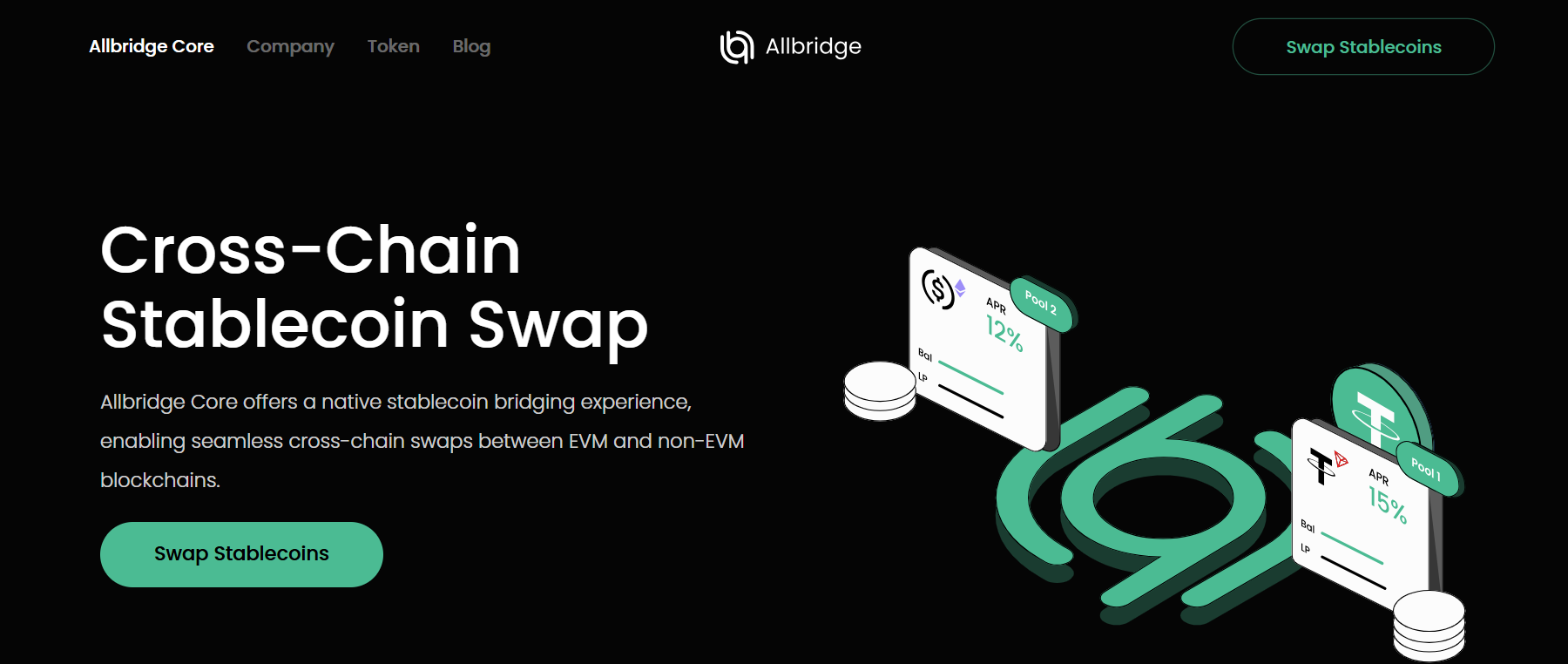
Allbridge is a cross-chain infrastructure focused on transferring stablecoins between networks, including Solana.
How it works in practice:
Cross-chain stablecoin routing is part of many Solana user journeys: deposits from other chains, multi-chain treasuries, and apps that support users wherever they are.
Allbridge Core is built to handle stablecoin transfers across multiple ecosystems, which helps teams avoid building and maintaining many bespoke routing integrations.
Why it matters on Solana:
Stablecoin utility isn’t only about what exists on Solana, it’s about how reliably value can arrive on Solana and leave it.
If you run payments, on-chain credit products, or cross-chain user acquisition funnels, a stablecoin transfer layer becomes an operational dependency, not a feature.
Benefits
- Supports cross-chain deposits, payouts, and treasury routing into and out of Solana.
- Simplifies integration work for multi-chain applications.
- Helps reduce user friction in bridging stable value.
Pros
- Strong fit for product teams building multi-chain stablecoin flows.
- Stablecoin-first routing focus aligns with payments and settlement use cases.
Cons
- Bridges add an additional risk surface (smart contracts, messaging, operational security). Treat bridge exposure separately from stablecoin exposure.
5) Paxos (USDP)
USDP is a regulated stablecoin issuer expanding USDP to Solana as a compliance-forward USD rail.
How it works in practice:
USDP is designed around a regulated issuer model with a focus on reserve management, predictable minting, and enterprise-grade controls.
For many organizations, the differentiator is not raw DeFi liquidity but counterparty comfort: a stablecoin that fits procurement expectations and compliance requirements.
Why it matters on Solana:
Solana’s high throughput and low fees are attractive for payment-style stablecoin use cases.
USDP’s regulated positioning can be valuable where stablecoin selection is driven by policy, audits, or regulated partner requirements rather than pure on-chain liquidity.
Benefits
- Strong regulated issuer posture for enterprise settlement.
- Useful for compliance-first payment flows and treasury operations.
- Often easier to justify to risk and finance stakeholders.
Pros
- Clear institutional narrative for stablecoin usage.
- Designed for policy-aligned issuance and redemption expectations.
Cons
- Liquidity depth may be thinner than USDC/USDT in some Solana venues; plan routing and execution accordingly.
6) Perena (Numéraire / USD*)
Perena is a stablecoin liquidity hub protocol designed to reduce fragmentation and improve stable-to-stable execution efficiency.
How it works in practice:
Stablecoin markets often suffer from fragmented liquidity across too many pools and pairs, which increases slippage and makes routing unreliable.
Perena’s hub-and-spoke design concentrates stable liquidity into a central pool and expresses exposure through a hub token (USD*), which can be used to route swaps and connect emerging stablecoins to established liquidity without forcing the core pool to absorb every new asset’s depeg risk.
Why it matters on Solana:
As the number of stablecoins grows, routing efficiency becomes a core ecosystem problem.
Liquidity hubs can improve execution quality for traders and provide better primitives for integrators building stablecoin-heavy UX, including payment routers and treasury swap tooling.
Benefits
- Improves stablecoin swap efficiency and routing.
- Reduces the need for many thin, duplicated pools.
- Creates a scalable framework for stablecoin liquidity expansion.
Pros
- Strong solution to stablecoin fragmentation.
- Useful primitive for aggregators and stablecoin-centric apps.
Cons
- Adds protocol risk (smart contract and pool parameter risk) on top of underlying stablecoin risk. Treat it as infrastructure exposure, not only “stable value.”
7) StablR (EURR, USDR)
StablR is a regulated stablecoin issuer offering euro and dollar stablecoins, emphasizing compliance posture and transparency.
How it works in practice:
EURR and USDR are positioned for users and businesses that need stable value with a compliance-forward model and clear reserve narratives.
For EU-oriented operators, regulated issuance and structured reserve reporting can be decisive factors when stablecoins must fit real-world finance workflows.
Why it matters on Solana:
Euro rails on Solana are increasingly important as stablecoins move into cross-border settlement and treasury functions.
A regulated EUR stablecoin can be useful for EUR-denominated balance sheets, euro payments, and conversions where holding USD introduces unwanted FX exposure.
Benefits
- EU-facing compliance posture and reserve transparency narrative.
- Practical for euro-denominated treasury and settlement workflows.
- Useful for businesses that need regulated issuance framing.
Pros
- Strong fit for EU treasury and payments use cases.
- Easier to align with procurement and compliance checks in regulated contexts.
Cons
- Liquidity distribution can vary by venue; validate integrations where your users actually swap and off-ramp.
8) Brale
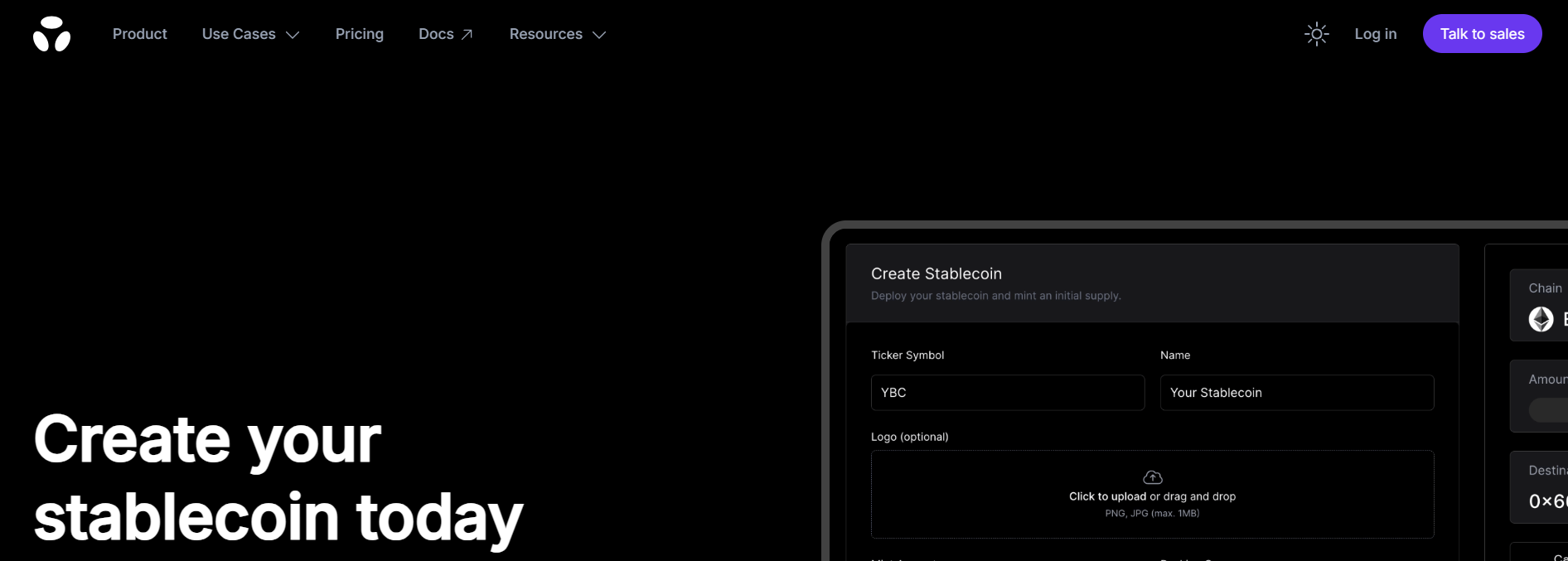
Brale is an institutional stablecoin issuance and management infrastructure that helps businesses issue, operate, and govern reserve-backed stablecoins.
How it works in practice:
The market is shifting from bespoke stablecoin builds to platform-based issuance, where reserve operations, reporting, compliance controls, and ecosystem integrations are packaged into repeatable workflows.
Brale is positioned for enterprise users that want to launch stablecoins and manage them with operational and compliance tooling rather than treating stablecoin issuance as only a token deployment.
Why it matters on Solana:
Solana’s token architecture enables advanced token-level controls. Issuance platforms can use these primitives to implement compliance rules and privacy-sensitive payment behavior at the token layer, which is relevant for enterprise and regulated stablecoin programs.
Benefits
- Faster time-to-market for reserve-backed stablecoin programs.
- Enterprise-grade operational tooling for reporting and controls.
- Useful for organizations that need stablecoin issuance as a product capability.
Pros
- Built for business issuers rather than retail-only usage.
- Strong fit for regulated and compliance-heavy stablecoin programs.
Cons
- Issuing stablecoins requires real operational maturity (reserve governance, monitoring, incident response). A platform reduces build time, not responsibility.
9) Ethena (USDe / sUSDe)
USDe (sUSDe) is a synthetic dollar design that targets stable value using hedging and structured risk management rather than purely fiat reserves.
How it works in practice:
Synthetic stablecoins are not cash-backed IOUs. They rely on a stability mechanism, often involving collateral assets plus hedging in derivatives markets, to maintain a stable reference value.
Ethena’s design is frequently discussed as a delta-hedged approach paired with a yield-bearing counterpart (sUSDe) that expresses reward flows. The value proposition is different from fiat stables: it targets capital efficiency and DeFi-native economics.
Why it matters on Solana:
Solana users increasingly want stable value that can also be productive. Synthetic designs can satisfy that demand, but they must be evaluated as a separate risk class.
The decision is not “is it stable,” but “what risks are embedded in the stability mechanism and how does it behave under stress.”
Benefits
- Distinct stable value primitive for DeFi-native usage.
- Often used where users want stable exposure plus yield dynamics.
Pros
- Clear differentiation from fiat-backed stablecoins.
- Can be attractive for advanced DeFi strategies that tolerate mechanism risk.
Cons
- Mechanism risk is meaningfully higher than fiat-backed stables: derivatives market dependencies, execution assumptions, and protocol risk must be explicitly accepted.
10) Sky Money (USDS)
Sky Money is a decentralized stablecoin ecosystem emphasizing peg management tooling and a native savings-rate mechanism.
How it works in practice:
USDS is framed as a collateralized stablecoin with a peg stability pathway that can convert certain assets at or near parity, supporting price stability in normal market conditions.
The ecosystem also includes a savings-rate style feature designed to grow balances over time, aligning user incentives with system stability and liquidity.
Why it matters on Solana:
Crypto-native stablecoin ecosystems remain important for users who want on-chain transparency and a decentralized issuance model.
On Solana, these systems can provide stable liquidity and a savings primitive that apps can integrate without relying solely on centralized issuers.
Benefits
- Crypto-native stablecoin model with explicit peg tooling.
- Savings mechanics can support stablecoin demand and retention.
- Useful for DeFi-native users who prioritize decentralization.
Pros
- Straightforward peg-management mental model.
- Savings module can make stablecoin holdings more sticky.
Cons
- Protocol-driven stablecoins require diligence around collateral models, peg support behavior, and Solana-specific liquidity.
11) Solayer (sUSD)
sUSD is a yield-bearing USD-pegged asset designed to combine stable value with embedded yield, described as backed by U.S. Treasury Bills.
How it works in practice:
Yield-bearing stablecoins aim to deliver a stable unit of account while also accruing yield to holders. Unlike staking wrappers that require a second token or separate deposit flow, yield-bearing designs can be implemented so the token itself reflects yield accrual over time (depending on wallet and protocol support).
The core promise is simple: stable balances that behave more like cash management instruments.
Why it matters on Solana:
Solana’s throughput and low fees make it a strong environment for high-frequency stablecoin usage.
A yield-bearing stablecoin can turn idle balances in wallets and apps into a more capital-efficient asset, particularly for treasuries, market makers, and payment operators that hold stable float.
Benefits
- Stable value plus embedded yield design.
- Treasury-style narrative that maps to cash-management behavior.
- Useful for apps that want a productive stable asset without complex UX.
Pros
- Clear value proposition for treasury balances and stable float.
- Can be a useful primitive for yield-aware payment and DeFi products.
Cons
- Compatibility matters: advanced token mechanics and integrations must be validated across wallets, custody providers, and DeFi venues.
12) EUROe
EUROe is a regulated euro stablecoin designed for EUR-denominated settlement and treasury use.
How it works in practice:
Euro stablecoins are most valuable when the user actually needs EUR unit-of-account behavior, euro treasuries, euro-denominated invoices, EU-facing payments, and avoiding USD FX exposure.
A regulated EUR stablecoin typically emphasizes 1:1 backing, clear redemption mechanics, and reserve safeguards, because EUR users often care more about redeemability and compliance than DeFi yields.
Why it matters on Solana:
EUR rails on Solana unlock practical use cases beyond trading: cross-border settlement, euro treasuries, and payment flows where users want stable euro exposure with fast, low-fee transfers.
Benefits
- Euro-denominated settlement on Solana.
- Better fit for EU payments and EUR treasury management.
- Reduces USD FX exposure for euro-native operations.
Pros
- Practical for euro unit-of-account use cases.
- Strong fit for businesses with EU-facing obligations.
Cons
- EUR stablecoin liquidity can be thinner than USD stables; validate exchange support and off-ramp pathways before standardizing.
13) PayPal (PYUSD)
PYUSD is a regulated USD stablecoin from a major payments company, implemented on Solana with advanced token functionality.
How it works in practice:
PYUSD is designed as a fiat-backed stablecoin with issuer-led compliance posture and payment-oriented distribution.
On Solana, it has been associated with token-level features that can support compliance controls and privacy-sensitive payment flows, which is relevant for real-world commerce and enterprise payments.
Why it matters on Solana:
PYUSD represents a stablecoin built for payments distribution and regulated usage.
For builders, the differentiation is not only the issuer brand but also the token-level programmability that can support enterprise requirements such as policy enforcement and controlled transfer behavior.
Benefits
- Payments-aligned stablecoin with regulated issuer posture.
- Token-level features can enable enterprise payment behaviors.
- Strong fit for fintech integrations and commerce-oriented flows.
Pros
- Clear payments narrative and strong brand distribution.
- Advanced token functionality can support compliance automation.
Cons
- Token-level controls can affect compatibility across wallets and DeFi venues; validate support end-to-end before production deployment.
14) Hubble Protocol (USDH)
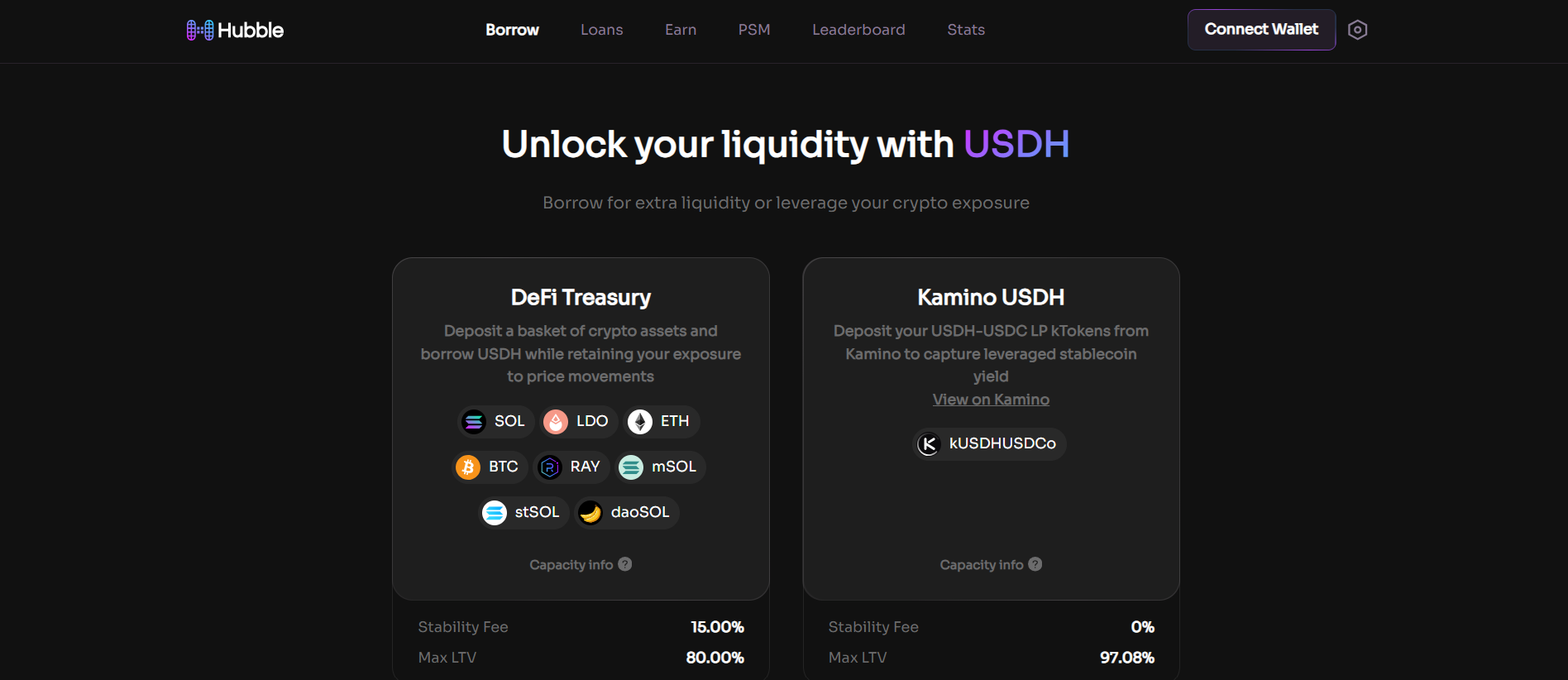
USDH is an overcollateralized stablecoin system on Solana where USDH is minted against crypto collateral and maintained through liquidation and solvency mechanisms.
How it works in practice:
Crypto-backed stablecoins behave like on-chain credit systems: users lock collateral and borrow stablecoins against it, while the protocol enforces collateralization through liquidations and risk parameters.
These systems can be transparent and censorship-resistant, but they also introduce liquidation dynamics that must be understood, especially during volatility.
Why it matters on Solana:
USDH provides a Solana-native, DeFi-composable stablecoin option for borrowing, leverage, and on-chain credit strategies.
It can be useful where users value on-chain collateral visibility and decentralized issuance.
Benefits
- On-chain collateral model with DeFi composability.
- Useful for borrowing and credit strategies on Solana.
- Aligns with censorship-resistant design preferences.
Pros
- Transparent collateral and protocol-driven issuance model.
- Integrates naturally into DeFi lending and leverage workflows.
Cons
- Overcollateralized stablecoins can face peg stress during volatility; evaluate collateral liquidity, liquidation design, and market depth.
How to Choose the Right Solana Stanlecoin in 2026
Use this decision filter to match the stablecoin category to your job-to-be-done:
- Trading and routing liquidity: Start with USDC or USDT, then choose based on the venues and counterparties you actually use.
- Enterprise settlement and compliance procurement: Prioritize regulated issuer-led options where reporting, controls, and redemption narratives matter more than DeFi liquidity.
- EUR or JPY treasury and payments: Choose euro or yen rails when the unit of account matters, then validate liquidity and redemption pathways before scaling.
- Stable plus yield: Treat yield-bearing and synthetic stablecoins as distinct asset classes; write a separate risk policy for them.
- Cross-chain and infrastructure needs: If stablecoins must move across chains or across fragmented pools, infrastructure layers can be as important as the stablecoin ticker.

Conclusion
Solana’s stablecoin ecosystem is now a layered market, not a single choice.
- Regulated issuer-led stablecoins expand what is possible for payments, procurement-driven deployments, and compliance-heavy counterparties.
- EUR and JPY stablecoins make non-USD treasury and settlement practical on-chain.
- Yield-bearing and synthetic designs can add economic efficiency, but they must be evaluated as higher-complexity stable assets.
- Finally, liquidity hubs, cross-chain routers, and issuance platforms increasingly determine whether stable value is truly usable at scale.
Pick the stablecoin that matches your operational constraints first, redemption path, compliance posture, liquidity venue, and integration compatibility, then optimize for cost, routing, and product design.
Read Next:
- Tokenized Money Market Funds: Everything you Need to Know for 2026
- Top 10 Stablecoin Lending Platforms in 2026
- Trustless Stablecoins: The Complete 2026 Guide
FAQs
1. What are stablecoins on Solana?
Stablecoins on Solana are tokens designed to track a stable reference value such as USD, EUR, or JPY while using Solana for fast, low-fee transfers and broad DeFi integrations for trading, lending, and payments.
2. What are the most used USD stablecoins on Solana?
The most used USD stablecoins on Solana are typically USDC and USDT because they are widely integrated across exchanges, wallets, and DeFi protocols and tend to have the strongest liquidity network effects.
3. What is the difference between fiat-backed, overcollateralized, and synthetic stablecoins?
Fiat-backed stablecoins target stability using off-chain reserves like cash and short-term government securities, overcollateralized stablecoins use on-chain crypto collateral with liquidation mechanisms, and synthetic stablecoins use structured hedging and protocol mechanisms to target a stable reference value.
4. What are yield-bearing stablecoins and how should I evaluate them?
Yield-bearing stablecoins are designed to provide stable value while accruing yield to holders. They should be evaluated by understanding the yield source, the custody and reserve model, the token mechanics used for accrual, and integration compatibility across wallets and venues.
5. Why would someone use a EUR or JPY stablecoin on Solana?
EUR and JPY stablecoins are useful when the unit of account matters for treasury, invoicing, and payments. They reduce FX exposure for euro- or yen-native operations and can make cross-border settlement faster while keeping balances denominated in the relevant fiat currency.
6. What is a liquidity hub like Perena and why does it matter?
A liquidity hub is designed to concentrate stablecoin liquidity into a central pool or routing layer to reduce fragmentation. It matters because it can improve execution quality, reduce slippage, and make stable-to-stable swaps more reliable across many stablecoin pairs.
7. When should I use a bridge like Allbridge Core?
A bridge is useful when stablecoins must move between Solana and other networks as part of deposits, payouts, or treasury routing. It becomes especially relevant for multi-chain applications where users arrive from different ecosystems and expect a simple stable-value transfer experience.
8. What is the fastest way to do due diligence on a Solana stablecoin?
Start by confirming the peg mechanism and backing model, then validate redemption pathways, reserve disclosures, liquidity on the venues you actually use, and technical compatibility across wallets, custody, and DeFi integrations, especially if the token uses advanced token-level controls.
Disclaimer:
This content is provided for informational and educational purposes only and does not constitute financial, investment, legal, or tax advice; no material herein should be interpreted as a recommendation, endorsement, or solicitation to buy or sell any financial instrument, and readers should conduct their own independent research or consult a qualified professional.