
Table of Contents
Stablecoins present the most practical way for many businesses to accept global payments with predictable value, faster settlement options, and more control over how funds move between customers, platforms, and treasury.
A stablecoin payment gateway is the system that makes this usable in real operations: it handles checkout or invoicing, detects on-chain payment completion, manages settlement to stablecoins or fiat, and produces the reporting your finance team needs to reconcile revenue.
Key Takeaways
- The best gateways in 2026 differentiate on settlement options, compliance fit, reconciliation tooling, and network support.
- For traditional commerce, stablecoin in and fiat out is often the simplest model to operationalize.
- For cross-border payouts and treasury workflows, stablecoin settlement can reduce frictions and improve operating speed.
- Enterprise and platform use cases often require API-first infrastructure rather than basic checkout plugins.
- Your selection process should start with your operating model, then map vendors to your token, network, and reporting requirements.

What a Stablecoin Payment Gateway Means in 2026
A stablecoin payment gateway is the middleware that lets customers pay in stablecoins while your business receives funds either:
- as stablecoins into a wallet you control, or
- as fiat into a bank account or provider balance, often with conversion handled by the provider.
In practice, gateways handle:
- Checkout and invoicing primitives such as payment links, invoices, embedded checkout, and plugins
- On-chain monitoring to detect confirmations and handle chain and network selection
- Pricing and quote logic including lock windows and underpayment and overpayment handling
- Settlement and treasury actions such as auto-convert to fiat, store funds as stablecoins, and payouts
- Compliance and reporting such as KYB where required, audit logs, and exports
A core trend in 2026 is that stablecoin acceptance is increasingly being packaged as a business payments rail, not a niche crypto product.
That changes buyer expectations: businesses want stablecoins to work with familiar checkout experiences and standard finance workflows.
Top Stablecoin Payment Gateways for Businesses in 2026
1) Stripe
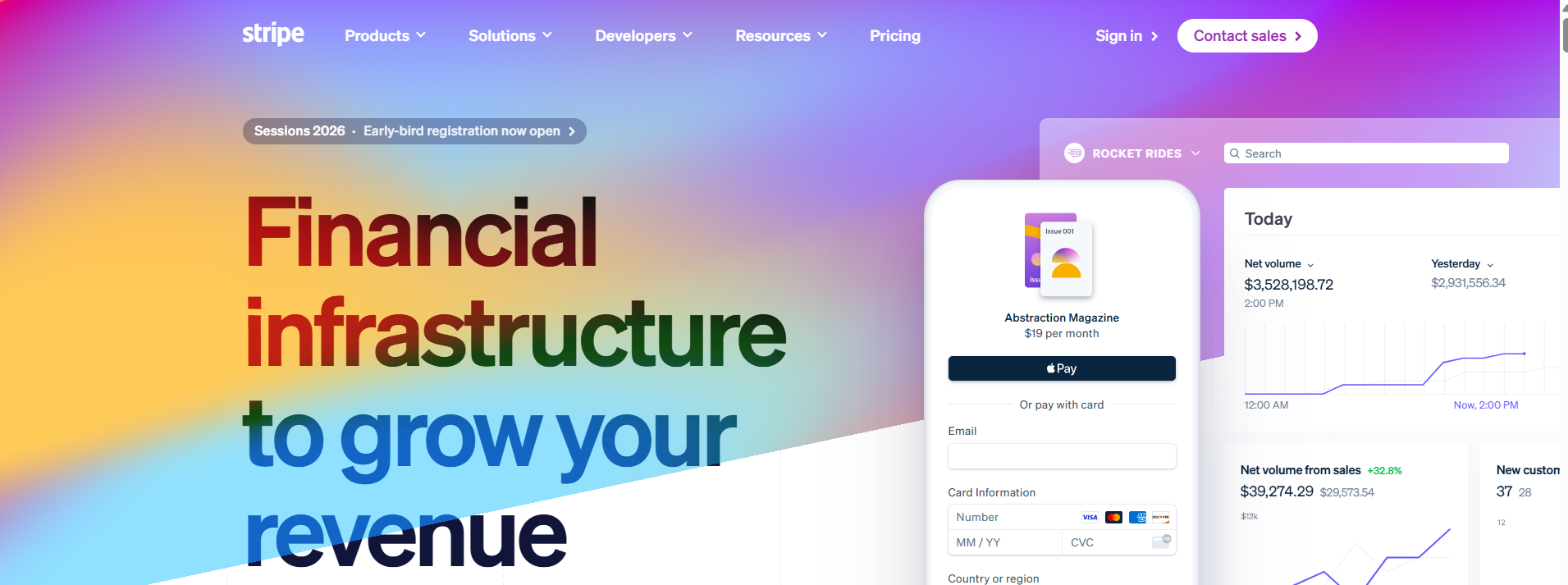
Best for online businesses that want stablecoin acceptance to feel like a standard payment method and settle as fiat with minimal operational change.
Why it stands out in 2026:
Stripe’s value is operational familiarity. It is designed to integrate stablecoin acceptance into a merchant stack without requiring your team to build blockchain monitoring, confirmation logic, or settlement workflows from scratch.
Strengths:
- Payments-grade developer and operations experience
- Familiar merchant workflow design
- Strong tooling for integration and reporting
Watch-outs:
- Stablecoin payment features can be availability and jurisdiction dependent
- Certain stablecoin payment options may be limited by business location and onboarding requirements
2) PayPal

Best for merchants who want a simplified crypto checkout experience connected to PayPal’s ecosystem and a clear fee model.
Why it stands out in 2026:
PayPal’s strength is distribution and consumer familiarity. The product is positioned for merchants who want a defined, packaged way to accept crypto-related payments while keeping merchant operations simple.
Strengths:
- Clear, merchant-friendly pricing structure
- Familiar checkout dynamics for many consumers
- Designed to minimize merchant operational complexity
Watch-outs:
- Eligibility and feature scope can vary by region, merchant category, and entity type
- Settlement mechanics and supported assets should be validated for your exact market
3) BitPay
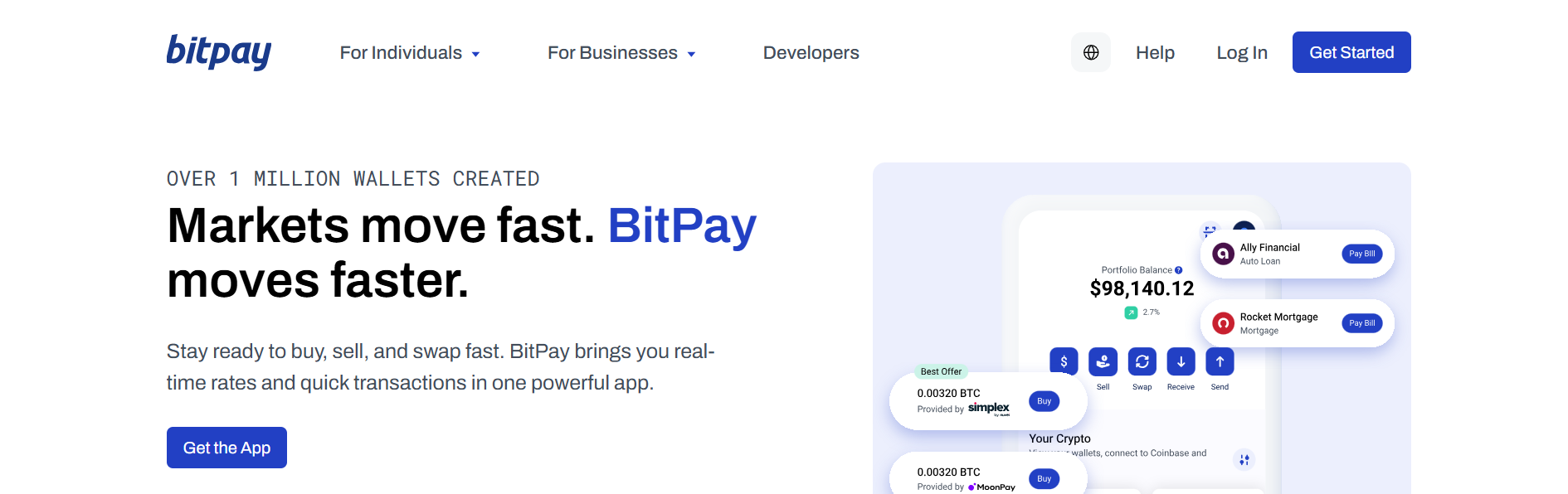
Best for merchants who want a mature crypto payment provider with stablecoin support and optional payout capabilities.
Why it stands out in 2026:
BitPay is positioned around end-to-end merchant payments, including acceptance, settlement options, and global payout workflows. That makes it relevant for businesses that want one provider for both revenue collection and outgoing payments.
Strengths:
- Established crypto checkout provider with merchant experience
- Flexible settlement options depending on the program
- Useful for businesses that want both acceptance and payout capabilities in one stack
Watch-outs:
- Stablecoin and network support can vary by geography and settlement model
- Operational detail matters: validate refund, invoice, and reconciliation features before committing
4) Coinbase Commerce
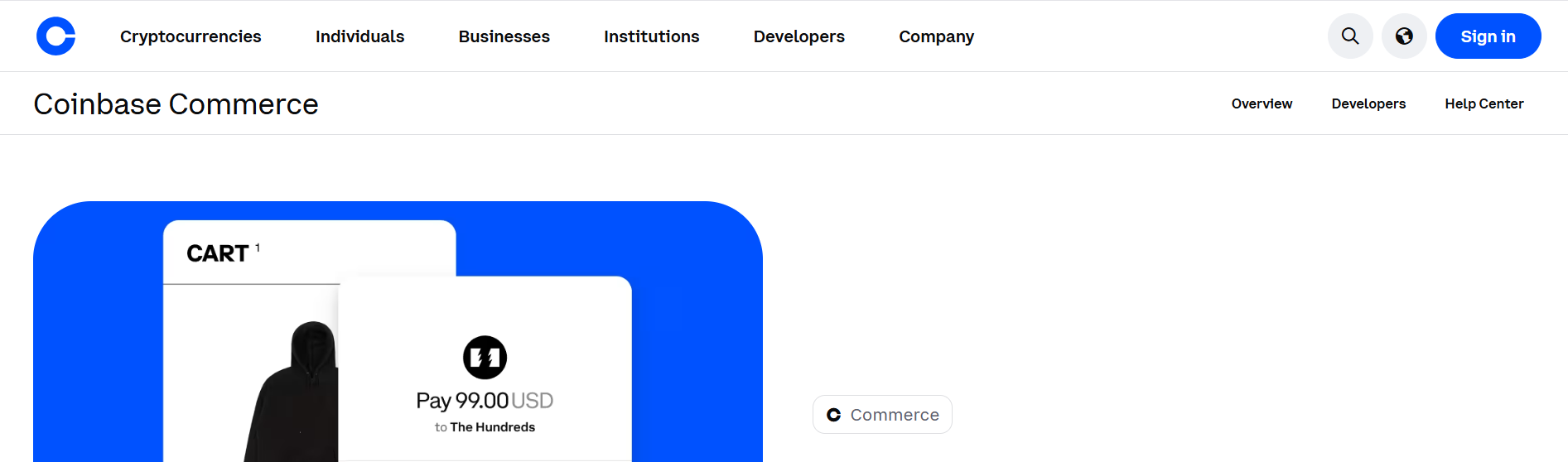
Best for businesses that want direct on-chain checkout with a recognizable crypto brand and stablecoin acceptance.
Why it stands out in 2026:
Coinbase Commerce is commonly evaluated by teams that are comfortable with on-chain flows and want stablecoin acceptance without building a full crypto payments stack internally.
Strengths:
- Strong brand recognition in crypto markets
- Good fit for crypto-native customer bases
- Works well for teams already operating with crypto accounts and tooling
Watch-outs:
- On-chain settlement means your finance team must handle wallet-based reconciliation at scale
- Network selection and customer payment errors need to be operationally planned
5) CoinGate
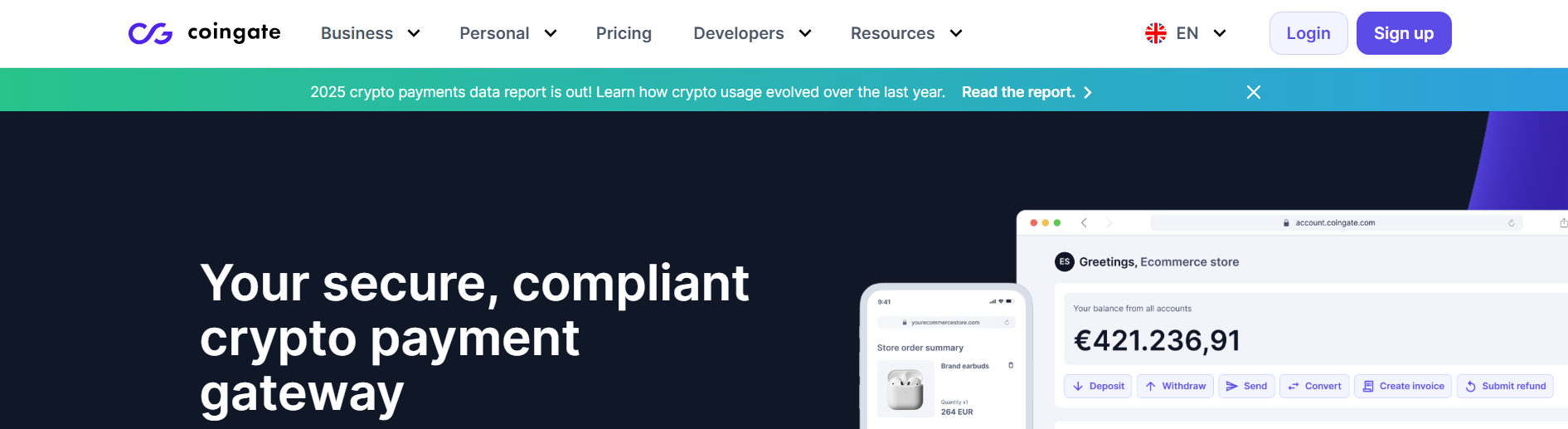
Best for merchants and platforms that want a processor profile with strong operational framing and scale signals.
Why it stands out in 2026:
CoinGate’s positioning aligns with payments as infrastructure, not just crypto acceptance. It is often shortlisted by teams that care about reporting depth and operational maturity.
Strengths:
- Merchant processor framing, not only crypto adoption marketing
- Suitable for businesses that want payments operations support
- Relevant for merchants with international customer bases
Watch-outs:
- Supported stablecoins, networks, and settlement options may vary by region
- You should validate stablecoin priority support for your target customer segments
6) BVNK

Best for international businesses, platforms, and higher-volume operators that need stablecoin rails embedded into treasury and payout workflows.
Why it stands out in 2026:
BVNK is positioned as stablecoin payments infrastructure for enterprise use cases, particularly where stablecoins are part of the operating model rather than a checkout add-on.
Strengths:
- Designed for treasury workflows, payouts, and platform integrations
- Typically stronger fit for API-first and higher-volume environments
- Built with enterprise compliance and operational controls in mind
Watch-outs:
- Implementations may require deeper diligence and process alignment than plug-and-play gateways
- Platform and enterprise buyers should confirm exact capabilities for their regions and rails
7) NOWPayments
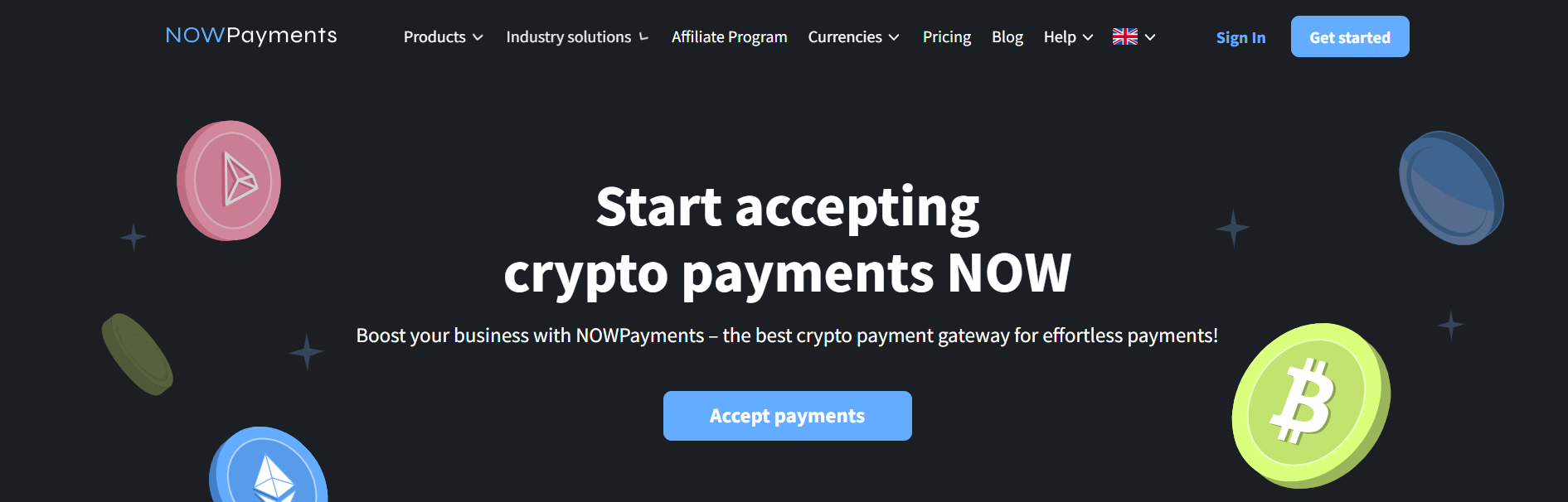
Best for smaller merchants and online businesses that want fast setup and broad crypto acceptance that includes stablecoins.
Why it stands out in 2026:
NOWPayments is often considered when speed-to-launch and asset breadth are priorities, especially for merchants serving crypto-native customers.
Strengths:
- Straightforward onboarding and quick deployment paths
- Broad asset coverage that can reduce customer friction
Watch-outs:
- For stablecoin-first programs, you should confirm the exact stablecoins and networks you want to support
- Compare reconciliation depth and reporting features against more enterprise-oriented providers
How to Choose a Stablecoin Gateway: The Business-Grade Checklist
1) Settlement Model: The Non-Negotiable Decision
This should be your first filter:
A) Fiat-backed settlement:
Best when you want minimal treasury change. You accept stablecoins, but you settle into fiat so accounting and reporting remain close to traditional card payments.
B) Stablecoin settlement:
Best when you already use wallets operationally or want stablecoins as a treasury rail for global vendor payments, payouts, and cross-border settlement.
2) Compliance Fit and Geographic Coverage
In 2026, the main question is whether the provider supports your jurisdictions, industries, and risk profile without creating operational risk. That includes KYB requirements, restricted geographies, and whether stablecoin and network support changes by region.
3) Stablecoin and Network Support
Network choice impacts:
- Confirmation time
- Transaction costs
- Operational edge cases during congestion
- Customer experience at checkout
You should select the primary stablecoin and network combinations you will support, then choose a gateway that makes those flows reliable and easy for customers.
4) Integration Path: Time-to-Live
Different gateways win in different integration environments:
- No-code and low-code tools such as hosted checkout, payment links, and invoices
- Plugins for Shopify, WooCommerce, and Magento
- API-first tooling for marketplaces, platforms, and custom checkout flows
5) Refunds, Disputes, and Customer Support Realities
Stablecoin payments do not behave like card chargebacks.
You need a defined operating policy for:
- Refund windows
- Partial refunds
- Wrong token or wrong network deposits
- Underpaid invoices and overpayments
Your gateway should support these workflows cleanly, or you must be comfortable running the process manually.
6) Reconciliation and Reporting
Your finance team needs exports that tie orders and invoices to payments and settlement outcomes.
At minimum, you should be able to track:
- Order or invoice ID mapping
- Fees and net settlement amounts
- Payment timestamps and confirmations
- Settlement currency, and conversion rates if applicable
Download our "2025 Stablecoin Year-End Report"
Practical Deployment Patterns: How Businesses Implement Stablecoin Payments
Pattern A: Stablecoin In, Fiat Out
You accept stablecoins but settle into fiat. This is usually the cleanest approach for:
- E-commerce and subscriptions
- Teams with strict treasury rules
- Businesses that want stablecoin acceptance without running wallets
Pattern B: Stablecoin In, Stablecoin Treasury
You accept stablecoins and keep them as stablecoins for:
- Paying global vendors and contractors
- Cross-border settlements
- 24/7 treasury operations
This pattern is strongest when stablecoins are not just a payment method but part of how you move money operationally.
Pattern C: Platform Embedded Payments
Marketplaces and platforms embed stablecoin rails for settlement and payouts. These buyers typically prioritize:
- API reliability and webhooks
- Identity and compliance workflows
- Controls, audit logs, and treasury management features
Risk, Controls, and Operations: What Finance Teams Care About
1) Network and Address Risk
Many costly failures are operational:
- Customer sends on the wrong chain
- Customer sends the wrong token
- Payment arrives late due to network congestion or confirmation delays
- Payment amounts mismatch because of fee assumptions
Mitigation: use gateways with strong payment intent logic, clear network selection UX, and webhooks tied to order states.
2) Treasury Controls
Decide in advance:
- Who can move funds from settlement wallets
- Whether you auto-convert to fiat
- Thresholds for manual review and enhanced checks on large transactions
3) Accounting and Auditability
At minimum, ensure you can export:
- Transaction identifiers and timestamps
- Order and invoice mapping
- Fees and net settlement results
- Settlement currency and conversion rates where applicable
4) Regulatory Drift
Stablecoin payment programs evolve quickly, especially across multiple jurisdictions. Your gateway choice should include an internal process for periodic reviews of eligibility, supported assets, and operational changes.
Conclusion
The best stablecoin payment gateway in 2026 depends on whether stablecoins are a checkout option you want to simplify or a treasury rail you want to operationalize.
Start by selecting your settlement model, then shortlist vendors based on network support, compliance fit, refund operations, and reconciliation exports.
Once those fundamentals are covered, integration path and pricing become manageable tradeoffs rather than structural risks.
Read Next:
- Why 9 European Banks Are Issuing One Euro Stablecoin
- How Bloquo Is Using the “Stablecoin Sandwich” to Rewire Global Trade Finance
- How to Generate High Yield with USDT in 2026
FAQs:
1. What stablecoins should businesses prioritize in 2026?
Most businesses prioritize stablecoins that are broadly supported across merchant tooling and networks, then narrow by where their customers actually pay. Your final list should reflect customer demand, regulatory footprint, and which networks you can support operationally.
2. Can I accept stablecoins but receive fiat to my bank account?
Yes. Many businesses choose a stablecoin in and fiat out model because it keeps treasury and accounting closer to traditional payment flows while still enabling stablecoin checkout.
3. Are stablecoin payments cheaper than card payments?
They can be, especially for cross-border transactions, but it depends on the provider fee model, your settlement choice, and network costs. You should compare all-in fees including conversion, settlement, and operational overhead.
4. Which gateways are best for international payouts and platform settlements?
If you need stablecoins as an operating rail for payouts and settlement, infrastructure-oriented providers and mature crypto payment processors are typically the best fit. These providers focus on treasury controls, compliance workflows, and API-first integration.
5. Do I need to hold crypto on my balance sheet to accept stablecoins?
Not necessarily. If you settle in fiat, you may avoid holding stablecoins directly. If you settle in stablecoins, you are choosing to hold and manage stablecoins operationally.
6. What is the most common failure mode when launching stablecoin checkout?
Operational edge cases such as wrong network deposits, wrong token deposits, delayed confirmations, and mismatched payment amounts. The best mitigation is strong payment intent logic, clear customer instructions, and automated reconciliation tied to order states.
Disclaimer:
This content is provided for informational and educational purposes only and does not constitute financial, investment, legal, or tax advice; no material herein should be interpreted as a recommendation, endorsement, or solicitation to buy or sell any financial instrument, and readers should conduct their own independent research or consult a qualified professional.