

Table of Contents
In a significant shift for the cryptocurrency sector, the U.S. Securities and Exchange Commission (SEC) has updated its guidance on how broker-dealers treat payment stablecoins in their net capital calculations.
Issued on February 19, 2026, by the Division of Trading and Markets, the new FAQ allows firms to apply a mere 2% haircut to qualifying stablecoin holdings, a dramatic reduction from the 100% deduction some broker-dealers previously imposed out of caution.
This change could unlock billions in liquidity, making it easier for regulated institutions to engage with stablecoins, tokenized securities, and decentralized finance (DeFi) protocols.
Key Takeaways
- Reduced Capital Burden: Broker-dealers can now apply a 2% haircut instead of 100%, treating stablecoins like low-risk assets such as money market funds.
- Qualification Criteria: Stablecoins must be backed by cash, Treasuries, or equivalents, with transparent reserves and regulatory compliance.
- Market Impact: Expected to boost liquidity for stablecoins, enabling greater institutional participation in tokenized securities and DeFi.
- Regulatory Alignment: Aligns with the GENIUS Act, signaling a more crypto-friendly stance from the SEC.
- Limitations: Applies only to proprietary positions; customer assets remain subject to separate custody rules.
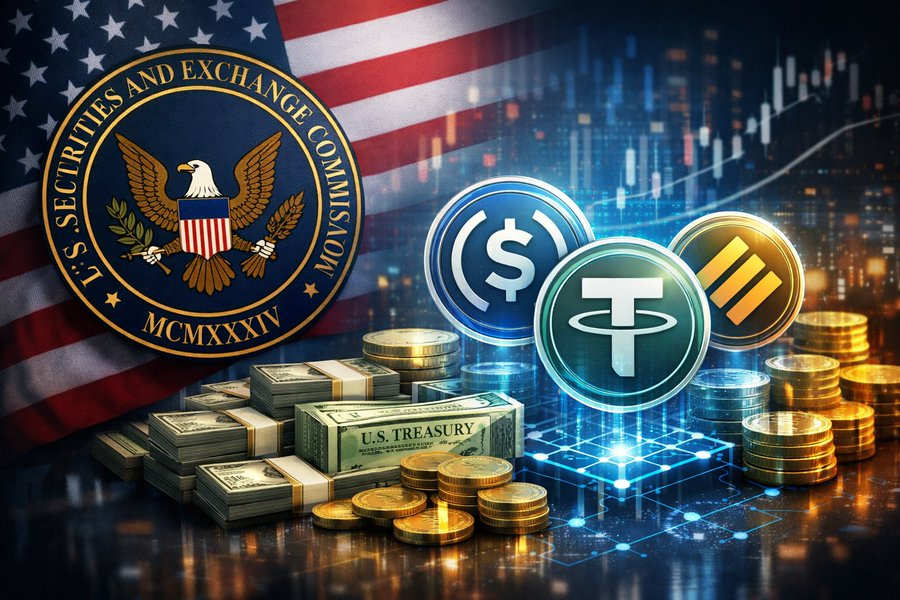
The update comes amid growing integration of blockchain technology into traditional finance, following the GENIUS Act's emphasis on stablecoin reserves.
SEC Commissioner Hester Peirce, in her statement titled "Cutting by Two Would Do," described the prior 100% haircut as "unnecessarily punitive," noting that stablecoins are backed by assets like U.S. dollars and short-term Treasuries, similar to money market funds, which also face a 2% haircut.
The Details: What the Guidance Means
Under Exchange Act Rule 15c3-1, broker-dealers must maintain a minimum net capital as a liquidity buffer to protect customers in case of financial distress.
This involves applying percentage deductions to asset values based on risk.
Previously, uncertainty led many firms to apply a full 100% haircut to stablecoins, effectively valuing them at zero for capital purposes. This made holding or using stablecoins, such as USDC or USDT, cost-prohibitive for activities like custody, settlement, or proprietary trading.
The new guidance clarifies that the SEC staff would not object if broker-dealers treat qualifying payment stablecoins as having a ready market and apply only a 2% haircut to the greater of their long or short proprietary positions.
To qualify, stablecoins must comply with GENIUS Act standards or equivalent criteria, including backing by high-quality reserves, par redemption, and monthly attestations by public accountants.
Industry reactions have been swift and positive:
- On X, Circle CEO Jeremy Allaire (implied in posts) hailed it as a big win for regulated stablecoins like USDC, noting it reduces capital costs and enables Wall Street's shift to blockchain infrastructure.
- Crypto commentator MartyParty called it a massive change, predicting easier liquidity provision and tokenized securities activity.
- Another post from Bhavesh Senedhun stated the SEC has erased the line between stablecoins and money market funds, making tokenized securities settlement commercially viable.
Analysts estimate this could free up substantial capital. By counting 98% of stablecoin values toward regulatory requirements, broker-dealers may expand into DeFi and tokenized assets, potentially injecting billions into the ecosystem.
However, the guidance is staff-level and reversible, not a formal rule, so firms should monitor for future updates or rulemaking.
Conclusion
The SEC's guidance marks a pivotal moment in bridging traditional finance and blockchain, reducing barriers for broker-dealers and fostering innovation in stablecoins.
By slashing the capital haircut to 2%, the agency is paving the way for broader adoption of digital assets, potentially transforming how institutions handle liquidity and settlements.
As Peirce suggested, this could lead to further rule amendments, but for now, it provides much-needed clarity.
Industry watchers will be keen to see how this unlocks new opportunities in tokenized markets and DeFi.
Read Next:
- U.S. Stablecoin Rules on Interest Yields
- BVNK's Stablecoin Utility Report 2026
- The U.S. Stablecoin Regulatory Reset
FAQs:
1. What is a capital haircut in SEC regulations?
A haircut is a percentage deduction applied to an asset's value in net capital calculations to account for risk, ensuring broker-dealers maintain sufficient liquidity.
2. What are payment stablecoins?
These are cryptocurrencies pegged to fiat currencies like the USD, backed by reserves such as cash or Treasuries, designed for payments and compliant with regulations like the GENIUS Act.
3. How does the 2% haircut differ from the previous treatment?
Previously, some firms applied a 100% haircut, valuing stablecoins at zero for capital purposes. Now, 98% of their value counts, making them more viable.
4. Will this boost DeFi and tokenized securities?
Yes, by freeing up capital, it could encourage broker-dealers to engage more with blockchain-based assets, unlocking liquidity and institutional adoption.
5. Is this guidance permanent?
No, it's staff-level and subject to change. Formal rulemaking may be needed for long-term stability.
Disclaimer:
This content is provided for informational and educational purposes only and does not constitute financial, investment, legal, or tax advice; no material herein should be interpreted as a recommendation, endorsement, or solicitation to buy or sell any financial instrument, and readers should conduct their own independent research or consult a qualified professional.