
Table of Contents
In a bold move set to reshape the digital finance landscape, Radius Technology has officially launched its innovative stablecoin network.
Announced on March 6, 2026, this EVM-compatible infrastructure is engineered specifically for stablecoins, promising unparalleled scalability and efficiency.
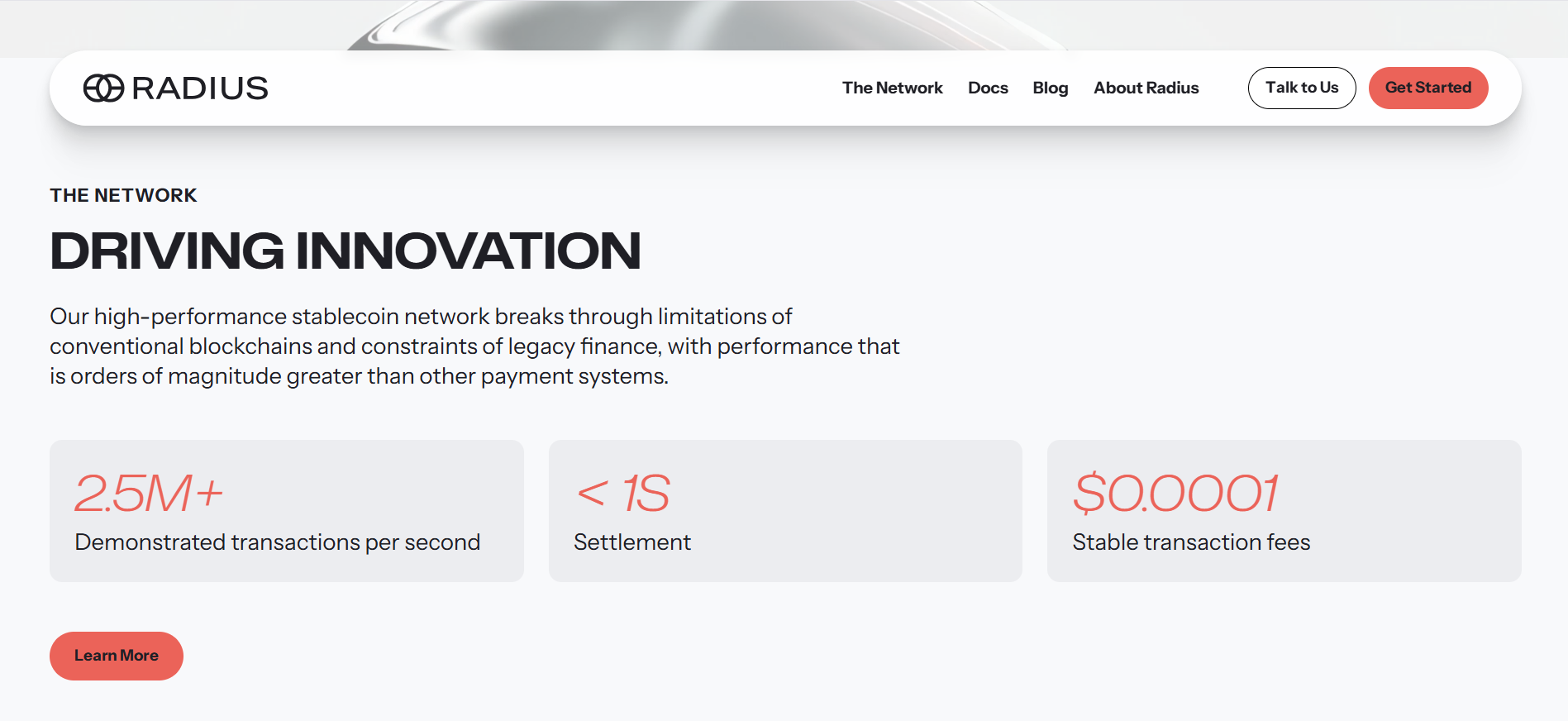
With independent sharding technology at its core, the network boasts an impressive throughput of up to 2.5 million transactions per second (TPS), a leap forward from traditional blockchain limitations.
Key Takeaways
- Unmatched Scalability: Up to 2.5 million TPS via independent sharding, outpacing legacy systems.
- EVM Compatibility: Seamless integration for developers and existing dApps.
- Cross-Chain Focus: Enables efficient, high-volume transfers across blockchains.
- AI-Ready Payments: Built for future AI agents in automated economies.
- Security-First Design: Advanced protocols to protect stablecoin transactions.

This launch comes at a pivotal time when stablecoins are exploding in popularity, powering everything from everyday payments to complex DeFi applications.
Radius Tech's solution addresses key pain points like congestion and high fees, focusing on high-volume cross-chain transactions and emerging AI-driven payment systems.
As global adoption of stablecoins surges, projected to reach trillions in market cap by 2030, this network positions itself as a foundational layer for a more interconnected and intelligent financial ecosystem.
Industry experts hail it as a game-changer, potentially accelerating the integration of blockchain with AI technologies for seamless, automated economies.
Key Features of the Radius Stablecoin Network
The network's standout feature is its independent sharding mechanism, which divides the blockchain into smaller, parallel-processing shards. This allows for massive scalability without compromising security or decentralization.
Unlike Ethereum's current setups, Radius's EVM compatibility ensures developers can easily port existing smart contracts, fostering rapid adoption.
High TPS is another highlight: At 2.5 million, it dwarfs competitors like Solana (65,000 TPS) or Visa (24,000 TPS), making it ideal for real-time applications.
Cross-chain functionality enables frictionless transfers between blockchains, reducing silos in the crypto space. Additionally, the platform incorporates AI-driven optimizations for payments, such as predictive routing and fraud detection, anticipating a future where AI agents handle trillions in autonomous transactions.
Radius Tech emphasizes security with advanced consensus algorithms and zero-knowledge proofs, ensuring stablecoin integrity amid regulatory scrutiny.
The infrastructure supports multiple stablecoins, including USDT and USDC, and is designed for enterprise-grade use cases like remittances, supply chain finance, and tokenized assets.
Implications for the Stablecoin Ecosystem
This launch signals a shift toward specialized blockchain networks tailored for specific assets like stablecoins.
As central bank digital currencies (CBDCs) and tokenized real-world assets gain traction, Radius's high-throughput design could handle the anticipated explosion in transaction volumes.
For instance, in AI-driven economies, where machines conduct micro-transactions, traditional networks would buckle under the load, Radius aims to thrive.
Experts predict this could lower barriers for institutional investors, driving mainstream adoption. However, challenges remain, including interoperability standards and energy efficiency, though Radius claims a 90% reduction in energy use compared to proof-of-work chains.
Conclusion
Radius Technology's stablecoin network launch marks a significant milestone in blockchain evolution, bridging the gap between current limitations and a hyper-connected future.
By prioritizing speed, scalability, and AI integration, it paves the way for stablecoins to become the backbone of global finance.
As the industry watches closely, this infrastructure could catalyze innovations in DeFi, payments, and beyond, ushering in an era of efficient, intelligent transactions.
Radius Tech is not just building a network, it's architecting the future of money.
Read Next:
- 9 Fastest-Growing Stablecoin Use Cases In 2026
- Top 10 Stablecoin Compliance Tools in 2026
- Solana's New Payments.org Just Changed Stablecoin Payments in 2026
FAQs:
1. What is Radius Technology's new stablecoin network?
It's an EVM-compatible blockchain infrastructure designed exclusively for stablecoins, featuring sharding for high scalability and AI-optimized payments.
2. How does sharding work in this network?
Independent sharding splits the blockchain into parallel segments, allowing up to 2.5 million TPS while maintaining security and decentralization.
3. What are the benefits for cross-chain transactions?
The network supports seamless, high-volume transfers between blockchains, reducing fees and delays for stablecoin users.
4. Is it suitable for AI-driven payments?
Yes, it's engineered for AI agents, enabling automated, predictive transactions in future economies with expanded stablecoin use.
5. When was the Radius stablecoin network launched?
It was unveiled on March 6, 2026, positioning it for rapid adoption in the growing stablecoin market.
Disclaimer:
This content is provided for informational and educational purposes only and does not constitute financial, investment, legal, or tax advice; no material herein should be interpreted as a recommendation, endorsement, or solicitation to buy or sell any financial instrument, and readers should conduct their own independent research or consult a qualified professional.