
Table of Contents
MoonPay held an official launch event in Seoul on September 29, 2026 for MoonPay Korea, positioning the country as the hub for its Asian expansion. The company detailed work with Woori Bank, KB Financial Group, KakaoBank, and fintech firm Finger. The stated aim is to connect its global payments and stablecoin infrastructure with Korean financial services.
The focus is cross-border flows rather than domestic trading: remittances for international students, payments by foreign nationals in Korea, and overseas payments by businesses. MoonPay also plans to build overseas distribution channels for won stablecoins.
That last part is conditional. Won stablecoins have not been issued, because South Korea has not finished the rules that would permit them, and MoonPay says it will expand gradually after meeting virtual asset service provider reporting requirements and other licensing obligations.
MoonPay is not building a product for the Korean market. It is building the export channel a won stablecoin would need on the day one exists.
Key Takeaways
- MoonPay launched MoonPay Korea at a Seoul event on September 29.
- Partners named are Woori Bank, KB Financial Group, KakaoBank, and Finger.
- The focus is overseas distribution and settlement for won-backed stablecoins.
- Won stablecoins are not yet issued under South Korean law.
- MoonPay is still pursuing the licences its Korean operations require.
What Each Bank Would Do
Woori Bank's role centres on combining its won-based financial infrastructure with MoonPay's international distribution and payment network, with its remittance infrastructure connected to that network. The two companies also plan to test business-to-business payments.
KB Kookmin Bank would examine on and off ramp infrastructure, wallets, stablecoin issuance and distribution, and overseas remittance and settlement services. That is a broader scope than Woori's, covering issuance rather than only distribution.
KakaoBank is the notable repeat name. It signed a separate agreement with Fireblocks last week on stablecoin custody and distribution frameworks, which we covered in our report on the KakaoBank Fireblocks MoU.
Everything Here Is Conditional
No won stablecoin exists in production form, so every service described depends on a legal framework that South Korea is still drafting. MoonPay's own language reflects that, describing plans that apply if the assets are issued under developing rules.
The company is also not yet fully licensed to operate. It said it will expand services in Korea gradually after satisfying applicable regulatory requirements, including VASP reporting and other registrations.
What was announced is therefore a set of intentions and partner relationships rather than a live service. That is normal at this stage of the Korean market and worth stating plainly.
Foreign Stablecoins Are Already There
The gap MoonPay is positioning for cuts both ways. While won stablecoins wait on legislation, dollar-denominated tokens have been reaching Korean retail through domestic exchanges.
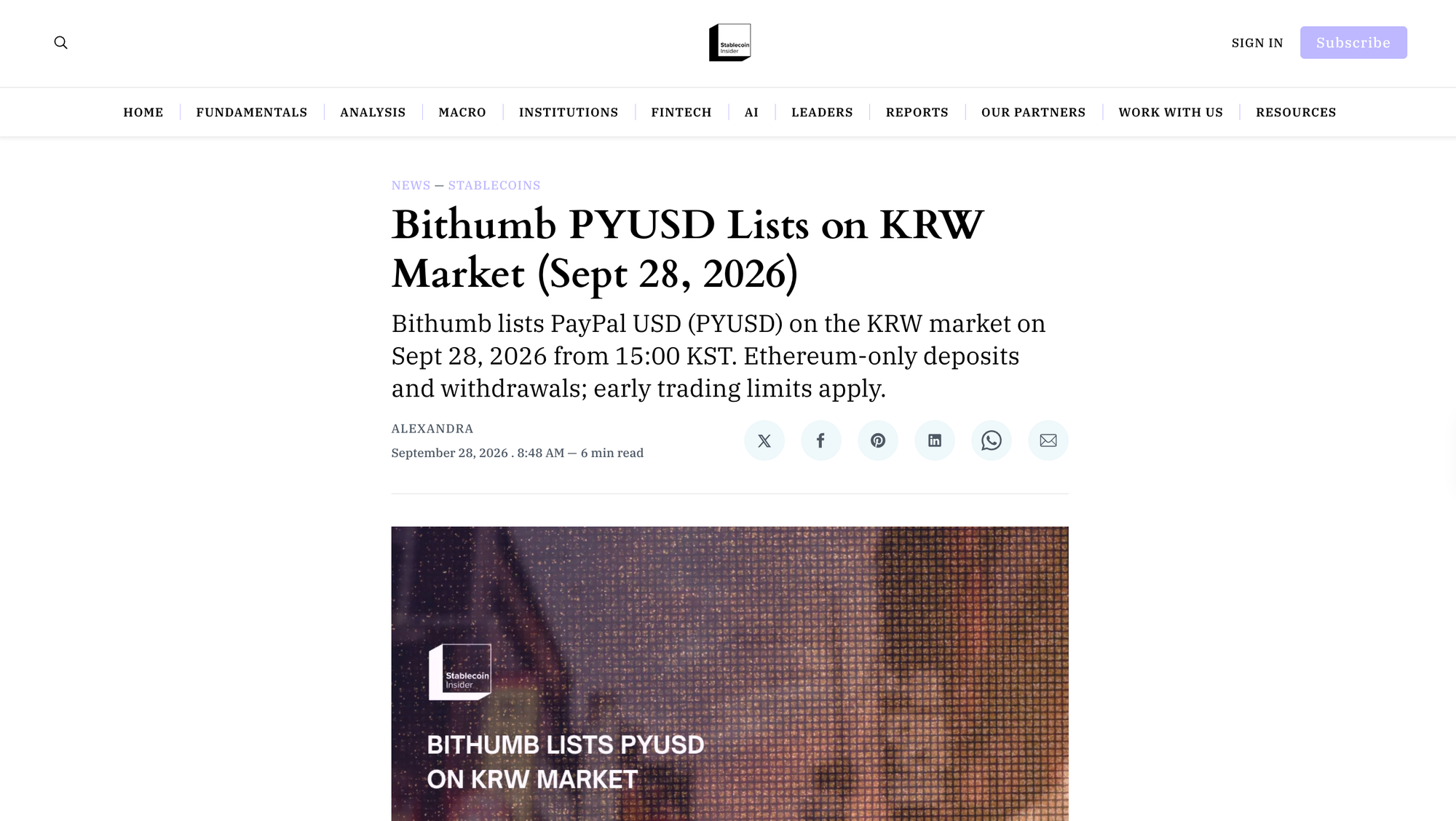
Bithumb listed PayPal USD on its won market yesterday, following Upbit's listings earlier this month, which we covered in our report on the PYUSD KRW listing. Korean users can buy a dollar stablecoin with won today and cannot buy a won stablecoin at all.
That asymmetry is the policy pressure behind every Korean initiative in this space, including this one.
The Korean Foothold Predates Today
MoonPay Korea is not new as an entity. The subsidiary announced its first banking memorandum with Woori Bank on April 30, naming the bank as the inaugural member of a KRW Stablecoin Consortium.
In April the company also teamed with Kosdaq-listed Sungho Electronics and its largest shareholder Seoryong Electronics to acquire Finger for 110 billion won, about $81 million. Finger appears again today among the named partners.
Today's event consolidated those threads into a single strategy with a wider partner set. The framing as a launch describes the public strategy rollout rather than the creation of the business.
The Infrastructure Behind It
MoonPay has been assembling institutional capability outside Korea in parallel. It launched MoonPay Trade in May as an execution platform for banks, fintechs, and enterprises, covering tokenized assets, stablecoin liquidity, and decentralised finance across more than 200 blockchain networks.
It also runs a US issuance platform offering white-label, full-reserve stablecoin launches, letting institutions mint, redeem, and manage tokens at scale. MoonPay Institutional, announced in April, is led by Caroline Pham, former acting chair of the US Commodity Futures Trading Commission.
The Korean plan uses those existing pieces rather than building new ones, which is why the announcement is about partnerships rather than technology.
Two Export Strategies Now Collide
If won stablecoins reach issuance, MoonPay wants overseas Koreans, students, and tourists to acquire, hold, and exchange them outside Korea through its wallet and ramp network. That is a currency export strategy built by a payments company rather than a state.
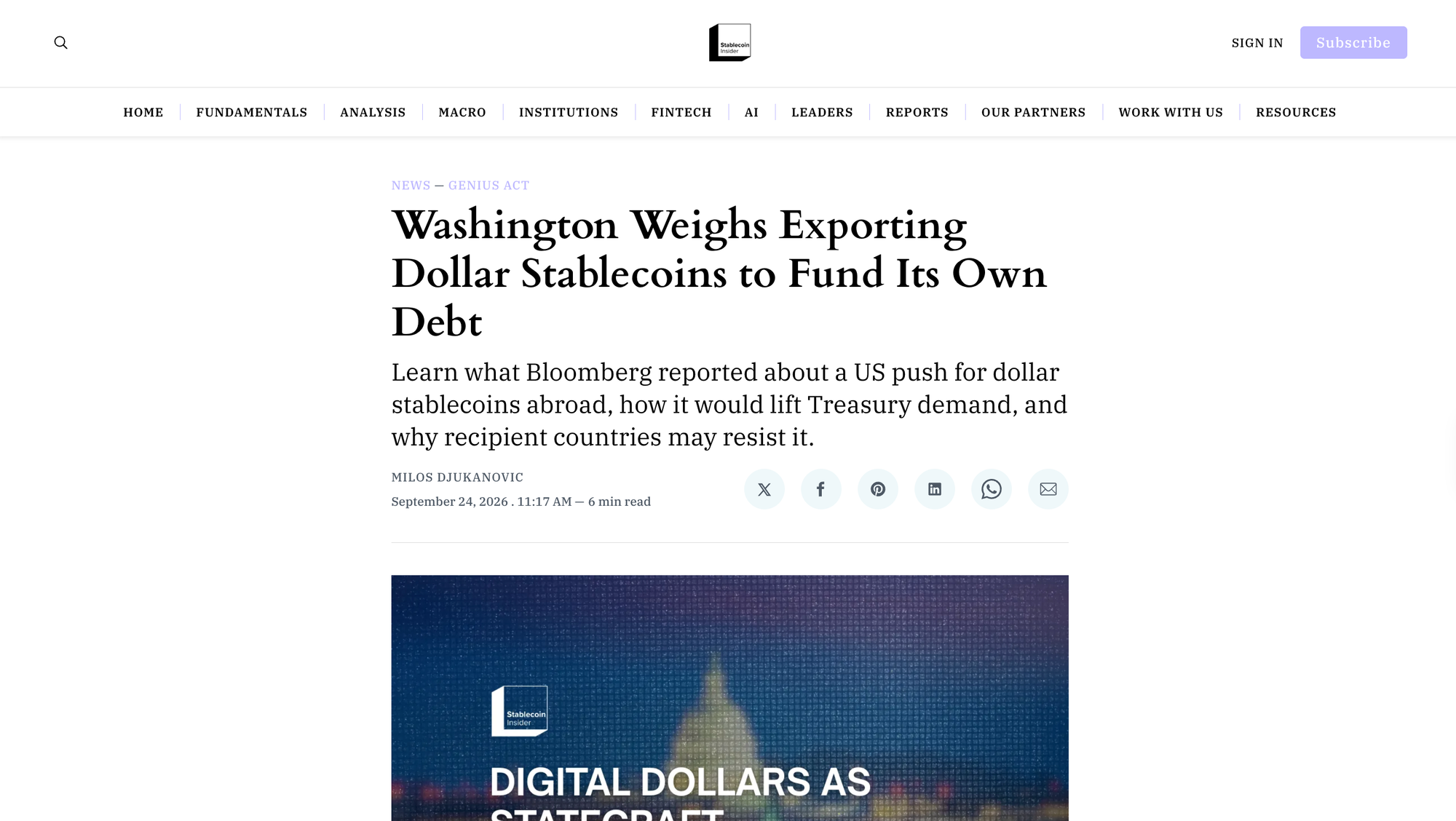
It runs directly into the dollar's incumbency. Washington is reported to be weighing its own initiative to spread dollar stablecoins internationally, which we covered in our report on the overseas dollar push, and dollar tokens already hold almost all global stablecoin supply.
FAQs:
1. What did MoonPay announce in Korea?
MoonPay held an official launch event in Seoul on September 29, 2026 for MoonPay Korea, setting out plans to make the country its Asian hub. It detailed work with Woori Bank, KB Financial Group, KakaoBank, and fintech firm Finger covering won stablecoins, cross-border payments, remittances, and digital asset infrastructure.
2. Can MoonPay distribute won stablecoins today?
No. Won-denominated stablecoins have not been issued under South Korean law, which is still being drafted. MoonPay's plans apply if and when those assets are issued, and the company says it will expand services gradually after meeting VASP reporting requirements and other licensing obligations.
3. What would each bank partner do?
Woori Bank would combine its won-based financial and remittance infrastructure with MoonPay's international distribution network, with business-to-business payment tests planned. KB Kookmin Bank would examine on and off ramp infrastructure, wallets, stablecoin issuance and distribution, and overseas remittance and settlement.
4. Is MoonPay Korea a new company?
The subsidiary was already established. It announced its first banking memorandum with Woori Bank on April 30, 2026, naming Woori as the inaugural member of a KRW Stablecoin Consortium, and MoonPay separately acquired Finger in April for 110 billion won, roughly $81 million.
5. Who would use a won stablecoin abroad?
MoonPay's stated targets are overseas Koreans, students, and tourists who would acquire, hold, and exchange the asset outside Korea through its wallet and ramp network. The company also names remittances for international students, payments by foreign nationals in Korea, and overseas business payments.
Disclaimer:
This content is provided for informational and educational purposes only and does not constitute financial, investment, legal, or tax advice; no material herein should be interpreted as a recommendation, endorsement, or solicitation to buy or sell any financial instrument, and readers should conduct their own independent research or consult a qualified professional.