Table of Contents
What's Actually Happening
Meta is reportedly planning to integrate stablecoin payments across its apps in the second half of 2026, working through a third-party vendor rather than launching its own token.
Rather than managing reserves or issuance, Meta's role centers on the user experience - most likely a built-in wallet across Facebook, Instagram, and WhatsApp.
One source close to the plans described the approach as deliberately "arm's length" - a phrase that says a lot about how much Meta learned from its last attempt.
This isn't purely hypothetical anymore, either.
Meta has already begun paying some creators in USDC through Stripe's Link wallets in markets like the Philippines and Colombia - an early, live test of the model before any broader rollout.
The Libra/Diem Flashback
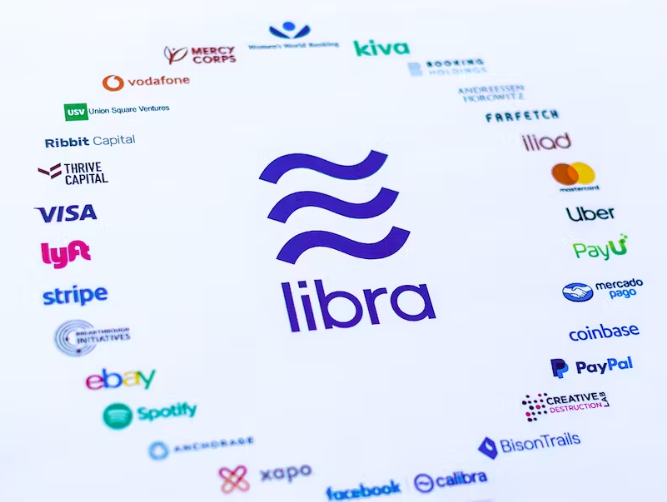
Rewind to 2019: Meta set out to act as something close to a quasi-central bank, building its own blockchain and a Swiss-based association to govern a new global currency. US and EU regulators saw a systemic threat to monetary sovereignty and shut it down within a few years, and the project died as Diem in 2022.
The lesson stuck.
This time, Meta isn't touching issuance, custody, or reserves at all.
Why the Arm's-Length Strategy Works Now
By outsourcing the infrastructure to specialized partners, Meta offloads the regulatory, compliance, and collateral-management burden entirely, positioning itself purely as a distribution and interface layer for stablecoins that are already regulated, like USDC or USDT, instead of trying to become an issuer itself.
That's only possible because the regulatory floor has changed.
The GENIUS Act has given the US a federal framework for stablecoin issuers for the first time, even as the finer points of implementing regulation are still being written.
Meta doesn't need to fight that framework anymore. It just needs a partner who already complies with it.
By the Numbers
- 3 billion+ - combined users across Facebook, Instagram, and WhatsApp who could gain stablecoin access in a single rollout
- H2 2026 - Meta's reported target window for launch
- 2019–2022 - the span from Libra's announcement to Diem's shutdown
- April 2025 - when Stripe CEO Patrick Collison joined Meta's board, deepening a relationship that predates any stablecoin talk
- 2 countries confirmed live - the Philippines and Colombia, where Meta creators are already being paid in USDC via Stripe's Link wallets
The Stripe/Bridge Angle
Stripe is the name that keeps surfacing as Meta's leading candidate, and the relationship runs deeper than a vendor contract.
Stripe's acquisition of stablecoin infrastructure firm Bridge, combined with CEO Patrick Collison joining Meta's board in April 2025, has quietly built the kind of institutional trust that a cold RFP process wouldn't (Yahoo Finance).
For Stripe, landing Meta would be a major proof point in its own stablecoin ambitions - validation that its post-Bridge infrastructure can handle payments at the scale of one of the largest consumer platforms on earth.
Scale Implications
Meta's apps serve more than 3 billion users combined. Even a modest rollout could open payment rails that reduce reliance on traditional banking infrastructure and cut transaction costs for cross-border transfers (The Paypers).
The likeliest early use cases: social commerce checkout, creator payouts (already underway), and remittances - all areas where Meta's existing user behavior maps neatly onto what stablecoins do well.
Open Questions
A lot is still unconfirmed.
Which stablecoin issuers Meta ultimately partners with, whether the wallet ends up custodial or user-controlled, which countries get first access, and what recovery policies apply when a transfer goes wrong are all still open (Daily Crypto Briefs).
There's also a harder question sitting underneath the branding: does routing everything through a centralized front end just turn on-chain money into a permissioned experience that only feels decentralized until it's inconvenient?
Specifically, watch for:
- Issuer selection - whether Meta standardizes on USDC, USDT, or supports multiple stablecoins across regions
- Wallet custody model - self-custodial wallets carry different risk and compliance profiles than custodial ones
- Geographic rollout order - early testing in the Philippines and Colombia suggests remittance corridors may come before US/EU consumer use
- Dispute and recovery policy - traditional payment rails have chargebacks and fraud protections; it's unclear what the stablecoin equivalent looks like inside Meta's apps
- Regulatory response - whether US and EU regulators treat "arm's length" as meaningfully different from Libra, or push back regardless
The Bigger Big Tech Picture
Meta isn't moving in isolation. PayPal, Visa, and Stripe have all expanded stablecoin operations over the past year, and Meta's re-entry fits a broader pattern of major consumer platforms treating stablecoins as payment infrastructure rather than crypto speculation (Yahoo Finance).
A few things make Meta's version distinct from its peers:
- Unlike Visa or Mastercard, which are building stablecoin-linked card rails, Meta is going wallet-first, embedding payments directly into social and messaging behavior it already owns
- Unlike PayPal, which issues its own stablecoin (PYUSD), Meta is explicitly avoiding issuance to sidestep the exact regulatory category that killed Libra
- Meta's scale is categorically different - no other consumer platform pursuing stablecoins operates at 3 billion-plus users
If Meta's arm's-length model succeeds, it likely becomes the template other large consumer platforms follow: don't issue, don't custody, just distribute.
Why This Matters
Big Tech distribution combined with already-regulated stablecoin infrastructure is one of the clearest signals yet of how stablecoins go mainstream - not through a new currency, but by quietly riding inside apps people already use every day. Worth revisiting once Meta names its jurisdictions and issuer partners.
Opportunities of the Month
Agentic Commerce Report
- In October, we are launching the Agentic Commerce Report, to span on products and stablecoin usage. Contact us below to be featured and be a Partner of the Report.
1 Free AI Audit
- Our team will conduct an in-depth review of your site, taking into account technical, on-site, off-site, AI visibility, and positioning, in order to improve the volume of inbound leads your company receives from search engines.
3 Founder Interviews
- Publish a featured interview of your founder on Stablecoin Insider to boost AI and Google visibility, along with a PR Release and Newsletter mention.
Partner/Advertise with Stablecoin Insider
Fill out this form to partner and advertise on the only publication, dedicated entirely to the Stablecoin ecosystem.
See you next week,
- The Stablecoin Insider team