Table of Contents
Decentralized Finance (DeFi) has introduced a fresh wave of financial advancements, enabling people to utilize financial services without depending on middlemen.
Among various protocols driving this change, Lava emerges as a strong platform providing diverse DeFi offerings, including lending, borrowing, staking, and managing assets. A core component of the Lava system is its own stablecoin: LavaUSD (LUSD).
LavaUSD is crafted to serve as a dependable, decentralized, and overcollateralized stablecoin that holds a 1:1 ratio to the US dollar.
In this piece, we'll explore LavaUSD in detail, covering its definition, functionality, benefits, applications, and prospects for this promising stablecoin.
Key Takeaways
- Decentralized Stability: LavaUSD offers a reliable, overcollateralized stablecoin pegged to the USD, emphasizing decentralization and transparency through smart contracts, setting it apart from centralized alternatives like USDC.
- Core Mechanisms: Minting requires at least 150% collateral in assets like ETH or LAVA, with burning and liquidation processes ensuring peg maintenance amid market volatility.
- Advantages for Users: Provides censorship resistance, risk buffering via overcollateralization, full on-chain visibility, and versatile integration for DeFi activities such as lending, yield farming, and payments.
- Practical Applications: Ideal for borrowing without selling assets, peer-to-peer transactions, and interoperability with other protocols, fostering broader adoption through potential partnerships.
- Risks to Consider: Includes collateral price fluctuations, smart contract vulnerabilities, and competitive market pressures, mitigated by audits and community oversight.
What is LavaUSD?
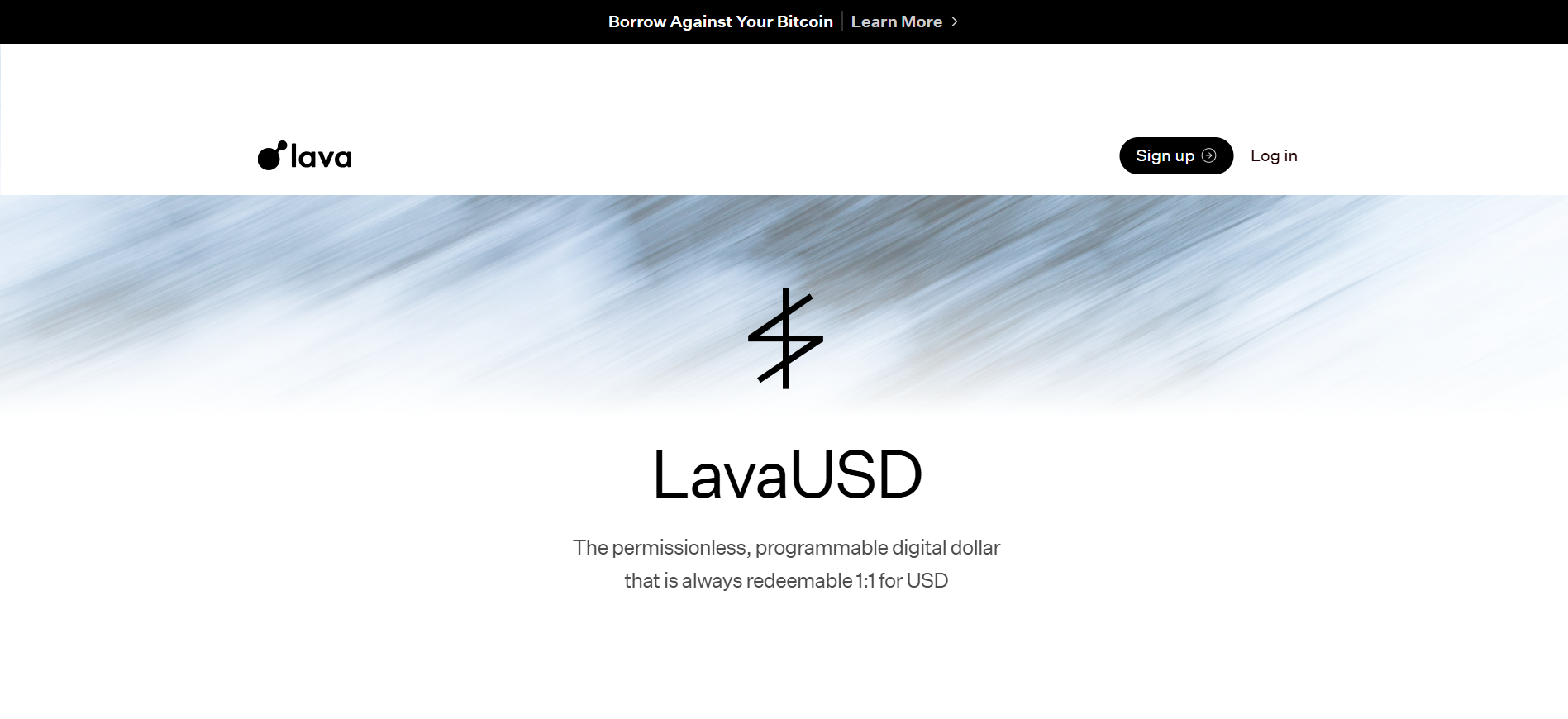
LavaUSD (LUSD) is a decentralized stablecoin developed by the Lava protocol. Similar to other decentralized stablecoins like DAI, LavaUSD seeks to offer users a digital asset that preserves its worth relative to the U.S. dollar, all while upholding decentralization and openness.
In contrast to centralized stablecoins such as USDC or USDT, which rely on fiat reserves managed by a single organization, LUSD is supported by cryptocurrency collateral stored in smart contracts.
Key Features of LavaUSD:
- Overcollateralized: Individuals need to lock in collateral valued at more than $1 (usually ETH or LAVA tokens) to create $1 of LUSD.
- Decentralized: No central body issues LUSD. All creation and redemption occur through smart contracts.
- Pegged to USD: Engineered to sustain a 1:1 alignment with the U.S. dollar via algorithmic and market-based methods.
- Transparent: Every transaction, collateral amount, and governance choice is openly accessible on the blockchain.
Comparison with Other Stablecoins:
- DAI: Comparable in its overcollateralized and decentralized nature, but supported by a wider variety of collateral options.
- USDC/USDT: Centralized stablecoins offering reduced transparency and potential for censorship.
How LavaUSD Works
Collateralization Mechanism
To generate LUSD, users deposit cryptocurrency assets, mainly ETH or LAVA, into a smart contract. The system mandates a collateralization ratio (for example, 150%), meaning that for each $1 of LUSD produced, the user must provide at least $1.50 in collateral value. This excess collateralization aids in preserving the protocol's stability and financial health, even amid market fluctuations.
Minting and Burning Process
- Minting: Upon depositing suitable collateral into the system, users can produce LUSD within the limits set by the collateral ratio.
- Burning: To recover their collateral, users repay the LUSD they created, which results in its destruction.
This process regulates LUSD's supply and supports its peg.
Stability Mechanisms and Peg Maintenance
LavaUSD upholds its dollar peg via a mix of:
- Market arbitrage: Traders purchase LUSD when its price dips below $1 and sell when it exceeds $1, restoring equilibrium.
- Liquidation processes: Should a user's collateral drop under the necessary level, the position gets liquidated to preserve the system's integrity.
- Incentive systems: The protocol might provide rewards like staking benefits or reduced charges to promote involvement and steadiness.
Smart Contract Infrastructure
All aspects of minting, burning, and collateral handling are managed by Ethereum smart contracts. These contracts undergo audits and are openly accessible, promoting transparency and lowering chances of tampering or deceit.
Unique Advantages of LavaUSD
Decentralization and Censorship Resistance
In contrast to centralized stablecoins that might be halted or restricted by the issuing entity, LUSD functions completely on the blockchain. This appeals to those who prioritize financial independence and wish to steer clear of dependence on central guardians.
Risk Management Through Overcollateralization
Overcollateralization acts as a safeguard against market instability. Even in severe price fluctuations, the system can stay viable, reducing the likelihood of the stablecoin losing its peg.
On-Chain Transparency
All LUSD-related transactions, including collateral ratios and liquidations, are openly observable. This transparency fosters confidence in the DeFi space and enables immediate verification.
Ecosystem Integration
LUSD is seamlessly embedded within the Lava protocol. It serves various DeFi purposes, such as:
- Lending and borrowing
- Yield farming and staking
- Payments and remittances
- Supplying liquidity on DEXs in the Lava network
Use Cases and Adoption
Lending, Borrowing, and Yield Farming
Users can secure LUSD loans using their crypto holdings and apply it to yield farming within the Lava environment or other DeFi platforms. This promotes efficient use of capital without liquidating base assets.
LavaUSD as a Payment Method
Due to its steadiness and blockchain-based operation, LUSD suits peer-to-peer transfers, business deals, and cross-border payments. Entities and independent workers in the crypto sector can rely on LUSD as a stable exchange medium.
Interoperability with Other Protocols
Owing to Lava's emphasis on composability, LUSD is built to work with other DeFi protocols and decentralized apps. This compatibility boosts its usefulness and drives wider acceptance.
Potential Partnerships or Integrations
Lava is pursuing collaborations with other protocols and services to broaden LUSD's presence. These encompass connections with decentralized exchanges (DEXs), wallet services, and payment systems.
Risks and Challenges
Collateral Volatility
Since LUSD depends on fluctuating crypto assets, rapid market drops may cause liquidations. While the setup is equipped to manage these, intense occurrences could affect the stablecoin's reliability.
Smart Contract Vulnerabilities
As with any DeFi system, Lava faces dangers from smart contract flaws or attacks. Consistent audits and community monitoring are vital to address these threats.
Market Competition
LUSD joins a competitive field with entrenched rivals. To thrive, it needs to deliver distinctive benefits and develop a dedicated community.
Future Outlook
Roadmap for LavaUSD and Lava Protocol
The Lava team has detailed a plan featuring:
- Broadening the types of accepted collateral
- Introducing a DAO for governance
- Enhancing user experience and mobile features
- Enabling cross-chain functionality for LUSD
Governance Improvements
Upcoming changes will implement decentralized governance tools, letting token owners decide on protocol settings, enhancements, and new collateral additions.
Potential for Market Leadership
Should LavaUSD expand its ecosystem, sustain stability, and earn trust, it could emerge as a top DeFi-originated stablecoin, especially for those desiring a censorship-proof option over centralized ones.
Conclusion
LavaUSD transcends being merely another stablecoin, it embodies a careful fusion of decentralization, safety, and practicality. Through the use of overcollateralization, clear smart contracts, and robust ecosystem connections, it tackles numerous flaws in both centralized and decentralized stablecoins.
As DeFi progresses, stablecoins like LavaUSD will be pivotal in facilitating novel financial engagements.
For those who appreciate openness, interoperability, and durability, LavaUSD presents an attractive choice that distinguishes itself in the growing stablecoin arena.
Read Next:
- Ethena's Staked USDe Stablecoin: Complete Review in 2025
- Uniswap Cross-Chain Aggregator: Full Review and Guide (2025)
- Understanding Rebase Tokens: The Next Wave in Flexible Cryptocurrency
- How to Earn 10%+ APY on Stablecoins Using Trusted Protocols
FAQs:
1. What exactly is LavaUSD and how does it differ from other stablecoins?
LavaUSD (LUSD) is a decentralized stablecoin from the Lava protocol, pegged 1:1 to the USD and backed by crypto collateral like ETH or LAVA tokens. Unlike centralized options like USDC, it's fully on-chain for transparency and resistance to censorship, similar to DAI but with Lava's unique integrations.
2. How do you mint and burn LavaUSD?
To mint LUSD, deposit overcollateralized assets (at least 150% ratio) into a smart contract. Burning involves repaying the minted amount to reclaim collateral, which helps regulate supply and maintain the USD peg through market dynamics.
3. What are the main benefits of using LavaUSD in DeFi?
Key advantages include decentralization for financial freedom, overcollateralization to buffer against market dips, full on-chain visibility for trust, and seamless use in lending, yield farming, payments, and liquidity pools within Lava's ecosystem.
4. What risks come with LavaUSD?
Primary risks involve collateral price swings leading to liquidations, potential smart contract exploits (mitigated by audits), and competition from established stablecoins, requiring users to monitor market conditions closely.
5. What's next for LavaUSD and the Lava protocol?
The roadmap features expanded collateral options, DAO governance for community decisions, better UI and mobile access, plus cross-chain support to boost interoperability and position LUSD as a top DeFi stablecoin.