
Table of Contents
Republican lawmakers in 2025 have aggressively pursued legislation to halt the development of central bank digital currencies (CBDCs) while bolstering frameworks for private digital assets.
This strategy, highlighted by House-passed bills and President Trump's executive actions, aims to prevent government-issued digital dollars that could enable surveillance, instead favoring profit-driven innovations from private companies like stablecoin issuers.
As of November 2025, these moves position the U.S. as a leader in decentralized finance, potentially reshaping global money transfers amid ongoing debates over privacy and economic efficiency.
Key Takeaways
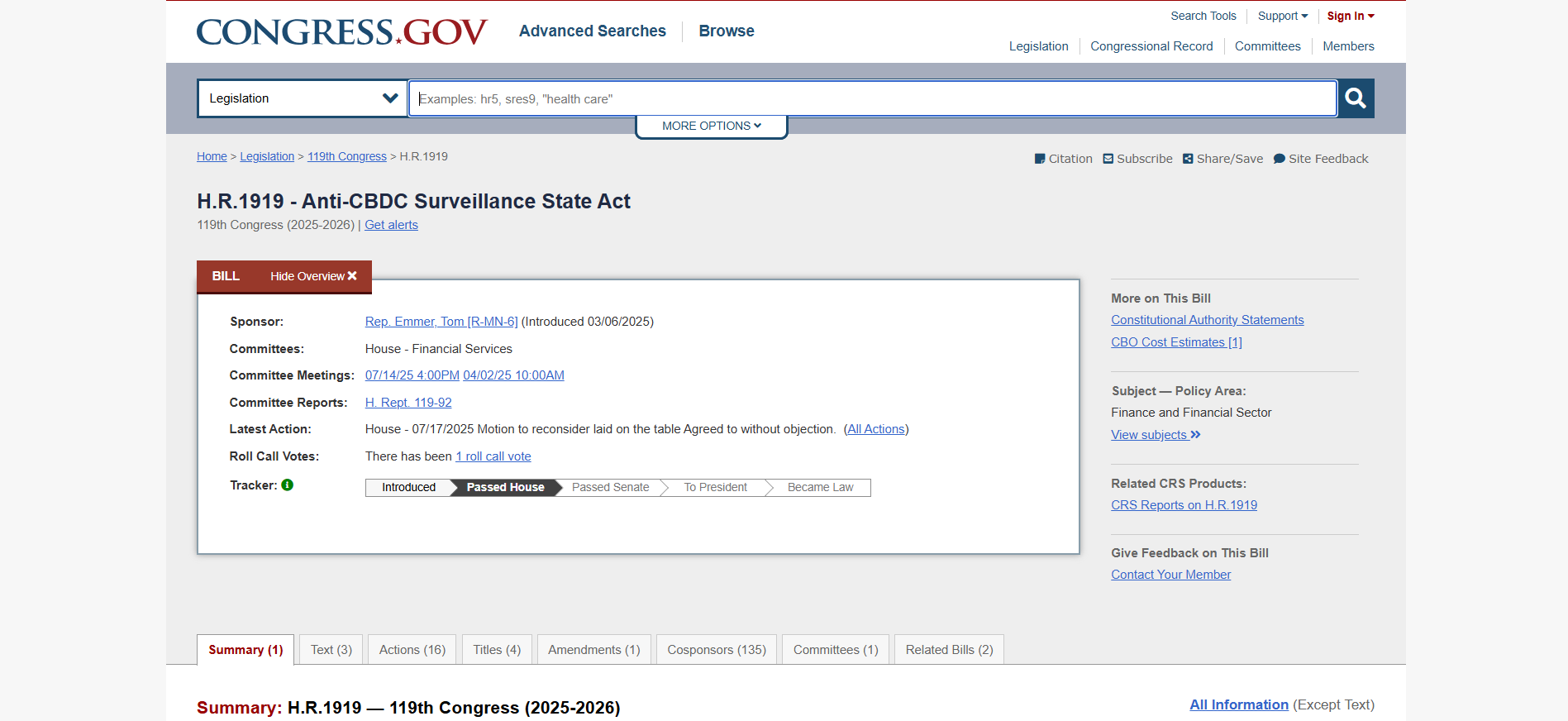
- The Anti-CBDC Surveillance State Act (H.R. 1919) passed the House in July 2025, banning the Federal Reserve from issuing or piloting CBDCs without congressional approval, emphasizing privacy protections.
- President Trump issued Executive Order 14178 in January 2025, prohibiting federal agencies from advancing CBDCs and promoting U.S. leadership in private digital assets.
- Landmark crypto legislation, including the GENIUS Act (S.1582), was signed into law by Trump in July 2025, establishing regulations for stablecoins and granting the Commodity Futures Trading Commission (CFTC) oversight of digital commodities.
- These efforts create a de facto monopoly for private stablecoin providers like Tether and Circle, enabling efficient, profit-oriented digital transfers while sidelining central bank competition.
- Critics argue this could heighten financial volatility, but supporters highlight benefits for innovation and reduced government overreach, with broader implications for consumer protections and global finance.
Background on CBDCs and GOP Opposition
Central bank digital currencies represent government-backed digital versions of fiat money, such as a potential digital U.S. dollar, designed for seamless transactions but raising alarms over privacy.
Republicans, led by figures like Rep. Tom Emmer, have long opposed CBDCs, viewing them as tools for excessive surveillance akin to China's digital yuan, which tracks user spending in real-time.
Pre-2025 debates intensified during the Biden administration, with concerns that CBDCs could erode financial anonymity and enable government control over personal finances.
The GOP's stance aligns with broader advocacy for decentralized alternatives, arguing that private digital money fosters competition and efficiency without centralized risks.
Key Legislation and 2025 Developments
The year 2025 marked a flurry of GOP-led actions against CBDCs. In February, Sen. Mike Lee reintroduced the No CBDC Act (S.464), aiming to permanently codify restrictions on the Federal Reserve's involvement in digital currencies.
By July, dubbed "Crypto Week" in Congress, the House passed the Anti-CBDC Surveillance State Act (H.R. 1919), sponsored by Rep. Warren Davidson, which prohibits the Fed from offering CBDC services to individuals or holding related accounts.
This bill advanced alongside the GENIUS Act and the CLARITY Act (H.R. 3633), creating regulatory clarity for stablecoins and digital assets.
In August, lawmakers embedded CBDC bans into the 2026 defense budget via the SPEED Act, signaling bipartisan momentum. President Trump's January executive order further halted all federal CBDC studies, reinforcing these legislative wins.
Fed Chair Jerome Powell has echoed this, stating no plans for CBDC development amid the bans.
Favoring Private Digital Money and Stablecoins
By blocking CBDCs, GOP legislation effectively hands the reins of digital transfers to private entities, empowering stablecoin issuers to dominate the market.
- Stablecoins, pegged to assets like the U.S. dollar, offer efficient, low-cost transactions without government interference, potentially undercutting traditional banks.
Companies such as Circle (issuer of USDC) and Tether stand to gain a monopoly on profit-driven digital money, with the GENIUS Act providing a stable regulatory environment that encourages innovation.
This aligns with Trump's vision of U.S. leadership in blockchain, as outlined in his executive order, which promotes private-sector advancements across financial technologies.
The result?
Faster adoption of private digital assets, transforming everyday payments and cross-border transfers.
Pros, Cons, and Broader Implications
Proponents, including the American Bankers Association, praise the bans for safeguarding privacy and spurring economic growth through private innovation. They argue that stablecoins enhance efficiency and financial inclusion via profit incentives.
However, critics warn of risks like market volatility, reduced access for unbanked populations, and potential instability without central oversight.
- Globally, this positions the U.S. against CBDC adopters like the EU's digital euro, potentially influencing international standards
- Domestically, it could accelerate crypto integration but raises questions about consumer protections in a deregulated landscape
Conclusion
The GOP's 2025 push to block CBDCs while empowering private stablecoins marks a decisive pivot toward decentralized, market-led digital finance.
With Trump's executive order and landmark bills like the Anti-CBDC Act now in play, the U.S. is charting a course that prioritizes innovation over central control.
As Senate deliberations continue, stakeholders should watch for regulations that could redefine money transfers for generations.
Read Next:
- Stablecoins vs. CBDCs
- Best Strategies for Converting Fiat to Stablecoins in 2025
- How to Integrate USDC into Your E-Commerce Platform with Stripe
- Best Crypto Cross-Chain Bridges in 2025
- Symbiosis Finance Cross-Chain Aggregator: Full Review and Guide (2025)
FAQs:
1. What is the main goal of the GOP's Anti-CBDC bills?
The primary aim is to prohibit the Federal Reserve from issuing or researching central bank digital currencies (CBDCs), citing risks to privacy and financial freedom, while fostering a regulatory environment for private stablecoins.
2. How do these bills benefit private companies like stablecoin issuers?
By blocking CBDCs, the legislation eliminates government competition, allowing private firms to dominate digital transfers with profit-focused models, potentially leading to faster innovation and efficiency in payments.
3. What are the key privacy concerns with CBDCs mentioned in the GOP legislation?
Opponents argue CBDCs could enable government surveillance of all transactions, similar to China's digital yuan, eroding the anonymity of cash and threatening individual liberties.
4. What recent actions has President Trump taken on CBDCs in 2025?
In January 2025, President Trump issued Executive Order 14178 barring federal agencies from studying CBDCs, aligning with GOP bills and reinforcing support for private digital assets.
5. Could banning CBDCs impact everyday consumers and the economy?
Yes, it might promote private stablecoins for quicker digital payments but could also increase reliance on volatile crypto markets, potentially affecting financial stability and access for those without private digital wallets.