
Table of Contents
Brussels, 2026.
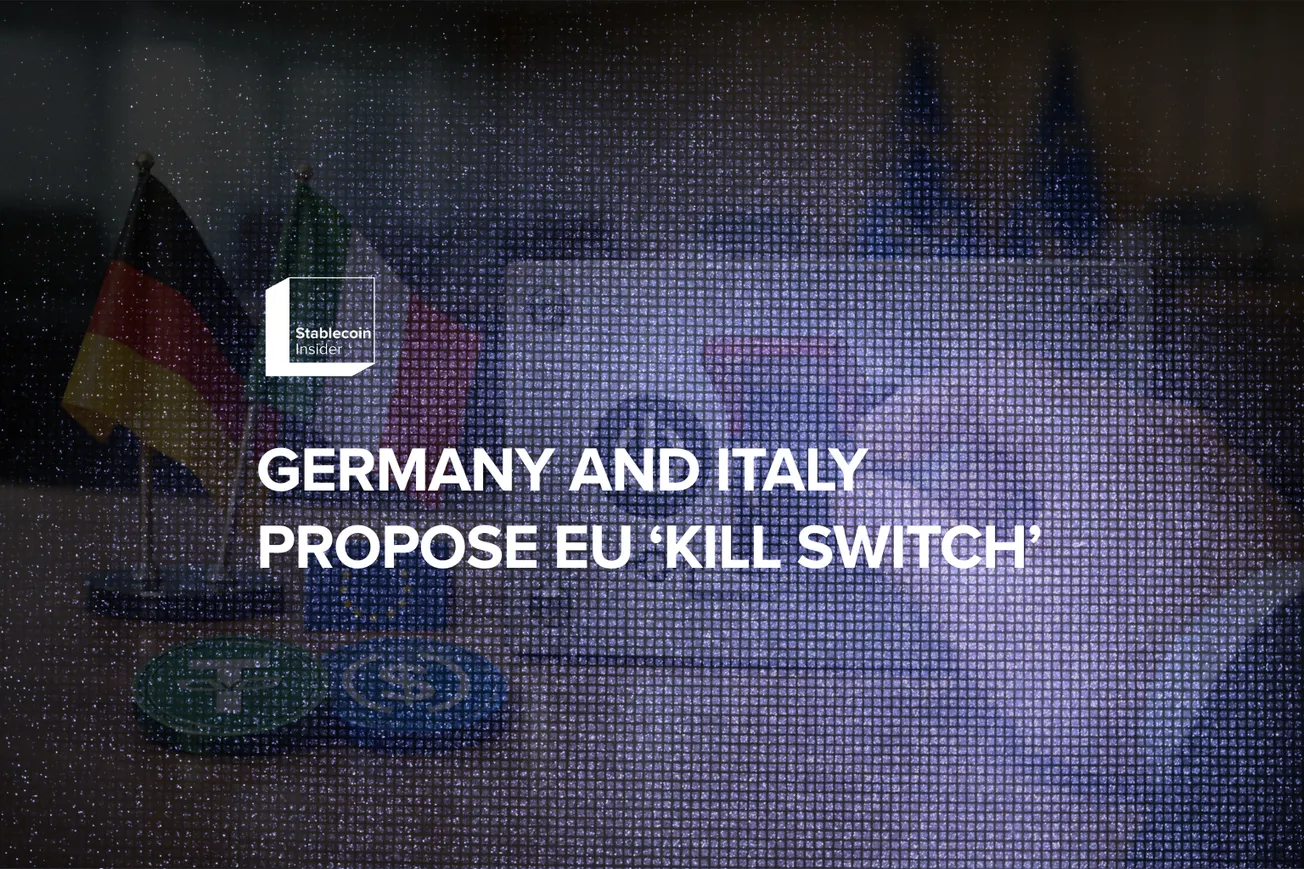
Germany and Italy have jointly called for sweeping new EU authority to bar foreign stablecoin operators from the bloc unless their home-country regulations are judged equivalent to European standards.
The proposal, outlined in a joint discussion paper circulated on 27. March 2026 and first reported today by Euronews, would hand regulators a mandatory “kill switch” to ban non-compliant stablecoins, especially multi-issuer, dollar-pegged tokens, amid growing concerns over financial stability and EU sovereignty.
Key Takeaways
- Equivalence regime: Foreign stablecoin operators, particularly multi-issuer dollar-pegged schemes, would be blocked from the EU market unless their home-country rules are formally deemed equivalent to MiCAR.
- Mandatory EBA ‘kill switch’: The European Banking Authority must ban non-compliant stablecoins if reserves cannot be instantly mobilised or if issuers breach rules or harm EU holders.
- Automatic supervision: Cross-border multi-issuer participation would trigger “significant” status and direct EBA oversight from the outset.
- Stability focus: The proposal directly addresses ESRB-flagged risks of liquidity shortfalls and potential bank-run-style contagion in split-reserve structures.
- Geopolitical angle: Framed around EU financial sovereignty, the move could effectively exclude major US-based dollar stablecoins until regulatory alignment occurs.
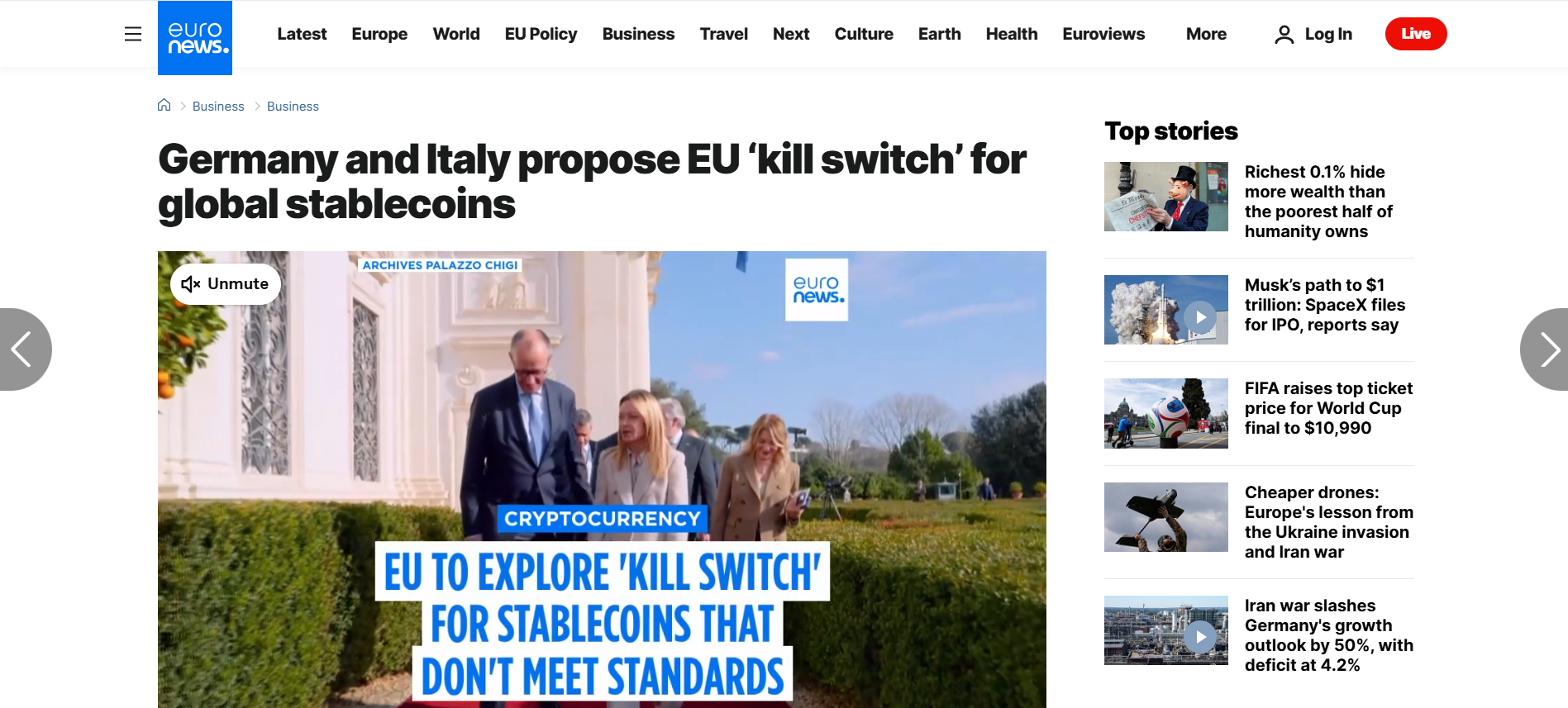
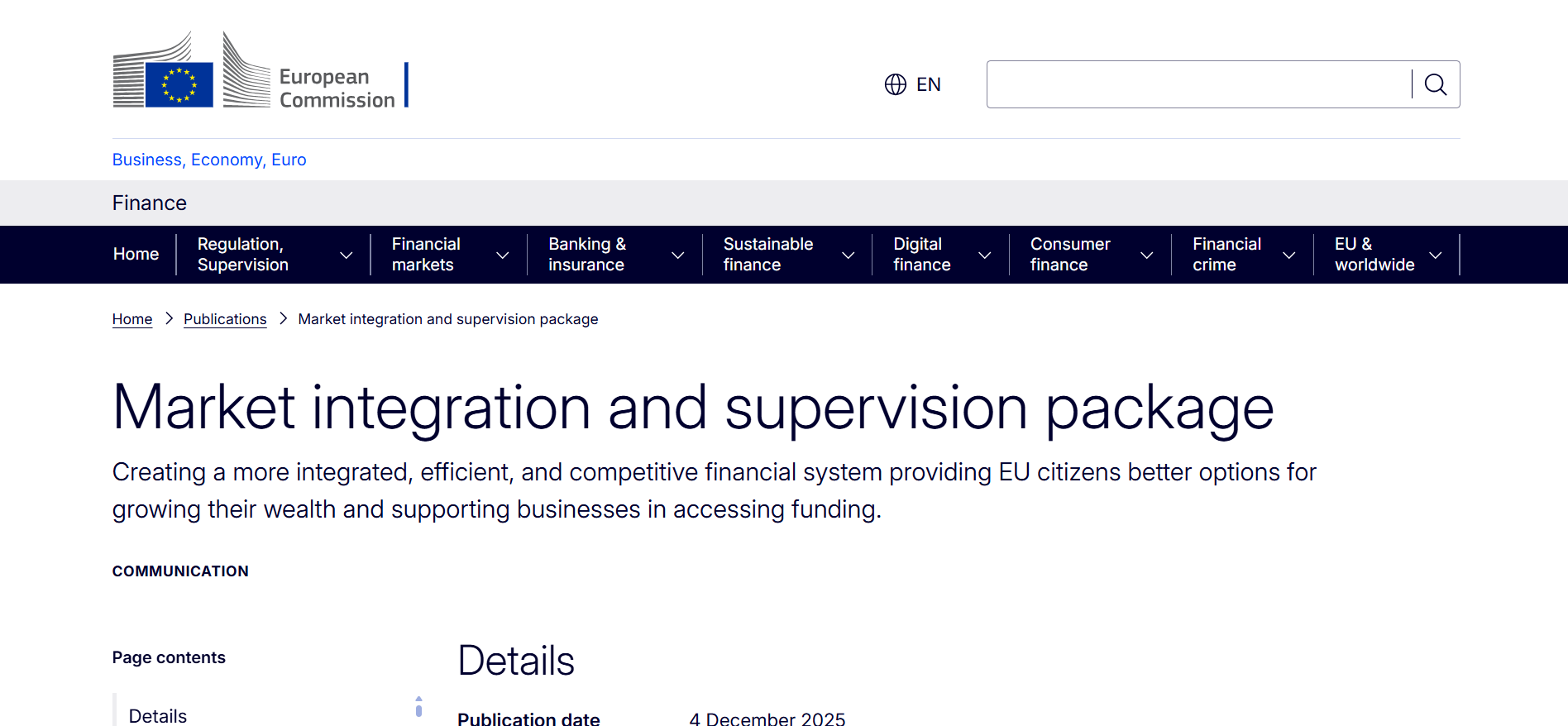
The non-paper was submitted ahead of working-party talks on the EU’s Market Integration and Supervision Package (MISP). It shifts the debate on global stablecoins from technical details to high-level political priorities, building on the bloc’s existing Markets in Crypto-Assets Regulation (MiCAR), which took effect in 2024.
Stablecoins are cryptocurrencies engineered to maintain a steady value, most often pegged to the US dollar or euro and backed by reserves of cash or cash equivalents. The Germany-Italy proposal focuses on “multi-issuer” schemes in which a single fungible token is issued simultaneously by entities in the EU and third countries, with reserves split across jurisdictions.
According to the document, such structures create inherent vulnerabilities. If EU holders rush to redeem tokens during stress, the European portion of reserves may prove insufficient, while funds held abroad could face legal or operational barriers to rapid transfer.
The paper stresses the need for guaranteed, instantaneous cross-border mobilisation of reserves “without legal or operational barriers” in times of crisis.
Under the proposed framework, any third-country multi-issuer stablecoin operator would be prohibited from offering services in the EU unless the European Commission formally determines that the home jurisdiction’s regulatory regime is equivalent to MiCAR. Without equivalence, currently absent in the United States, home to the largest dollar-pegged stablecoins, market access would be denied.
The European Banking Authority (EBA) would receive a hard “kill switch.” It would be required to ban a stablecoin outright if:
- the reserve transfer mechanism fails;
- the issuer seriously breaches its home-country rules; or
- there is evidence the issuer is acting against the interests of EU token holders.
The proposal would also automatically classify participation in any third-country multi-issuer scheme as “significant,” triggering direct EBA supervision from day one regardless of the token’s size or transaction volume.
The push comes after repeated warnings from the European Systemic Risk Board (ESRB), which has highlighted the financial-stability risks of multi-issuer structures and urged safeguards by the end of 2026, with further measures by 2027. Germany and Italy argue these recommendations must now be hard-wired into ongoing MISP negotiations.
“To ensure the stability and sovereignty of the EU financial system, it is imperative to establish a comprehensive and harmonized regulatory framework for global stablecoins from third-country multi-issuance schemes,” the joint paper states. “Timing is key and we should act soon to address the financial stability and consumer protection risks posed by the multi-issuance scheme.”
The initiative, backed by the eurozone’s two largest economies, is expected to carry significant weight in Brussels even though it does not yet represent an agreed EU position.
Conclusion
Germany and Italy’s proposal marks a decisive step toward closing perceived gaps in Europe’s crypto-asset rulebook.
By demanding regulatory equivalence and equipping the EBA with an enforceable kill switch, the two countries aim to protect consumers, safeguard financial stability, and reinforce EU strategic autonomy in the global digital-finance race.
Whether the full EU adopts these measures will shape how, and whether, the world’s largest stablecoins can operate inside the bloc in the years ahead.
Read Next:
FAQs:
1. What are multi-issuer stablecoins and why does the EU want to regulate them?
Multi-issuer stablecoins are tokens issued jointly by EU and non-EU entities with reserves split across borders. The EU is concerned that in a crisis, European holders may not be able to redeem tokens quickly if funds are trapped abroad.
2. How would the proposed ‘kill switch’ work?
The European Banking Authority would be legally required to ban a stablecoin if its reserve-transfer mechanism fails, the issuer breaks home rules, or it acts against EU token-holder interests.
3. Would this ban major dollar stablecoins like USDT or USDC?
Potentially yes. Because the United States currently lacks an equivalent regulatory framework to MiCAR, the proposal could prevent major US-dollar stablecoins from operating in the EU until equivalence is granted.
4. How does this relate to existing EU rules?
It builds on MiCAR (2024), which already sets reserve and governance standards for EU issuers, but plugs gaps for cross-border multi-issuer schemes outside full EU jurisdiction.
5. When could these rules take effect?
The measures are being pushed for inclusion in the current Market Integration and Supervision Package negotiations, with ESRB-recommended safeguards targeted for implementation by the end of 2026.
Disclaimer:
This content is provided for informational and educational purposes only and does not constitute financial, investment, legal, or tax advice; no material herein should be interpreted as a recommendation, endorsement, or solicitation to buy or sell any financial instrument, and readers should conduct their own independent research or consult a qualified professional.