


Table of Contents
Cheyenne, Wyoming, August 2025:
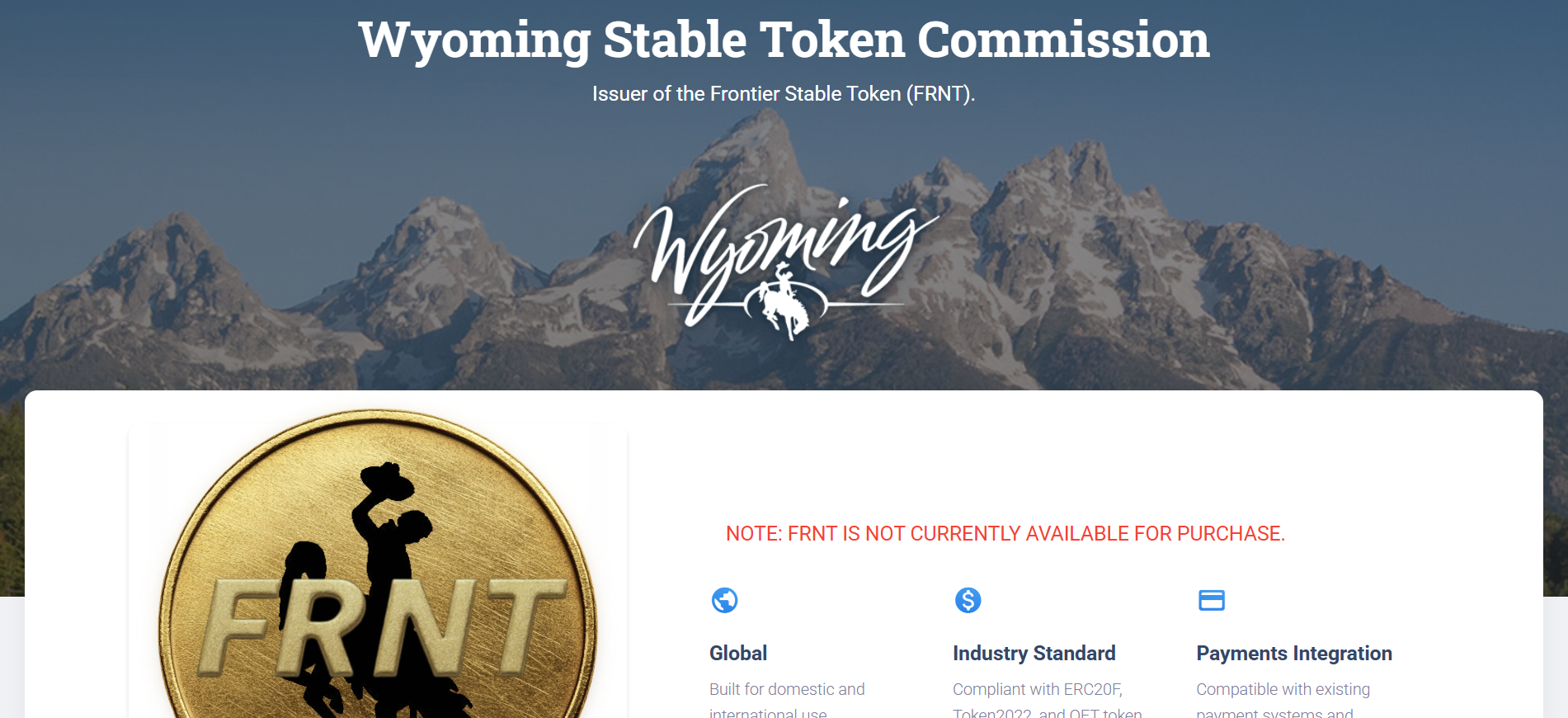
In a historic first for the United States, the Wyoming Stable Token Commission officially launched FRNT (Frontier Stable Token)
Backed 102% by cash and short-term U.S. Treasuries, instantly transferable across seven major blockchains, and carrying transaction fees under one cent, FRNT is being hailed as the opening shot in a new era of sovereign digital dollars.
The launch, quietly executed in August after a successful July pilot on Avalanche, marks the culmination of Wyoming’s decade-long crusade to turn the Cowboy State into the crypto capital of America.
Key Takeaways
- FRNT is the first U.S. public entity-issued stablecoin, fully reserved and overcollateralized at 102%.
- Transactions settle in seconds for under $0.01 across Ethereum, Solana, Avalanche, Arbitrum, Base, Optimism, and Polygon.
- Interest from Treasury reserves will fund Wyoming public schools, no new taxes required.
- Spendable worldwide via Visa-backed Rain cards from day one.
- Other states are already studying the model, setting the stage for a potential federation of state-backed digital dollars.
Background: From Bitcoin Cowboys to Sovereign Stablecoins
Wyoming has passed more than 45 blockchain-enabling laws since 2016, created the nation’s first crypto-bank charter (SPDI), and attracted heavyweights like Kraken and Ava Labs.
In 2023, the Wyoming Stable Token Act allocated $5.8 million and established an independent commission to design and issue a state-backed digital dollar.
Governor Mark Gordon, speaking at the SALT Blockchain Symposium in August, called FRNT “the logical next step after recognizing Bitcoin as property and chartering crypto banks.”
The token’s executive director, Anthony Apollo, told reporters the goal was simple: “Give citizens and institutions a stablecoin they can trust more than any private issuer, because it’s issued by a state, not a company.”
A July 2025 pilot using the prototype WYST token proved the concept: the state cut vendor payment times from 45 days to seconds using Avalanche’s Hashfire subnet, saving thousands in administrative costs.
How FRNT Actually Works
- Backing & Reserves: 100% cash and short-term U.S. Treasuries + mandatory 2% overcollateralization (102% total). Reserves are managed by Franklin Templeton subsidiary Franklin Advisers; monthly attestations are performed by accounting firm The Network Firm.
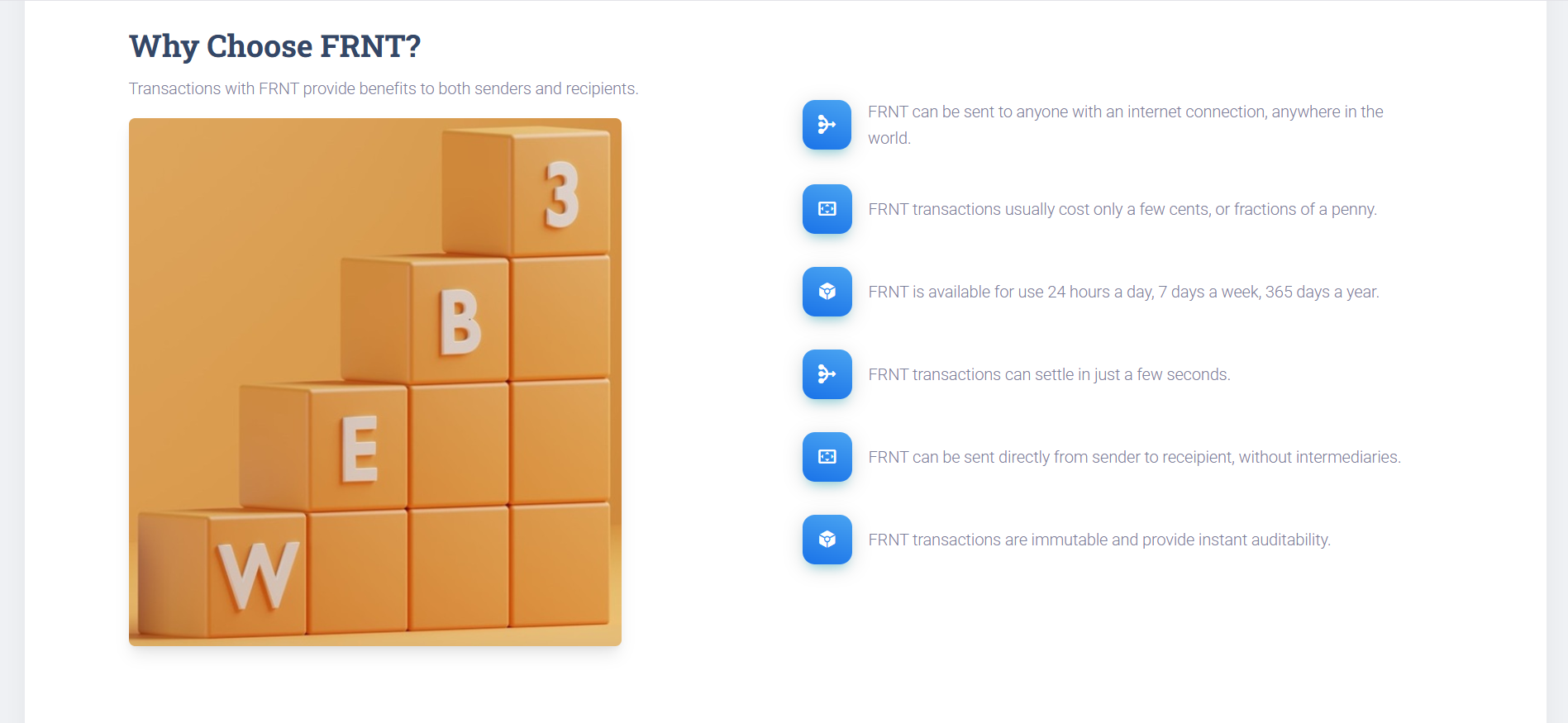
- Omnichain from Day One: Built on LayerZero’s Omnichain Fungible Token (OFT) standard, FRNT moves natively between Ethereum, Solana, Avalanche, Arbitrum, Base, Optimism, and Polygon without wrapped versions or liquidity pools.
- Cost: On-chain transfers cost less than $0.01 regardless of amount.
- Real-World Spending: At launch, users can load FRNT onto Rain cards (Visa-backed) for everyday purchases anywhere Visa is accepted.
- Initial Availability: Kraken listed FRNT on Solana at mainnet launch; additional exchanges and wallets are in the pipeline.
- Regulatory Edge: Thanks to the federal GENIUS Act passed earlier in 2025, state-issued stablecoins are explicitly exempt from Federal Reserve oversight, giving Wyoming freedom private issuers lack.
Implications: Schools Funded by Yield, States Eyeing Their Own Tokens
Because FRNT’s reserves are invested in Treasuries, the interest earned flows directly into Wyoming’s public school foundation, potentially millions per year with no taxpayer cost.
Other states are watching closely: sources tell us Texas and Florida legislative staff have already reached out to the Wyoming commission for technical and legal blueprints.
The stablecoin market, currently $260 billion and projected to surpass $1 trillion by 2030, has been dominated by private issuers Tether (USDT) and Circle (USDC).
FRNT’s arrival introduces the first government competitor with sovereign credit quality and zero issuer default risk.
Critics, including Cardano founder Charles Hoskinson, have warned that state-issued tokens could “re-centralize money under political control.”
Wyoming officials counter that monthly public audits and overcollateralization provide more transparency than most private stablecoins offer today.

Conclusion
FRNT is more than a new stablecoin, it’s Wyoming’s declaration that states, not just Silicon Valley startups or the federal government, can lead the next chapter of money.
With private stablecoins under increasing regulatory scrutiny and central-bank digital currencies years away, America’s least populous state just positioned itself at the center of the global digital-dollar race.
As Governor Gordon put it at the launch event:
“We were the last frontier once. Now we’re building the next one.”
Read Next:
- OpenOcean vs Symbiosis Finance: Which Offers Better Stablecoin Rates?
- How to Buy Euro Stablecoins in 2025
- Stablecoin Tax Guide 2025: Reporting and Tools for Compliance
- The Future of Stablecoins: What's Next in 2026 and Beyond
FAQs:
1. What is FRNT, and when did Wyoming launch this state-backed stablecoin?
FRNT (Frontier Stable Token) is the first stablecoin ever issued by an American state. It launched on mainnet in August 2025, pegged 1:1 to the U.S. dollar and fully backed by cash and U.S. Treasuries.
2. How is FRNT backed, and is it safer than USDT or USDC?
FRNT is backed 102% by U.S. dollars and short-term Treasuries held in custody by Franklin Advisers. Monthly independent audits and overcollateralization make it arguably the most transparent and lowest-risk stablecoin available.
3. Can I actually spend FRNT like cash, and how much do transfers cost?
Yes, load FRNT onto a Rain card and spend anywhere Visa is accepted. On-chain transfers cost less than one cent and settle in seconds across seven blockchains.
4. Why isn’t FRNT regulated by the Federal Reserve?
The 2025 federal GENIUS Act explicitly exempts state-issued stablecoins from Fed oversight, giving Wyoming the green light to innovate faster than private issuers bound by heavier regulation.
5. Will Texas, Florida, or other states launch their own versions soon?
Momentum is building. Legislative teams from multiple states have already contacted Wyoming’s commission, and industry sources expect at least one additional state stablecoin announcement in 2026.