
Table of Contents
The “40% APY stablecoin strategy” on Berachain is best understood as a stacked carry trade: base stablecoin yield plus PoL incentives, governance-token rewards, points, and managed leverage, all executed on institutional-grade infrastructure.
This article breaks that stack down into transparent components so you can see exactly where the returns come from and what risks sit underneath them.
Key Takeaways
- Berachain’s Proof-of-Liquidity (PoL) pushes block rewards to liquidity providers, not idle stakers.
- HONEY and other stablecoins (BYUSD, NECT, rUSD) anchor most yield strategies on Berachain.
- Base stablecoin yields come from LP fees and products like an 11.5% fixed-rate rUSD vault.
- “Up to 40% APY” is a managed vault outcome that stacks incentives, governance tokens, and leverage.
- The strategy is high-complexity, high-risk carry, not a simple savings product.
Why Institutions Care About Berachain Stablecoin Yields

Berachain is explicitly designed so that the best returns live in DeFi, not just in staking the native token. Proof-of-Liquidity (PoL) redirects a significant portion of block rewards to liquidity providers and integrated dApps, aligning the incentive structure with liquidity and real usage.
Two data points show why this matters to professional desks:
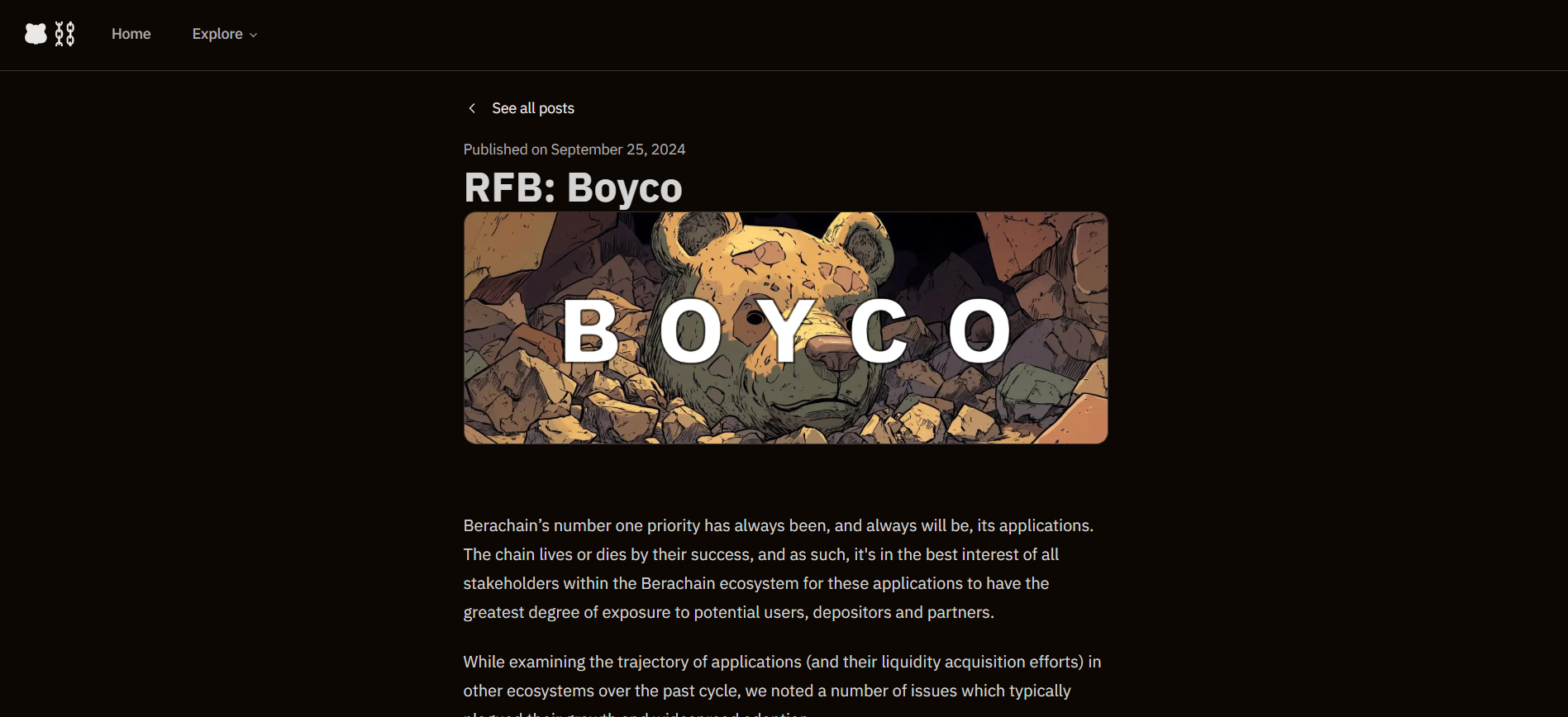
- Boyco’s pre-deposit campaign attracted over 2.3 billion USD in TVL and roughly 155,000 users before mainnet.
Large tranches came from institutional-facing platforms like ether.fi, StakeStone, CIAN, Lombard, Solv and Ethena, signaling that professional capital is already positioned to farm Berachain incentives.
- Fireblocks: custody and infrastructure for trading firms, banks, fintechs, and hedge funds, has integrated Berachain and highlights specific flows like providing HONEY–USDC liquidity on BEX and staking LP tokens into PoL Reward Vaults.
In a world where cash and T-bills yield around 4–5%, a system that natively supports higher, protocol-driven stablecoin yields is naturally interesting to funds that specialize in structured carry.
The Building Blocks: Berachain’s Stablecoin Stack and PoL
The Tri-Token Model: BERA, BGT, HONEY
Berachain’s core token architecture:
- BERA: gas and security token used for fees and validator staking.
- BGT: non-transferable governance and reward token, emitted via PoL and burnable 1:1 into BERA.
- HONEY: fully collateralized, USD-soft-pegged native stablecoin, central to the ecosystem’s liquidity.
Simplified PoL flow:
- Validators stake BERA and receive BGT block rewards.
- They route BGT into approved Reward Vaults attached to whitelisted dApps.
- Liquidity providers deposit LP tokens into those vaults.
- LPs earn pool fees plus BGT emissions.
The result: capital that supports liquidity and usage receives more rewards than passive stake.
HONEY and the Surrounding Stablecoins
HONEY:
- Fully collateralized by whitelisted assets.
- Soft-pegged to USD.
- Minted by depositing collaterals such as USDC, BYUSD (PayPal USD), USDT0 and USDE.
- Mint fee: 0%; redemption fee: 0.05%, routed to BGT holders.
- Basket Mode diversifies redemptions across the basket if a single collateral de-pegs.
Around HONEY, several stablecoins form the yield stack:
- BYUSD: PayPal USD bridged onto Berachain. Its BYUSD/HONEY LP holds 200m+ USD in TVL and is associated with PoL incentive APR in the 3–10% band, on top of trading fees; it’s positioned for large, more patient positions.
- NECT: Beraborrow’s stablecoin, minted against income-generating collateral such as LP tokens. NECT can be staked as sNECT and directed into BGT reward vaults or Infrared auto-compounders.
- rUSD: Reservoir’s stablecoin. It powers rUSD–HONEY LP exposure, a fixed 11.5% APR GoldiVault, and leveraged srUSD loops with up to about 7× leverage.
These tokens and their LPs are the primary “raw materials” used to assemble high-yield strategies.
Base Yield: Stablecoin LPs and Vaults
Before adding PoL, governance tokens or leverage, there is a fundamental stablecoin yield layer.
Representative components:
- HONEY–USDC LP on BEX
- Provide liquidity to the HONEY–USDC pool.
- Earn swap fees from traders.
- Stake LP tokens into PoL Reward Vaults to earn BGT on top of fees.
- BYUSD/HONEY LP
- TVL above 200 million USD.
- PoL APR typically fluctuating around 3–10%, plus normal LP fees.
- Explicitly marketed for “large and stable” capital allocations.
- rUSD GoldiVault
- Offers 11.5% fixed APR on rUSD deposits.
- Additional upside can come from tokenized yield and associated points.
Across Berachain, plus integrations that tokenize yield or slice it into tranches, base stablecoin APYs in the high single digits to low double digits are common for incentivized stable pools.
The 40% number only shows up when additional layers are stacked on top.
Adding PoL Incentives, BGT Flywheel and Points
BGT and iBGT: The Incentive Layer
BGT is the principal reward token emitted by PoL. When LP tokens are deposited into Reward Vaults, they accrue BGT alongside pool fees or vault interest.
Wrapped BGT (iBGT) adds another dimension:
- iBGT can be staked to earn additional yield.
- At certain moments, iBGT staking APR has been reported north of 100%, driven by early-phase emissions and bribe dynamics.
For an institutional desk, that means a two-part return profile:
- Stablecoin carry (in HONEY, BYUSD, NECT, rUSD, etc.).
- Variable, often volatile return in BGT/iBGT and related ecosystem tokens, which can be hedged, sold, or deployed to influence governance outcomes.
Auto-PoL Farming via Set & Forgetti
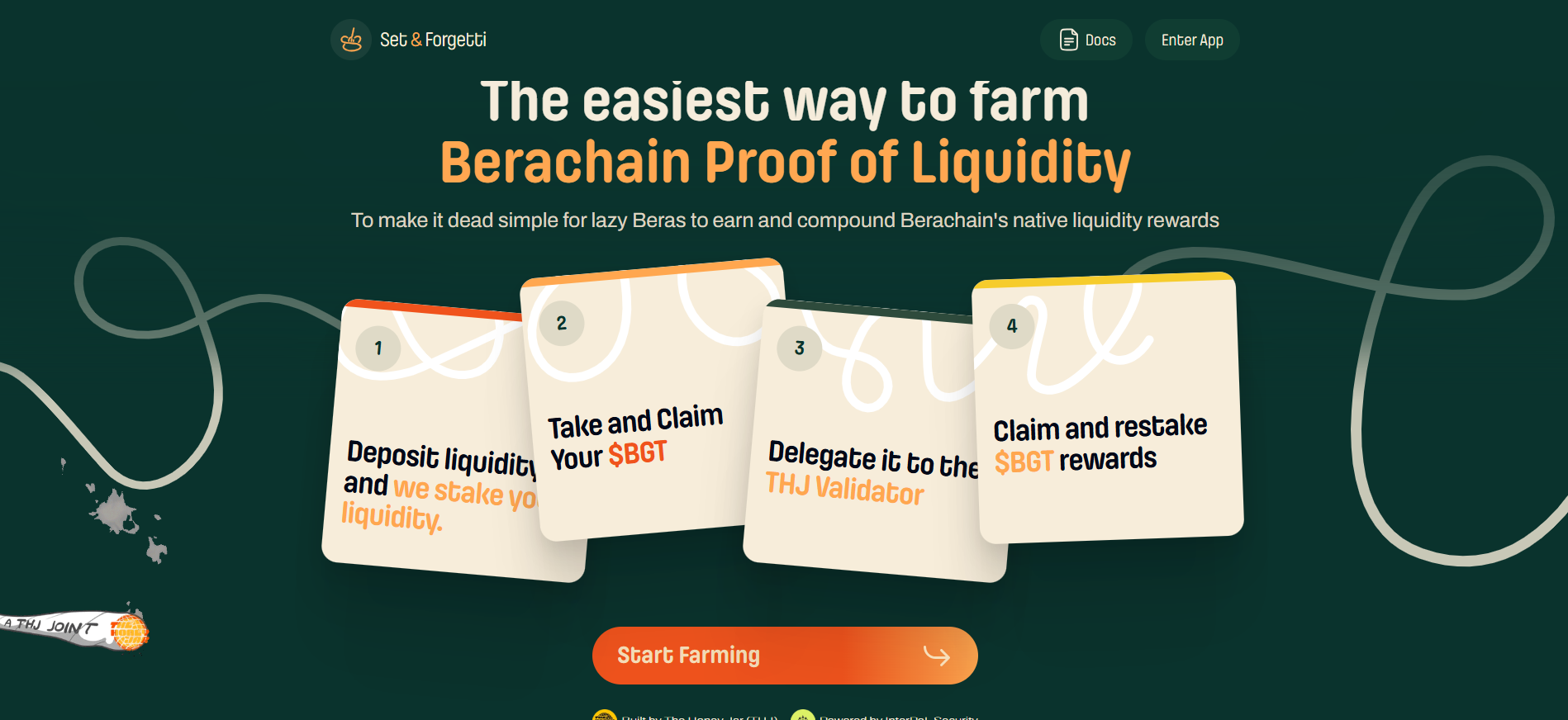
Set & Forgetti (from The Honey Jar) abstracts away much of the operational complexity:
- Users deposit once; the protocol handles LP staking, BGT management, and reward compounding.
- Fee model: 0% on deposits/withdrawals, 2% only on earned rewards.
- The Boyco Deposit Vault takes USDC, pairs it with HONEY, allocates to the HONEY/USDC pool on Beraswap, stakes into a Stable Farm to earn PoL rewards, and autocompounds into HENLO plus BERA.
- Deposits into this vault were capped at 42m USDC and locked for three months from mainnet.
This is exactly the sort of infrastructure that lets funds run PoL strategies at meaningful scale with manageable operational overhead.
Stablecoin Strategy Menu on Berachain
Common elements you’ll see in Berachain stablecoin strategies:
- NECT: minted from income-generating collateral, staked as sNECT to earn BGT, and often run through Infrared auto-compounders.
- rUSD: split between rUSD–HONEY LP exposure, the 11.5% fixed APR GoldiVault, and srUSD leverage loops.
- BYUSD: BYUSD/HONEY LP with high TVL and PoL APR in the 3–10% range.
- NECT / USDC.e / HONEY pool: a three-token stable pool that is PoL-whitelisted and pays rewards in staked BERA plus protocol points.
Each component introduces additional sources of “hidden APY,” including governance tokens, yield tokens, and points that may be relevant for future airdrops or governance decisions.

The “Up to 40% APY” Stack: Beraborrow’s Managed Leverage Vault
The explicit “up to 40% APY” figure is associated with Beraborrow’s Managed Leverage Vault.
Publicly described features include:
- Single deposit, “no liquidation risk,” and no lock-up period.
- Targeted up to 40% APY returns plus Infrared points.
- Support for stablecoins, BTC/ETH liquid staking tokens, and LP combinations.
Under the hood, the vault typically:
- Accepts capital from users, including auto-transferred funds from Boyco pre-deposits.
- Allocates collateral into income-generating positions (such as LP tokens or yield-bearing tokens).
- Mints NECT against that collateral.
- Deposits NECT into a Liquidity Stability Pool to earn sNECT.
- Auto-compounds sNECT rewards back into the strategy.
This structure blends:
- Base stablecoin yield (e.g., the 11.5% fixed APR rUSD GoldiVault).
- PoL rewards in BGT on the underlying positions.
- Additional iBGT/BGT staking yield (triple-digit APR at some snapshots).
- Points from partners like Infrared and other incentive programs.
The 40% APY is not a fixed rate; it is an upper-range marketing figure for the vault’s blended performance under favourable conditions, reflecting stacked incentives and moderate leverage on top of a stablecoin-heavy core.
How Hedge Funds Actually Plug Into This
While specific hedge funds can’t be named from on-chain data, the infrastructure they would use is clear:
1. Custody & Infrastructure
- Use institutional custodians such as Fireblocks that support Berachain connectivity.
- Configure policy controls, approval flows, and transaction whitelists aligned with internal governance.
2. Sourcing & Bridging Capital
- Acquire stablecoins (USDC, BYUSD, etc.) through exchanges or existing DeFi venues.
- Bridge assets to Berachain using supported bridges, often integrated with Boyco or similar tooling.
3. Liquidity & PoL Exposure
- Provide liquidity to pools like HONEY–USDC, BYUSD/HONEY, NECT/USDC.e/HONEY.
- Stake LP tokens into PoL Reward Vaults or use Set & Forgetti-style auto-compounders for large, stable allocations.
4. Leverage & Managed Vaults
- Route part of the portfolio into Beraborrow’s Managed Leverage Vault to consolidate NECT minting, stability pool deployment, sNECT auto-compounding, and point farming into one strategy.
- Treat the vault as an actively managed stablecoin carry product with embedded leverage.
5. Risk & Reporting
- Implement position limits per protocol, token, and strategy.
- Hedge volatile token exposure where feasible and apply conservative valuation to governance tokens and points until realized.
- Integrate on-chain positions into internal risk, compliance, and reporting line items.
From an operational view, this is closer to running a credit and derivatives portfolio than simply “farming yield.”
Risks and Stress Scenarios
Any honest analysis has to surface the main risk vectors behind the 40% figure.
1. Smart-Contract & Protocol Risk
- Strategies span several smart contracts and protocols (BEX, Boyco, Set & Forgetti, Beraborrow, Infrared, etc.).
- Berachain has already navigated an exploit incident related to Balancer infrastructure and recovered around 12.8m USD, underscoring both technical risk and the importance of response capability.
2. Stablecoin & Basket Risk
- HONEY’s strength depends on the quality and correlation of its collateral basket. Basket Mode mitigates single-asset depegs but not systemic shocks.
- BYUSD’s risk profile links to PayPal USD’s design and backing; rUSD and NECT rely on their own collateral, oracle, and liquidation logic.
3. Incentive & Emission Risk
- High early-phase yields are driven by generous PoL emissions and partner incentives. Over time, governance typically reduces emissions, compressing yields.
- As TVL grows, the same reward budget is divided among more capital, mechanically lowering APY.
4. Leverage & Correlation Risk
- Managed leverage can amplify returns in benign markets, but also magnifies losses when correlated assets move together or collateral underperforms.
- “No liquidation risk” usually refers to internal design choices; capital can still suffer impairment through mark-to-market losses or systemic events.
5. Regulatory & Operational Risk
- Institutions must navigate KYC/AML, capital controls, and varying legal treatment of DeFi yield and governance tokens.
- Tax and accounting complexity increases with multiple layers of yield, token incentives, and cross-chain flows.
For serious capital, the “up to 40% APY” label is a starting point for risk modelling, not an endpoint.
How to Evaluate Any “Secret APY” Strategy on Berachain
A practical framework:
- Base yield first: identify the stablecoin yield from LP fees or fixed-rate vaults before incentives and leverage.
- Map PoL exposure: list which Reward Vaults are involved and their current BGT APR.
- Decompose token mix: separate stablecoin returns from returns paid in volatile governance or ecosystem tokens.
- Flag leverage: identify any explicit or implicit leverage (NECT, srUSD, looped LP positions, rehypothecation).
- Count protocol hops: track how many contracts and multisigs capital passes through. More hops generally mean more attack surface.
- Check constraints: note caps, lock-ups, withdrawal conditions (e.g., Boyco 3-month lock), and fees at every layer.
This decomposition turns marketing language into a series of quantifiable risk-return components.

Conclusion
The “secret 40% APY stablecoin strategy” on Berachain is not one magical farm but a layered construct: base stablecoin carry, PoL-driven BGT rewards, governance-token and point incentives, and managed leverage bundled into products like Beraborrow’s Managed Leverage Vault.
Its building blocks: HONEY, BYUSD, NECT, rUSD, BGT, iBGT, auto-compounders, and stability pools, are real but volatile and policy-dependent, making this a high-complexity carry trade that demands careful risk analysis, not a simple yield opportunity to chase blindly.
Read Next:
- Stablecoins x Tokenized Finance in 2026: Here's What's Coming
- The Neobank Transition Report
- 2025 Stablecoin Spending Report
FAQs:
1. How do investors actually reach up to 40% APY on Berachain stablecoins?
They reach it by stacking base stablecoin yield, PoL rewards, governance-token yield, points, and moderate leverage in managed vaults like Beraborrow’s strategy.
2. Is the Berachain 40% APY strategy suitable for regular retail users?
It isn’t, because the strategy uses multiple protocols, complex contracts, changing incentives, and leverage that make it high risk and hard to manage.
3. Which stablecoins are the core of Berachain’s high-yield strategies?
They mainly use HONEY, BYUSD, NECT, and rUSD as the stablecoin base for LPs, vaults, and leveraged loops.
4. Are 20-40% APY stablecoin yields on Berachain sustainable long term?
They usually aren’t, because most of the yield comes from early incentive programs and emissions that tend to drop over time.
5. What should I check before using any “secret APY” stablecoin vault on Berachain?
You should check the collateral, leverage, involved protocols, reward tokens, fees, lock-ups, and how easily you can exit the position.