Table of Contents
On January 29, 2026, Aleo, a leader in zero-knowledge technology, partnered with Toku, a global compliant stablecoin payroll platform, and Paxos Labs, a regulated stablecoin issuer, to launch the world's first fully private stablecoin payroll solution.
This initiative integrates Aleo's privacy infrastructure into Toku's payroll system, enabling enterprises to process payroll using stablecoins while maintaining transaction confidentiality.
The solution uses the USAD stablecoin, issued by Paxos Labs and backed 1:1 by Paxos Trust Company's USDG, addressing a core barrier in stablecoin adoption: public transaction visibility on blockchains.
This new solution takes advantage of zero-knowledge proofs (cryptographic methods that verify transactions without revealing underlying data), to ensure compliance with regulations while shielding information from public scrutiny.
Key Takeaways
- Integrate zero-knowledge proofs for confidential stablecoin transactions in payroll systems.
- Use Toku's API to connect HR software for compliant global payments in over 100 countries.
- Leverage USAD stablecoin for 1:1 USD backing and instant cross-border settlements.
- Reduce payroll costs by 90% via blockchain efficiency over traditional wires.
- Launch pilot in Q1 2026 to test enterprise-scale privacy and compliance.
Partnership Details
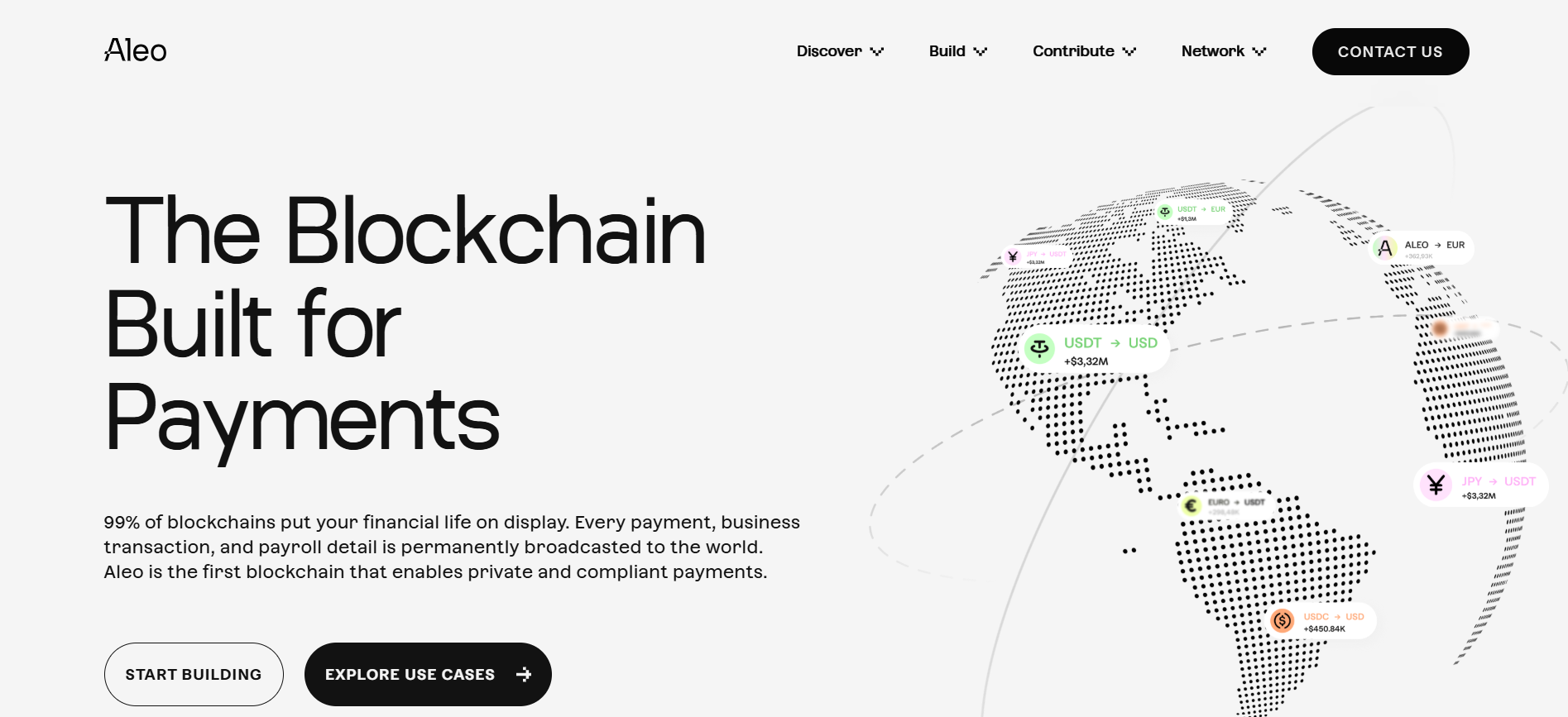
- Aleo provides the zero-knowledge layer, allowing computations and transactions to occur privately on its blockchain network.
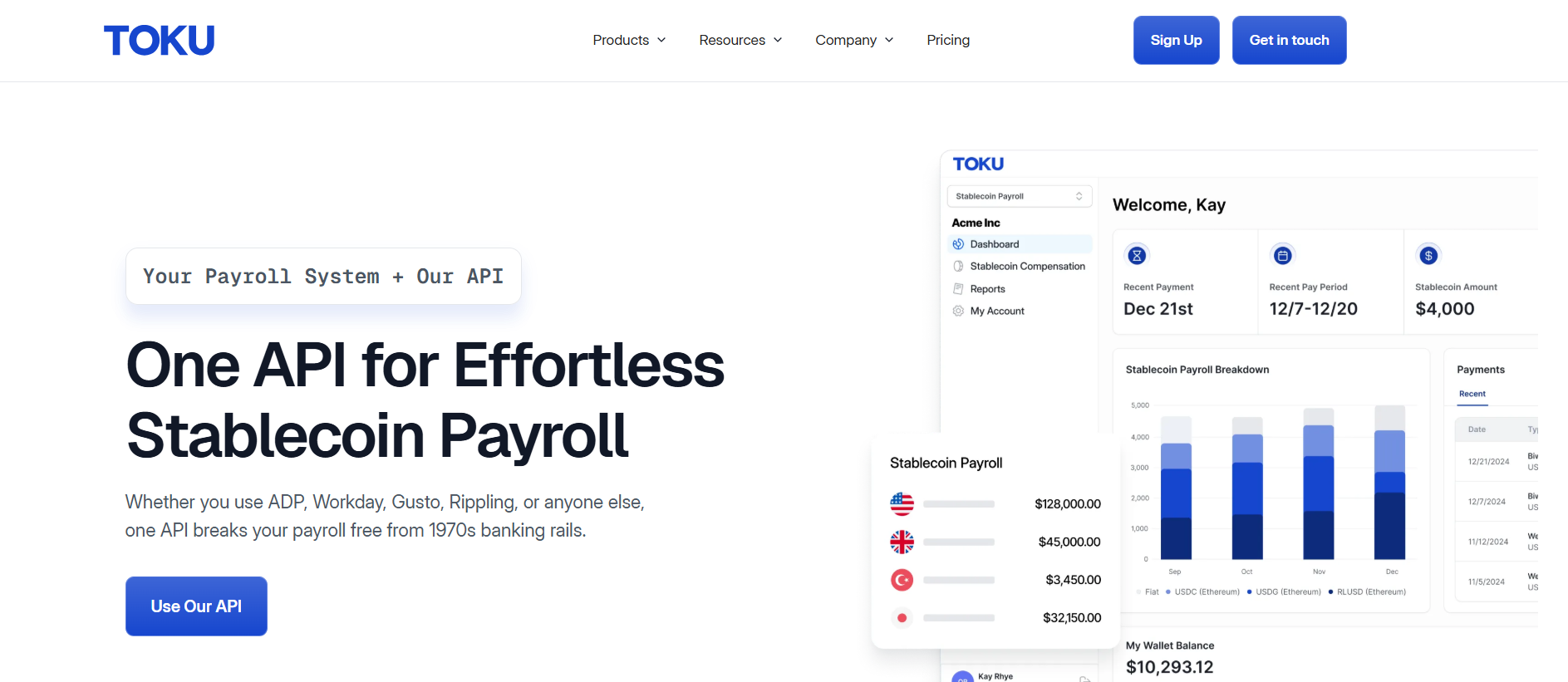
- Toku's platform, which already enables companies to integrate stablecoin payroll via APIs into existing HR systems, now runs on Aleo's infrastructure.
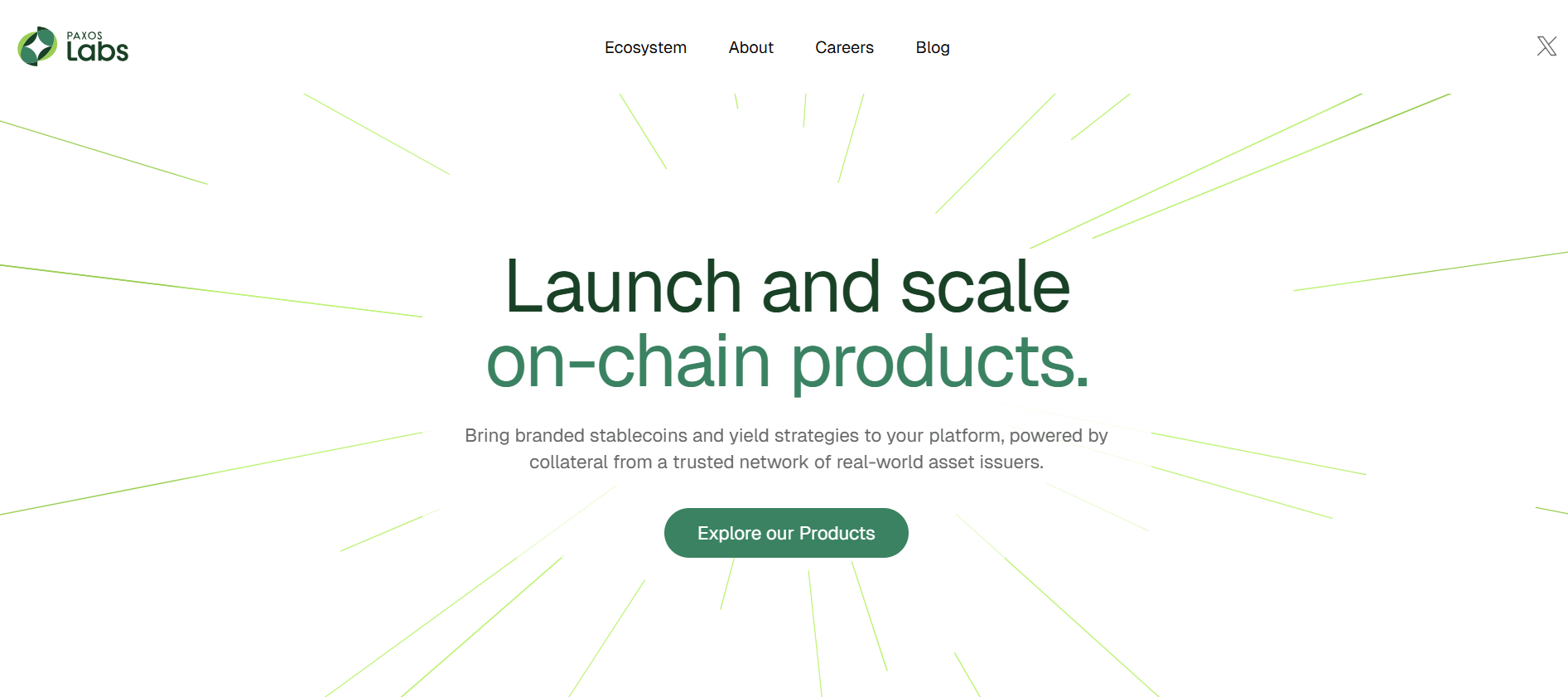
- Paxos Labs contributes the stablecoin issuance, ensuring regulatory oversight through its trust company structure.
Ken O’Friel, CEO of Toku, emphasized the shift:
"Enterprises have long hesitated on stablecoins due to privacy gaps. This partnership closes that loop, offering the confidentiality of traditional banking with blockchain efficiency." Similarly, Howard Wu, co-founder of Aleo, noted the solution's role in scaling enterprise applications: "Privacy is essential for real-world adoption. We're enabling instant, global payroll without exposing sensitive data."
Paxos Labs, known for issuing regulated stablecoins like USDP, extends its expertise to USAD, which is fully reserved and audited.
The collaboration targets multinational corporations managing dispersed workforces, where traditional payroll involves high fees, delays, and currency conversion risks.
Technology Integration
The core innovation is Aleo's zero-knowledge virtual machine (zkVM), which processes payroll calculations off-chain but verifies them on-chain without disclosing details.
For instance, an employer can compute salaries, deductions, and taxes privately, then settle payments in USAD stablecoins instantly across borders.
Toku's API facilitates seamless integration: Companies connect their HR software, such as Workday or SAP, to Toku, which handles compliance with local tax laws in over 100 countries.
Payments are executed on Aleo's network, where zero-knowledge proofs ensure auditability for regulators without public exposure. This mitigates risks like data breaches or competitive intelligence leaks, common in open blockchains like Ethereum.
The solution also incorporates risk mitigation features, including automated compliance checks and escrow mechanisms, reducing fraud potential.
A pilot program is set to launch in Q1 2026, focusing on tech firms with global teams, with full rollout expected by mid-year.
Market Impact
The global payroll market, valued at $55 trillion annually, stands to benefit significantly.
Stablecoins could reduce processing costs by up to 90% compared to wire transfers, enabling same-day payouts for remote workers. In regions with volatile currencies, like parts of Latin America and Southeast Asia, stablecoin payroll provides stability without exchange rate losses.
This launch comes amid rising enterprise interest in blockchain for finance. Stablecoin transaction volumes exceeded $10 trillion in 2025, but privacy concerns limited corporate uptake.
By resolving this, the partnership positions stablecoins as a viable alternative to legacy systems, potentially accelerating adoption in sectors like gig economy platforms, software companies, and manufacturing.
Regulatory alignment is key: Paxos operates under New York Department of Financial Services oversight, ensuring the solution meets anti-money laundering (AML) and know-your-customer (KYC) standards. This compliance-first approach differentiates it from unregulated crypto tools, appealing to risk-averse enterprises.
Conclusion
This partnership equips enterprises with a secure, efficient payroll tool, driving stablecoin integration into mainstream finance.
Focus on implementation to capture cost savings and compliance benefits immediately.
Read Next:
- 55 Comparison Stats: Stablecoins vs. CBDCs in 2026
- 2025 Stablecoin Spending Report
- Who Is Winning the Stablecoin Infrastructure Race?
FAQs:
1. What is zero-knowledge technology in this payroll solution?
Zero-knowledge proofs verify transactions without revealing details, ensuring privacy on Aleo's blockchain.
2. How does this address stablecoin privacy issues?
This address stablecoin privacy issues by shielding payroll amounts and parties from public view, matching traditional banking confidentiality.
3. Which stablecoin is used?
USAD, issued by Paxos Labs and backed 1:1 by regulated USDG.
4. Is it compliant with regulations?
Yes, it meets AML/KYC standards under Paxos's oversight and Toku's global tax compliance.
5. When will it be available?
Pilot launches in Q1 2026, with broader enterprise access by mid-2026.
Disclaimer:
This content is provided for informational and educational purposes only and does not constitute financial, investment, legal, or tax advice; no material herein should be interpreted as a recommendation, endorsement, or solicitation to buy or sell any financial instrument, and readers should conduct their own independent research or consult a qualified professional.