
Table of Contents
February 16, 2026 - Singapore
Alchemy Pay, a prominent fiat-to-crypto payment solutions provider, has announced the testnet launch of Alchemy Chain, a Layer-1 blockchain optimized for stablecoin transactions.
Scheduled for February 23, 2026, this development emphasizes native stablecoin integration, instant settlements, and predictable transaction fees, all facilitated by the $ACH token.
The initiative, detailed in an official announcement on X by @AlchemyPay, aims to enhance cross-border payments and bridge traditional finance with blockchain technology.
Key Takeaways
- Launch Timeline: Testnet activation on February 23, 2026, initiates community-driven validation for stablecoin-centric payments.
- Innovative Elements: Native stablecoin aggregation, on-chain rate conversions, FIFO processing, and $ACH-denominated fixed fees for enhanced predictability.
- Token Utility: $ACH facilitates gas payments and incentives, leveraging Alchemy Pay's established network of 300+ fiat gateways.
- Sector Implications: Focuses on cost and time reductions in remittances and e-commerce, with built-in global regulatory alignment.
- Future Roadmap: Testnet emphasizes scalability testing; mainnet rollout targeted for H2 2026, bolstered by developer SDKs.
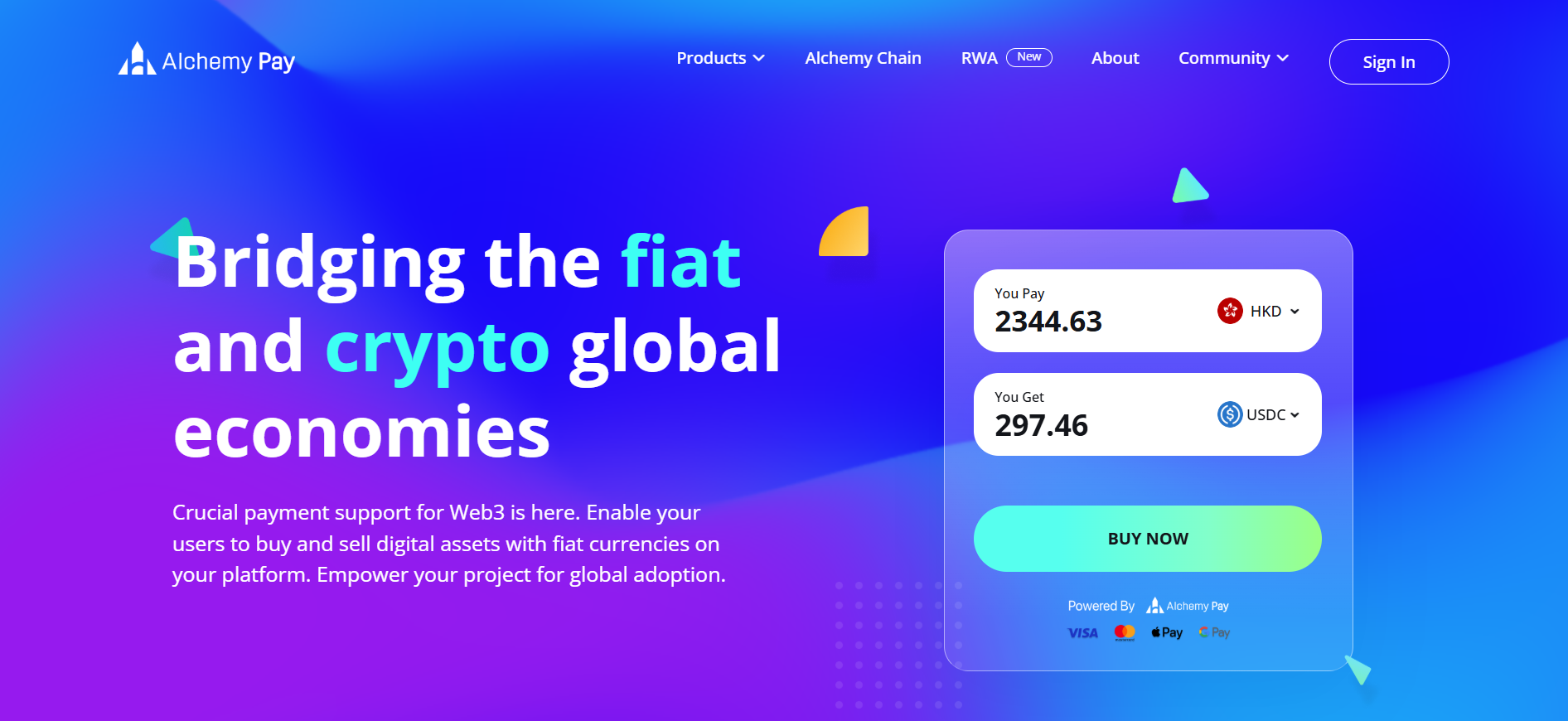
This launch addresses persistent challenges in cryptocurrency payments, including high volatility in fees and prolonged settlement periods, which have impeded broader adoption.
Alchemy Chain seeks to consolidate global stablecoins, such as USDT, USDC, and regional variants like XSGD, enabling efficient, real-time conversions without reliance on external bridges or exchanges.
Such capabilities could significantly lower costs, potentially by up to 90% relative to conventional systems, while supporting applications in remittances, e-commerce, and decentralized finance (DeFi).
Company Background
Established in 2018, Alchemy Pay has emerged as a key player in the hybrid payment ecosystem, facilitating billions in transaction volume through partnerships with major entities including Visa, Mastercard, and Binance.
The platform currently supports over 300 fiat channels across more than 170 countries, underscoring its global footprint and regulatory compliance.
The native $ACH token, trading at approximately $0.025 with a market capitalization surpassing $250 million, will underpin Alchemy Chain's operations as the gas token.
This structure incentivizes network validators and users while maintaining fixed fees tied to transaction routes and stablecoin pairings, promoting operational stability.
Recent milestones, including U.S. money transmitter licenses and integrations with StraitsX stablecoins, position Alchemy Pay for compliant expansion.
These developments align with the company's strategic focus on scalable, user-centric blockchain infrastructure.
Key Features of Alchemy Chain
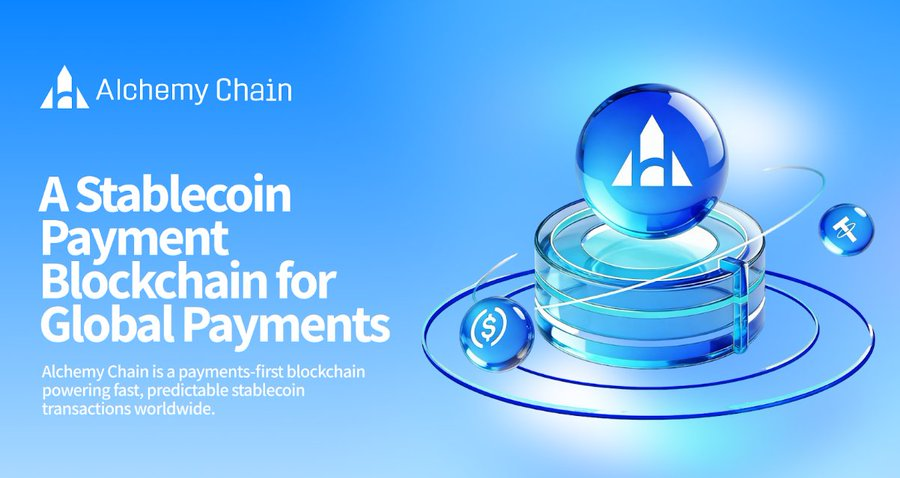
Alchemy Chain is engineered as a payments-first blockchain, taking advantage of an enhanced Ethereum Virtual Machine (EVM) for its consensus mechanism.
A standout element is the integration of on-chain exchange rates for stablecoins, which streamlines transaction validation and enables sub-second conversions. This reduces settlement durations from minutes or hours to near-instantaneous processing, minimizing intermediary dependencies.
To ensure equitable transaction handling, the network employs a First-In-First-Out (FIFO) ordering system, where validators process orders chronologically to mitigate risks like front-running or gas auctions.
Enhanced block sizes and a hybrid off-chain storage architecture further elevate throughput to thousands of transactions per second, accommodating high-volume payment demands.
Supporting tools include AchScan for blockchain analytics and AchWallet for intuitive user engagement, empowering developers to build and integrate applications swiftly.
These features collectively foster a strong ecosystem tailored for secure, efficient financial operations.
Testnet Launch Details
The testnet, commencing on February 23, 2026, will open participation to developers, partners, and early adopters for rigorous testing of core functionalities.
Activities will encompass simulating cross-chain transfers, verifying instant settlements, and gathering insights to optimize the forthcoming mainnet deployment, anticipated in the second half of 2026.
Interested parties can register through Alchemy Pay's developer portal to access beta resources and contribute to refinements. Initial feedback mechanisms will prioritize performance metrics, security protocols, and user experience, ensuring a resilient production environment.
Conclusion
Alchemy Chain represents a strategic evolution for Alchemy Pay, transforming blockchain from a speculative tool into a reliable payments backbone.
By emphasizing stability, speed, and compliance, it tackles longstanding barriers to cryptocurrency's practical integration, with potential to serve millions in underserved markets.
As the testnet unfolds, collaborative input will refine this platform, heralding broader advancements in digital finance.
Stakeholders are encouraged to engage early to influence its trajectory.
FAQs:
1. What is Alchemy Chain?
Alchemy Chain is a Layer-1 blockchain developed by Alchemy Pay, specializing in stablecoin payments with native support for instant settlements and asset unification.
2. When is the Alchemy Chain testnet launching?
The testnet is set to launch on February 23, 2026, enabling developers to evaluate $ACH-powered transaction features.
3. How does Alchemy Chain handle stablecoins?
It unifies global stablecoins like USDT, USDC, and XSGD through integrated on-chain exchange rates for borderless, real-time transactions.
4. What is the function of the $ACH token?
$ACH acts as the gas token, supporting fixed fees and validator rewards to maintain network efficiency and predictability.
5. Why prioritize instant settlements in Alchemy Chain?
Instant settlements leverage FIFO mechanisms and EVM optimizations to shorten processing from hours to seconds, optimizing remittances and retail payments.
Disclaimer:
This content is provided for informational and educational purposes only and does not constitute financial, investment, legal, or tax advice; no material herein should be interpreted as a recommendation, endorsement, or solicitation to buy or sell any financial instrument, and readers should conduct their own independent research or consult a qualified professional.