Table of Contents
Last updated: October 19, 2026
In the world of decentralized finance (DeFi) and digital asset management, access to deep, reliable stablecoin liquidity is paramount. For market makers, decentralized exchanges, lending protocols, and institutional treasuries, inefficient capital deployment leads directly to slippage, missed opportunities, and reduced profitability. The core challenge is navigating a complex ecosystem to find the best stablecoin liquidity providers that align with specific operational needs, risk tolerance, and on-chain strategies. This guide eliminates the guesswork by providing a detailed, data-driven analysis of the top platforms for sourcing and providing stablecoin liquidity.
We move beyond surface-level descriptions to offer a comprehensive breakdown of each provider, including Curve Finance, Uniswap, Balancer, and leading centralized exchanges. You will find actionable insights into their core mechanics, fee structures, and supported assets. We’ll explore how platforms like Curve minimize slippage for like-asset swaps and how Uniswap v3’s concentrated liquidity model enables unprecedented capital efficiency for sophisticated users.
This roundup is designed to be your go-to resource for making informed decisions. Each entry includes:
- Quantitative liquidity metrics and volume data.
- An analysis of counterparty and smart contract risk.
- Direct links to the platforms and relevant documentation.
The intricate mechanisms behind these liquidity pools often rely on robust Ethereum transaction management smart contracts, ensuring every swap and deposit is processed securely and efficiently. Whether you are a DeFi builder seeking integration partners or a treasury manager optimizing yield, this curated list provides the critical information needed to enhance your capital strategy and effectively manage your stablecoin positions.
1. Curve Finance
Curve Finance is a decentralized exchange (DEX) and automated market maker (AMM) protocol that stands as a cornerstone of decentralized finance (DeFi), particularly for stablecoin liquidity. Its core innovation is the StableSwap invariant, an algorithm specifically designed to facilitate extremely efficient swaps between assets that are pegged to the same value, such as various USD-pegged stablecoins (e.g., DAI, USDC, USDT) or different wrapped versions of Bitcoin (e.g., wBTC, renBTC). This focus makes it one of the best stablecoin liquidity providers for traders seeking minimal slippage on large-volume transactions.
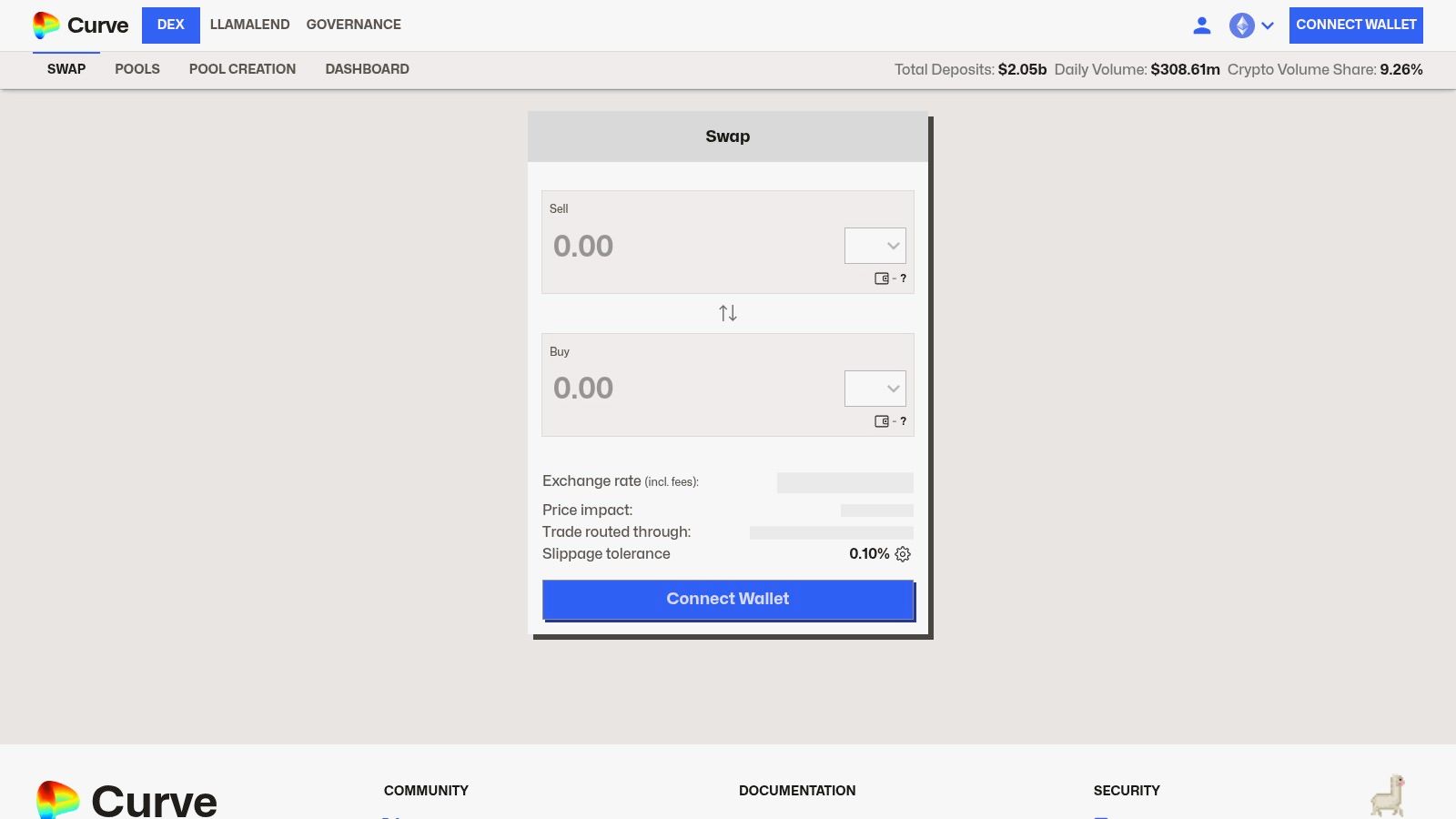
Unlike general-purpose AMMs, Curve’s model concentrates liquidity around the peg, ensuring that trades have a very low price impact. This design has allowed it to consistently offer some of the deepest and most reliable on-chain liquidity for stablecoins.
Key Features and Liquidity Pools
Curve’s ecosystem is built around its specialized liquidity pools. The most famous is the 3pool, which holds DAI, USDC, and USDT, and serves as a foundational liquidity source across DeFi. Users can provide liquidity to this pool and earn trading fees generated from swaps.
Another key feature is metapools, which pair a less common stablecoin against the 3pool's LP token (3CRV). This clever mechanism allows new stablecoins to tap into the deep liquidity of the 3pool without diluting its existing assets. For liquidity providers, this offers a way to gain exposure to newer assets while still benefiting from the trading volume of the base pool.
User Experience and Fee Structure
Interacting with Curve requires a non-custodial web3 wallet like MetaMask. While the user interface is functional and data-rich, its design can be complex for newcomers unfamiliar with concepts like gauges, metapools, and veCRV tokenomics.
- Trading Fees: A small fee is charged on every swap, which is distributed to liquidity providers.
- CRV Rewards: LPs can stake their LP tokens in "gauges" to earn CRV token emissions, the protocol's governance token.
- veCRV Boost: Users can lock CRV tokens to receive veCRV ("voting-escrowed CRV"), which allows them to boost their CRV rewards from liquidity provision and earn a share of the protocol's trading fees. This system incentivizes long-term commitment. For those interested in maximizing returns, understanding these mechanics is a crucial part of the strategies for using stablecoins in DeFi yield farming.
Practical Use Cases and Considerations
- For Traders & Arbitrageurs: Execute large stablecoin swaps with minimal price impact, far superior to most other DEXs.
- For Liquidity Providers: Earn passive income from trading fees and CRV rewards by supplying stablecoins to deep, established pools.
- For DeFi Protocols: Integrate with Curve pools as a reliable source of stablecoin liquidity for lending, borrowing, or treasury management.
While its smart contracts are battle-tested, the protocol is not without risk. The complexity of its system can be a double-edged sword, and users should be aware of front-end security risks, always ensuring they are on the official curve.fi domain. Despite these considerations, Curve's unparalleled depth and efficiency solidify its position as an essential liquidity hub in DeFi.
Website: https://curve.fi
2. Uniswap (v3 and v4)
Uniswap is a premier decentralized exchange (DEX) whose innovations have profoundly shaped the DeFi landscape. While known for its broad asset support, its v3 and upcoming v4 iterations make it one of the best stablecoin liquidity providers due to a powerful feature: concentrated liquidity. This mechanism allows liquidity providers (LPs) to allocate their capital within specific price ranges, a game-changer for stablecoin pairs that trade within a very tight band around their peg (e.g., within a fraction of a cent of the peg).
Unlike traditional AMMs that spread liquidity across an infinite price curve, Uniswap v3 enables LPs to create highly capital-efficient positions. By concentrating liquidity for a USDC/USDT pair in a narrow range, providers can earn significantly more fees from the same amount of capital compared to other platforms, as their funds are actively facilitating nearly every trade.
Key Features and Liquidity Pools
Uniswap’s strength lies in its customizable liquidity provision. Instead of one-size-fits-all pools, LPs create unique NFT positions representing their stake, price range, and chosen fee tier. For stablecoins, the lowest fee tiers (typically 0.01% or 0.05%) are the most popular, attracting high trading volumes and ensuring competitive swap rates.
The upcoming Uniswap v4 introduces "hooks," which are custom contracts that can run at various points in a pool's lifecycle. This will allow for features like dynamic fees that adjust to volatility or automated reinvestment of earned fees back into the position, further enhancing its capabilities for sophisticated stablecoin liquidity strategies.
User Experience and Fee Structure
Uniswap's interface is widely regarded as one of the most user-friendly in DeFi, making it accessible even to newer users with a web3 wallet. The process of swapping or providing liquidity is streamlined, though mastering concentrated liquidity requires a deeper understanding of market dynamics.
- Fee Tiers: LPs select from multiple fee tiers (e.g., 0.01%, 0.05%, 0.30%, 1.00%). For stablecoin pairs, the 0.01% or 0.05% tiers are ideal to remain competitive (Uniswap fee docs).
- Concentrated Liquidity: LPs must define a price range. If the asset price moves outside this range, their position becomes inactive and stops earning fees until the price returns.
- Manual Fee Claiming: Fees are not auto-compounded. LPs must manually claim their accumulated fees, which requires a separate transaction.
Practical Use Cases and Considerations
- For Traders: Access deep, efficient stablecoin liquidity across numerous chains. Uniswap's routing capabilities often find the best price for stablecoin swaps.
- For Liquidity Providers: Maximize fee generation on stablecoin capital by providing liquidity within tight, actively traded price ranges.
- For DeFi Protocols: Integrate with Uniswap as a primary liquidity source. The platform's extensive tooling and multi-chain presence make it a reliable choice.
The primary consideration for LPs is managing their positions. A de-pegging event could cause the price to move outside the set range, leading to impermanent loss and a halt in fee accrual. Therefore, active monitoring is crucial. The platform's role is also expanding beyond a simple DEX, as detailed in the analysis of Uniswap as a cross-chain aggregator. Despite the need for active management, Uniswap's capital efficiency and massive volume secure its spot as a top-tier liquidity venue.
Website: https://app.uniswap.org
3. Balancer (v2/v3)
Balancer is a decentralized exchange (DEX) and automated portfolio manager that offers a highly flexible and composable framework for liquidity provision. While it supports a wide array of assets, its innovative pool architecture makes it one of the best stablecoin liquidity providers for users seeking capital efficiency. Balancer's core differentiator is its ability to route idle assets within a liquidity pool to external yield-generating protocols, like Aave or Morpho, allowing LPs to earn both trading fees and lending yields simultaneously.
This "yield-bearing liquidity" model, epitomized by its Boosted Pools, means that stablecoins deposited by LPs don't just sit waiting for a swap. A significant portion of these assets are actively earning interest on lending markets, with only a small fraction held in the pool to facilitate trades. This creates a powerful, multi-layered return stream from a single LP position.
Key Features and Liquidity Pools
Balancer's strength lies in its modular and versatile pool designs. The flagship for stablecoins are Boosted Pools, such as the popular bb-a-USD pool (Balancer Boosted Aave USD). This pool combines major stablecoins like USDC, USDT, and DAI. Instead of holding the raw tokens, it holds their yield-bearing Aave equivalents (aTokens).
Another key component is Balancer's composable architecture. This allows pools to be nested within other pools, enabling sophisticated strategies and efficient routing. The BatchRouter contract further optimizes trade execution by finding the most efficient path through these interconnected pools, including unwrapping and wrapping yield-bearing tokens as needed.
User Experience and Fee Structure
Interacting with Balancer is done via a clean web interface and requires a standard web3 wallet. While the core swapping function is straightforward, providing liquidity to Boosted Pools involves understanding concepts like linear pools and Phantom BPT (Balancer Pool Tokens), which can present a learning curve for beginners.
- Trading Fees: Swap fees are set by the pool creator and are distributed to liquidity providers.
- Yield Generation: The primary attraction is the additional yield earned from integrated lending protocols.
- BAL Rewards: LPs can stake their BPTs in gauges to earn emissions of BAL, the protocol's governance token.
- Protocol Fees: Balancer's v3 aims to implement a more LP-friendly fee model, ensuring providers retain a larger share of the yield their capital generates. Exploring these mechanics is central to developing effective Balancer yield strategies for 2026.
Practical Use Cases and Considerations
- For Liquidity Providers: Maximize capital efficiency by earning multiple sources of return (swap fees, lending APR, BAL emissions) from a single stablecoin deposit.
- For Traders: Access deep and efficiently routed liquidity for stablecoin swaps.
- For New Protocols: Launch a new stablecoin against a single, highly liquid asset like
bb-a-USD, tapping into its deep liquidity rail from day one.
The primary risk associated with Balancer's yield-bearing pools is layered smart contract risk. Since these pools interact with external protocols like Aave, a vulnerability in either Balancer or the integrated protocol could impact user funds. Furthermore, the yields are dependent on the performance and parameters of these external platforms. Despite this added complexity, Balancer's innovative approach to combining trading with yield generation solidifies its place as a top-tier liquidity venue.
Website: https://docs.balancer.fi
4. Aave (v3)
Aave is a premier decentralized, non-custodial liquidity protocol where users can participate as suppliers or borrowers. While primarily known as a lending market, it serves as one of the best stablecoin liquidity providers by creating deep, accessible pools of assets like USDC, USDT, and DAI. Users supply their stablecoins to the protocol and in return, earn a variable interest rate, which is paid by borrowers who use the supplied liquidity. This model offers a straightforward "deposit-to-earn" mechanism, making it a foundational money market across the DeFi ecosystem.
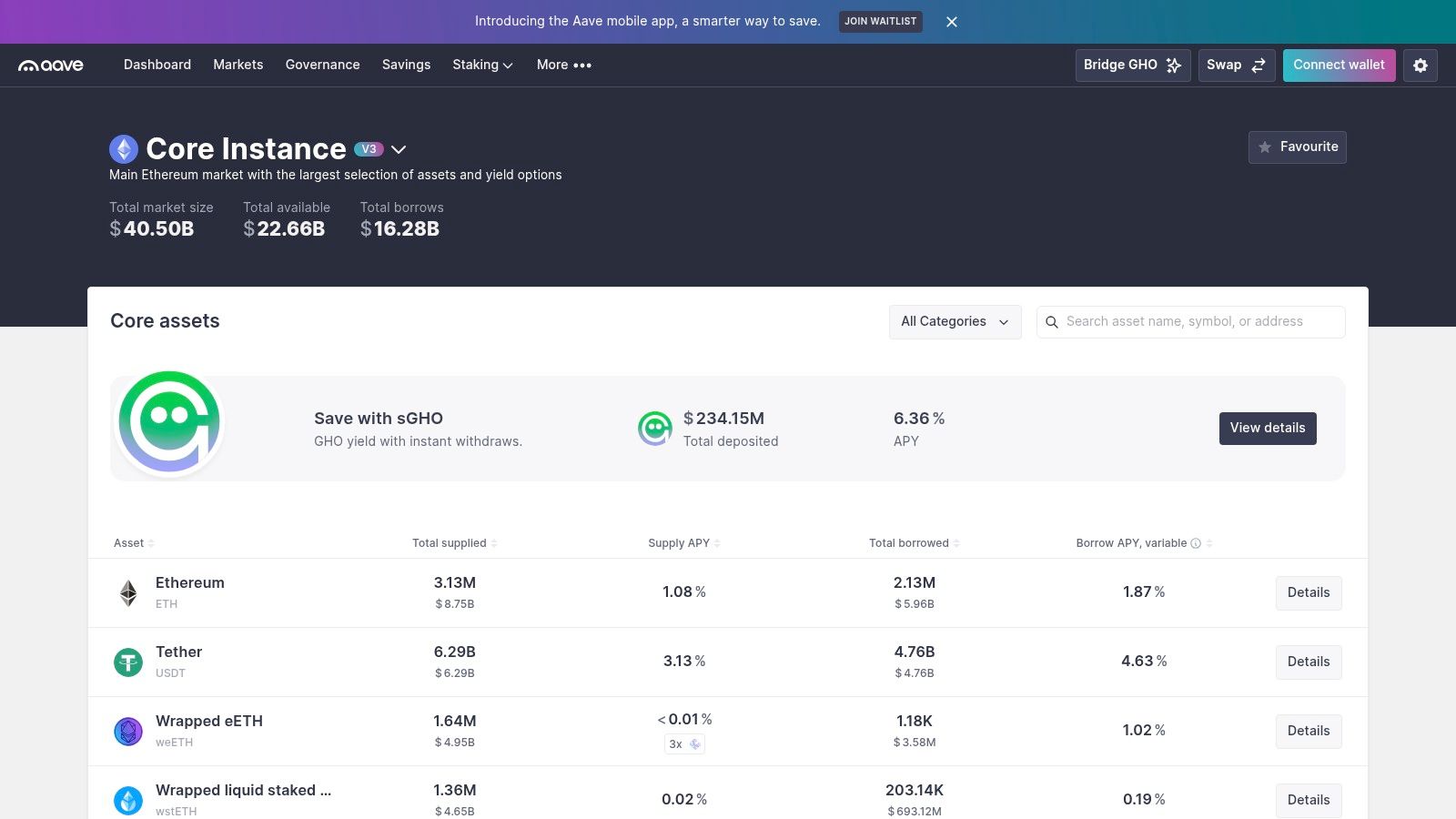
Unlike AMMs where returns are generated from trading fees, Aave's yield comes directly from borrowing demand. This creates a different risk and reward profile, often appealing to those who prefer passive yield generation over active liquidity management. Aave V3 introduced significant upgrades, including enhanced capital efficiency, improved risk management features, and multi-chain deployments, further solidifying its role.
Key Features and Liquidity Pools
Aave’s core function revolves around its asset pools, where each supported stablecoin has its own market. Interest rates are determined algorithmically based on a utilization rate curve; as more of a pool’s assets are borrowed, the supply APY increases to incentivize new deposits and stabilize liquidity.
Aave's multi-chain presence on networks like Ethereum, Polygon, Arbitrum, and Avalanche allows liquidity providers to choose environments with lower transaction fees. Its strong integration across DeFi means that aTokens (the interest-bearing tokens representing a user's supplied assets) are widely accepted as collateral in other protocols.
User Experience and Fee Structure
The user experience on Aave is notably simpler than that of complex AMMs. Users connect a web3 wallet, select a stablecoin to supply, and approve the transaction. The dashboard provides clear, real-time data on supply APYs, available liquidity, and utilization rates.
- Interest Rate Model: There are no direct fees for supplying liquidity. Instead, the protocol takes a small percentage of the interest paid by borrowers as a reserve factor, which acts as a safety net for the protocol.
- Collateral and Borrowing: Suppliers can use their deposited stablecoins as collateral to borrow other assets, enabling capital-efficient strategies like leveraging or hedging.
- Governance: The protocol is governed by AAVE token holders who vote on risk parameters, asset listings, and protocol upgrades, ensuring a transparent and community-driven approach to risk management. For a deep dive into its mechanics, you can explore how to earn stablecoin yield with Aave.
Practical Use Cases and Considerations
- For Passive Yield Seekers: Supply stablecoins to earn a variable APY with a simple "set and forget" approach, avoiding the complexities of impermanent loss or active range management.
- For Traders and Power Users: Use supplied stablecoins as collateral to borrow volatile assets for trading or borrow other stablecoins for yield farming strategies.
- For DeFi Protocols: Integrate Aave's aTokens as a yield-bearing and liquid form of collateral within their own systems.
While Aave is extensively audited, it is not without risks. Smart contract vulnerabilities are an inherent risk in any DeFi protocol, and yields are dependent on fluctuating market-wide borrowing demand, which can lead to lower returns during periods of low on-chain activity.
Website: https://app.aave.com
5. Coinbase Advanced
Coinbase Advanced is a US-regulated centralized exchange that serves as a critical bridge between the traditional financial system and the digital asset world. While decentralized platforms dominate on-chain activity, Coinbase provides deep, order book-based liquidity, particularly for USD-backed stablecoins like USDC. Its strength lies in offering a compliant, high-performance trading environment with direct fiat on-ramps, making it one of the best stablecoin liquidity providers for institutions, market makers, and traders who require reliable fiat-to-crypto access.
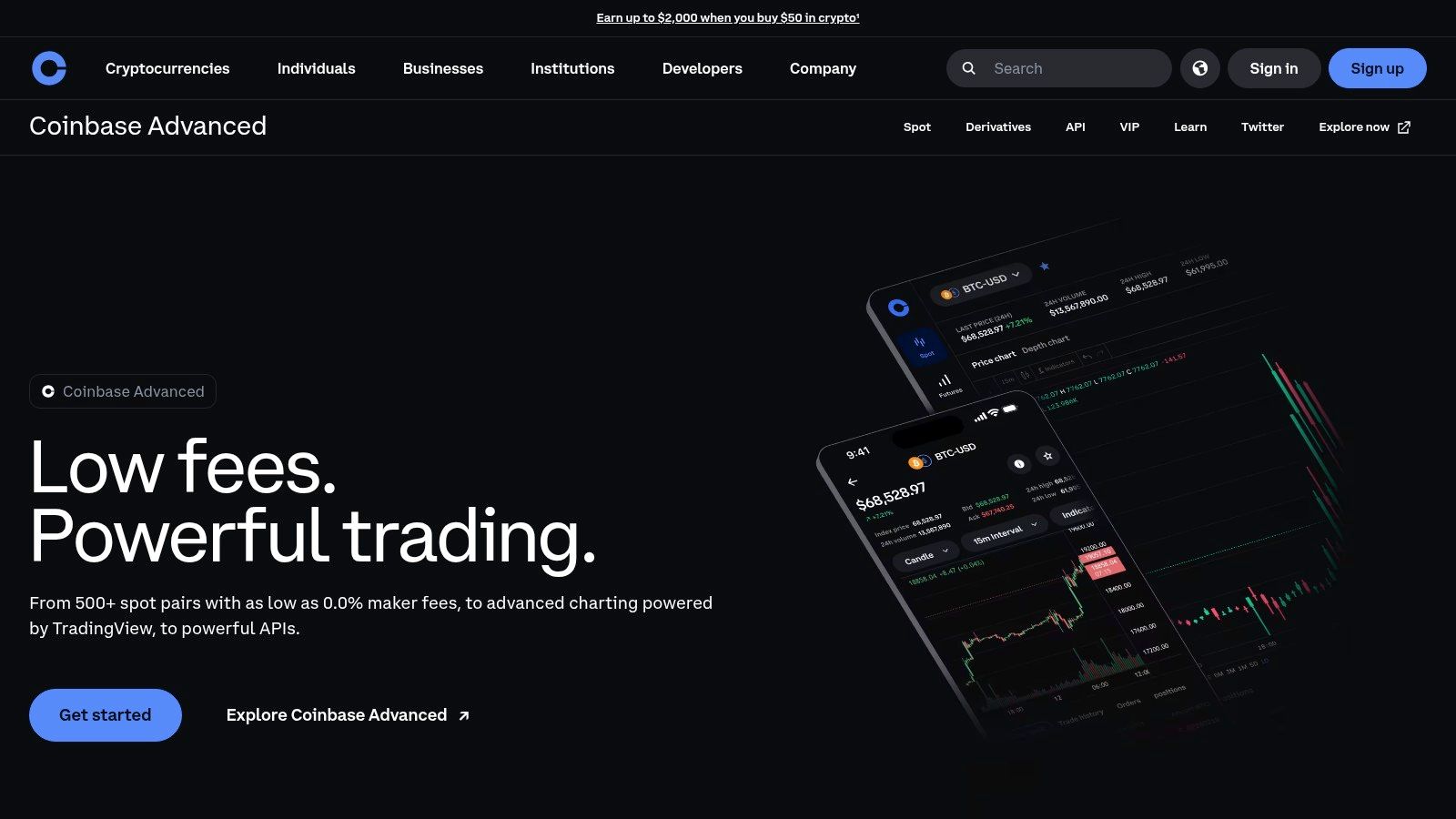
Unlike AMMs that rely on algorithms, Coinbase Advanced uses a traditional central limit order book (CLOB), which allows for precise execution strategies like limit and stop orders. The platform features unified USD/USDC order books, creating a single, deep pool of liquidity that ensures tight spreads and minimal slippage for large trades involving USDC and other major stablecoins.
Key Features and Liquidity Pools
Coinbase's primary offering for stablecoin liquidity is its robust set of trading pairs against USD and USDC. The exchange's institutional-grade infrastructure is built to handle high-frequency trading and large block trades, providing a secure and regulated environment for participants who might be hesitant to engage with DeFi protocols.
A key feature is its seamless integration with the fiat banking system. Users can fund their accounts directly via ACH or wire transfers, purchase stablecoins, and then withdraw them to an external wallet for use in DeFi or other applications. This makes it an essential on-ramp and off-ramp for capital flowing into and out of the crypto ecosystem.
User Experience and Fee Structure
The Coinbase Advanced interface provides a professional trading experience with advanced charting tools, order book depth visualization, and multiple order types. It is designed for active traders and is a significant step up from the simple "buy/sell" functionality of the standard Coinbase platform. Full KYC (Know Your Customer) verification is mandatory for access.
- Trading Fees: Follows a transparent maker-taker fee model, where fees decrease as a user's 30-day trading volume increases. Market makers (providing liquidity) often pay lower fees than takers.
- Fee Promotions: Coinbase frequently offers fee rebates or waivers for specific stablecoin-to-stablecoin pairs (e.g., USDC/USDT) to encourage liquidity and trading activity.
- Fiat Rails: Direct ACH and wire transfers provide efficient and regulated pathways to fund and withdraw USD, a critical component for stablecoin arbitrage and treasury management.
Practical Use Cases and Considerations
- For Traders & Arbitrageurs: Capitalize on price discrepancies between Coinbase's deep order books and other venues, including DEXs.
- For Institutions & Treasuries: Use Coinbase as a primary, compliant partner for large-scale stablecoin purchases and redemptions with direct USD settlement.
- For Market Makers: Provide liquidity on the order book to earn fees and benefit from high trading volumes in a regulated environment.
The main consideration is its centralized nature; funds held on the exchange are subject to custodial risk, unlike non-custodial DeFi protocols. Additionally, being a US-regulated entity means strict adherence to compliance and regulatory requirements. Despite this, for users prioritizing security, fiat integration, and deep order book liquidity, Coinbase Advanced is an indispensable hub.
Website: https://www.coinbase.com/advanced-trade
6. Kraken
Kraken is a prominent and long-standing centralized exchange (CEX) that provides deep, order-book-based liquidity for a wide array of stablecoins. As a US-accessible platform known for its security and regulatory compliance, it serves as a critical bridge between traditional fiat currencies and the digital asset ecosystem. For traders, institutions, and arbitrageurs seeking reliable execution on stablecoin pairs, Kraken's spot markets for assets like USDC, USDT, and DAI offer a highly predictable environment, making it one of the best stablecoin liquidity providers in the centralized finance space.
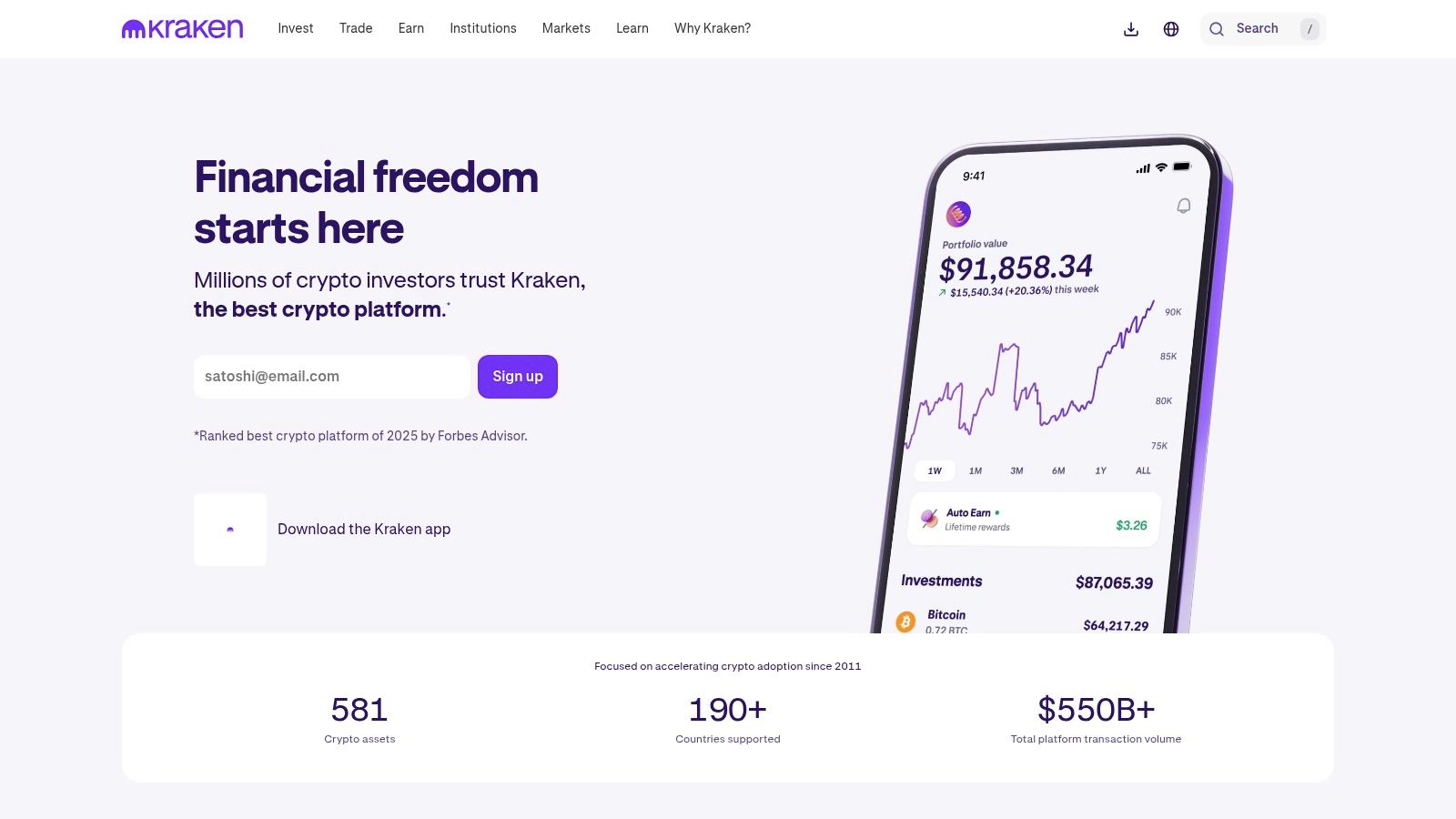
Unlike decentralized protocols, Kraken operates on a traditional central limit order book (CLOB) model, which appeals to users accustomed to conventional trading interfaces. Its reputation, established since 2011, provides a degree of trust and reliability that is crucial when dealing with large volumes of assets intended to hold a stable value.
Key Features and Liquidity Pools
Kraken's strength lies in its extensive listing of stablecoin spot markets against both fiat (e.g., USD, EUR) and major cryptocurrencies (e.g., BTC, ETH). The platform supports multi-network deposits and withdrawals for major stablecoins like USDT, allowing users to move assets across chains like Ethereum, Tron, and Solana efficiently.
A standout feature is its distinct fee schedule specifically for Stablecoin & FX pairs. These markets often have a simplified, and sometimes identical, maker-taker fee structure. This predictability is highly advantageous for market makers and high-frequency traders who need to model their costs accurately. While availability can vary by jurisdiction, Kraken has also historically offered margin trading on certain stablecoin pairs, providing tools for more sophisticated trading strategies.
User Experience and Fee Structure
The Kraken Pro interface offers advanced trading tools, including detailed charting, order book depth visualization, and multiple order types, catering to experienced traders. For less-seasoned users, the standard Kraken interface provides a simpler way to buy, sell, and convert assets. Full access to the platform and its fiat on-ramps requires completing Know Your Customer (KYC) verification.
- Trading Fees: Fees are based on a 30-day trading volume tier. Stablecoin-to-stablecoin or stablecoin-to-fiat pairs often fall under a separate, highly competitive fee schedule.
- Deposit/Withdrawal: Fiat and crypto deposits are generally free, while withdrawal fees vary by asset and network.
- Custody: As a centralized exchange, Kraken holds custody of user funds deposited on the platform, a key distinction from non-custodial DeFi solutions.
Practical Use Cases and Considerations
- For Traders & Arbitrageurs: Execute trades against a deep, centralized order book with clear fee structures, ideal for capturing arbitrage opportunities between different stablecoins or exchanges.
- For Institutions & Treasuries: Use Kraken as a reliable on-ramp and off-ramp for converting large sums between fiat and stablecoins.
- For General Users: Access a secure and regulated venue for buying and selling a wide range of stablecoins with strong customer support.
The primary consideration when using Kraken is its centralized nature. Users must trust the exchange's security and custody practices and are subject to its terms of service and jurisdictional restrictions. Despite this, its robust security track record, transparent fee models for stable pairs, and strong fiat gateways make it an essential liquidity source in the broader digital asset market.
Website: https://www.kraken.com
7. 1inch
1inch is a decentralized exchange (DEX) aggregator that functions as a smart routing and discovery engine, sourcing liquidity from hundreds of protocols across multiple blockchains. While not a direct liquidity provider itself, it plays a critical role by connecting traders to the most efficient swap routes available. For users looking to exchange stablecoins, 1inch scans a vast landscape of DEXs like Curve, Uniswap, and Balancer to find the optimal path, making it one of the best stablecoin liquidity providers from an access standpoint. Its system splits trades across various pools to minimize slippage and maximize returns on every transaction.
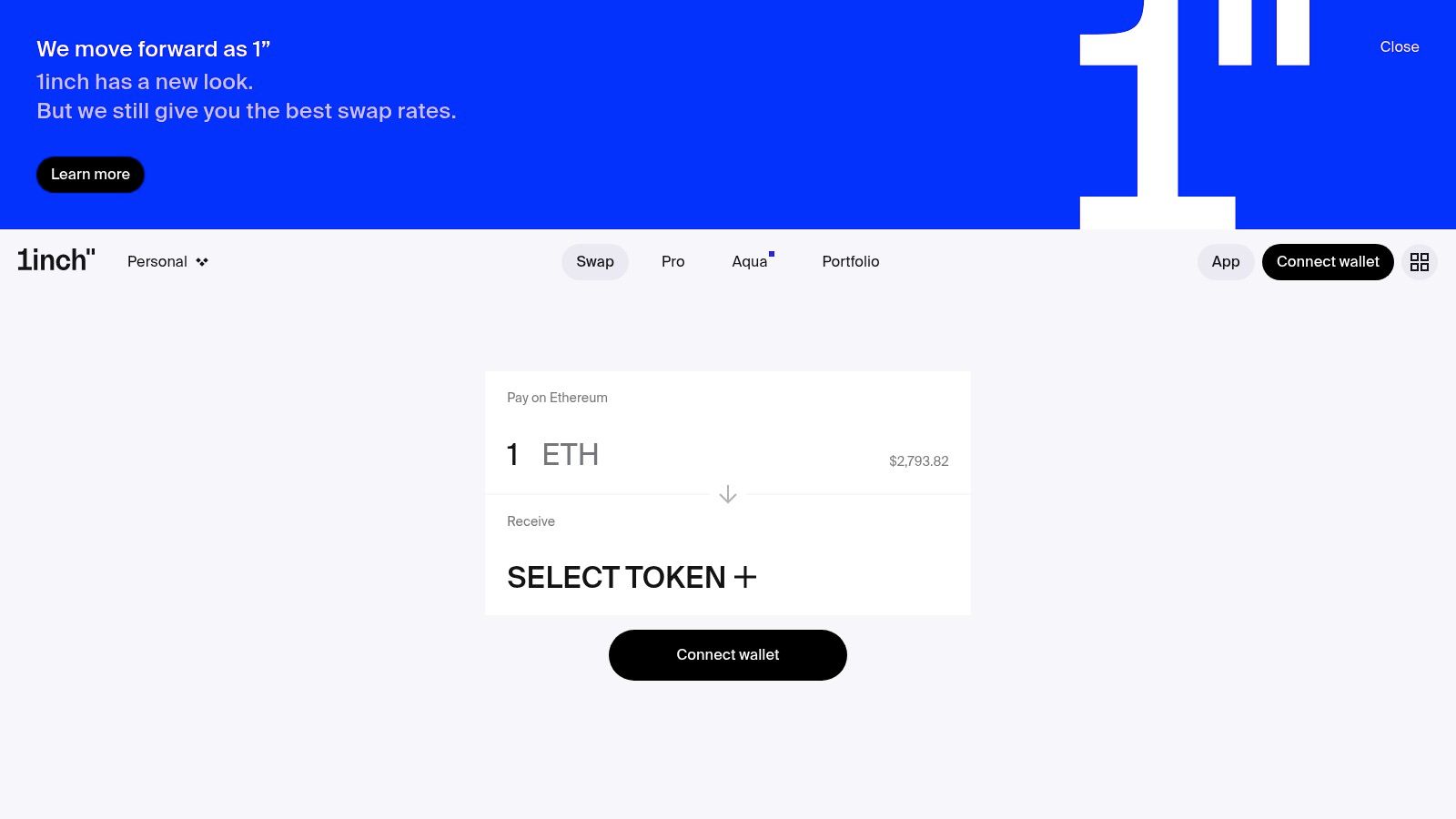
This aggregation model ensures that even large stablecoin swaps are executed at the best possible market rate, as 1inch can tap into fragmented liquidity that a single DEX might miss. Its Pathfinder algorithm is the core technology that finds these complex, multi-hop routes.
Key Features and Liquidity Pools
1inch’s primary feature is its powerful routing algorithm that provides access to over 100 liquidity sources. For stablecoin traders, this means they are not limited to the depth of a single pool but can leverage the combined liquidity of the entire DeFi market through one interface.
A standout feature is 1inch Fusion, an upgrade that offers gas-efficient and MEV-protected swaps. In Fusion mode, users sign an off-chain transaction that is then filled by professional market makers, known as Resolvers. This protects traders from front-running and sandwich attacks, which are common risks in on-chain trading.
User Experience and Fee Structure
The 1inch platform provides a user-friendly interface that simplifies the complexity of its underlying routing mechanism. Users connect their web3 wallet, enter the desired swap, and the aggregator presents the best available route. It is one of the most popular tools in the category of stablecoin swap aggregators for zero slippage.
- Trading Fees: 1inch does not charge a protocol fee on most swaps. Fees are determined by the underlying liquidity sources used in the transaction route.
- Gasless Swaps: In Fusion mode, users can execute swaps without paying for gas directly, as the Resolver covers the transaction cost.
- Limit Orders: The platform also supports limit orders, allowing users to set a specific price for their trade to execute, with no protocol fees.
Practical Use Cases and Considerations
- For Traders & Arbitrageurs: Execute large stablecoin swaps with significantly reduced slippage by accessing aggregated liquidity across dozens of venues.
- For DeFi Users: Find the most capital-efficient path for swapping assets, ensuring you receive the maximum output for your input.
- For Security-Conscious Traders: Use Fusion mode to protect sensitive transactions from MEV and avoid failed transactions due to gas price volatility.
While 1inch provides superior pricing, the quality of the execution still relies on the depth and health of the underlying DEXs it routes through. Users should also note that advanced features like resolver management or 1INCH token staking for governance can add complexity for those new to the ecosystem.
Website: https://app.1inch.io
Top 7 Stablecoin Liquidity Providers: Comparison
| Platform | Implementation complexity | Resource requirements | Expected outcomes | Ideal use cases | Key advantages |
|---|---|---|---|---|---|
| Curve Finance | Medium–High: stablepool/metapool mechanics | Web3 wallet, capital for LP, gas, optional CRV locking | Very low slippage on like‑priced assets; steady fee + incentive yield | Large stablecoin trades; LPs seeking stable liquidity exposure | Deepest stablecoin liquidity; low price impact; multiple yield boosts |
| Uniswap (v3/v4) | High: concentrated liquidity/range management | Capital, active monitoring, gas for adjustments | Capital‑efficient fee capture when in‑range; variable returns | Active LPs targeting narrow ranges; cross‑chain swaps | Large ecosystem & volume; fine‑grained control; configurable fees |
| Balancer (v2/v3) | Medium–High: composable & boosted pools | Capital, gas, integrations with lending protocols | Swap fees combined with external yield (lending) in one position | LPs wanting combined trading + lending income; stable baskets | Composability; boosted pools that tap multiple yield sources |
| Aave (v3) | Low: deposit/earn money market UX | Capital, wallet, minimal ongoing management | Variable supply APY tied to utilization; predictable money‑market returns | Passive stablecoin yield; users needing simple lending exposure | Simple UX; governance transparency; multi‑chain deployments |
| Coinbase Advanced | Low: centralized order book | Fiat rails, KYC/verified account, custodial custody | Deep centralized liquidity; tight execution and predictable fees | Institutions and traders needing fiat on/off‑ramp and market‑making | US compliance; institutional liquidity; direct fiat integration |
| Kraken | Low: centralized exchange model | KYC/verified account, fiat rails, custodial custody | Predictable fees and order‑book liquidity across stable pairs | Traders seeking secure, regulated fiat/crypto access | Established security/reputation; multi‑network deposits |
| 1inch | Low–Medium: aggregator with advanced modes | Web3 wallet, gas; optional staking for features | Improved execution and reduced slippage via multi‑DEX routing | Large or sensitive stablecoin swaps requiring best price | Aggregates many liquidity sources; MEV protection (Fusion); efficient routing |
Where Stablecoin DEX Liquidity Sits in October 2026
The numbers below are a DefiLlama snapshot read on October 19, 2026. TVL covers every asset in each protocol, not only stablecoins, so read it as a ceiling on stablecoin depth, not a measure of it.
| Venue | TVL (Oct 19, 2026) | 30-day DEX volume | Source |
|---|---|---|---|
| Curve DEX | $1.20 billion | $2.70 billion | DefiLlama |
| Uniswap v3 | $1.56 billion | $35.59 billion | DefiLlama |
| Uniswap v4 | $1.37 billion | $37.18 billion | DefiLlama |
| Balancer v2 | $18 million | $111 million | DefiLlama |
| Balancer v3 | $20 million | $89 million | DefiLlama |
| Aave V3 (lending) | $17.06 billion | n/a (money market) | DefiLlama |
Two things stand out. Uniswap v3 and v4 together cleared more than 25 times Curve's 30-day volume (DefiLlama), even though Curve's TVL is in the same range, so most routed stablecoin flow now settles on concentrated-liquidity pools. And Balancer's v2 and v3 TVL is now about $38 million combined (DefiLlama), so treat it as a niche venue for stablecoin size rather than a primary one. For lending-side liquidity, Aave V3 remains the deepest stablecoin money market on this list.
How to Check Pool Depth Before a Large Stablecoin Swap
Protocol-wide TVL tells you little about the pool you are about to trade through. Before sizing a ticket, check the exact pool and the exact chain:
- Find the pool, not the protocol. Look up the specific USDC/USDT or USDC/DAI pool on DefiLlama Yields, filter by chain, and note its TVL.
- Check that pool's recent volume. A large pool with little trading can quote depth it will not deliver under real flow.
- Quote your real size, then a bigger one. Pull a quote at your trade size and at several times that size on an aggregator from our best DEX aggregators for stablecoin swaps list. If price impact jumps sharply at the larger size, the pool is thin just beyond your ticket.
- Check both pegs. A pool is only as safe as its weakest stablecoin; a small depeg on one side shows up as hidden slippage.
- Compare off-chain routes for institutional size. For very large or fiat-settled trades, compare the on-chain quote with an exchange order book, an OTC desk, or issuer mint and redemption through the providers in our stablecoin on/off-ramp guide.
Recheck depth on the day you trade. Pool balances move by the hour as liquidity providers enter and exit.
Choosing Your Optimal Liquidity Partner
The journey through the landscape of the best stablecoin liquidity providers reveals a diverse and highly specialized ecosystem. From the concentrated liquidity innovations of Uniswap v3 to the hyper-efficient stablecoin-focused Automated Market Maker (AMM) design of Curve Finance, and the institutional-grade depth offered by centralized exchanges like Coinbase and Kraken, the right partner depends entirely on your specific objectives. This is not a one-size-fits-all decision; the optimal choice is a strategic one, balancing risk, cost, and operational complexity.
Our exploration has underscored a fundamental truth: liquidity is multifaceted. It's not just about the depth of the order book or the total value locked (TVL) in a pool. It involves analyzing slippage, fee structures, smart contract security, counterparty risk, and the underlying stability mechanisms of the stablecoins themselves. An exchange might offer deep liquidity but introduce custodial risk, while a decentralized protocol like Balancer provides immense flexibility at the cost of requiring more active management.
Key Takeaways for Selecting Your Provider
As you move from analysis to action, keep these critical insights at the forefront of your decision-making process:
- Define Your Use Case First: Are you a DeFi protocol builder needing composable on-chain liquidity? A corporate treasury managing large stablecoin balances? Or a market maker executing high-frequency strategies? Your answer will immediately narrow the field. For instance, a treasury might prioritize the battle-tested security and low slippage of a major CEX, while a DeFi project would gravitate towards Curve or Balancer for its integration potential.
- Decentralization is a Spectrum, Not a Binary Choice: The line between CeFi and DeFi is blurring. Platforms like 1inch aggregate liquidity from both worlds, offering a hybrid solution. Your risk tolerance for smart contract vulnerabilities versus custodial counterparty risk is a pivotal factor in determining where on this spectrum you should operate.
- Active vs. Passive Management: Protocols like Uniswap v3 and Balancer can yield higher returns through concentrated liquidity and custom pools, but they demand active management to stay within profitable ranges. Conversely, simpler pools or lending on Aave offer a more passive, set-and-forget approach, albeit with potentially different return profiles.
- Read Fees, Not Just TVL: Compare swap fee tiers, gas costs on your chain, and CEX withdrawal fees against your expected volume before committing capital.
- Price In Custody and Contract Risk: DeFi pools such as Curve, Uniswap and Balancer carry smart contract risk, while Coinbase and Kraken hold funds custodially and require full KYC.
Your Actionable Next Steps
With a clearer understanding of the market, your next steps should be methodical and data-driven. Don't rush into a decision based on TVL alone.
- Create a Risk Matrix: For your top 2-3 candidates, create a simple chart. List potential risks down one column (e.g., smart contract failure, regulatory action, de-pegging event, custodial theft) and score each provider's vulnerability to that risk. This clarifies the trade-offs you are making.
- Model Your Costs: Go beyond advertised fees. Use the provider's documentation to model the total cost of your expected transaction volume, including gas fees for on-chain solutions, withdrawal fees for CEXs, and potential impermanent loss for AMMs. What seems cheapest on the surface may not be for your specific usage pattern.
- Conduct a Small-Scale Pilot: Before committing significant capital, execute a pilot program. Deposit a small, non-critical amount of liquidity to test the platform's user interface, monitor the actual returns and costs, and experience the process of entering and exiting your position. This real-world test is invaluable and can surface unforeseen challenges.
Ultimately, selecting from the best stablecoin liquidity providers is about forging a strategic partnership with a platform whose technology, risk profile, and fee structure align perfectly with your goals. The DeFi and CeFi landscapes are constantly evolving, but a diligent, structured approach to selection will ensure your liquidity strategy is not just effective today, but resilient for tomorrow.
FAQ
What is a stablecoin liquidity provider?
A stablecoin liquidity provider is a venue or protocol that supplies the depth needed to swap, lend or redeem stablecoins with minimal slippage. On-chain this means AMM pools such as Curve, Uniswap and Balancer or lending markets like Aave; off-chain it means order books on exchanges such as Coinbase Advanced and Kraken.
Which venue has the lowest slippage for large stablecoin swaps?
For like-for-like swaps such as USDC to USDT, Curve's StableSwap pools and tight-range Uniswap v3 positions are built to keep price impact low, and aggregators like 1inch can split a large order across many pools. For fiat on-ramps and redemptions, centralized order books are usually the simpler path.
Is providing stablecoin liquidity risk-free?
No. Liquidity providers face smart contract risk, depeg risk if one stablecoin in a pool loses its peg, inactive positions when prices move outside a concentrated range, and custodial risk on centralized exchanges.
How do I check stablecoin liquidity before a large swap?
Look up the exact pool on DefiLlama Yields rather than the protocol total, check its recent volume, then quote your trade size and a larger size on an aggregator. A sharp jump in price impact at the larger size means the pool is thin for your ticket.
Should I use a DEX or a centralized exchange for stablecoin liquidity?
Use a DEX or lending market when you need composable, non-custodial liquidity inside DeFi. Use a regulated exchange when you need USD settlement, large block trades with a compliance trail, or bank-connected on- and off-ramps.
To stay ahead in this fast-moving space, you need specialized, real-time data and analysis. Stablecoin Insider provides the deep market intelligence, on-chain metrics, and risk assessment tools essential for making informed decisions about stablecoin liquidity and security. Visit Stablecoin Insider to equip yourself with the professional-grade insights needed to navigate the stablecoin ecosystem with confidence.