
Table of Contents
December 4, 2025
Zephyr Protocol, the over-collateralized privacy stablecoin ecosystem, has announced it is moving at full speed on its long-awaited cross-chain EVM bridge for $ZSD (Zephyr Stable Dollar).
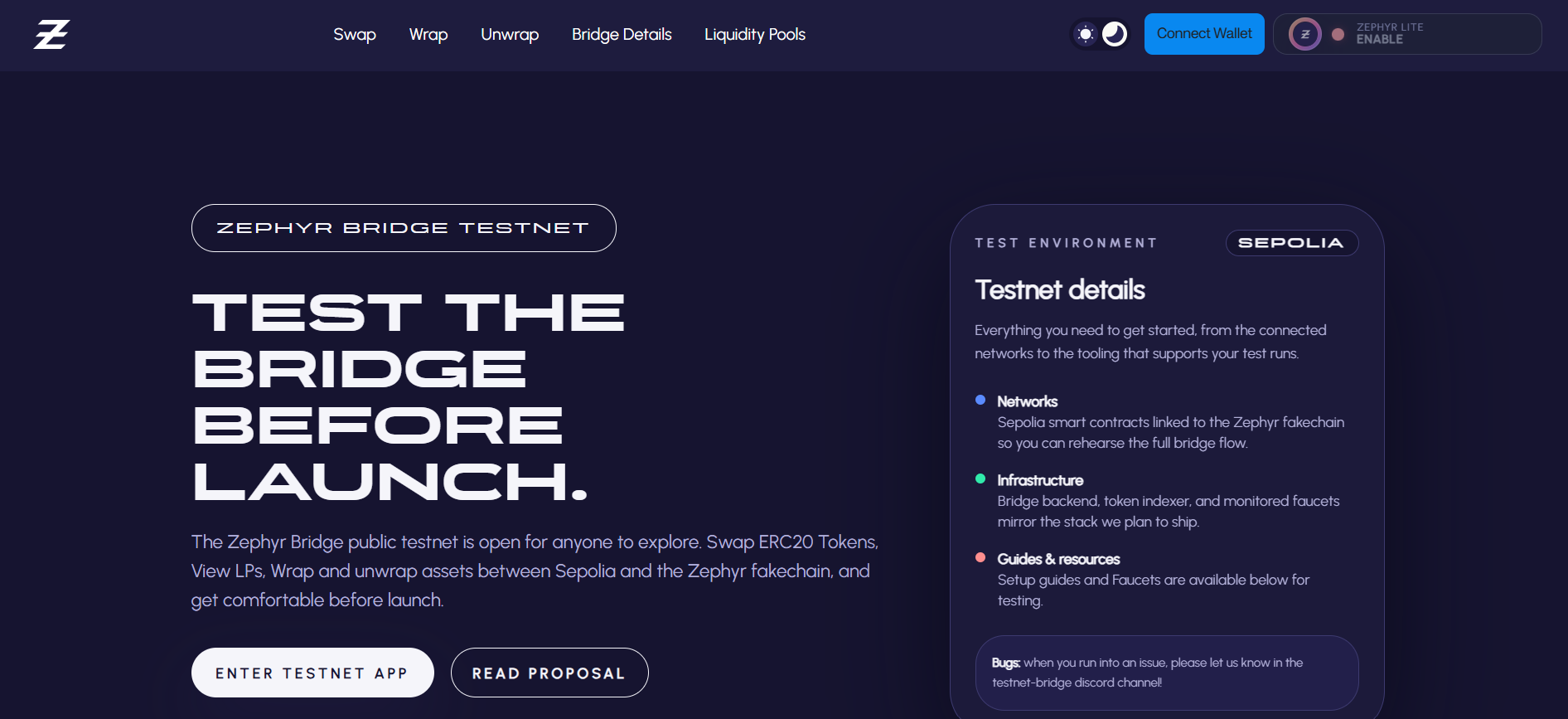
According to an official update released today, Testnet V2, the final testing phase before mainnet, will roll out within weeks, with the production bridge to Ethereum-compatible chains launching shortly after.
The development marks one of the most significant milestones yet for privacy-focused DeFi, bringing Monero-grade transaction anonymity to the Ethereum Virtual Machine ecosystem for the first time at scale.
Key Takeaways
- Testnet V2 rollout confirmed for the coming weeks; Mainnet deployment to follow rapidly
- First-ever bridge combining Monero-level privacy with full EVM interoperability and native yield
- $ZSD holders will soon be able to use a truly private, yield-bearing stablecoin across the entire Ethereum DeFi ecosystem
- Over-collateralization ratio remains 400–800%, ensuring peg stability even under stress
- Early testers and stakers positioned for significant first-mover advantage
Background on Zephyr Protocol
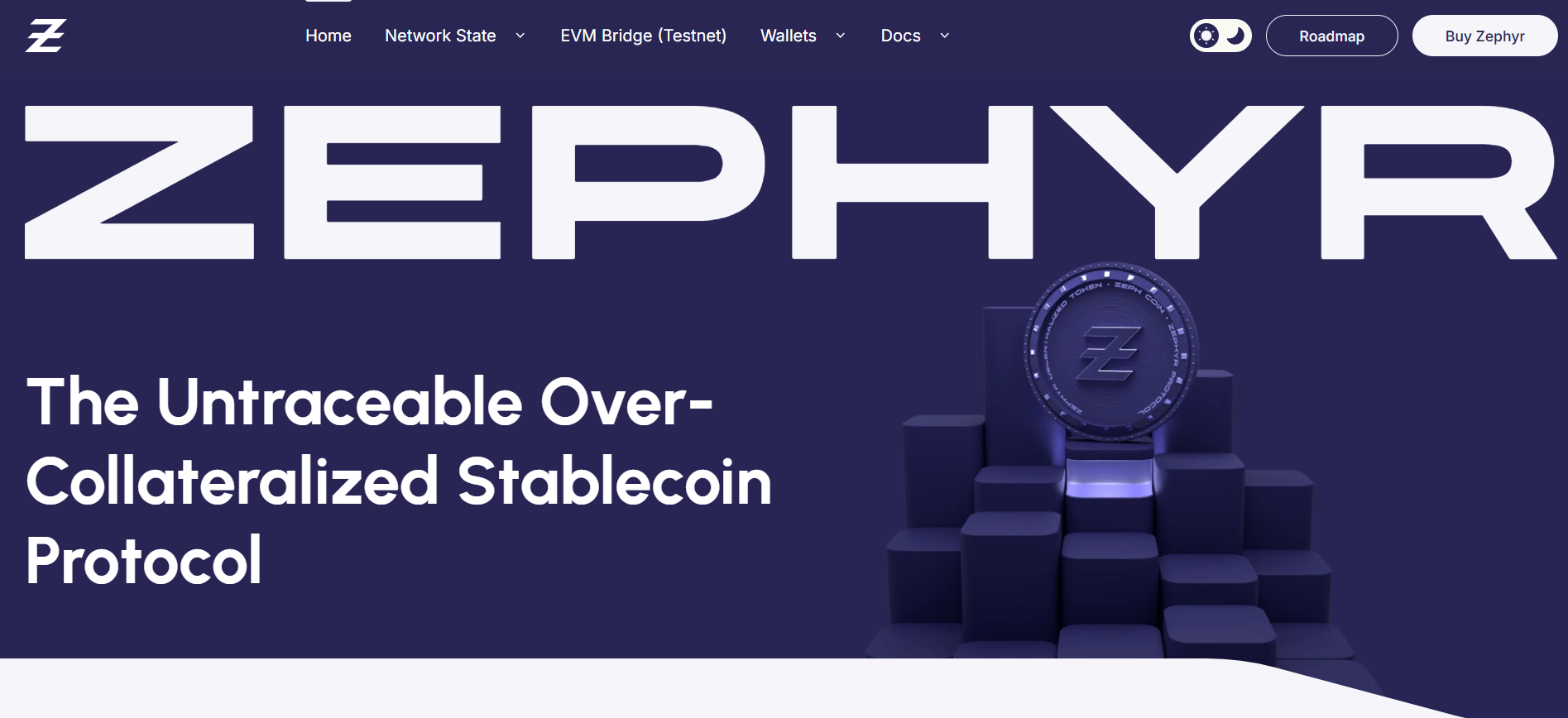
Launched in 2023, Zephyr Protocol operates a three-token model built on a Monero-forked blockchain:
- $ZEPH: volatile collateral asset
- $ZSD: privacy-preserving stablecoin soft-pegged 1:1 to USD
- $ZRS / $ZYS: reserve and yield shares that distribute protocol revenue
Unlike centralized stablecoins such as USDT or USDC, $ZSD hides sender, receiver, and amount data by default using ring signatures and stealth addresses.
The protocol maintained its peg through extreme volatility, including a 52× rally and subsequent 90% drawdown in $ZEPH price earlier this year.
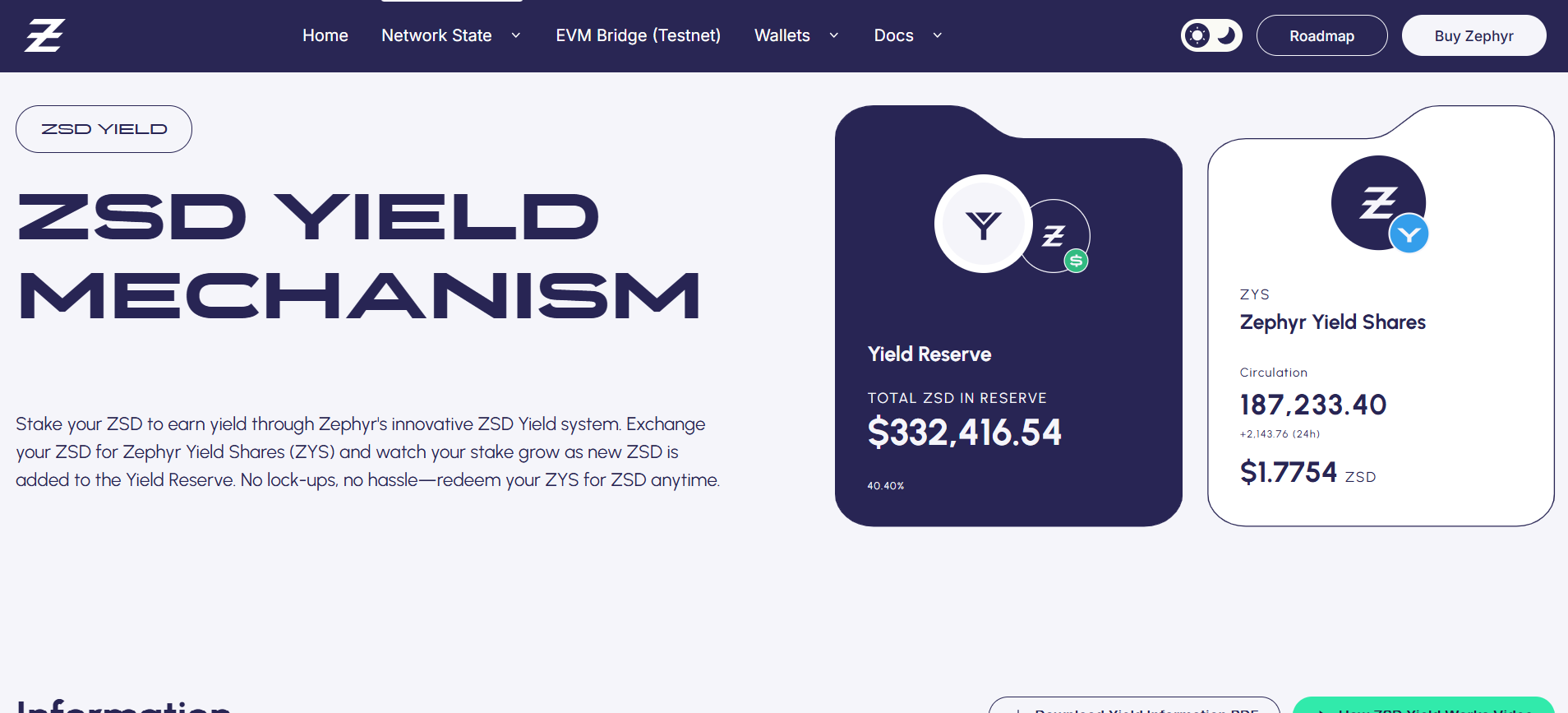
A recent v2.0.0 hardfork introduced $ZYS yield shares, allowing $ZSD holders to stake and earn up to 68% sustainable APY in the first year, paid directly in additional stablecoins from reserve over-collateralization.
The EVM Bridge: Technical Breakthrough
The upcoming bridge will allow users to lock $ZSD on the native Zephyr chain and atomically mint a wrapped, yield-accruing version on any EVM chain (Ethereum, Polygon, Arbitrum, Base, etc.) while preserving full privacy guarantees on both sides.
Key features confirmed for Testnet V2:
- Private cross-chain minting and redemption
- Continuous $ZYS yield accrual even when $ZSD is deployed on EVM chains
- Integration with MetaMask and other major Web3 wallets
- Third-party security audits already in final stages
Developers familiar with the project describe the bridge as “the missing link that finally makes private stablecoins usable in real DeFi applications.”
Impact on DeFi Privacy and Adoption
Stablecoins currently command a market cap exceeding $280 billion, with more than 70% of DeFi TVL denominated in USDT, USDC, or DAI, all fully transparent on-chain.
Privacy advocates have long warned that this transparency creates surveillance and censorship risks for users.
Zephyr’s bridge directly addresses this gap, potentially opening billions in privacy-seeking liquidity.
Early community estimates suggest $ZSD could capture 5–10% of the privacy-stablecoin segment within 12 months of mainnet launch.

Conclusion
With centralized stablecoin issuers facing increasing regulatory scrutiny and on-chain surveillance tools becoming more sophisticated, demand for genuinely private alternatives has never been higher.
Zephyr Protocol’s accelerated EVM bridge timeline positions $ZSD as the frontrunner to become the default private, over-collateralized, yield-generating stablecoin of the next bull cycle.
Investors, developers, and privacy advocates are advised to follow @zephyr_org for Testnet V2 access instructions and prepare EVM wallets for the upcoming mainnet launch.
Read Next:
FAQs:
1. What is the Zephyr Protocol EVM bridge and why does it matter for $ZSD stablecoin?
The Zephyr EVM bridge is a trust-minimized cross-chain solution that lets users move $ZSD (a fully private, over-collateralized stablecoin) between the native Zephyr chain and any Ethereum-compatible network while keeping amounts and addresses hidden. It matters because it finally brings real privacy to Ethereum DeFi without forcing users to give up yield or interoperability.
2. When is Zephyr Protocol launching Testnet V2 and Mainnet for the EVM bridge?
Testnet V2 is scheduled to launch within the next few weeks from December 2025. The team has confirmed Mainnet will follow shortly after final audits and testing – positioning Zephyr as one of the fastest-moving privacy bridge projects in crypto.
3. How does $ZSD keep privacy when bridged to Ethereum or Polygon?
The bridge uses cryptographic commitments and zero-knowledge techniques to prove that $ZSD was correctly locked/burned on one side and minted on the other, while ring signatures and stealth addresses ensure no transaction details are ever exposed, even on transparent EVM chains.
4. Can I still earn yield on $ZSD after bridging to an EVM chain?
Yes. Staked $ZSD continues accruing $ZYS yield shares automatically, regardless of which chain the stablecoin resides on. Current projected APY for year one is up to 68 %, paid in additional $ZSD from protocol reserves.
5. How do I participate in Zephyr Protocol EVM bridge Testnet V2?
Follow @zephyr_org on X and join the official Discord/Telegram channels. The team will release Testnet invite links and instructions in the coming days. You’ll need $ZEPH or $ZSD on the main Zephyr chain to start testing cross-chain flows.