Table of Contents
New York, March 20, 2026.
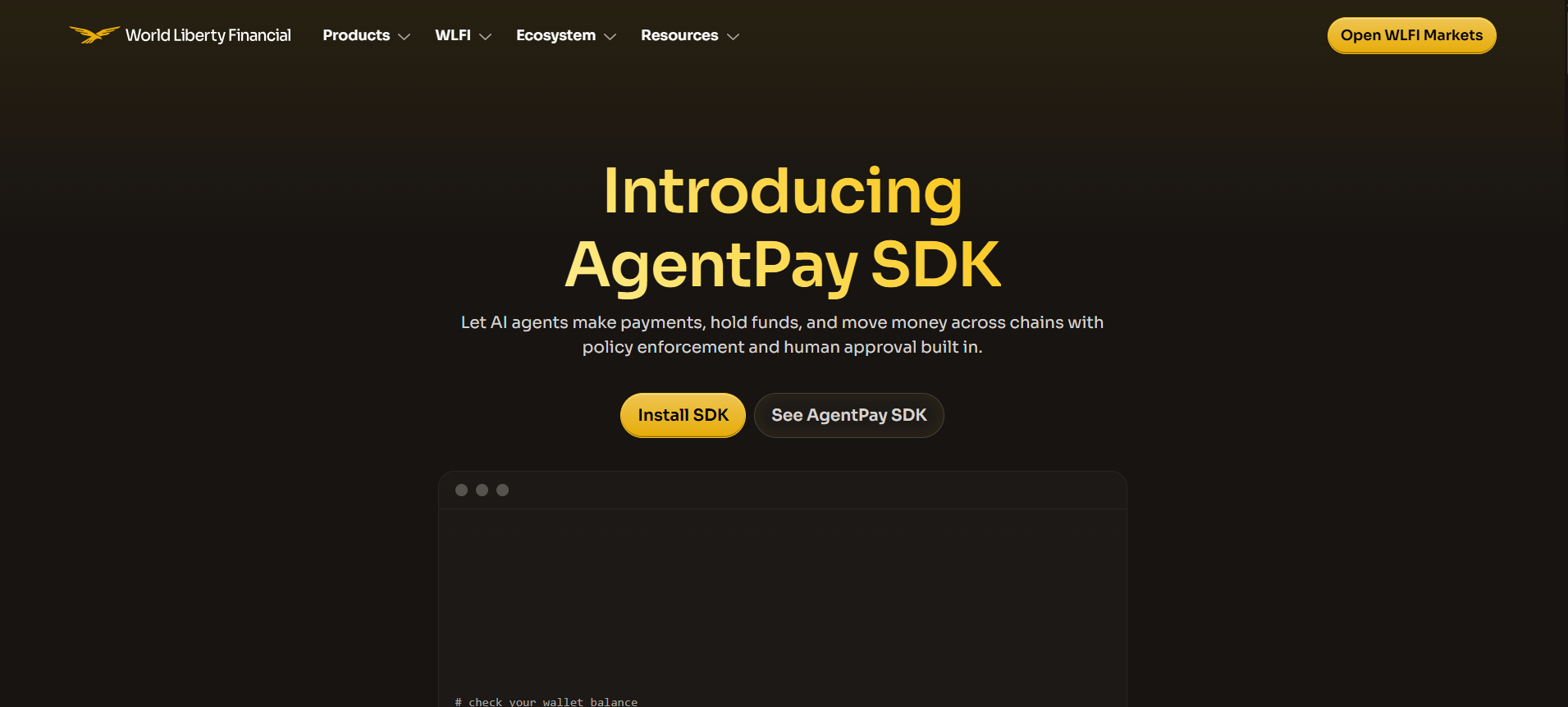
World Liberty Financial (WLFI), the cryptocurrency project backed by the Trump family, today unveiled AgentPay SDK, a free, open-source toolkit that lets AI agents autonomously hold, transfer, and govern the USD1 stablecoin across EVM-compatible blockchains.
The launch marks a significant step toward the “agentic economy,” where autonomous AI systems can independently execute financial tasks with built-in security and policy controls.
USD1 is positioned as the core economic operating layer for these intelligent agents, solving a key challenge: enabling secure, reliable payments without human intervention.
Key Takeaways
- Open-source and self-custodial: Full MIT license; no custody by WLFI.
- AI-native payments: Agents can hold, send, and manage USD1 under strict policy rules.
- EVM compatible: Works on Ethereum, BSC, and any EVM chain.
- Built-in security: Local signing, policy-before-sign, no telemetry.
- Easy integration: CLI + skill packs for leading AI coding agents.
- Zero platform fees: Only standard blockchain gas applies.
Key Features and Technical Highlights
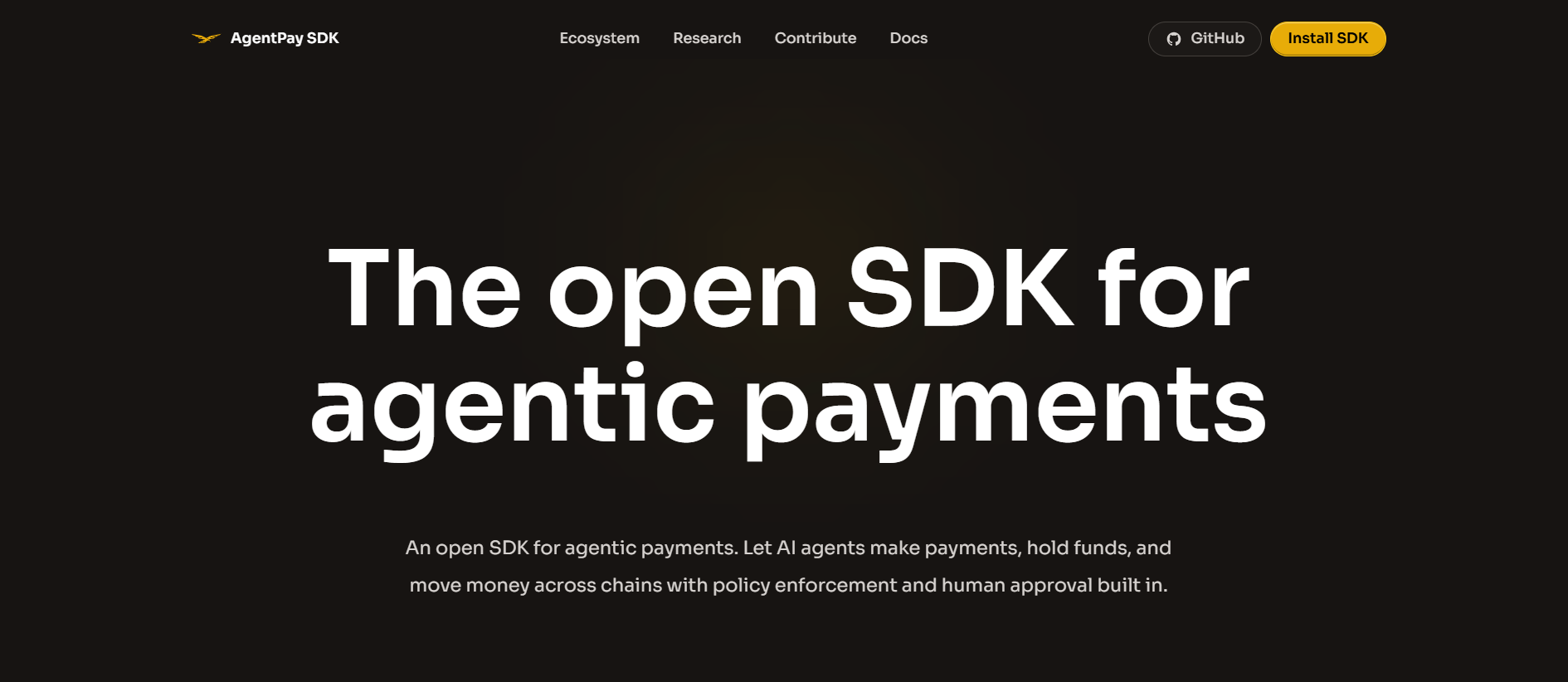
AgentPay SDK combines a non-custodial wallet, policy engine, and a simple agentpay command-line interface (CLI). Every wallet is self-custodial, private keys are generated and stored locally on the operator’s machine, with all transaction signing happening offline. WLFI has zero access to keys or funds.
A strict policy system evaluates every request before signing, enforcing spending limits, approvals, and rules set by the operator. The architecture includes a local daemon that never phones home, sends telemetry, or exposes signing state.
Additional protections include a skill pack for popular AI hosts (Claude Code, Codex, OpenClaw, Cursor) so agents can request payments naturally.
The SDK supports major EVM networks out of the box (Ethereum mainnet and BNB Smart Chain) with USD1 pre-configured. Installation is straightforward: a one-command curl script for macOS or full source build via GitHub.
Developers can fund wallets, define policies, and execute transfers in minutes.
Conclusion
The AgentPay SDK positions World Liberty Financial at the forefront of programmable finance for AI.
By giving developers a secure, policy-driven toolkit, WLFI is accelerating the shift to an agentic economy where autonomous systems transact seamlessly using USD1.
Early adopters can now experiment with AI agents that not only think but also pay, safely and independently.
Read Next:
- Binance Launches Airdrop for World Liberty Financial
- 6 Best Stablecoin APIs For Businesses In 2026
- Ethena's USDe Q1 2026 Report
FAQs:
1. What is World Liberty Financial’s AgentPay SDK?
AgentPay SDK is an open-source, self-custodial toolkit launched today that allows AI agents to hold, transfer, and govern USD1 stablecoin on EVM chains. It includes a wallet, policy engine, and CLI for secure autonomous payments.
2. How does AgentPay SDK enable AI agents to make payments?
The SDK runs locally with policy checks before every transaction. AI hosts use the included skill pack to request actions like “transfer 5 USD1,” which the daemon evaluates, signs locally, and broadcasts, keeping keys and control fully with the operator.
3. Is AgentPay SDK safe for AI agents?
Yes. Keys never leave your machine, signing is local, policies cannot be bypassed, and there is zero telemetry or third-party access. WLFI does not custody funds or control transactions.
4. Which blockchains and stablecoin does AgentPay support?
It works on any EVM chain, with Ethereum and BNB Smart Chain pre-configured. The native token is WLFI’s USD1 stablecoin (contract 0x8d0D000Ee44948FC98c9B98A4FA4921476f08B0d).
5. How do I install and start using AgentPay SDK?
Run curl -fsSL https://wlfi.sh | bash on macOS for instant setup, then agentpay admin setup. Full source code is available on GitHub at worldliberty/agentpay-sdk. Detailed guides cover wallet creation, funding, policy setup, and AI skill integration.
Disclaimer:
This content is provided for informational and educational purposes only and does not constitute financial, investment, legal, or tax advice; no material herein should be interpreted as a recommendation, endorsement, or solicitation to buy or sell any financial instrument, and readers should conduct their own independent research or consult a qualified professional.