
Table of Contents
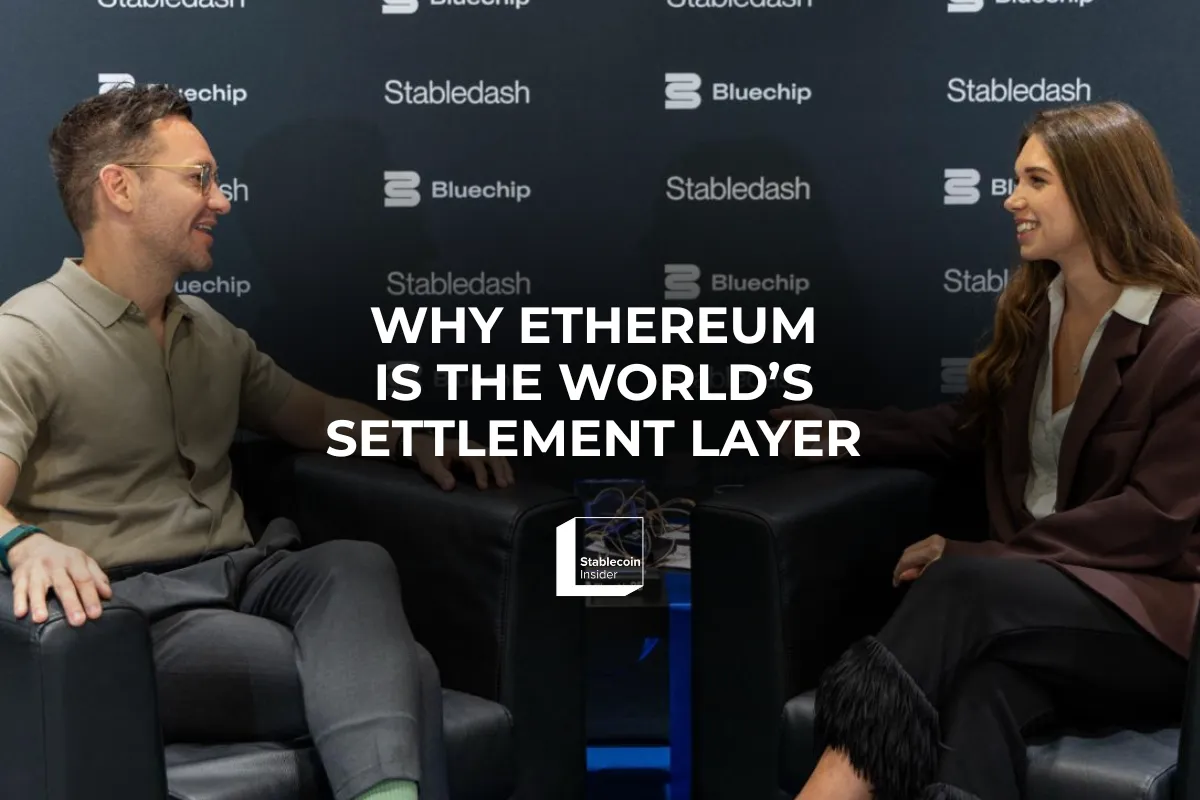
In this deep-dive interview on the Bluechip25 stage in Vienna, Chiara Munaretto sits down with James Smith, Head of Ecosystem at the Ethereum Foundation.
This conversation shifts the focus from the banks and asset managers to the "base layer" itself.
James explains why Ethereum remains the undisputed king of stablecoin settlement and why the Ethereum Foundation views "competition" between different stablecoin issuers as the ultimate win for the network.
The Settlement Layer: Why the World Chooses Ethereum
While many "faster" and "cheaper" blockchains have emerged, Ethereum still settles more stablecoin value than almost every other network combined.
James Smith provides a rare look into the Ethereum Foundation’s philosophy. He explains that while Layer 2 (L2) solutions are the future for retail, the Ethereum Mainnet (L1) is becoming the "global court" for high-value institutional settlement.
Pluralism as Resilience: Why There Is No "Official" Ethereum Coin
One of the most revealing moments in the interview is James’s explanation of why the Ethereum Foundation will never launch its own stablecoin.
Philosophical Neutrality:
James explains that the Foundation’s goal is "pluralism." If Ethereum were to endorse one specific coin, it would stifle the innovation and experimentation that makes the ecosystem strong.
The Antifragile Ecosystem:
By allowing USDC, USDT, Euro AU, and bank-consortium coins to compete, Ethereum ensures that if one fails, the network remains intact. "Competition breeds resilience," James notes.
The "Invisible Infrastructure" Play
James challenges the popular narrative that Ethereum is "losing" to Layer 2s like Base, Arbitrum, or Optimism.
- The Layered Strategy: He argues that Ethereum is strategically positioning itself as the permissionless infrastructure that powers everything else.
- Value Capture: Even if a stablecoin transaction happens on an L2, the ultimate "finality" and security are anchored to the Ethereum Mainnet. For James, Ethereum's success isn't measured by where the user clicks "send," but by where the value is secured.
Bridging the Gap: TradFi Meets Permissionless Rails
James addresses the "culture clash" between traditional financial institutions (like the 9-bank consortium) and the decentralized ethos of Ethereum.
- The Institutional Shift: He notes that banks are no longer asking why they should use Ethereum; they are asking how to do it while staying compliant.
- ZK-Privacy: James highlights breakthroughs in Zero-Knowledge (ZK) technology as the key that will allow institutions to maintain privacy for their transactions while still benefiting from the transparency and security of a public blockchain.
The 2026 Outlook: From Speculation to "Utility Settlement"
Looking toward the end of 2026, James predicts a massive wave of Real-World Asset (RWA) tokenization.
Stablecoins as the "Glue"
He views stablecoins as the connective tissue that will allow trillions of dollars in tokenized treasury bills, real estate, and corporate bonds to be traded instantly on-chain.
Global Accessibility
For James, the real win is making the Euro and the Dollar as accessible to a small business in Southeast Asia as they are to a major bank in Frankfurt.
Related Interviews: