


Table of Contents
Washington, D.C. – March 1, 2026.
The White House’s self-imposed March 1 deadline to resolve a bitter dispute over stablecoin rewards in the Digital Asset Market Clarity Act (CLARITY Act) has arrived with no final agreement, leaving Senate progress on landmark U.S. crypto regulation uncertain.
The CLARITY Act, officially H.R. 3633, the Digital Asset Market Clarity Act of 2025, passed the House of Representatives last July with strong bipartisan support (294-134 votes).
The legislation seeks to divide oversight of digital assets between the SEC and CFTC, providing much-needed regulatory clarity for the $2.4 trillion crypto industry.
Key Takeaways
- The White House’s March 1 deadline for stablecoin rewards language in the CLARITY Act has passed without a final compromise.
- Core dispute centers on banning idle yields while permitting transaction- or activity-based rewards.
- CLARITY Act already passed the House 294-134 in July 2025; Senate markup now faces further delay.
- Industry leaders remain optimistic, with Ripple’s CEO citing 90% odds of passage by April.
- Prolonged uncertainty risks slowing U.S. crypto innovation, tokenization efforts, and institutional adoption.
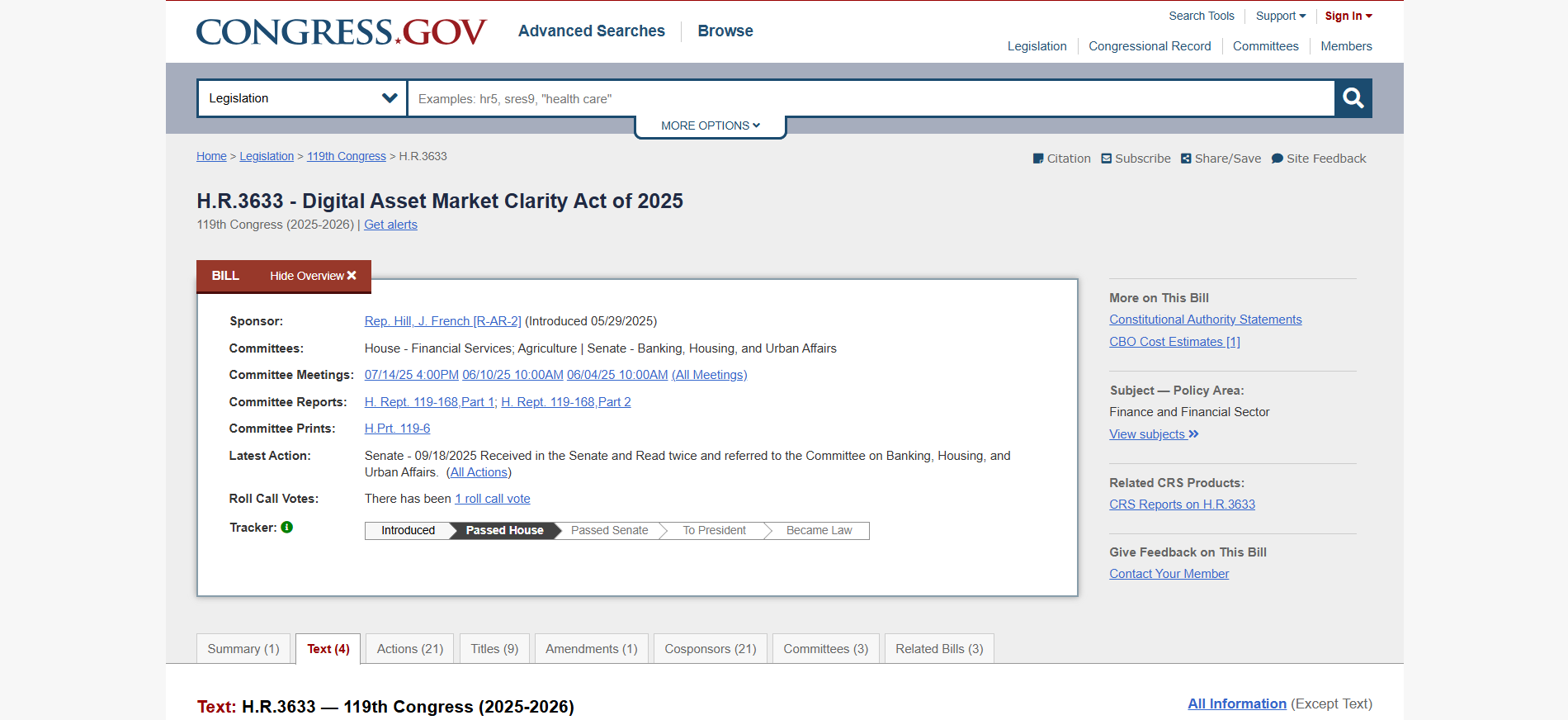
Negotiations stalled in the Senate Banking Committee over one core issue: whether crypto platforms and stablecoin issuers can offer rewards or yield-like incentives to users. Banks argue that any form of payment on stablecoin holdings resembles interest-bearing deposits and threatens financial stability.
Crypto firms counter that activity-based rewards (tied to transactions or network participation) drive innovation and should remain permitted.
White House crypto adviser Patrick Witt set the March 1 deadline during closed-door talks in February, warning that failure to reach compromise language would delay Senate markup and risk derailing the entire bill. Multiple rounds of negotiations produced draft text allowing limited activity-based rewards while banning idle-balance yields, but sources close to the discussions confirm the two sides remain divided.
As of midday March 1, no deal has been announced. Insiders describe talks as constructive yet insufficient to meet the hard deadline.
Ripple CEO Brad Garlinghouse expressed optimism in recent statements, estimating a 90% chance the bill could still reach the president’s desk by April if good-faith negotiations continue.
However, market analysts note that the missed deadline adds weeks, if not months, to an already protracted legislative timeline ahead of November midterms.
The impasse follows Coinbase’s earlier withdrawal of support and ongoing debates over DeFi protections and illicit finance safeguards.
Treasury Secretary Scott Bessent has publicly urged fast-track passage, calling the CLARITY Act essential to positioning the United States as the “crypto capital of the world.”
Conclusion
The arrival of March 1 without a stablecoin rewards deal marks a setback but not the end for the CLARITY Act.
With both crypto and banking stakeholders signaling continued engagement, lawmakers still have a narrow window to bridge remaining gaps and deliver regulatory clarity the market has awaited for years.
Until then, U.S. digital asset firms and investors must navigate continued uncertainty, underscoring why swift resolution remains critical for America’s competitive edge in the global crypto economy.
Read Next:
FAQs:
1. What is the CLARITY Act?
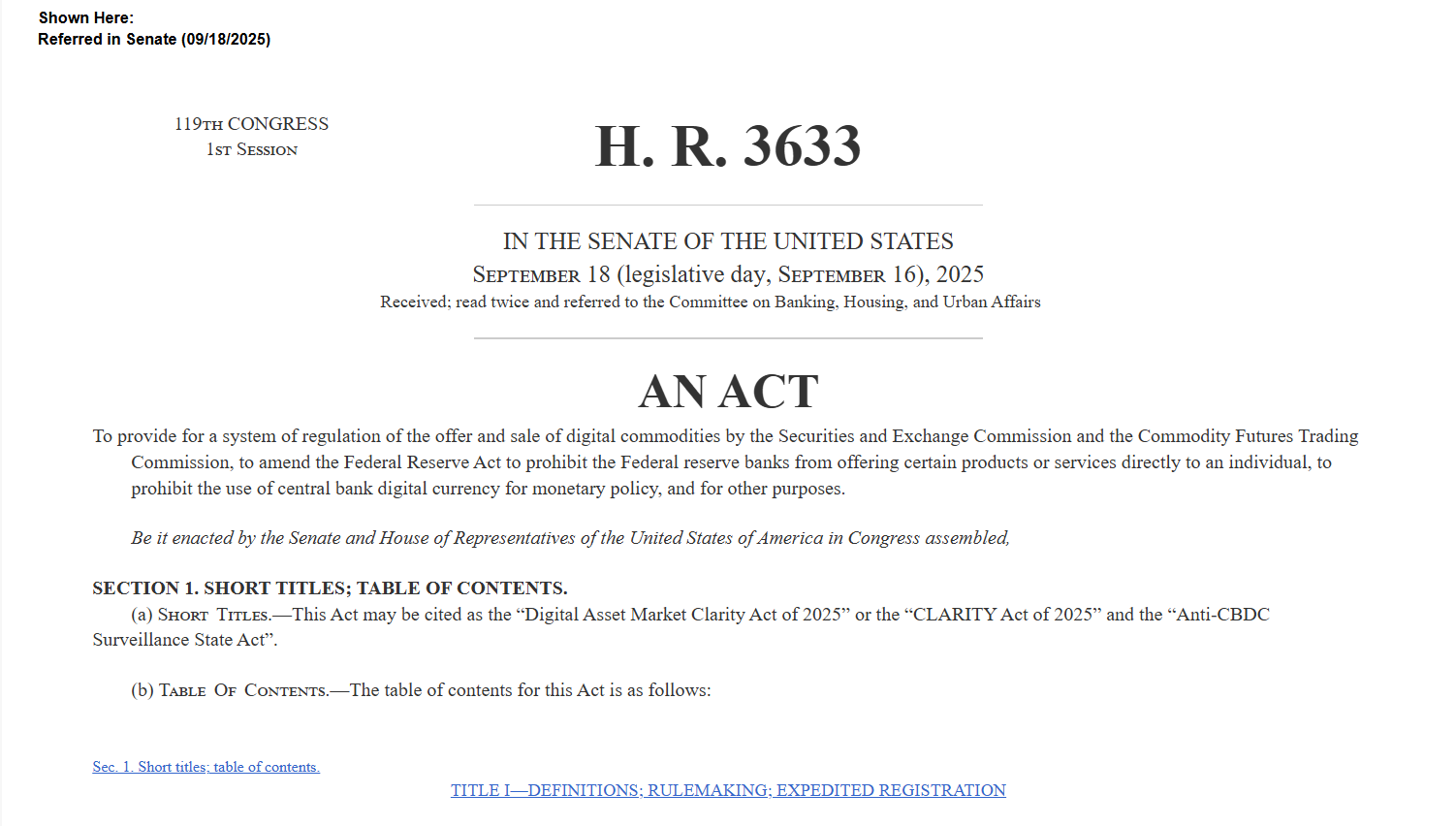
The Digital Asset Market Clarity Act (H.R. 3633) establishes a federal framework dividing digital asset oversight between the SEC (securities) and CFTC (commodities), while addressing stablecoin rules and market structure.
2. Why does the stablecoin rewards issue matter?
Rewards programs influence whether stablecoins compete with traditional bank deposits. Banks fear loss of deposits; crypto firms say restrictions stifle product innovation and user benefits.
3. What happens now that the March 1 deadline has passed?
No immediate collapse, talks continue. Senate Banking Committee markup is delayed but expected in coming weeks if a narrow compromise emerges.
4. Will the CLARITY Act still pass in 2026?
Industry sentiment remains positive. Ripple’s Brad Garlinghouse and White House officials project passage by April or early summer, provided good-faith negotiations resume quickly.
5. How does this affect crypto investors and stablecoin users?
Short-term uncertainty may increase market volatility, but successful passage would bring long-term clarity, boost institutional participation, and accelerate mainstream stablecoin adoption.
Disclaimer:
This content is provided for informational and educational purposes only and does not constitute financial, investment, legal, or tax advice; no material herein should be interpreted as a recommendation, endorsement, or solicitation to buy or sell any financial instrument, and readers should conduct their own independent research or consult a qualified professional.