
Table of Contents
The regulatory landscape for digital assets in the United States has changed more in the past year than in the previous decade combined.
- The GENIUS Act is law.
- The SEC's Crypto Task Force has replaced enforcement actions with roundtables and guidance.
- The CLARITY Act passed the House and is now advancing through the Senate.
And the CFTC has a new chairman whose last job was chief counsel of the SEC's crypto unit.
For stablecoins and tokenized securities specifically, the implications are enormous: a $306 billion stablecoin market now has its first federal rulebook, tokenized equities have surged 2,900% year-over-year, and the SEC just issued its first comprehensive guidance on how securities law applies to tokenized instruments.
This is the regulatory update that matters.
The GENIUS Act: Stablecoins Get a Federal Framework
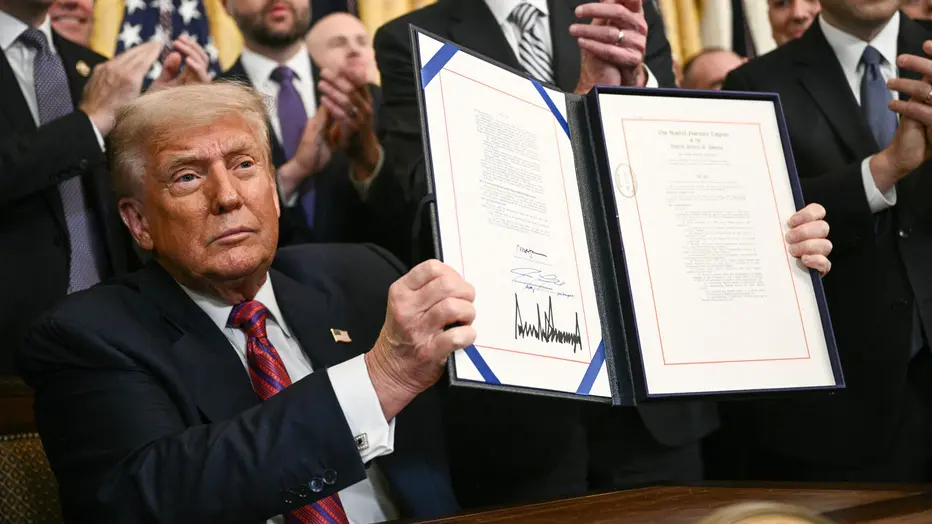
Signed into law on July 18, 2025, the Guiding and Establishing National Innovation for U.S. Stablecoins Act (GENIUS Act) is the first federal regulatory framework for payment stablecoins ever enacted in the United States.
The core requirements: issuers must maintain 1:1 reserve backing with liquid assets like U.S. dollars or short-term Treasuries, publish monthly reserve disclosures, submit to annual independent audits, and comply with Bank Secrecy Act AML requirements.
Only certain entities such as bank subsidiaries, OCC-supervised nonbanks, and state-chartered entities with federal approval can issue payment stablecoins under the framework.
Critically, the law carves compliant payment stablecoins out of the definitions of "security" and "commodity", placing them in a distinct regulatory category overseen by the OCC, FDIC, and Federal Reserve Board.
A new interagency body, the Stablecoin Certification Review Committee (chaired by the Treasury Secretary), evaluates applications from non-financial companies seeking issuer status.
The full framework must be finalized by January 18, 2027 at the latest, but could take effect as early as mid-2026 if regulators issue final rules ahead of schedule.
The FDIC approved its first proposed rulemaking in December 2025, and the OCC conditionally approved five new national trust bank charters for digital asset firms in the same month.
The market impact has been immediate.
- Stablecoin market cap closed 2025 at $306 billion - up 49% from $205 billion in January.
- Annual transaction volume hit $33 trillion, a 72% year-over-year increase.
- Stablecoin reserves now collectively hold over $150 billion in U.S. Treasuries, making issuers the 17th largest holder globally.
- Supply is projected to exceed $1 trillion by late 2026.
The SEC Crypto Task Force: From Enforcement to Framework
In January 2025, then-Acting SEC Chairman Mark Uyeda launched the Crypto Task Force, led by Commissioner Hester Peirce, with a mandate to build a comprehensive regulatory framework for digital assets.
The objective was explicit: move away from "regulation by enforcement" toward transparent, industry-engaged policymaking.
The shift was dramatic.
The SEC dropped nearly all enforcement actions initiated under the Biden administration against crypto companies, including cases involving Coinbase, Binance, and Gemini.

- New enforcement actions fell to 313 in FY2025, the lowest in a decade and down 27% from the prior year.
- Total monetary settlements declined 45% to $808 million.
The Task Force held five public roundtables in Washington D.C. covering securities status of digital assets, disclosure frameworks, custody requirements, and financial surveillance privacy. It then went on the road for stakeholder meetings across the country. Written submissions numbered in the hundreds.
At the CFTC, Michael Selig was confirmed as chairman at the end of 2025, arriving directly from his role as chief counsel of the SEC's Crypto Task Force. He inherited a year-long "Crypto Sprint" and a tokenization pilot program exploring tokenized collateral in derivatives markets, both of which are expected to produce concrete regulatory outputs in 2026.
The coordination between the SEC and CFTC is more aligned than at any point in crypto's history.
The CLARITY Act: Market Structure Takes Shape
The Digital Asset Market Clarity Act of 2025 (CLARITY Act) passed the House in July 2025 and would establish a comprehensive regulatory regime for digital asset brokers, dealers, and exchanges, while defining when digital assets are regulated as securities versus commodities.
The Senate is working on its own version.
On January 21, 2026, the Senate Agriculture Committee released updated legislative text (the "Digital Commodity Intermediaries Act") which builds on the House bill and incorporates elements from the Senate Banking Committee's draft.
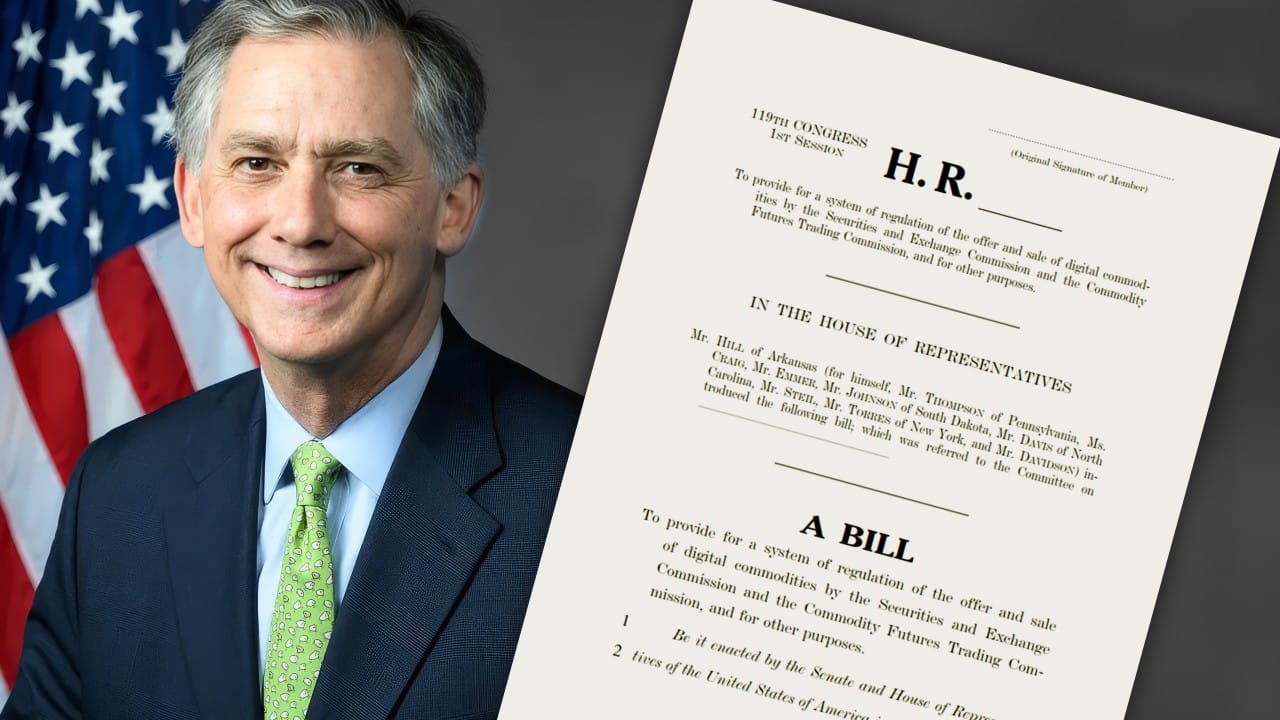
On January 29, the Agriculture Committee voted along party lines to advance the bill, marking the first time crypto market structure legislation has ever passed a Senate committee.
The bill still needs to clear the Senate Banking Committee, be reconciled between chambers, and survive a floor vote, all before midterm elections in November 2026 potentially shift the political landscape.
Policy analysts have flagged that timeline as tight, and some industry observers have warned the legislation could stall if it cuts too close to the election cycle.
If enacted, the CLARITY Act would create joint SEC-CFTC rulemaking for exchanges and intermediaries, provide expedited registration pathways, and potentially introduce an "innovation exemption" sandbox for digital asset services with lighter regulatory requirements.
What This Means for Tokenized Securities
The regulatory thaw has produced an explosion in tokenized securities activity.
On January 28, 2026, the SEC issued its first comprehensive guidance on tokenized securities in a joint statement from the divisions of Corporation Finance, Investment Management, and Trading and Markets.
The guidance affirmed that existing securities laws apply to tokenized instruments regardless of format, while distinguishing between issuer-sponsored and third-party-sponsored tokenization models and providing a clearer compliance roadmap for each.
The market data reflects the shift.
→ Tokenized equities reached approximately $963 million in market value as of January 2026, up roughly 2,900% year-over-year.
→ The broader tokenized stock market grew more than 50x during 2025, surging from under $30 million to over $700 million by December.
→ Citigroup projects tokenized securities could reach $4–5 trillion by 2030.
Infrastructure is moving in lockstep.
Beginning in 2026, the Depository Trust Company (DTC) will create blockchain-based "digital twins" of securities it already holds, including U.S. equities, ETFs, and Treasury securities on approved distributed ledger networks.
The New York Stock Exchange has announced plans for a platform enabling 24/7 trading of tokenized stocks with instant settlement and Securitize announced plans to list on NASDAQ at a $1.25 billion pre-money valuation.
For context, tokenized assets currently represent just 0.01% of global equity and bond market capitalization.
The upside, if the regulatory framework holds, is measured in trillions.
What Could Slow This Down
None of this is guaranteed to proceed smoothly. Democrats raised conflict-of-interest concerns about President Trump's personal crypto ventures during the CLARITY Act markup, proposing amendments that would ban public officials from engaging in the crypto industry. Those amendments did not pass, but the political tension is real.
The GENIUS Act has drawn criticism from Consumer Reports for insufficient consumer protections.
State attorneys general have flagged gaps in provisions requiring issuers to return stolen funds to fraud victims. And economists have warned that a mass redemption event could force stablecoin issuers to liquidate Treasury holdings at scale, creating bond market instability.
The November 2026 midterms are the biggest wildcard. A shift in congressional control could slow or halt the CLARITY Act entirely, leaving the market structure framework incomplete.
The Bottom Line
The U.S. has built more crypto regulatory infrastructure in the past 12 months than in the previous 15 years.
The window to finish the job is finite. Implementation deadlines, legislative timelines, and midterm elections all converge in the second half of 2026.
If the framework gets completed, the U.S. will have the most comprehensive digital asset regulatory regime in the world.
If it doesn't, the industry will be left with a half-built system and the next Congress may not be as friendly.
Related Reports
- 50 Stablecoin Statistics That Matter in 2026
- Tokenized Money Market Funds: Everything you Need to Know for 2026
Partner/Advertise with Stablecoin Insider
Fill out this form to partner and advertise on the only publication, dedicated entirely to the Stablecoin ecosystem.
See you next week,
- The Stablecoin Insider team