
Table of Contents
Somewhere on the Base blockchain right now, a software agent is making a purchase you never approved. It spotted a data feed it needed, calculated the cost against its budget, authorized a transfer of USDC, and moved on, all in milliseconds, without a single human click.
This is not a future scenario. It is happening at scale. At Davos in January, Circle CEO Jeremy Allaire called stablecoins "the native payment rail for machine-to-machine commerce at internet speed and global scale."
The infrastructure is catching up to the rhetoric fast.
In just the past two weeks, Stripe launched a "machine payments" preview that lets developers bill AI agents directly in USDC, and Coinbase unveiled Agentic Wallets which is crypto infrastructure designed specifically for bots, not humans.
The numbers behind this shift are striking.
→ McKinsey estimates real-world stablecoin payments hit $390 billion annually in 2025, with B2B flows accounting for $226 billion of that, a 733% year-over-year surge.
→ Gartner projects machine customers could control up to $30 trillion in purchases by 2030. The agent economy is no longer a whitepaper concept.
Here are five documented ways it's playing out today.
Paying for API Access and Compute, One Request at a Time
The old model for accessing a premium API was a subscription: pay monthly, get access, hope you use enough to justify the bill. That model breaks down when you're an AI agent spinning up and spinning down thousands of times a day, querying dozens of different services.
Enter x402, an open payment protocol developed by Coinbase that revives the long-dormant HTTP 402 "Payment Required" status code and turns it into a real transaction.
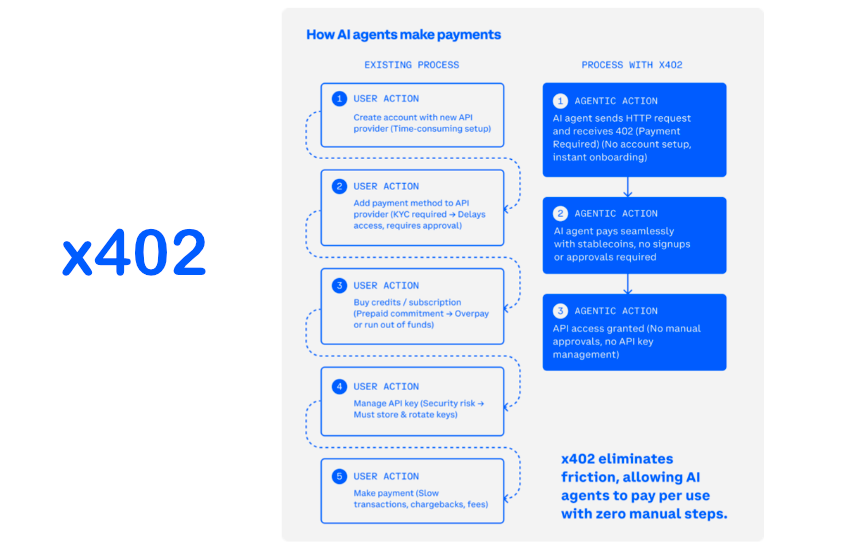
When an agent hits a paywall, the server responds with the cost and a wallet address. The agent evaluates, pays in USDC, and gets through the gate. No accounts, no subscriptions, no API keys. Just money moving at the speed of an HTTP request.
On February 11, Stripe integrated x402 into its new machine payments preview, enabling developers to charge agents directly in USDC on Base. Cloudflare, which co-launched the x402 Foundation alongside Coinbase in September 2025, is already deploying it for "pay-per-crawl" web data access.
120M+ → Total x402 transactions processed across all chains since launch, per Dune Analytics. Cumulative value transferred has exceeded $41M, with Base leading at $21.5M and Solana at $16.4M.
Agent-to-Agent Commerce: When Bots Pay Other Bots
The more interesting use case isn't agents paying APIs, it's agents paying each other. One agent specializing in weather forecasting buys hyper-local sensor readings from another agent network. A research agent purchases curated analysis from a summarization agent. These micro-markets are forming in real time, running on smart contracts, settling in stablecoins.
- Circle's Developer-Controlled Wallets give agents independent financial identity—the ability to hold, receive, and spend USDC without a human co-signing every transaction.
- Google's Agent Payments Protocol (AP2), backed by Mastercard and PayPal, extends this into stablecoin settlement across agent networks.
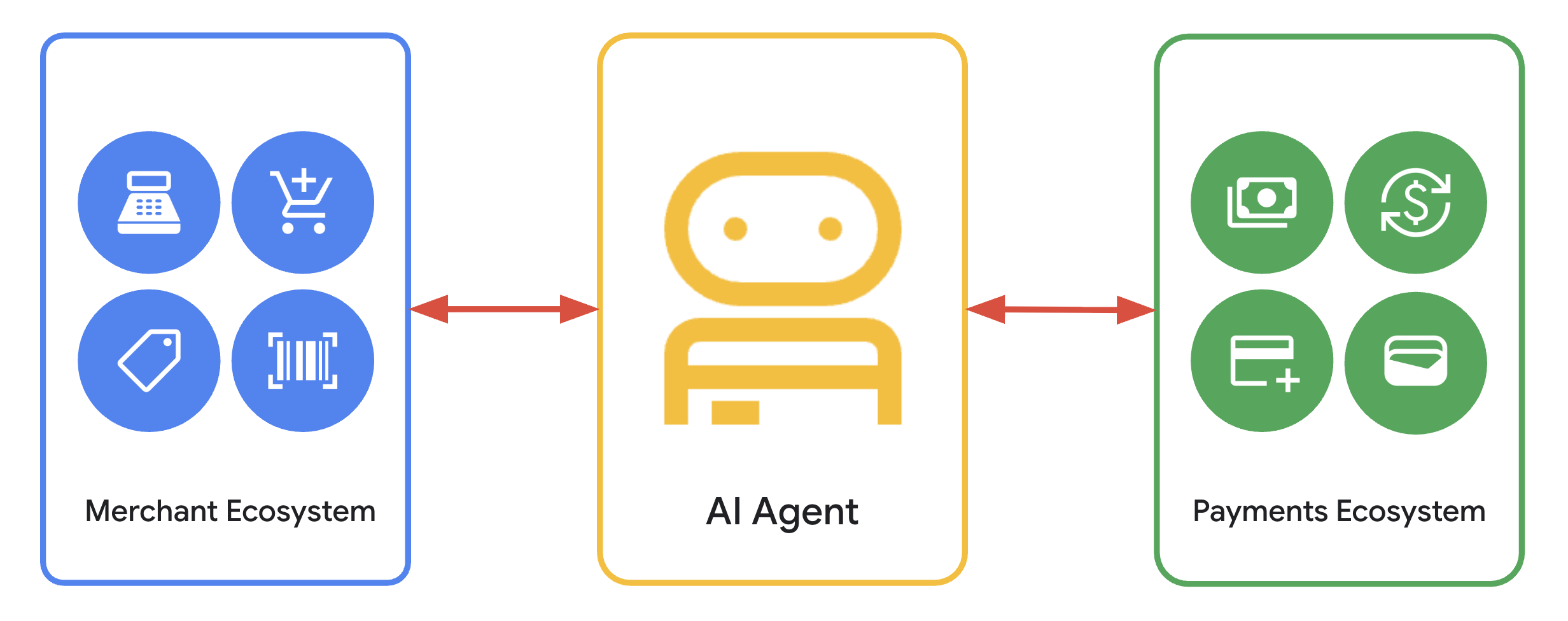
What makes this consequential is the scale of what's accumulating beneath it. Unique stablecoin wallet addresses grew 50% year-over-year to 35 million in 2025. Monthly transaction volumes rose from $450 billion in early 2024 to roughly $710 billion by early 2025. Agentic micropayments are a growing slice of that flow.
35M → Unique stablecoin wallet addresses in 2025, up 50% year-over-year as programmable, agent-friendly payment flows drive broader adoption.
Autonomous Procurement: Agents That Negotiate and Pay for Real Goods
Procurement is one of the most friction-heavy processes in enterprise. Vendor selection, price negotiation, cross-border compliance, payment terms, it burns thousands of human hours annually. Agentic AI is beginning to eat into this, and stablecoins are what make the payment leg possible without a CFO signing off.
Pilots are underway in logistics and inventory management where agents scan vendor APIs for raw materials, compare live pricing against internal ROI thresholds, commit to orders conditionally, and settle in stablecoins the moment terms are met.
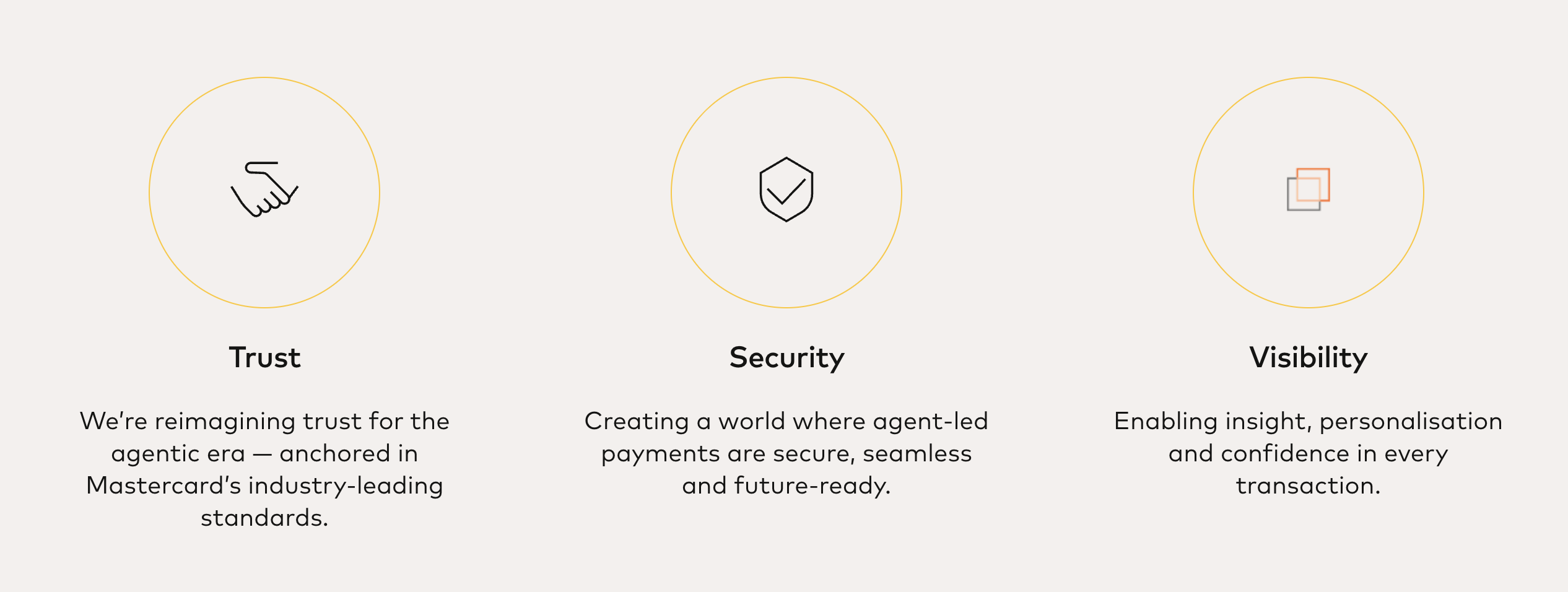
Mastercard's Agent Pay and Visa initiatives provide identity and credentialing infrastructure, while Stripe and Coinbase tooling handles compliant agent spending on Base.
The macro context: B2B stablecoin payments hit $226 billion annually in 2025, roughly 60% of all global stablecoin payment volume, growing 733% year-over-year according to McKinsey. A meaningful portion of that growth is automated procurement, not human wire transfers.
$226B → in annual B2B stablecoin payments in 2025, up 733% year-over-year (McKinsey). Autonomous procurement and treasury flows are a growing share of this.
Buying Data Mid-Task: The End of the Paywall Problem
Any researcher who has ever hit a journal paywall at 2am understands the frustration. AI agents hit this problem constantly and unlike humans, they can pay through it automatically.
Using x402, a research agent compiling a medical or financial report can encounter a proprietary dataset, evaluate its relevance in context, authorize a USDC micro-payment, extract what it needs, and continue without breaking stride.
Circle has demonstrated this with a reference app using LangChain and GPT-4o mini, where agents pay for risk reports autonomously. Nevermined layers usage-based billing for AI model access on top of similar rails.
This transforms data markets. Static paywalls become fluid, per-query monetization. Content creators and data providers get granular revenue; agents get access without subscriptions. It's a structural change for knowledge-intensive industries such as healthcare, finance, and legal where data freshness is competitive advantage.
$4.5B → In stablecoin-linked card spending in 2025, up 673% from 2024 (McKinsey) as programmable payment rails extend to dynamic, mid-workflow data purchases.
Shopping on Your Behalf: Consumer Agents With Spending Limits
The most consumer-facing use case is also the one that will reach the most people first. Personal AI agents, instructed to "find the cheapest direct flight to Lisbon under $800" or "reorder coffee when I'm running low"—are beginning to operate with actual payment authority, not just recommendations.
PayPal's Financial OS for agents and Visa/Mastercard infrastructure are enabling autonomous checkout flows. Coinbase's new Agentic Wallets address one of the central trust problems: "Smart Security Guardrails" let users define hard spending limits and transaction permissions, while private keys are isolated in secure enclaves never exposed to the agent's underlying model.
The prize here is enormous. McKinsey projects agentic commerce could influence up to $1 trillion in U.S. B2C retail revenue by 2030. Early data suggests conversion rates 6-7x higher than traditional search, because agents don't browse, they execute.
$1 Trillion In U.S. B2C retail revenue that agentic commerce could influence by 2030 (McKinsey), as consumer AI agents shift from making recommendations to completing purchases autonomously.
The bottom line.
2026 is when agentic payments moved from pilot to production.
The GENIUS Act and Europe's MiCA framework are providing the regulatory clarity that institutional players needed. The infrastructure x402, Agentic Wallets, AP2 is live and processing real money.
The remaining challenges are real: prompt injection attacks, agent identity, liability when a bot makes a bad purchase. But the trajectory is clear.
Stablecoins are now the settlement layer for a new class of economic actors that never sleep, never forget a price comparison, and never miss a payment deadline. The machines are spending. The only question is how fast.
Related Reports
- 50 Stablecoin Statistics That Matter in 2026
- Tokenized Money Market Funds: Everything you Need to Know for 2026
Partner/Advertise with Stablecoin Insider
Fill out this form to partner and advertise on the only publication, dedicated entirely to the Stablecoin ecosystem.
See you next week,
- The Stablecoin Insider team