Table of Contents
Last updated: October 22, 2026
Stablecoin yield in 2026 is not one market with one average rate. It is a stack of different yield engines that behave like different asset classes: tokenized Treasury cash management, onchain money markets, protocol savings rates, yield bearing dollars, fixed yield primitives, basis and funding trades, liquidity provision, and leveraged structures.
This matters because stablecoins are now large enough to turn yield into a core product category, not a niche.
On October 22, 2026, DefiLlama tracked total stablecoin market cap around $307.3B, with USDT dominance about 59.4%. At the same time, a16z estimates stablecoins accounted for about $46T in transaction volume in the prior year and its 2025 report also highlights an adjusted measure of organic activity.
The result is simple: you can find yield almost anywhere, but the best strategy depends on what risk you are being paid to take, how transparent the mechanism is, and how you exit under stress.
How we picked these strategies: we grouped stablecoin yield by its primary driver (cash, credit, protocol policy, derivatives, fees or leverage), kept one strategy per driver that a retail or treasury user can access today, and checked each example rate against DefiLlama or the platform's own page on October 22, 2026.
Key Takeaways
- The lowest risk lane onchain tends to be tokenized T bills and cash equivalent fund tokens that invest in short dated Treasuries and repo.
- DeFi money markets pay you mainly from borrow demand, while many yield bearing dollars depend on protocol revenue or derivatives basis and funding conditions.
- Higher APY usually means taking on one or more of these: smart contract risk, counterparty risk, liquidation risk, depeg risk, credit risk, or liquidity and exit risk.
- Before sizing any position, confirm who pays the yield, how and how fast you can exit, and what happens to your principal in a depeg, liquidation, or issuer failure.
- Each strategy maps to real venues: DeFi markets such as Aave, Morpho, Compound and Spark, fixed-yield markets like Pendle, RWA issuers like Ondo, and regulated CeFi programs; match the venue to the risk lane you chose.

Yield Snapshot, October 2026
| Strategy | Example protocol | Chain | 30d avg APY (Oct 22, 2026) | Main risk | Source |
|---|---|---|---|---|---|
| Tokenized T bills | Ondo USDY | Ethereum | 3.6% | Issuer, eligibility limits | DefiLlama |
| Protocol savings rate | Sky sUSDS | Ethereum | 3.7% | Governance rate changes | DefiLlama |
| DeFi money market | Aave v3 USDC | Ethereum | 4.4% | Smart contract, utilization | DefiLlama |
| DeFi money market | Compound v3 USDC | Ethereum | 4.9% | Smart contract, utilization | DefiLlama |
| Onchain private credit | Maple USDC (syrupUSDC) | Ethereum | 5.2% | Borrower credit | DefiLlama |
| Synthetic dollar (basis) | Ethena sUSDe | Ethereum | 4.9% | Funding can turn negative | DefiLlama |
30-day average APY from DefiLlama pool pages, read October 22, 2026. Fixed yield, AMM liquidity provision, vault allocators and looping depend on the specific market and are not shown as a single rate. For which tokens pay yield, see our yield-bearing stablecoins guide; for staking platforms, see staking stablecoins for yield; for a plan you can follow, see our step-by-step guide to earning APY on stablecoins.
How To Evaluate Stablecoin Yield Risk In 2026
Before you compare numbers, classify the yield by its primary driver:
- Cash Yield: short duration Treasuries and repo
- Credit Yield: borrower interest and spreads
- Derivatives Yield: perpetual funding and basis
- Protocol Yield: fees and monetary policy inside a protocol
- Incentive Yield: emissions and reward programs
A hard data point that frames the entire category is issuer reserve economics. Circle reported reserve income of $733M in Q4 2025 and USDC circulation of $75.3B, illustrating how large the reserve yield pool can be when circulation is high.
Use that lens when you see a yield product. Ask what portion is coming from cash like returns versus credit or derivatives.
1) Tokenized T Bills And Cash Equivalent Fund Tokens
What It Is:
Onchain tokens representing interests in funds that hold short term US Treasury bills and often run repo and reverse repo against government collateral.
Why It Sits In The Low Risk Lane:
The return is anchored to short duration government paper rather than crypto leverage loops.
A concrete example is USYC, described as the onchain representation of a short duration yield fund that invests in short term US Treasury bills and performs repo and reverse repo activity.
What Makes This More Than A Narrative In 2026:
Institutional commentary is increasingly explicit that stablecoin growth can translate into meaningful Treasury demand.
A Standard Chartered scenario covered by CoinDesk discussed stablecoins driving large incremental T bill issuance over time, which is part of why tokenized cash management is a center of gravity for yield products.
What To Diligence:
- Fund structure, administrator, custody, and redemption windows
- Allowlisting and transfer restrictions for compliance
- Settlement and liquidity mechanics under stress
2) Protocol Savings Rates That Pay Yield On A Native Stablecoin
What It Is:
A protocol controlled savings module where deposits earn a variable rate set by governance and protocol parameters.
Example Mechanics With Verifiable References:
Sky describes the Sky Savings Rate as variable, governance determined, with no minimum deposit requirement and withdraw anytime positioning.
Spark documentation describes sUSDS as an ERC 4626 wrapper for USDS in the Sky Savings Rate module, designed to make the savings position transferable and composable.
Why It Is Popular In 2026:
This lane is a default for users who want yield without active strategy management. It often integrates directly into wallets and apps and can act as a base rate inside a broader ecosystem.
What To Diligence:
- Governance risk and rate change frequency
- Smart contract and module risk
- Stablecoin system health and collateral exposure
3) DeFi Money Markets With Variable Lending Rates
What It Is:
Supply stablecoins into lending protocols and earn interest paid by borrowers.
Where Yield Comes From:
Borrow demand from leverage, hedging, market making, and liquidity operations. Rates rise and fall with utilization and risk appetite.
Why This Strategy Remains Foundational:
This is the simplest transparent yield engine in DeFi: interest paid by borrowers against collateral with liquidation rules.
It is also one of the most legible models for treasury teams because the mechanism maps to credit markets.
What To Diligence:
- Collateral mix and concentration
- Liquidation design and oracle robustness
- How much of APY is true borrow interest versus incentives
4) Risk Managed Lending Vaults And Allocators
What It Is:
You deposit stablecoins into a vault that allocates across money markets and opportunities, often with caps, whitelists, and rebalancing logic.
Why It Exists:
Operationally, most teams do not want to manage dozens of lending venues. Vaults package monitoring, diversification, and execution into a single position.
Key Tradeoffs:
- You may get better diversification and controls
- You take manager and strategy risk plus fees
What To Diligence:
- Strategy mandate, caps, and risk limits
- Transparency on positions and rebalancing triggers
- Fee stack and whether performance is net of costs
5) Onchain Private Credit And Real World Lending
What It Is:
Stablecoins lent to real world borrowers through onchain credit structures that may include receivables, collateral, or underwriting frameworks.
Why Yield Can Be Higher:
Credit spreads exist because defaults happen. Higher returns compensate for underwriting, enforcement, and liquidity risk that does not exist in Treasury backed products.
What To Diligence:
- Underwriting and default history
- Legal enforceability, jurisdiction, and collateral recourse
- Transparency on borrower concentration and covenants
6) Yield Bearing Dollars Built On Reserve Or Cash Like Income
What It Is:
Stable value tokens designed so holders can benefit from cash like yield mechanics, either through direct pass through or protocol structures that reflect reserve income.
Why This Category Is Expanding:
Issuer reserve economics are now widely visible.
Circle reported reserve income of $733M in Q4 2025 and large growth in USDC circulation, which is a clear indicator of how much yield exists at the reserve layer when stablecoin supply is large.
What To Diligence:
- Whether the yield is actually passed to holders or retained
- Redemption certainty and liquidity under stress
- Regulatory constraints on yield distribution in your jurisdiction
7) Fixed Yield Primitives That Separate Principal And Yield
What It Is:
Yield tokenization splits a yield bearing asset into a Principal Token and a Yield Token so you can lock fixed yield or trade yield exposure.
How It Works In Documented Terms:
Pendle documentation describes minting PT and YT from a yield bearing asset wrapper, with PT redeemable for principal at maturity and YT receiving yield distribution before maturity.
Why This Is A Major 2026 Strategy:
It introduces term structure logic into DeFi.
Galaxy explicitly describes a strategy pattern where users buy discounted PTs that converge to full face value at maturity, effectively encoding an implied fixed yield.
What To Diligence
- Liquidity at entry and exit for PT markets
- Curve risk and mark to market volatility before maturity
- Smart contract and oracle dependencies
8) Basis And Funding Yield From Delta Neutral Structures
What It Is:
Harvest perpetual funding or basis spreads while hedging directional exposure.
Why It Can Produce Attractive Yield:
When leveraged demand is structurally one sided, funding can remain positive, creating an ongoing transfer from leveraged traders to hedged capital.
Why It Is Not Low Risk:
Funding can flip negative and basis can dislocate in stress. Operationally, many implementations rely on centralized venues, which introduces counterparty and custody risk.
What To Diligence:
- Venue and custody exposure
- Funding regime sensitivity and hedge slippage
- Exit planning under volatility spikes
9) Synthetic Yield Bearing Dollars Using Derivatives And Collateral Yield
What It Is:
Stable value tokens that generate yield via protocol strategies, often combining derivatives positioning with collateral yield, and distributing the net outcome to token holders.
Why This Category Exists:
It aims to provide a yielding dollar experience without requiring every user to run a complex hedged book.
Primary Risks:
- Depeg behavior in extreme conditions
- Dependence on derivatives funding regimes
- Counterparty exposure if hedges rely on centralized venues
- Governance and reserve management quality
10) Stablecoin Liquidity Provision In AMMs
What It Is:
Provide stablecoin liquidity to pools and earn swap fees plus incentives.
Why APY Can Be Misleading:
Reported APY often blends:
- Fee APR, which depends on real volume
- Incentives, which can end abruptly
- Short lived campaigns that distort forward returns
Main Risks:
- Pool imbalance during volatility
- Depeg events that concentrate losses
- Smart contract risk and withdrawal congestion
11) Leveraged Structured Yield And Looping Strategies
What It Is:
Use leverage to amplify lending or fixed yield exposure, often by borrowing against yield bearing collateral and re deploying into more yield assets.
Documented Strategy Pattern:
Galaxy describes a loop style pattern involving buying discounted PTs, using them as collateral, borrowing stablecoins, and repeating to compound exposure.
Why It Is The Highest Risk Lane:
Leverage introduces liquidation risk and turns routine rate volatility into existential drawdown risk.
What To Diligence:
- Liquidation thresholds and oracle behavior
- Borrow rate volatility and cost of capital spikes
- Network congestion and unwind feasibility
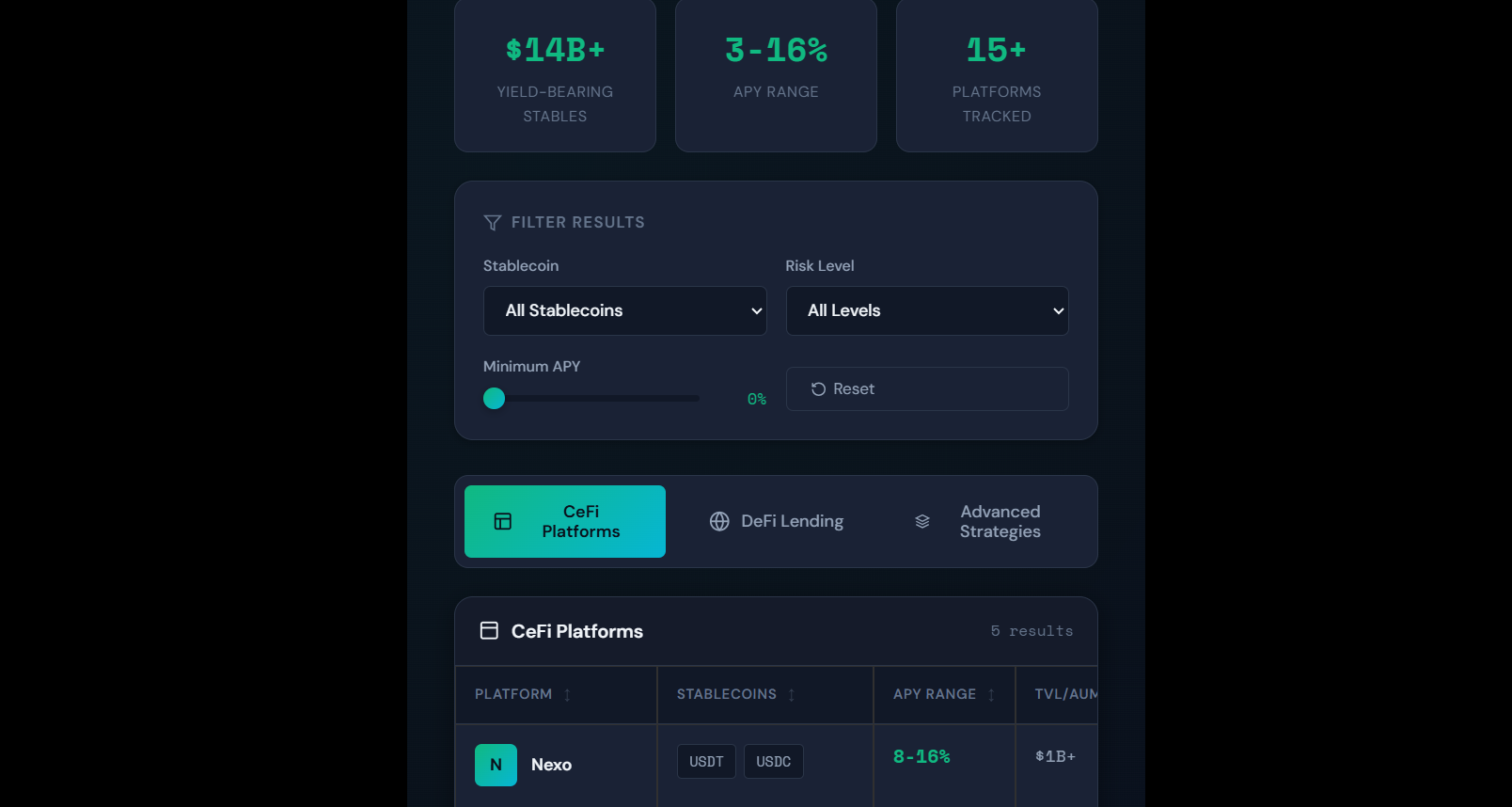
Where to Run These Strategies: 16 Stablecoin Yield Platforms
Aave
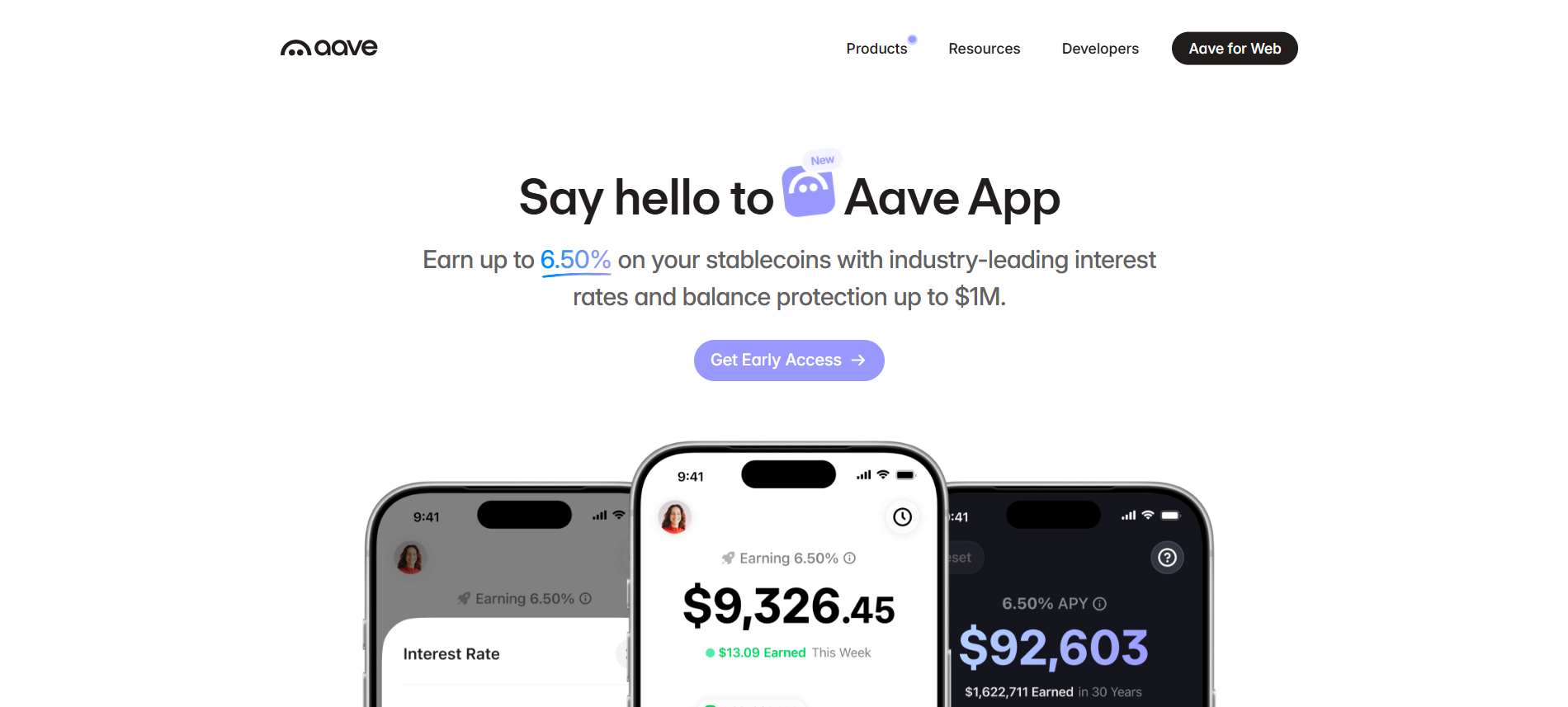
A leading DeFi money market used across multiple chains, known for deep stablecoin liquidity and broad integrations. It is commonly used by traders, market makers, and DeFi treasuries because positions are transparent and typically easy to rebalance.
Rates are market-driven, so returns move with borrowing demand.
How it generates yield:
Lenders earn variable interest paid by borrowers who post collateral to borrow stablecoins for leverage, arbitrage, and liquidity.
Pros
- Deep liquidity and strong adoption across chains
- Transparent on-chain positions and utilization metrics
- Generally straightforward to enter and exit (when liquidity is available)
Cons
- APY is variable and can compress quickly
- Smart contract/oracle/liquidation-design risk
- High utilization can reduce withdrawal liquidity
Morpho
A DeFi lending layer focused on improving rate efficiency versus standard pooled lending by matching lenders and borrowers more directly. It is often used by allocators who care about net yield and want a more optimized lending experience without running a bespoke strategy.
Product complexity is slightly higher than basic pooled lending, but still transparent.
How it generates yield:
Earns yield from borrowing demand, often improving pricing through more efficient matching and routing mechanics.
Pros
- Often more capital-efficient than pooled-only lending
- Transparent positions and market-level rate discovery
- Strong fit for rate-sensitive stablecoin lenders
Cons
- Still exposed to protocol/market risks in the stack
- Rate advantages can shrink in competitive markets
- Requires more understanding than a basic pool deposit
Compound
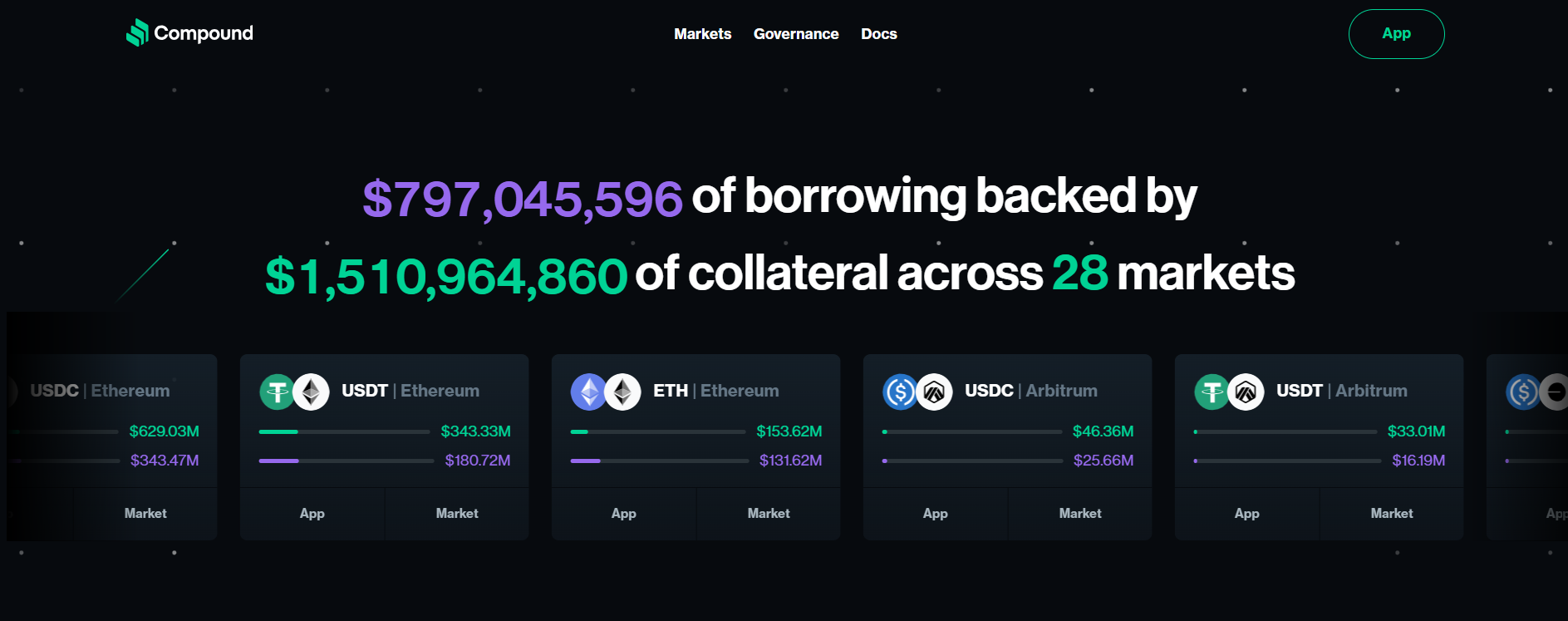
One of the original DeFi lending protocols, widely integrated and conceptually simple: supply assets, earn a variable rate, and withdraw subject to liquidity. It is often used as a baseline venue for DeFi lending exposure because the mechanics are familiar and easy to audit.
Yields generally track market borrow demand and can be less “spiky” than incentive-heavy venues.
How it generates yield:
Lenders earn variable interest paid by overcollateralized borrowers.
Pros
- Simple, widely understood lending model
- Strong ecosystem integrations and composability
- Useful as a conservative DeFi lending building block
Cons
- Rates can be lower than more optimized venues at times
- Variable APY can drop fast in low-demand regimes
- Smart contract and liquidation-structure risk remains
Spark Protocol
A DeFi lending venue built with a strong emphasis on stablecoin liquidity and treasury-style usage. It is often used by allocators who want stablecoin-first lending exposure rather than multi-asset complexity.
Like other lending markets, returns are driven by utilization and borrowing demand.
How it generates yield:
Lenders earn interest paid by borrowers, with rates primarily reflecting stablecoin borrow utilization.
Pros
- Stablecoin-centric design and market focus
- Clear yield driver (borrow interest) with onchain transparency
- Can be a solid “core sleeve” venue for stable allocations
Cons
- Variable APY and utilization-driven liquidity constraints
- Protocol/governance risks still apply
- Market conditions can shift quickly during stress
Pendle Finance
A term-yield marketplace that lets users separate and trade yield components to target or lock returns over a defined period. It is commonly used when allocators want more predictability than pure variable lending, or when they want to position around expected rate moves.
It is powerful, but requires understanding of maturity, pricing, and exit mechanics.
How it generates yield:
Users gain yield exposure through term-based pricing and yield component trading that can lock or target rates for a maturity window.
Pros
- Better predictability versus purely variable-rate lending
- Useful for planning, budgeting, and term-based positioning
- Can be attractive when you expect variable rates to fall
Cons
- Higher complexity than lending markets
- Secondary liquidity and pricing vary by market/maturity
- Exit before maturity can introduce pricing slippage
Yearn Finance

A vault and strategy layer designed to automate stablecoin allocation across onchain opportunities. It is often used by users who prefer delegation and systematic rebalancing rather than manual routing between markets.
Returns depend heavily on the specific vault strategy, fees, and current incentive environment.
How it generates yield:
Vault strategies allocate across lending, liquidity, and incentive opportunities and rebalance to optimize net returns.
Pros
- Hands-off management and automated rebalancing
- Can improve net APY by routing across venues
- Strategy abstraction reduces day-to-day operational burden
Cons
- Adds strategy-layer risk on top of protocol risk
- Strategy performance can change as incentives rotate
- Requires trust in vault design, parameters, and execution
Ondo Finance

An RWA-focused platform offering tokenized exposures commonly linked to short-duration traditional yield sources. It is often used by allocators seeking yield that behaves more like rates-driven cash management than DeFi borrowing cycles.
Product availability, redemption terms, and eligibility can vary depending on structure and jurisdiction.
How it generates yield:
Yield is derived from off-chain cashflows (often treasury-like) and reflected through token structure, accrual, and redemption mechanics.
Pros
- Yield source is typically easier to explain (rates/cashflows)
- Often less correlated to DeFi leverage cycles
- Can fit treasury-style stablecoin allocation frameworks
Cons
- Issuer/legal/custody structure risk is central
- Redemption terms and eligibility can be restrictive
- Onchain liquidity varies by venue and market conditions
Ethena
A higher-complexity stablecoin-adjacent yield approach built around hedged carry dynamics that can produce strong returns in certain market regimes. It is typically used by sophisticated allocators who understand funding/basis sensitivity and who size positions conservatively.
Returns can change quickly when market structure shifts.
How it generates yield:
Yield is primarily sourced from strategy mechanics such as funding rates and hedged basis/carry dynamics (regime-dependent).
Pros
- Potential for top-tier yields in favorable regimes
- Diversifies away from pure borrowing-demand yield
- Fits well as a satellite sleeve for experienced allocators
Cons
- Tail risk and regime shifts can be material
- Requires deeper understanding of dependencies and mechanics
- Not ideal for set-and-forget users with low risk tolerance
Coinbase

A large custodial venue where yield products are delivered through an exchange-native experience, often appealing to users who prioritize simplicity and reporting. It is typically chosen for operational convenience rather than maximum onchain transparency.
Yield terms, eligibility, and rates can vary by product and region.
How it generates yield:
Yield is produced through platform-managed lending/financing/investment routing (platform-dependent).
Pros
- Simple onboarding and custody + earn in one place
- Operational convenience and familiar UX
- Often easier portfolio tracking for custodial users
Cons
- Counterparty risk is the main risk driver
- Less transparency into exact yield engine than DeFi
- Rates/terms can change based on policy and market conditions
Kraken
A custodial platform offering yield access integrated with trading and account management. It is often used by users who want stablecoin yield without managing wallets, gas, bridges, or onchain monitoring.
Product availability and yield levels can differ by jurisdiction and account type.
How it generates yield:
Yield comes from platform-run lending/financing arrangements and product structures.
Pros
- Simple UX and exchange-integrated operations
- Low on-chain operational overhead
- Convenient for users already trading on-platform
Cons
- Counterparty/platform risk dominates
- Product terms and availability can be region-dependent
- Less granular transparency versus on-chain venues
Binance
A large custodial platform with multiple yield formats (often including flexible and locked options) and frequent rate promotions. It is typically selected for breadth of product choices and ease of execution.
Because product menus can be extensive, diligence on terms and lockups matters.
How it generates yield:
Yield is delivered through platform-managed lending/financing and structured earn products.
Pros
- Broad range of stablecoin yield options and terms
- Often competitive headline rates during promotions
- Fast execution for users already operating on the exchange
Cons
- Counterparty risk remains the core tradeoff
- Terms, lockups, and eligibility can change quickly
- Complexity increases with many product variants
Nexo

A custodial yield and lending platform that often combines earn features with a credit-style product ecosystem. It is typically used by users who want a unified custodial experience and do not want to manage on-chain positions.
Rate tiers and conditions can materially affect realized yield.
How it generates yield:
Yield is derived from platform-managed lending/financing and product-specific allocation policies.
Pros
- Streamlined custodial UX for earn and related products
- Can offer boosted rates depending on program terms
- Convenient for users who prefer an all-in-one platform
Cons
- Counterparty and operational risk dominate
- Boosted yields may require lockups or conditions
- Transparency depends on platform disclosures and product design
Ledn
A custodial lender typically framed around a lending-first yield model rather than complex strategy stacking. It is often chosen by users who want fewer moving parts and a clearer narrative for how returns are generated.
As with all custodial lenders, platform risk and product terms are decisive.
How it generates yield:
Yield is primarily driven by lending activity and borrower demand under the platform’s risk framework.
Pros
- Lending-based yield model is easy to understand
- Generally simpler product framing than strategy-heavy offerings
- Can suit users who want a more conservative custodial approach
Cons
- Counterparty/platform risk remains significant
- Rates can lag aggressive DeFi incentive cycles
- Availability and terms can vary by jurisdiction
Uphold
A custodial app that pays stablecoin rewards to users who complete three challenges each month: open the app, deposit at least $50, and trade at least $50 (Uphold). It suits users who want a simple CeFi option and do not mind a monthly checklist.
Rewards reset each month, so a missed challenge means a missed payout.
How it generates yield:
On October 22, 2026, Uphold's rewards page listed 3% on RLUSD and 2% on USDC, with all stablecoin rewards paid in RLUSD (Uphold). Uphold says rewards are subject to change.
Pros
- No DeFi interaction or wallet management required
- Published reward levels on a public page
- Rewards are paid in a stablecoin and can compound
Cons
- Rewards depend on a monthly deposit and trade
- Custodial counterparty risk
- Rates and eligibility can change by jurisdiction
Crypto.com Earn
A custodial Earn program where your rate depends on the token, the term you choose, and how much CRO you lock under Crypto.com tiers. Its public calculator lets you model token, amount, CRO lockup, and term before you commit (Crypto.com).
The best stablecoin rates usually need a CRO lockup, so count that extra exposure in your return.
How it generates yield:
Yield is platform-managed: Crypto.com sets rates by token, term, and tier, and Private Members get an extra 1% p.a. paid in CRO (Crypto.com).
Pros
- Flexible and fixed-term options in one app
- Transparent in-app rate calculator
- Supports major stablecoins alongside other assets
Cons
- Top rates tied to CRO lockups and membership tiers
- Custodial counterparty risk
- Products and rates vary by region
DeFiLlama Yields
Not a place to deposit funds but a free, neutral dashboard that tracks yields across DeFi pools, with filters for stablecoin pools, base versus reward APY, and TVL (DeFiLlama Yields). It is the fastest way to check whether a quoted rate is real before you move money.
Treat the highest listed APYs as leads to research, not recommendations.
How it generates yield:
It does not. DeFiLlama reports what each protocol pays from lending interest, trading fees, or token rewards, and splits base APY from reward APY so you can see how much of a rate depends on incentives.
Pros
- Broad coverage across chains and protocols
- Base versus reward APY split on every pool
- TVL and rate history per pool
Cons
- No custody, so all risk sits with the protocol you choose
- The highest APYs often come from new or thin pools
- Data can lag protocol changes
CeFi vs DeFi Stablecoin Rates: October 2026 Snapshot
| Platform | Type | Stablecoin rate (Oct 22, 2026) | Main risk |
|---|---|---|---|
| Uphold | CeFi rewards | 2% USDC, 3% RLUSD | Platform risk; monthly challenges |
| Crypto.com Earn | CeFi earn | Varies by token, term, and CRO tier | Platform risk; CRO lockup |
| Aave v3 (Ethereum) | DeFi lending | About 3.8% on USDC | Smart contract; rate swings |
| Compound v3 (Ethereum) | DeFi lending | About 3.2% on USDC | Smart contract; rate swings |
| Sky (sUSDS) | Protocol savings rate | About 3.8% | Governance rate changes |
| Maple (syrupUSDC) | Onchain private credit | About 5.1% | Borrower credit risk |
Sources: Uphold rewards page, Crypto.com Earn, and DefiLlama pools for Aave v3 USDC, Compound v3 USDC, sUSDS and Maple USDC (syrupUSDC), all checked October 22, 2026. Looking for the highest APY by token instead of by platform? See our best yield-bearing stablecoins in 2026 guide, which profiles sUSDS, syrupUSDC, sUSDai, savUSD, siUSD and more.
A Practical Due Diligence Checklist For Any Stablecoin Yield Product
- Yield Source: Treasuries, borrower interest, credit spreads, funding and basis, protocol fees, incentives
- Dominant Risks: Smart contract, counterparty, liquidation, depeg, credit, liquidity and exit
- Exit And Redemption: Who redeems, how fast, what limits apply, what happens during market stress
- Transparency: Audits, proof of reserves where applicable, onchain reporting, risk disclosures
- Concentration: Top borrowers, top collateral types, venue exposure, chain exposure

Common Mistakes to Avoid
Even low-risk assets like stablecoins carry strategic pitfalls.
Key errors to steer clear of include:
- Over-reliance on a single protocol: A failure in one DeFi app (e.g., smart contract exploit) can lead to total capital loss.
- Ignoring depegging risks: Always verify reserve transparency and market stability of stablecoins.
- Pursuing unsustainable APYs: High yields driven by token emissions can vanish quickly.
- Skipping insurance: Uninsured vaults are risky; prioritize platforms with smart contract protections.
A diversified, risk-aware approach using tools like DeFiLlama, Certora, and DeFiSafety can mitigate these issues.
Conclusion
Stablecoin yield in 2026 should be approached like portfolio construction, not rate shopping.
- If you prioritize capital preservation and operational simplicity, tokenized T bills and protocol savings modules are usually the first place to look, because the return is anchored to cash like drivers and the mechanics are easier to diligence.
- If you move up the risk curve into money markets, fixed yield primitives, and basis strategies, you trade simplicity for return potential and you must underwrite new failure modes like liquidation mechanics, funding regime changes, and liquidity risk.
The most durable rule is still this: do not treat APY as a feature unless you can explain what funds it, what breaks it, and how you exit.
Read Next:
- Solana's New Payments.org Just Changed Stablecoin Payments in 2026
- The Machines Are Spending Stablecoins. Here's Where the Money Is Going.
- Tokenized Money Market Funds: Everything you Need to Know for 2026
FAQs:
1. What is the lowest risk stablecoin yield strategy in 2026?
The lowest risk stblecoin yield strategy in 2026 are Tokenized T bills and cash equivalent fund tokens, because the return is anchored to short term US Treasury bills and repo style cash management mechanics.
2. How do protocol savings rates like the Sky Savings Rate work?
Protocol savings rates pay a variable rate determined by governance and protocol parameters. Users deposit USDS and can receive a transferable wrapper like sUSDS that represents the savings position.
3. Why do money market lending rates change so much?
Because lending APY is driven by utilization and borrow demand. When borrowers aggressively lever or hedge, rates rise. When demand cools, rates compress.
4. What makes fixed yield primitives different from lending?
Fixed yield primitives separate principal from yield so users can target maturity based outcomes. Pendle documentation describes PT as representing principal redeemable at maturity and YT as representing the yield stream.
5. What is the most common reason stablecoin yield strategies fail in stress?
Most failures come from one of three issues: depeg risk, liquidation cascades from leverage, or liquidity and exit constraints that prevent orderly redemption at par.
Disclaimer:
This content is provided for informational and educational purposes only and does not constitute financial, investment, legal, or tax advice; no material herein should be interpreted as a recommendation, endorsement, or solicitation to buy or sell any financial instrument, and readers should conduct their own independent research or consult a qualified professional.