
Table of Contents
Bitcoin was never meant to have tokens, let alone dollar-pegged assets with instant settlement.
Yet from 2023–2025, a new mix of protocols: Ordinals/BRC-20, Taproot Assets, and Stacks with sBTC, quietly turned the “digital gold” chain into a serious base layer for stablecoins.
At the same time, stablecoins themselves have become systemic in crypto and increasingly relevant to traditional finance. Global stablecoin market cap has passed roughly $300 billion, and multiple analyses estimate $10 trillion in transfer volume during 2024 alone, exceeding the combined card volumes of Visa and Mastercard.
The European Central Bank has also noted that stablecoins already feature in the majority of centralized-exchange trades.
Against that backdrop, Bitcoin-native stablecoins matter for three reasons:
- They combine dollar exposure with Bitcoin’s security and brand.
- They plug into Lightning-style payments for near-instant settlement.
- They open a path to BTC-denominated DeFi via Stacks and sBTC.
Key Takeaways
- Stablecoins have scaled to hundreds of billions in cap and tens of trillions in annual transfer volume, making them core financial infrastructure.
- Bitcoin now hosts three distinct stablecoin architectures: Ordinals/BRC-20, Taproot Assets over Lightning, and Stacks-based tokens.
- BRC-20 stablecoins prove that fungible, dollar-pegged assets can live directly on Bitcoin L1, but rely heavily on off-chain indexers.
- Taproot Assets + Lightning aim to turn Bitcoin into a multi-asset payment rail, with USDT and other stablecoins routed at Lightning speed while anchored to Bitcoin.
- Stacks and sBTC create a programmable environment where BTC and stablecoins can participate in DeFi while inheriting Bitcoin’s settlement.
Why Stablecoins on Bitcoin Matter Now
From speculative trading chips to infrastructure
In the early 2010s, Bitcoin was the crypto market. Today, the main settlement asset inside crypto is the dollar, represented by stablecoins.
Recent research broadly shows:
- Total stablecoin market cap around the hundreds of billions of dollars.
- Annual on-chain transfer volume in the tens of trillions of dollars, depending on methodology.
Most of that volume flows on Ethereum, Tron, and a handful of newer chains. But a growing share of builders and institutions want Bitcoin-grade settlement under their dollars.
Bitcoin’s missing piece: programmability
Out of the box, Bitcoin:
- Uses a UTXO model and a conservative scripting language.
- Was never designed for rich token standards or complex smart contracts.
That is why other chains captured the first wave of stablecoin issuance.
However, several upgrades and protocol layers changed the design space:
- SegWit and Taproot enabled more flexible transaction formats and opened the door to embedding structured data in outputs.
- Ordinals introduced a way to assign serial numbers to individual satoshis and “inscribe” arbitrary data onto them.
- BRC-20 defined a (still experimental) way to represent fungible tokens via JSON inscriptions.
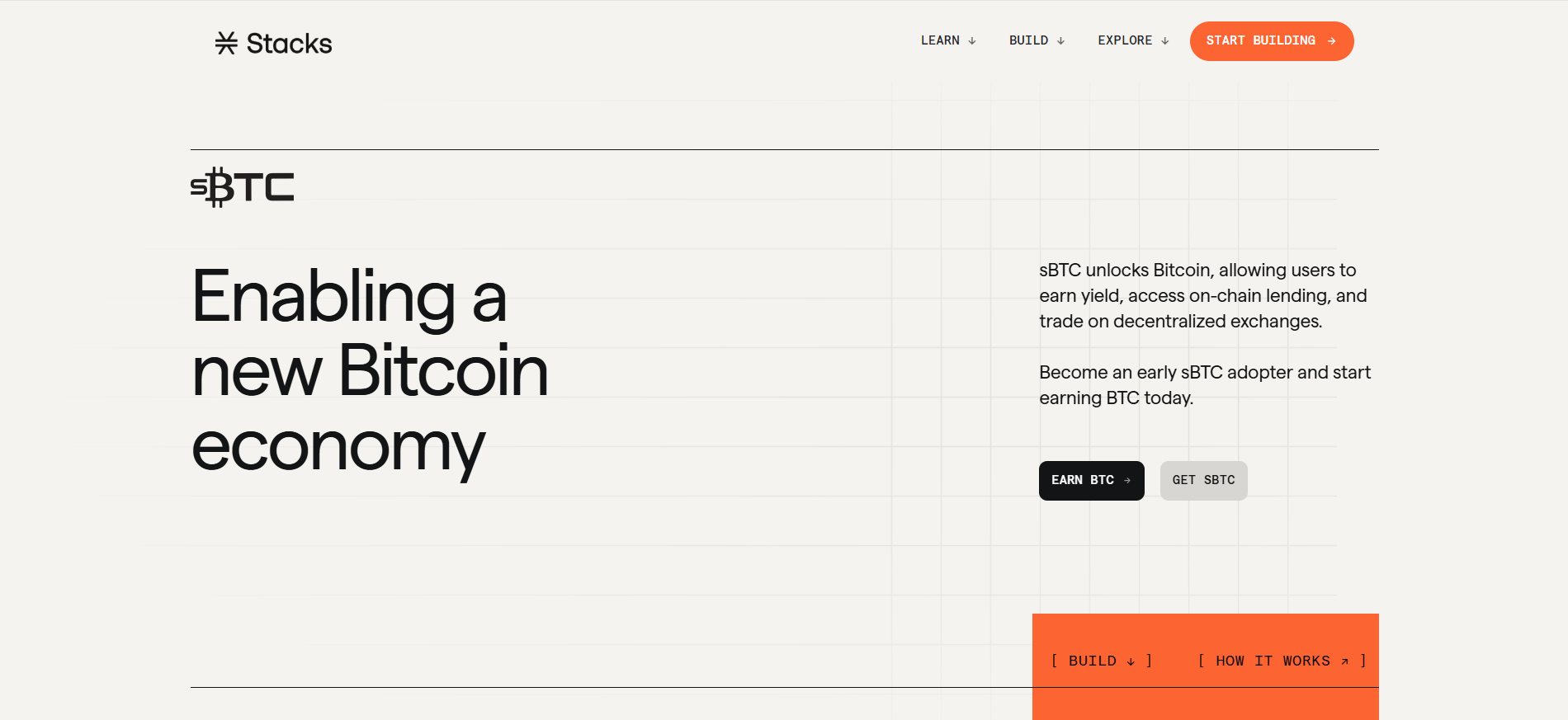
- Taproot Assets (formerly Taro) defined a protocol for issuing assets on Bitcoin and routing them over the Lightning Network.
- Stacks introduced a separate layer with its own smart contracts and consensus, while anchoring to Bitcoin for settlement and finality.
Put together, these let stablecoins sit “on Bitcoin” in several different ways.
Technical Foundations: Ordinals, BRC-20, Taproot Assets, and Bitcoin Layers
Ordinals: giving every satoshi an identity
The Ordinals protocol treats each satoshi as a numbered unit. That numbering, sometimes called Ordinal Theory, allows you to:
- Track satoshis through the chain.
- Attach arbitrary content (text, images, JSON, etc.) as an “inscription” to specific sats.
These inscriptions are simply data encoded in Taproot witness fields, but with a shared indexing convention that wallets and explorers can interpret.
That mechanism is the foundation for both NFTs and fungible tokens on Bitcoin.
BRC-20: fungible tokens via JSON inscriptions
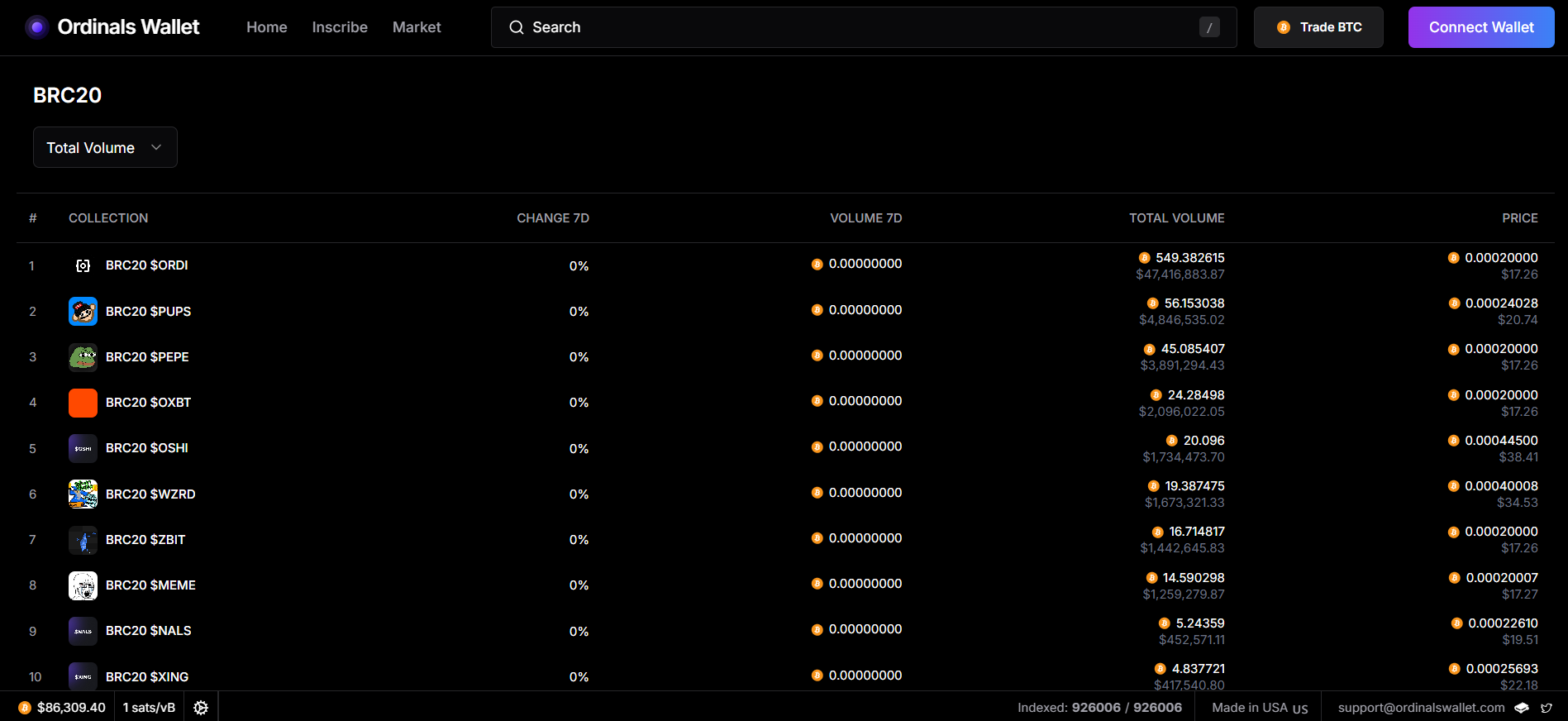
BRC-20 is an experimental token standard defined by a set of JSON fields written as Ordinal inscriptions.
Key characteristics:
- No on-chain smart contract logic: Token state (balances, total supply) is reconstructed by off-chain indexers that read the sequence of inscriptions.
- Purely Bitcoin-native: All data lives on Bitcoin L1; there is no separate chain.
- High blockspace cost: During meme-token waves in 2023, BRC-20 traffic pushed Bitcoin fees sharply higher.
Despite these trade-offs, BRC-20 demonstrated that you can represent fungible assets, including stablecoins, directly on Bitcoin.
Taproot Assets: asset issuance with Lightning routing
Where BRC-20 is inscription-only, Taproot Assets is a full protocol for issuing and transferring assets using Taproot outputs. It has several important properties:
- Asset metadata is anchored in Bitcoin UTXOs, so the base security is Bitcoin L1.
- Most asset state can be kept off-chain, improving scalability.
- Assets can be deposited into Lightning channels and routed just like BTC, enabling low-fee, instant transfers.
Taproot Assets is often described as a “multi-asset Lightning protocol” where stablecoins and other tokens can move over the same graph as BTC.
Stacks: smart contracts and DeFi anchored to Bitcoin
Stacks takes a different approach. It is its own chain, but:
- Anchors its blocks to Bitcoin via a consensus mechanism called Proof of Transfer (PoX).
- Uses the Clarity programming language designed for predictable, interpretable smart contracts.
- Settles transactions to Bitcoin, so Stacks activity ultimately inherits Bitcoin finality.
The Stacks ecosystem now includes DEXs, lending protocols, and Bitcoin-backed synthetic dollars. That makes it the main venue for DeFi denominated in BTC and stablecoins, while still anchored to Bitcoin.
The First Bitcoin Stablecoins via Ordinals and BRC-20
From meme tokens to dollar-pegged assets
When Ordinals and BRC-20 took off in early 2023, most activity revolved around NFTs and meme coins. But the same mechanism can represent any fungible asset, including stablecoins.
The first widely publicized BRC-20 stablecoin came from Stably.
Case study: Stably USD (#USD) on Bitcoin
In May 2023, Stably, a stablecoin-as-a-service provider, introduced Stably USD (#USD) as a BRC-20 token on Bitcoin:
- #USD is a USD-backed stablecoin issued as a BRC-20 asset using the Ordinals protocol.
- Each token is described as backed 1:1 by U.S. dollars held with a custodian, with periodic attestations from a third-party firm.
- Stably had previously issued the same asset on other chains; the BRC-20 version extended it to Bitcoin.
Technical implications:
- State (who owns how many #USD) is derived entirely from BRC-20 inscriptions.
- Transfers are regular Bitcoin transactions carrying inscription data; wallets and explorers interpret that data.
Limitations of BRC-20 stablecoins
While BRC-20 shows that bitcoin-native stablecoins are possible, it has clear limits for serious payments and DeFi:
- Indexer dependency: Token balances depend on off-chain indexers applying shared rules to on-chain data. If indexers disagree or fail, users can see inconsistent state.
- No contract logic: There is no native way to encode interest, liquidation, or other DeFi behaviors on Bitcoin L1. Everything beyond “mint/transfer/burn” happens off-chain.
- High fee exposure: When inscription traffic spikes, BRC-20 stablecoin users pay the same inflated fees as everyone else.
For that reason, BRC-20 stablecoins are better understood as a proof of concept and a niche settlement asset than as the main channel for global stablecoin flows on Bitcoin.
Taproot Assets and Lightning: Bitcoin-Native Stablecoins at Payment Speed
If BRC-20 is about representing tokens, Taproot Assets is about moving them efficiently.
How Taproot Assets works
Taproot Assets lets issuers create assets that:
- Are anchored to specific Taproot outputs on Bitcoin, securing them with Bitcoin consensus.
- Carry asset metadata off-chain in a way that still allows verification from Bitcoin’s base layer.
- Can be deposited into Lightning channels, so they can be sent over the Lightning Network with multi-hop routing, HTLCs, and low fees.
Releases of Taproot Assets on mainnet have been framed as the first steps toward a “multi-asset Lightning protocol” where stablecoins and other assets can be minted on Bitcoin and transmitted via Lightning.
USDT on Bitcoin and Lightning
Tether has announced that USDT would be issued using Taproot Assets and integrated with the Lightning Network:
- USDT is historically the largest stablecoin by market cap and volume.
- Bringing it back to Bitcoin (USDT had an earlier Omni-based version) via Taproot Assets allows high-volume payments in a dollar unit while inheriting Bitcoin’s settlement guarantees.
This combination means, in principle:
- Merchants can accept USDT over Lightning with near-instant confirmation.
- Exchanges and fintechs can route deposits and withdrawals using Lightning rails instead of (or in addition to) bank wires.
- Cross-border remitters can move dollars at Lightning speeds, while the underlying asset is anchored to Bitcoin.
Exactly how fast this infrastructure scales now depends on wallet and gateway support, but the technical building blocks are live.
Benefits and trade-offs
Benefits
- Speed & cost: Lightning-routed stablecoins can settle in seconds with low on-chain footprint once channels are opened.
- Security: Assets are ultimately secured by Bitcoin’s consensus and Taproot outputs.
- Interoperability: The same Lightning infrastructure can handle BTC and multiple assets.
Trade-offs
- Channel management: Non-custodial users must still manage channels and liquidity, which is non-trivial.
- Ecosystem maturity: Wallets, explorers, and accounting tools for Taproot Assets are newer than those for ERC-20s.
- Regulation: Routing fiat-backed stablecoins over Lightning doesn’t remove KYC/AML obligations for custodial endpoints.
Stacks, sBTC, and Stablecoins in Bitcoin DeFi
While Taproot Assets focus on payments, Stacks focuses on programmable finance anchored to Bitcoin.
Stacks as a Bitcoin layer
Stacks is often described as “a Bitcoin layer for smart contracts.”
In practice:
- Stacks blocks record application logic and state.
- Those blocks are anchored to Bitcoin; Bitcoin serves as the final settlement and security layer.
- The Clarity language deliberately avoids some of the pitfalls of more permissive VMs by being decidable and interpreted from source.
The ecosystem includes DEXs, lending markets, NFT platforms, and infrastructure providers.
sBTC: a trust-minimized BTC asset for Stacks
A key missing piece for Bitcoin-native DeFi has been a way to move BTC into smart contracts without relying entirely on centralized custodians.
The sBTC design addresses this by proposing:
- A trust-minimized two-way peg where BTC on L1 can be locked and represented 1:1 as sBTC on Stacks, and later redeemed.
- A decentralized signer set and protocol-level rules to minimize reliance on a small federation.
Once BTC becomes sBTC, it can participate in Stacks DeFi, including stablecoin protocols, while remaining economically tied to Bitcoin.
Stablecoins on Stacks today
Several projects and data points illustrate how stablecoins are emerging on Stacks:
- Arkadiko launched USDA, a crypto-collateralized stablecoin backed by Bitcoin-related collateral on Stacks.
- The ecosystem has explored bringing USDC-style fiat-backed stablecoins to Stacks, modeling how dollar assets can live on the Bitcoin-anchored layer.
- Other projects have worked on Bitcoin-backed, yield-bearing synthetic dollars.
On-chain analytics show that the total stablecoin market cap on Stacks is still small, on the order of a few million dollars, with a single asset accounting for the majority of that. That’s tiny compared to Ethereum or Tron, but the architecture is in place.
Why this matters for Bitcoin treasuries
From a treasury perspective, Stacks + sBTC + stablecoins offers:
- BTC as productive collateral, via lending, AMMs, and structured products.
- Stablecoin liquidity anchored to Bitcoin settlement rather than an alt-L1.
- The ability to hedge or earn yield in dollar terms while keeping exposure and logic close to Bitcoin.
The trade-off is that Stacks introduces additional protocol risk beyond Bitcoin itself; any serious user has to evaluate that stack separately.
Comparing Stablecoin Architectures on Bitcoin
We can now distinguish three main families of “stablecoins on Bitcoin”:
Taxonomy
- Ordinal / BRC-20 stablecoins
- Representation: JSON inscriptions on individual sats.
- Example: Stably USD (#USD).
- Taproot Assets stablecoins (Lightning-routed)
- Representation: asset metadata anchored in Taproot outputs; state mostly off-chain.
- Example: Tether’s announced USDT on Bitcoin and Lightning.
- Stacks-based stablecoins (Bitcoin-anchored smart contracts)
- Representation: tokens on the Stacks chain (e.g., USDA, other BTC-backed dollars), settled and anchored to Bitcoin via PoX.
Trade-off matrix (high level)
- Security anchoring
- All three ultimately depend on Bitcoin L1, but BRC-20 and Taproot Assets sit closer to the base layer than Stacks, which adds its own consensus.
- Programmability
- BRC-20: minimal, indexer-driven.
- Taproot Assets: supports complex flows when combined with Lightning, but not a full smart-contract VM.
- Stacks: full smart contracts (Clarity), enabling lending, AMMs, and more.
- Throughput and fees
- BRC-20: limited by Bitcoin L1 capacity, sensitive to fee spikes.
- Taproot Assets: most transfers off-chain over Lightning; can reach very high throughput for payments.
- Stacks: higher throughput than L1, with its own block times and fee market.
- DeFi composability
- BRC-20: low, there is no native contract layer.
- Taproot Assets: moderate, can power payments, but complex DeFi requires additional infrastructure.
- Stacks: high, explicitly designed for DeFi and apps.
No single approach “wins” on every dimension.
Instead, each one aligns with different use cases:
- BRC-20: experimental issuance, collectibles, niche settlement.
- Taproot Assets: payments and remittances using Lightning.
- Stacks: DeFi and structured finance anchored to Bitcoin.
Risk, Compliance, and Regulation
Risk layers specific to Bitcoin stablecoins
Any stablecoin stack has at least three risk layers:
- Reserve risk:
Whether off-chain assets truly back the stablecoin, how segregated they are, and how transparent the issuer is. Large analyses now routinely scrutinize stablecoin reserves and call out concentration in short-term Treasuries and other assets. - Protocol risk:
- Ordinals/BRC-20: bugs or ambiguity in inscription parsing and indexer implementations.
- Taproot Assets: correctness of asset issuance and routing logic.
- Stacks/sBTC: assumptions about peg signers and Stacks consensus.
- Network risk
- Fee spikes on Bitcoin L1.
- Liquidity and channel capacity on Lightning.
- Liquidity fragmentation across multiple stablecoin designs.
Regulation: the stablecoin bill wave
On the policy side, the United States and other jurisdictions have moved toward dedicated stablecoin legislation, including:
- Requirements for fully backed reserves held with regulated custodians.
- Clear segregation of assets and obligations.
- Supervisory oversight of issuers and reserve custodians.
European regulators have also flagged risks that large stablecoins could siphon bank deposits or accelerate dollarization, underlining that regulatory scrutiny will intensify as volumes grow.
For Bitcoin-native stablecoins, the key compliance question is not where the token lives technically, but who issues and redeems it and how they manage reserves and KYC/AML obligations.

Conclusion
Stablecoins on Bitcoin are no longer a thought experiment; they are live across multiple architectures with real assets and real flows.
Ordinals and BRC-20 show how far you can push Bitcoin’s base layer, Taproot Assets and Lightning turn it into a high-speed multi-asset payment network, and Stacks delivers the missing DeFi logic around BTC and dollars.
- For builders, the play is to pick the lane that matches your product: BRC-20 for experimentation, Taproot Assets for payments, Stacks for structured finance.
- For treasuries and institutions, the job now is to watch liquidity, integration support, and regulatory clarity, then move early where the risk/reward profile looks acceptable.
The revolution is already underway; the opportunity is in deciding which of these Bitcoin-native rails you’re willing to bet on.
Read Next:
- The Neobank Transition Report: Stablecoin Effects on Banking
- Stablecoins on Layer-3s
- Stablecoin Tax Guide 2025: Reporting and Tools for Compliance
FAQs:
1. Are Bitcoin-based stablecoins safer than those on Ethereum or Tron?
Not automatically. “Safety” depends on reserve quality, issuer transparency, and legal framework, plus the technical risk of the protocol (BRC-20, Taproot Assets, Stacks). Bitcoin’s base layer is highly secure, but a poorly designed peg or opaque reserves can still create serious risk.
2. What’s the main difference between BRC-20 stablecoins and Taproot Assets stablecoins?
BRC-20 uses ordinal inscriptions and relies on off-chain indexers to reconstruct balances from JSON data on Bitcoin L1. Taproot Assets uses Taproot outputs and a dedicated protocol for asset issuance, then routes assets over Lightning for instant transfers. The latter is designed for payments; the former is more of a generic inscription schema.
3. Do I need to manage Lightning channels to use stablecoins via Taproot Assets?
If you use a custodial wallet or exchange, they typically manage channels and liquidity for you. Non-custodial users who want direct control over funds must handle channel opening, liquidity, and routing, just as with BTC Lightning today.
4. How does Stacks use sBTC and stablecoins together?
BTC can be pegged into sBTC, a 1:1 Bitcoin-backed asset on Stacks. That sBTC can then be combined with stablecoins like USDA or other BTC-backed dollars in lending markets, AMMs, and other DeFi apps. This lets users borrow dollars against BTC, earn yield, or provide liquidity, all anchored to Bitcoin for settlement.
5. Is there significant liquidity yet for stablecoins on Bitcoin?
Relative to Ethereum and Tron, liquidity is still small. Stablecoins on Stacks add up to only a few million dollars of market cap, and BRC-20 stablecoins like #USD are tiny compared to USDT/USDC on EVM chains. Taproot Assets and Lightning integrations are newer, so large-scale volume will depend on how quickly wallets, exchanges, and merchants integrate them.
6. What should institutions watch if they are considering Bitcoin-native stablecoins?
Key indicators include: legal clarity around reserve requirements and issuers; growth in Taproot Assets usage and Lightning-routed stablecoin transactions; and TVL, volume, and security track records of Stacks DeFi protocols.