Table of Contents
January 22, 2026.
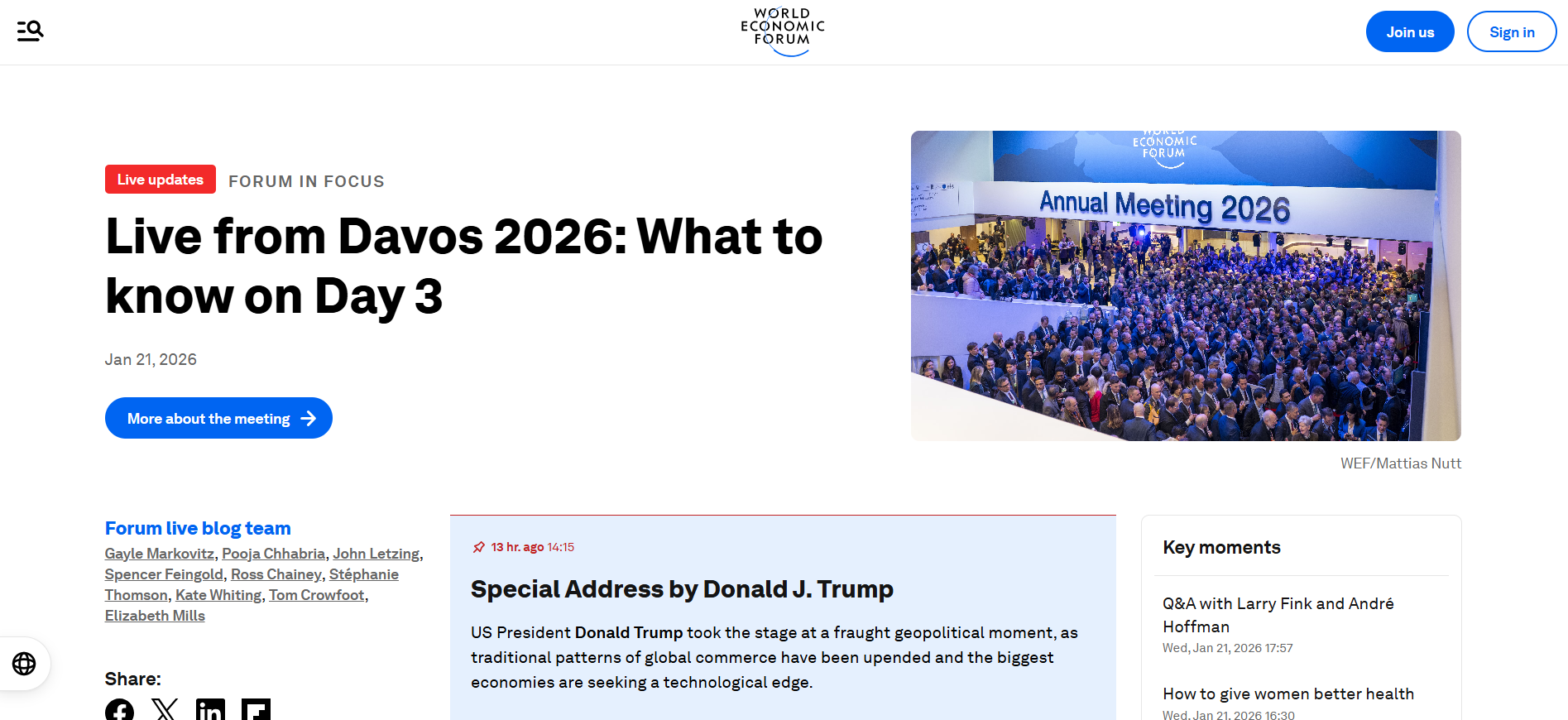
As the World Economic Forum's annual meeting unfolds in the snowy peaks of Davos, Switzerland, stablecoins have taken center stage.
In the middle of Bitcoin's recent volatility, dipping briefly below $90,000, industry leaders, regulators, and institutions converged to discuss how these pegged cryptocurrencies are bridging traditional finance with blockchain technology, with circulation figures like USDC's 108% year-over-year growth underscoring their real-world traction.
Key Takeaways
- Stablecoins positioned as foundational infrastructure for global payments, tokenization, and financial inclusion at Davos 2026.
- First dedicated high-level sessions on stablecoins signal shift from speculation to integration with traditional finance.
- Debates focus on yields for stablecoin holders, with Coinbase CEO Brian Armstrong supporting yields for consumer benefits and U.S. competitiveness.
- Central bankers like François Villeroy de Galhau warn yields pose risks to banking stability and monetary sovereignty.
- Stablecoins linked to broader trends like asset tokenization, real-world assets, and AI-blockchain convergence.
Pivotal Panels Highlight Regulatory and Interoperability Advances
The forum marked a milestone with its first dedicated high-level sessions on stablecoins, signaling a shift from speculative curiosity to strategic integration.
The standout panel, "Where Are We on Stablecoins?" held on January 22, featured heavyweights including Coinbase CEO Brian Armstrong, Ripple CEO Brad Garlinghouse, and representatives from the European Central Bank and Standard Chartered.
Discussions centered on regulatory frameworks, such as the U.S. GENIUS Act, which mandates full reserve backing and audits to ensure stability.
A lively debate ensued between Armstrong and French Central Bank Governor François Villeroy de Galhau over whether stablecoins should offer yields to holders:
- Armstrong advocated for yields as a means to enhance consumer returns and bolster U.S. competitiveness against offshore alternatives, warning that restrictions could drive innovation abroad.
- Villeroy, however, cautioned that such features could introduce systemic risks to banking and monetary sovereignty, preferring stablecoins to complement rather than compete with initiatives like the digital euro.
Other sessions, such as "Stablecoins: How Interoperability Will Define Global Finance," portrayed stablecoins as a bridge, not a threat, to legacy systems, emphasizing their role in seamless cross-border payments and reducing frictions in global earnings.
In "Global Finance's New Foundation: Banks and Blockchains," experts noted a 138% surge in deposit volumes and a 51% increase in average transaction sizes in 2025, tying stablecoins to the broader tokenization trend.
Groundbreaking Announcements Signal Real-World Adoption
Davos 2026 was rife with announcements that could reshape economies. The Government of Bermuda unveiled plans to become the world's first fully on-chain national economy, taking advantage of the partnerships with Circle and Coinbase to integrate stablecoins into banking, insurance, and everyday services like tax payments.
This ambitious move aims to create a digital-first ecosystem, potentially serving as a model for other nations.
Humanitarian efforts also gained momentum:
- Circle announced a grant to United Nations agencies for stablecoin-based aid delivery, promising faster, cheaper, and more transparent distributions to refugees and underserved communities.
- UNICEF's CryptoFund expansion to include USDC was highlighted in sessions focused on closing the humanitarian aid gap, with applications in child-focused initiatives worldwide.
Zerohash's "2026 Stablecoin Momentum Report," released during the event, painted a picture of explosive growth: 690% year-over-year transaction volume, a 146% rise in transacting customers, and a 422% increase in non-U.S. users. The report also noted 1.4 billion stablecoin-ready accounts globally and a 290% uptick in SEC filings referencing stablecoins, underscoring institutional interest.
Regulatory tailwinds were a recurring theme. U.S. President Trump urged swift enactment of market structure legislation, including clarity on stablecoins and DeFi, to position America as the "crypto capital" amid competition from China.
Garlinghouse predicted crypto market highs in 2026, driven by stablecoins' efficiency in payroll and operations, while Armstrong withdrew support for a draft CLARITY Act over yield limitations favoring banks.
Debates on Yields, Sovereignty, and the Bitcoin Standard
Tensions flared over stablecoins' potential to disrupt traditional banking. Armstrong proposed a Bitcoin standard as a hedge against fiat devaluation, a notion Villeroy dismissed as a threat to national sovereignty. Garlinghouse called for equitable standards between crypto firms and banks, arguing that inconsistent regulations stifle innovation.
Broader adoption was celebrated, particularly in emerging markets and Asia, where stablecoins are democratizing financial access.
BlackRock's outlook framed them as foundational for payments, while WEF reports dubbed 2026 an inflection point for digital assets, including stablecoins and CBDCs.
Social Media Buzz and On-the-Ground Reactions
On X, the conversations amplified the optimism. UNICEF's chief highlighted the CryptoFund's USDC integration for aid, while crypto analysts shared live debates on yields and Bermuda's onchain pivot.
Read more: CBIR Acquires Over $500 Million in USDT
Users noted stablecoins' transition to core infrastructure, with chatter linking them to tokenization and DeFi.
Download our "2025 Stablecoin Year-End Report"
Looking Ahead: Challenges and Opportunities
As Davos wraps up, stablecoins' trajectory appears upward, intertwined with tokenization, real-world assets (RWAs), and AI-blockchain synergies.
Institutions like UBS and JP Morgan view them as future payment rails, but hurdles remain: privacy concerns, oracle reliability, and maintaining pegs beyond the USD.
With advancing regulations in the U.S., Europe, Hong Kong, and the UAE, experts predict trillions in transaction volume, potentially flattening access for the unbanked. Yet, critics urge vigilance to mitigate risks in this rapidly maturing space.
Read Next:
- A Tactical Guide of Global Stablecoin Accounts (GSAs)
- Savings GHO (sGHO) from Aave: Full 2026 Review
- Tether (USDT) January 2026 Reserves Report
FAQs:
1. What was the main focus of stablecoin discussions at Davos 2026?
Discussions centered on stablecoins as bridges between traditional finance and blockchain, emphasizing interoperability, regulatory frameworks like the GENIUS Act, and real-world applications in payments and humanitarian aid.
2. Who were key participants in the stablecoin panels?
Panelists included Coinbase CEO Brian Armstrong, Ripple CEO Brad Garlinghouse, ECB representatives, French Central Bank Governor François Villeroy de Galhau, and leaders from Standard Chartered and BlackRock.
3. What announcements were made about stablecoins?
Bermuda launched a fully onchain economy with Circle and Coinbase; Circle granted funds to UN for refugee aid; UNICEF expanded CryptoFund to include USDC; Zerohash released a report on massive growth in stablecoin usage.
4. What debates arose regarding stablecoin yields?
Brian Armstrong argued for yields to boost returns and innovation, while François Villeroy de Galhau opposed them due to potential systemic risks to banks and sovereignty.
5. How do stablecoins relate to broader financial trends?
Stablecoins are seen as enablers for tokenization, cross-border payments, and financial access in emerging markets, with predictions of trillions in volume under advancing regulations in the U.S., Europe, and Asia.
6. What are the future implications of stablecoins from Davos?
2026 viewed as an inflection point for digital assets, with stablecoins potentially democratizing finance but requiring safeguards for privacy and stability.
Disclaimer:
This content is provided for informational and educational purposes only and does not constitute financial, investment, legal, or tax advice; no material herein should be interpreted as a recommendation, endorsement, or solicitation to buy or sell any financial instrument, and readers should conduct their own independent research or consult a qualified professional.