
Table of Contents
Stablecoins are no longer just crypto trading collateral. In 2026, they are increasingly being treated as an always-on settlement rail for dollars and dollar-like value across payments, treasury, market structure, and fintech infrastructure.
The shift is being pulled forward by clearer regulatory perimeter in major jurisdictions, more institutional-grade custody and controls, and growing evidence that stablecoins can reduce settlement time, operational overhead, and FX leakage for specific workflows.
Key Takeaways
- Stablecoin payment usage is measurable and growing, with analysis estimating about $390B of stablecoin payments volume in 2025.
- Stablecoin rails are being adopted by mainstream payment networks and PSPs, including Visa stablecoin settlement and Stripe stablecoin subscriptions support.
- Remittance costs remain materially high globally (World Bank reported ~6.49% average), creating room for stablecoin-based rails where compliance and cash-out are solved.
- Enterprise adoption in 2026 is primarily about controls, auditability, and counterparty risk management, not hype.

What Counts As A Stablecoin Use Case In 2026
A real 2026 use case is an operational workflow where stablecoins are used to settle obligations, move working capital, or reduce reconciliation burden, with repeatable controls and reporting.
In an enterprise lens, the decision criteria usually look like this:
- Settlement certainty and speed: minutes vs days, including weekends and holidays.
- All-in cost: network fees + spreads + on/off-ramp costs + internal ops time
- Compliance fit: KYC/KYB, sanctions screening, Travel Rule where applicable, record retention
- Counterparty risk: issuer, reserves, redemption mechanics, custody model
- Integration effort: ERP, payroll systems, treasury tooling, monitoring, approvals
Why 2026 Is A Step-Change Year For Institutional Adoption
1. Regulation Is Making Stablecoin Procurement Easier
In the EU, MiCA’s framework has been applicable to stablecoin categories (ARTs/EMTs) since June 30, 2024, and the broader regime for service providers since December 30, 2024, which gives compliance teams a clearer baseline for due diligence.
2. Market Structure Is Maturing
Stablecoins remain heavily used in trading and liquidity, but the institutional direction is toward compliance-ready settlement primitives, better monitoring, and clearer reserve narratives.
IMF research also highlights the scale of stablecoin trading activity (USDT and USDC trading volume cited at $23T in 2024), which is part of why traditional finance keeps investing in the rails and controls around them.
3. Payment Networks And PSPs Are Shipping Production Integrations
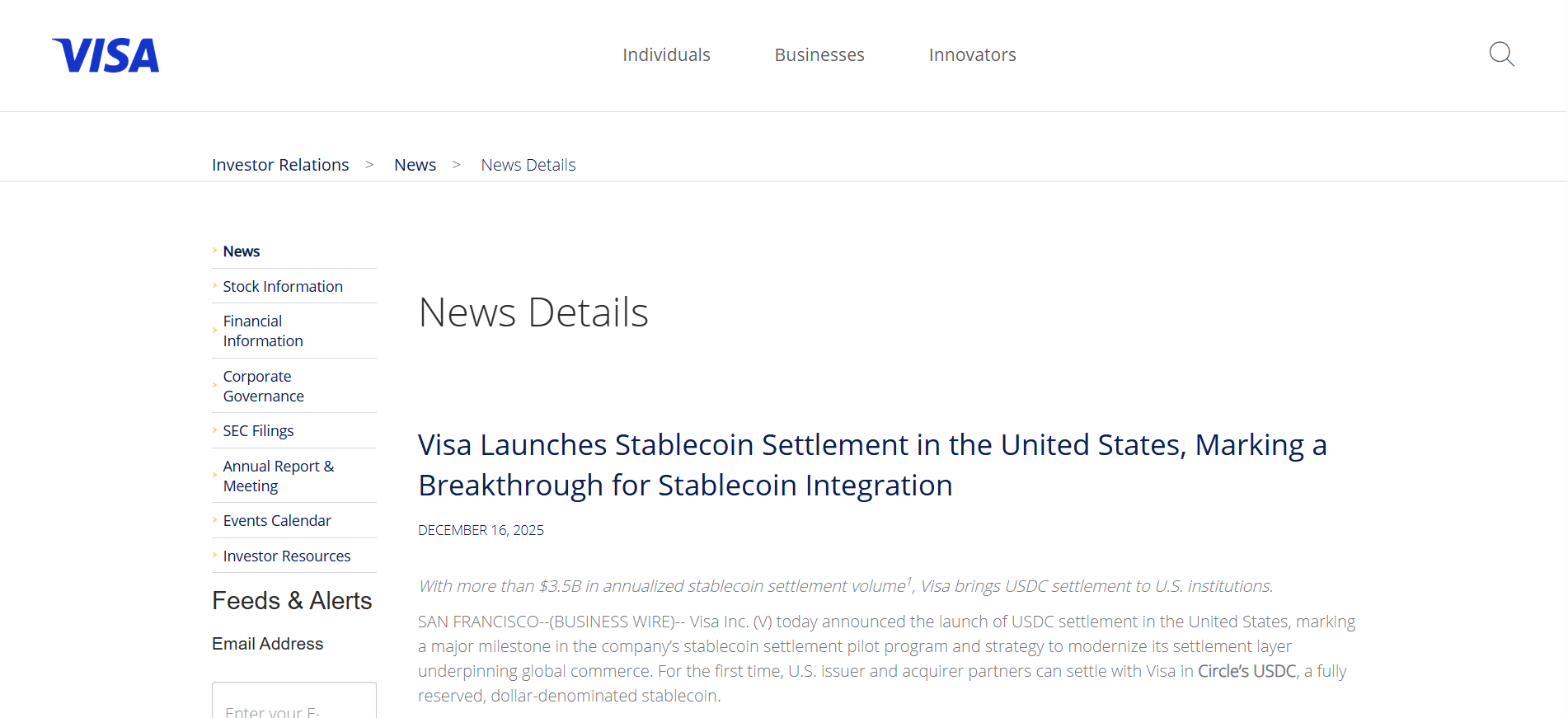
- Visa publicly disclosed stablecoin settlement progress and expanded USDC settlement for institutions, with messaging around annualized settlement volume.
- Stripe introduced stablecoin payments for subscriptions using USDC on Base and Polygon (initially private preview), which matters because it normalizes stablecoins inside existing merchant stacks.
- PayPal positions PYUSD as usable for business payments on PayPal checkout and for transfers on and off PayPal.
The 9 Fastest-Growing Stablecoin Use Cases In 2026
1) Global Payroll And Contractor Payouts
Why it is growing: Global talent is normal, while cross-border banking is still slow, fragmented, and expensive for many worker destinations.
Stablecoins reduce time-to-receive and can lower payout friction when workers prefer digital dollars.
Enterprise implementation pattern
- Funding: treasury funds a payout wallet (or custodian account) on a schedule
- Conversion: convert fiat to stablecoin through a regulated on-ramp
- Payout: distribute to workers to approved addresses or platform accounts
- Reporting: export payout proofs, cost basis, and reconciliation data to finance
Controls that make it enterprise-safe
- Separation of duties (initiator vs approver)
- Address allowlists and verified recipient mapping
- Payout limits by role, region, and amount
- Monitoring for velocity anomalies and sanctions exposure
KPIs
- Time-to-settle (median/95th percentile)
- Failed payout rate
- Cost per payout (fees + spreads + internal ops time)
- Support tickets per 1,000 payouts
2) Remittances And Cross-Border P2P Transfers
Why it is growing: Remittance rails still cost a lot.
The World Bank’s Remittance Prices Worldwide data has cited a global average cost around 6.49%, far above the SDG target of 3%.
At the same time, remittance flows remain massive (hundreds of billions annually).
What stablecoins actually improve
- Faster cross-border settlement between providers
- Potentially lower corridor costs when cash-out is efficient
- Improved traceability and programmability for compliance and support
Reality check
The ECB has cautioned that while cross-border payments are a frequently cited stablecoin use case, evidence for systematic remittance usage is mixed and retail stablecoin use can be a small share of total volume.
This matters: remittances scale when distribution, cash-out, and compliance are solved end-to-end.
Implementation checklist
- Strong cash-in/cash-out partnerships (banks, agents, fintechs)
- Compliance stack: KYC, sanctions screening, transaction monitoring
- Clear error handling and customer support workflows
- Transparent fee disclosures
3) B2B Cross-Border Invoicing And Supplier Payments
Why it is growing: B2B payments are operationally painful across borders, especially for SMB-to-midmarket procurement, agencies, and global vendors.
Stablecoins can reduce wire delays and help vendors receive dollars faster.
Best-fit scenarios
- Paying international contractors and service suppliers
- Cross-border vendor payments where speed matters
- Companies with multi-entity treasury complexity
What to implement
- Vendor onboarding with verified wallet address ownership
- Invoice references mapped into payment metadata for reconciliation
- Payment policies: approval routing, thresholds, restricted jurisdictions
- Monthly close package: wallet statements + transaction logs + conversions
4) Trading, Exchange Settlement, And Liquidity Operations
Why it is growing: Trading is still the biggest stablecoin gravity well.
TRM Labs reported stablecoin transaction volume reaching record highs in 2025, with multi-trillion volume figures cited for parts of the year.
IMF work also underscores the massive scale of USDT/USDC trading volumes.
Enterprise playbook
- Maintain venue buffers and rebalance rules (daily/weekly)
- Set exposure limits by issuer, chain, and venue
- Automate monitoring (failed transfers, fee spikes, unusual flows)
- Ensure incident response for depegs, chain congestion, venue outages
5) Corporate Treasury And Internal Liquidity Management
Why it is growing: Treasury teams increasingly want 24/7 settlement and clearer visibility into intercompany movement, especially for global businesses.
BIS notes stablecoins can potentially offer lower costs and faster speed, including for cross-border transfers and outside banking hours.
Practical treasury use cases
- Moving cash between subsidiaries faster
- Weekend settlement needs for global operations
- Maintaining digital dollar liquidity for payments and vendors
Governance controls
- Approved issuer list + reserve diligence cadence
- Custody policy (self-custody vs qualified custodian vs managed wallets)
- Concentration limits and redemption playbooks
- Audit-ready reporting artifacts
6) Merchant Payments And Checkout
Why it is growing: Some merchants want lower acceptance cost, instant settlement, and access to global customers.
Stripe’s stablecoin subscription support is a strong signal that stablecoins are being embedded in mainstream billing workflows.
PayPal also positions PYUSD for merchant acceptance within PayPal checkout.
What merchants must get right
- Payment confirmation policy (how many block confirmations, what chains)
- Refunds policy and operational tooling
- Accounting integration (revenue recognition, reconciliation)
- Consumer disclosures and support workflow
7) Fintech And PSP Back-End Settlement
Why it is growing: Stablecoins can reduce the need for prefunding across partners and can speed settlement between PSPs, neobanks, and processors.
Visa’s stablecoin settlement effort is a visible example of stablecoins being used to modernize settlement flows in familiar networks.
Implementation pattern
- Wallet structure segmented by partner and product line
- Settlement SLAs and reconciliation files
- Monitoring for anomalous partner flows
- Clear segregation of customer funds vs operating funds
8) Tokenized Real-World Assets And Stablecoin-Settled Markets
Why it is growing: Tokenized funds, T-bills, and other RWAs need a settlement leg that feels like cash.
Stablecoins are the default on-chain settlement asset for many tokenized markets because they behave like programmable dollars.
Enterprise requirements
- Transfer restrictions and whitelist frameworks
- Investor eligibility and compliance logic
- Custody integrations and audit trails
- Robust disclosures and redemption handling
9) Disbursements For Governments, NGOs, And Enterprises
Why it is growing: Disbursements (aid, grants, rebates, payouts) benefit from traceability and speed, especially in time-sensitive contexts.
What to implement
- Recipient verification and eligibility logic
- Disbursement controls: limits, staged releases, audit logs
- Recovery workflows (lost access, mistaken destination)
- Reporting: proof-of-distribution and exception handling

How To Choose The Right Use Case For Your Business
A simple scoring rubric helps prioritize pilots.
| Use Case | Primary ROI Driver | Key Dependencies | Biggest Risk |
|---|---|---|---|
| Payroll | Faster payouts, fewer rails | Worker cash-out + compliance | Recipient errors, controls |
| Remittances | Lower corridor cost | Distribution + cash-out | Compliance + consumer protection |
| B2B Supplier Payments | Working capital + speed | Vendor onboarding | Reconciliation discipline |
| Trading/Liquidity | Capital efficiency | Venue connectivity | Venue/issuer/chain risk |
| Treasury | 24/7 liquidity | Governance + custody | Policy, concentration risk |
| Merchant Checkout | Settlement + global reach | Billing integration | Refunds/support ops |
| PSP Settlement | Less prefunding | Partner operations | Segregation + monitoring |
| RWA Settlement | Market expansion | Eligibility controls | Regulatory perimeter |
| Disbursements | Traceability + speed | Recipient verification | Recovery and support |
Enterprise Implementation Playbook
Architecture Components You Typically Need
- On/off-ramps (regulated exchange, broker, bank partner)
- Custody or managed wallet provider
- Policy engine: approvals, limits, allowlists
- Monitoring: sanctions/AML, anomaly detection
- Reporting pipeline: ledger, ERP exports, month-end packages
Compliance And Risk Notes That Matter In 2026
- Illicit finance controls: Stablecoins can be frozen by issuers in some cases, and enforcement actions and compliance expectations are rising.
Reuters reported Tether stating it froze billions linked to illicit activity, illustrating both compliance capability and scrutiny.
- Macro and policy attention: The ECB has warned stablecoin expansion could have broader financial implications, reinforcing why enterprises should expect tighter oversight and higher due diligence standards over time.
- Stablecoin policy baseline in the EU: MiCA timelines and obligations make it easier to build consistent internal standards across EU operations.

Conclusion
In 2026, the fastest-growing stablecoin use cases are the ones that look like operational finance: payroll, cross-border settlement, B2B payables, treasury movement, and PSP back-end settlement, with trading and liquidity still acting as the deepest liquidity anchor.
The winners are the teams that treat stablecoins as a regulated payment and treasury rail with strong controls, monitoring, and audit-ready reporting, not as a shortcut around governance.
Read Next:
- Top 10 Stablecoin Compliance Tools in 2026
- Solana's New Payments.org Just Changed Stablecoin Payments in 2026
- The Machines Are Spending Stablecoins. Here's Where the Money Is Going.
FAQs:
1. Are Stablecoins Legal For Businesses To Use In 2026?
Stablecoins can be legal for business use in 2026 when they are used within applicable payments, AML/sanctions, and crypto-asset rules in the jurisdictions you operate in, and when your program includes compliant onboarding, monitoring, and recordkeeping.
2. What Is The Most Practical First Stablecoin Pilot For A Mid-Sized Company?
The most practical first stablecoin pilot for a mid-sized company is usually contractor payroll, B2B supplier payments, or internal treasury transfers, because you can measure ROI directly through settlement time, total fees and spreads, and reconciliation effort.
3. What Controls Do Enterprises Need Before Moving Money With Stablecoins?
The controls enterprises need before moving money with stablecoins are role-based access, dual approvals, wallet/address allowlists, transaction limits, exception handling, continuous monitoring and alerting, and audit-ready reporting exports that map cleanly to finance close processes.
4. Do Stablecoins Actually Reduce Remittance Costs?
Stablecoins can reduce remittance costs when they lower settlement friction and reduce intermediaries, but end-user savings depend on distribution, compliance, and cash-out economics in a specific corridor.
5. What Are The Biggest Enterprise Risks To Model?
The biggest enterprise risks are issuer and reserve risk, custody risk, chain congestion or outages, compliance failures (KYC/KYB, sanctions screening, monitoring, record retention), operational errors (incorrect destination or compromised credentials), and reconciliation gaps that break audit readiness.
Disclaimer:
This content is provided for informational and educational purposes only and does not constitute financial, investment, legal, or tax advice; no material herein should be interpreted as a recommendation, endorsement, or solicitation to buy or sell any financial instrument, and readers should conduct their own independent research or consult a qualified professional.