

Table of Contents
In 2026, compliance teams are expected to monitor stablecoin flows across chains, screen counterparties for sanctions exposure, satisfy Travel Rule obligations where applicable, and produce audit-ready evidence without crushing operations with false positives.
That is why most mature programs do not buy a single tool.
They build a compliance stack: on-chain risk intelligence + sanctions screening + Travel Rule messaging + investigations and case management.
FATF guidance explicitly treats stablecoins as in-scope for AML/CFT expectations, and regulators increasingly expect risk-based controls, not checkbox compliance.
Key Takeaways
- The best stablecoin compliance stacks combine blockchain analytics, sanctions screening, and workflow tooling for investigations.
- Cross-chain tracing and stablecoin route visibility matter as much as single-chain monitoring.
- Travel Rule compliance is operational, not theoretical, and needs counterparty verification plus secure data exchange.
What Makes a Stablecoin Compliance Tool In 2026
Core Capabilities To Require
- Wallet and transaction risk screening: real-time scoring for deposits, withdrawals, and payouts (including indirect exposure).
- Entity attribution and typologies: clustering and labeling that helps answer who you are transacting with and why it is risky.
- Cross-chain tracing: visibility across bridges, L2s, and multi-hop routes that obscure provenance.
- Sanctions controls: screening and reporting workflows aligned with OFAC-style expectations for virtual currency risk management.
- Investigations and case management: triage queues, alert SLAs, evidence capture, and consistent decisioning.
- Auditability: decision logs, configurable policies, exports for auditors, and repeatable reporting.
Stablecoin-Specific Needs
Stablecoins create compliance edge cases:
- High-frequency, low-value flows (payouts, merchant settlement, payroll) that demand automation.
- Route complexity (USDC on multiple chains, bridged variants, swap + bridge sequences).
- Issuer and token-contract context (what stablecoin it is, where it came from, and what exposure it has).
How We Selected And Ranked The Top 10 Stablecoin Compliance Tools for 2026
We prioritized tools that are commonly deployed in production compliance programs and map to the stablecoin reality of 2026: cross-chain activity, sanctions pressure, and Travel Rule rollout.
Independent of vendor positioning, the practical scoring criteria were:
- Coverage (chains, stablecoins, bridges), signal quality, explainability
- Workflow fit (alerts → investigations → outcomes) and integration readiness
- Enterprise controls (RBAC, audit trails) and operational scalability
1. Chainalysis KYT + Address Screening
What It Does Best
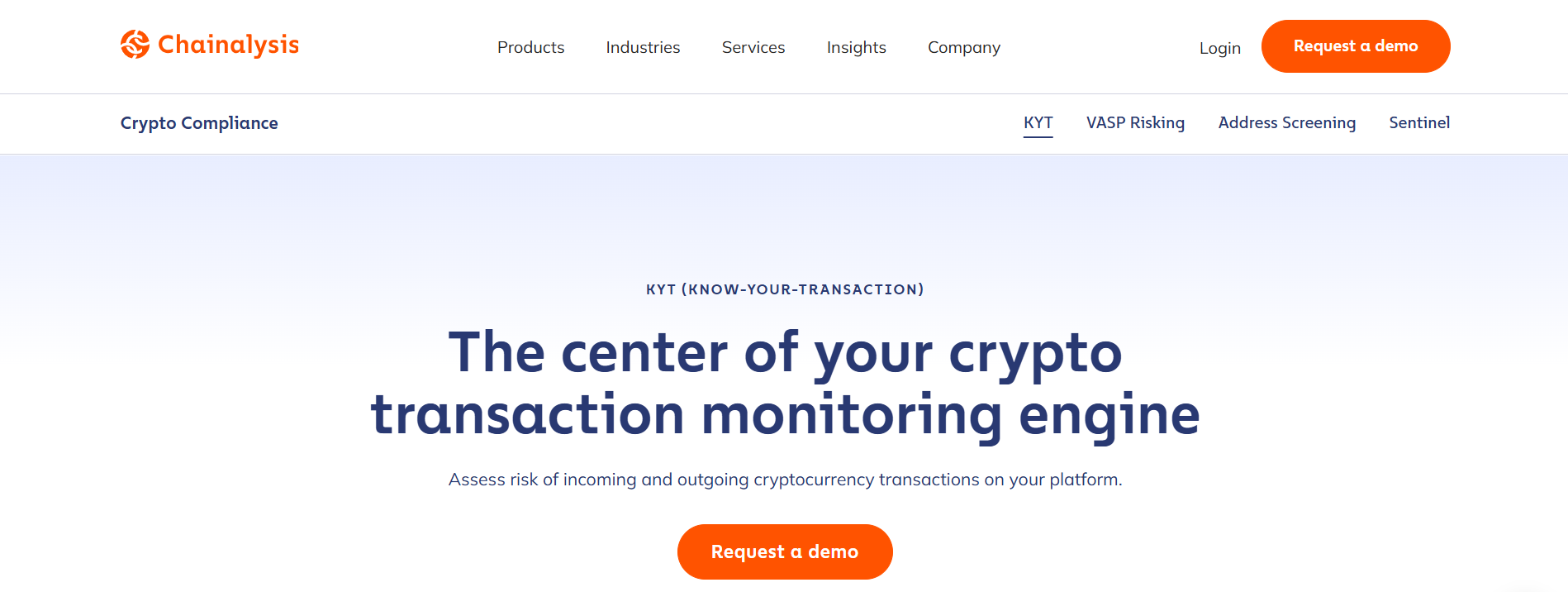
Chainalysis is typically deployed as a core KYT layer for continuous monitoring plus pre-transaction address screening, especially in environments where auditability and repeatable decisioning matter.
Stablecoin Compliance Features That Matter In 2026
- Continuous transaction monitoring (KYT): built to monitor inbound and outbound transfers via API and analyst console workflows.
- Pre-transaction risk screening (Address Screening): check wallet addresses or liquidity pools and block or route activity based on policy.
- Sanctions-oriented screening support: address screening is positioned as a next step beyond free sanctions screening tools, with broader risk categories surfaced for compliance workflows.
- Stablecoin ecosystem risk management: positioned for stablecoin issuers and partners to profile counterparties, monitor exposure, and trigger actions when exposure exceeds policy.
Best For
Exchanges, custodians, stablecoin payout platforms, and fintechs that need a mature KYT posture and consistent audit artifacts.
Integrations And Operational Fit
- KYT is designed for straightforward API integration and to connect into existing workflows and partner ecosystems.
- Examples of embedded-compliance integrations exist in custody and identity stacks (useful when you want KYT to become an automated control, not a manual review step).
2026 Setup Tip
Separate stablecoin monitoring policies by flow type (payouts vs customer withdrawals vs treasury), because stablecoin risk is often driven by counterparty and velocity patterns rather than only source exposure.
2. TRM Labs (Wallet Screening + Transaction Monitoring + Forensics)
What It Does Best
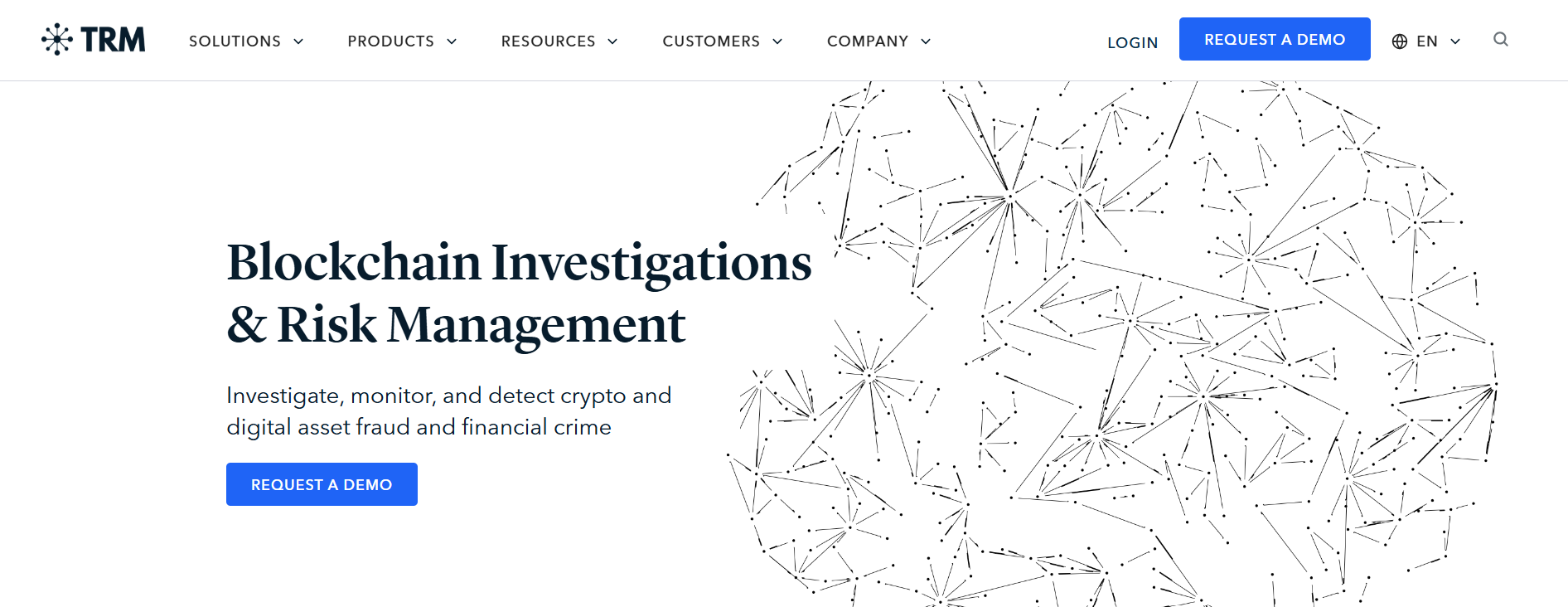
TRM is commonly deployed when teams want one vendor to cover screening, monitoring, and deep investigations with cross-chain tracing.
Stablecoin Compliance Features That Matter In 2026
- Wallet Screening with granular policy tuning: TRM explicitly markets a customizable risk engine with 150+ configurations (ownership, counterparty, indirect exposure; sanctions, scams, etc.).
- Forensics for investigations: automatic cross-chain tracing plus multi-route pathfinding to visualize multiple paths between addresses and entities, reducing manual tracing effort.
- Platform positioning around global adoption: the vendor positions the platform as used by government agencies, financial institutions, and crypto businesses.
Best For
Compliance teams that need both operational monitoring and investigations-ready tooling for escalations, disputes, and regulator questions.
Integrations And Operational Fit
TRM provides APIs designed to integrate wallet, transaction, and risk signals into third-party tools and custom workflows.
2026 Setup Tip
Use wallet screening as a pre-authorization gate for stablecoin payouts, then rely on monitoring plus forensics for post-event analysis as attribution and clustering updates over time.
3. Elliptic Lens (Unified Screening + Monitoring Workflow)
What It Does Best
Elliptic is optimized for compliance teams that want a single path from alert to decision and strong cross-chain risk coverage.
Stablecoin Compliance Features That Matter In 2026
- Unifies transaction monitoring + wallet screening into Lens with real-time, cross-chain risk insights.
- Vendor-published performance claim: teams using Lens resolve 99% of alerts in under five minutes (helpful as an operational benchmark when comparing tools).
- Vendor-published coverage stats (useful for cross-chain stablecoin routing and bridge exposure):
- 50+ blockchains assessed
- 250+ bridges covered
- 6.4B+ labeled addresses
Best For
Centralized exchanges, payment teams, and compliance orgs that care about reducing analyst time-per-alert while keeping cross-chain visibility.
2026 Setup Tip
Route alerts by stablecoin use case (merchant settlement vs payroll/payouts vs treasury moves). You get cleaner typology separation and more stable thresholds.
4. Merkle Science Compass (Behavior-Based Monitoring)

What It Does Best
Merkle Science emphasizes behavior-based monitoring that can surface suspicious activity beyond static lists, which matters as stablecoin flows often involve fresh wallets and fast routing.
Stablecoin Compliance Features That Matter In 2026
- Compass positioning: prevent fraud and comply with AML, KYC, and CFT using behavior-based transaction monitoring and risk reporting, designed to identify suspicious activity beyond blacklists.
- Operational readiness theme: Merkle Science highlights real-time ingestion and continuous monitoring as a core requirement given blockchain data velocity.
- Merkle Science also publishes content around cross-chain analytics as a core investigative need, aligning with stablecoin bridge routing realities.
Best For
Teams that see stablecoin risk as behavioral and typology-driven (rapid hops, bridge loops, payout layering), not just exposure-driven.
2026 Setup Tip
Model stablecoin typologies explicitly as independent scenarios (bridge loop behavior, rapid hops, peel-chain payout patterns) and assign different thresholds and escalation rules per scenario.
5. Crystal Intelligence (Investigations + Compliance Evidence Packs)
What It Does Best
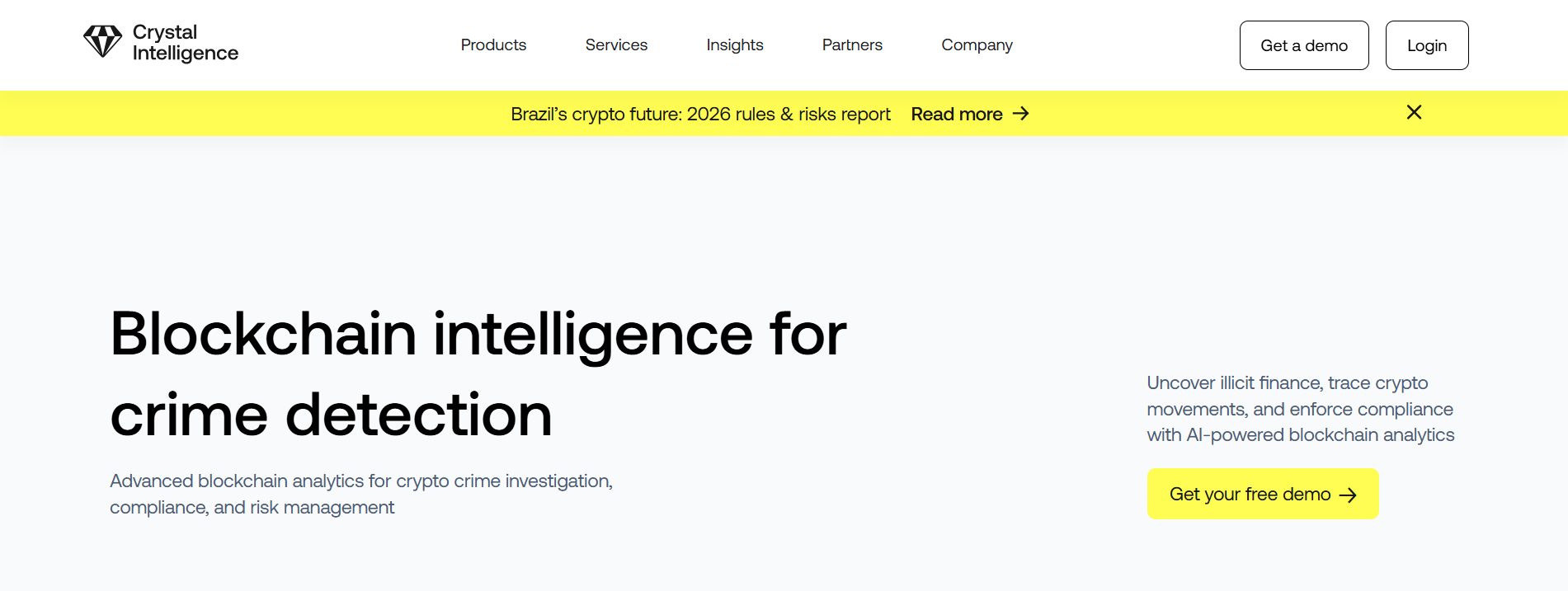
Crystal is strong when you need explainable tracing, visualizations, and evidence bundles for investigations, audits, or courtroom-ready documentation.
Stablecoin Compliance Features That Matter In 2026
- Crystal positions itself for crypto investigations and compliance workflows with interactive tracing and visualization.
- Vendor-published scale indicators (useful as due-diligence inputs):
- 210M+ verified transfers
- 100K+ crypto entities checked
- 30M+ risky transfers flagged
- DIFC Courts publicly referenced Crystal capabilities for transaction monitoring, multi-hop asset tracing, sanctions/high-risk wallet screening, and fund-flow visualization.
Best For
Compliance programs that frequently need to justify decisions to auditors, regulators, banks, or internal risk committees.
2026 Setup Tip
Standardize an evidence pack format per escalated stablecoin case (flow visualization, key hops, entity tags, timestamps, policy rule triggered, reviewer notes). Your audit time drops sharply when evidence is templated.
6. Mastercard CipherTrace (Enterprise Financial Crime Alignment)
What It Does Best
CipherTrace is often relevant where crypto compliance needs to align with an enterprise-grade financial crime management (FCM) framework, especially in large institutions.
Stablecoin Compliance Features That Matter In 2026
- Mastercard positions its Financial Crime Management suite to include capabilities that manage crypto ecosystem risk and AML risk-rating exposure.
- Mastercard’s CipherTrace Armade is referenced as being used to help banks monitor transactions from 6,000+ crypto exchanges for fraud, in the context of Mastercard partnerships.
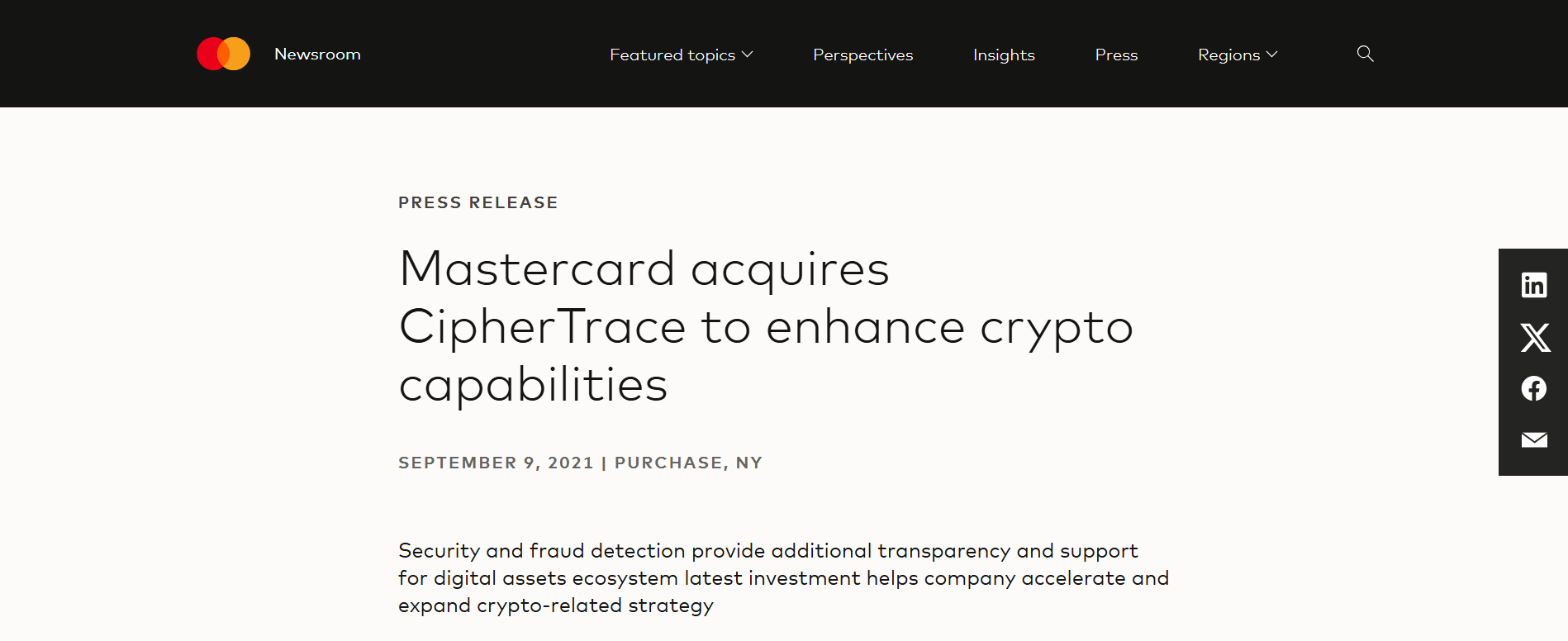
- CipherTrace’s acquisition by Mastercard was explicitly tied to providing more transparency and support for the digital asset ecosystem.
Best For
Banks, processors, and large fintechs that want crypto risk signals governed under the same umbrella as card, ACH, and traditional AML tooling.
2026 Setup Tip
Map stablecoin controls to your enterprise case taxonomy (sanctions, AML, scam, mule risk). The fastest way to create audit clarity is consistent classification across rails.
7. Notabene (Travel Rule + Pre-Transaction Authorization For Stablecoin Payments)
What It Does Best
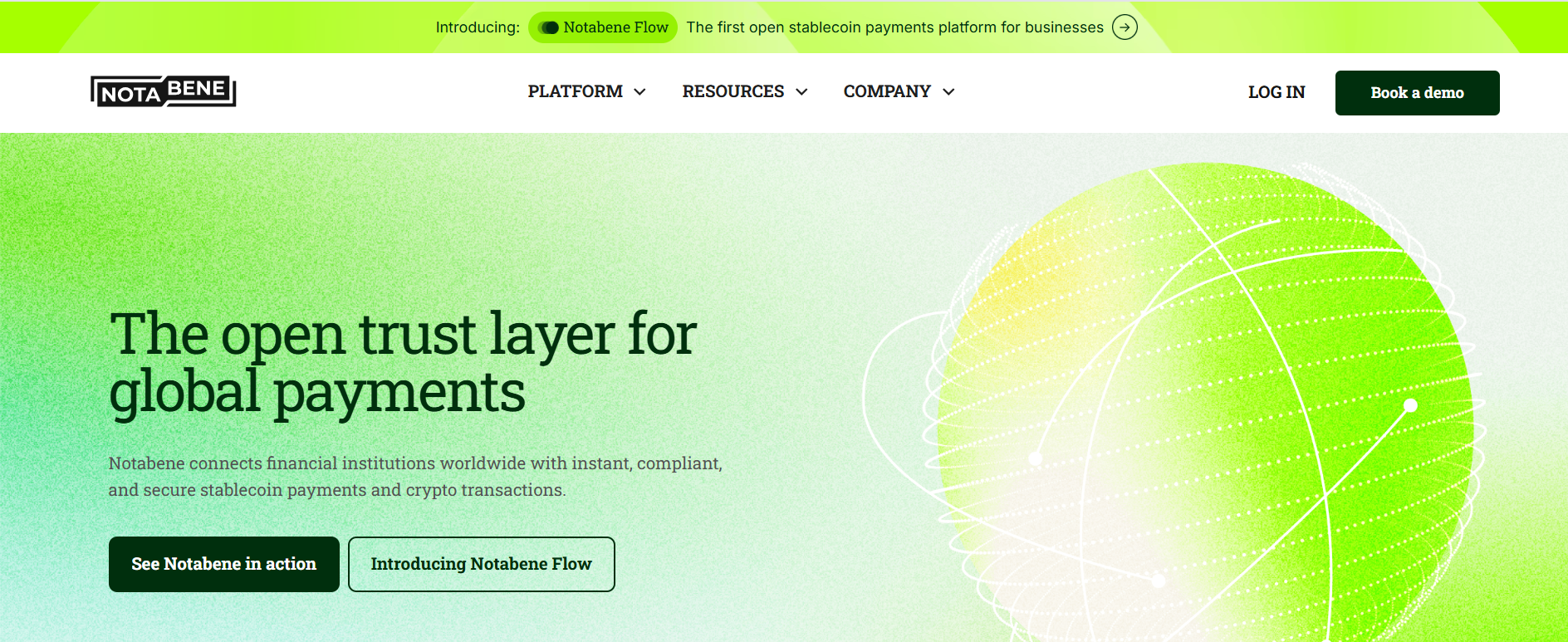
Notabene is differentiated by focusing on pre-settlement authorization and Travel Rule-grade counterparty coordination, which is the operational bottleneck for regulated stablecoin payments.
Stablecoin Compliance Features That Matter In 2026
- Network and scale claims published by Notabene:
- 2,000+ VASPs in network
- 250+ customers
- 100+ jurisdictions covered
- $2T+ transaction volume
- Notabene Flow is positioned as an open stablecoin payments platform for businesses, built on TAP.
- Transaction Authorization Protocol (TAP): defines how counterparties coordinate authorization before a blockchain transaction settles using signed transfer requests and encrypted messaging.
Best For
VASPs and stablecoin payment businesses that need compliant counterparty verification and Travel Rule coordination to be embedded in the transaction lifecycle, not handled after settlement.
2026 Setup Tip
Implement TAP-style authorization as a product control with strict fail-closed behavior for missing originator/beneficiary fields in jurisdictions where Travel Rule implementation is active.
8. ComplyAdvantage (Screening + Risk Data Layer For Crypto Programs)

What It Does Best
ComplyAdvantage is typically used as a sanctions, watchlist, PEP, and broader AML intelligence layer that complements on-chain analytics tools.
Stablecoin Compliance Features That Matter In 2026
- Crypto-focused AML positioning includes real-time screening against sanctions lists and watchlists, plus a transaction monitoring rules engine that supports segmentation by currency, location, and volume.
- Company positioning centers on AI-driven financial crime intelligence across onboarding, ongoing monitoring, remediation, and reporting.
- There is a documented partnership model where ComplyAdvantage pairs with blockchain analytics providers to deliver combined compliance capabilities.
Best For
Programs that need robust off-chain compliance screening and adverse intelligence to round out an on-chain-only view.
2026 Setup Tip
Treat ComplyAdvantage as your identity and entity screening backbone, then link results to on-chain address risk decisions so you can explain approvals and blocks in one narrative.
9. Sardine (Fraud + AML Operations For Ramps And High-Speed Fintech)
What It Does Best
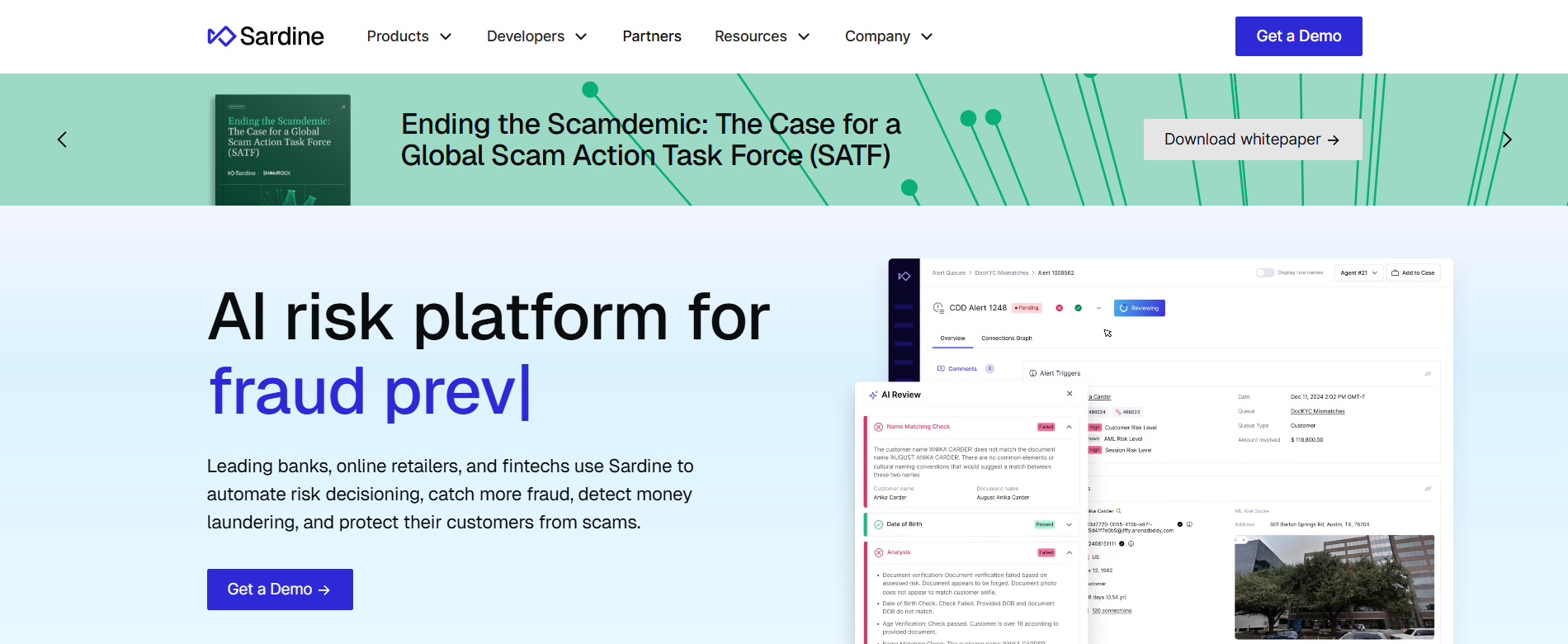
Sardine is useful when stablecoin compliance intersects with fraud, onboarding abuse, and account-level risk, which is common in on-ramps/off-ramps and payout platforms.
Stablecoin Compliance Features That Matter In 2026
- Sardine positions itself as an AI risk platform using device intelligence and behavioral biometrics, integrated with a broader data enrichment layer.
- Vendor AML product page claims:
- real-time and batch transaction monitoring
- pre-built rulesets with 500+ rules
- case management and investigations tooling
Best For
On-ramps, neobanks, and stablecoin payout platforms where the dominant risk is fraud + AML combined, not AML alone.
2026 Setup Tip
Split alert queues into fraud-led (account takeover, social engineering, onboarding manipulation) vs AML-led (sanctions exposure, laundering typologies). Mixed queues destroy analyst throughput and increase false positives.
10. Scorechain (Monitoring + Risk Scoring With EU Hosting Focus)
What It Does Best
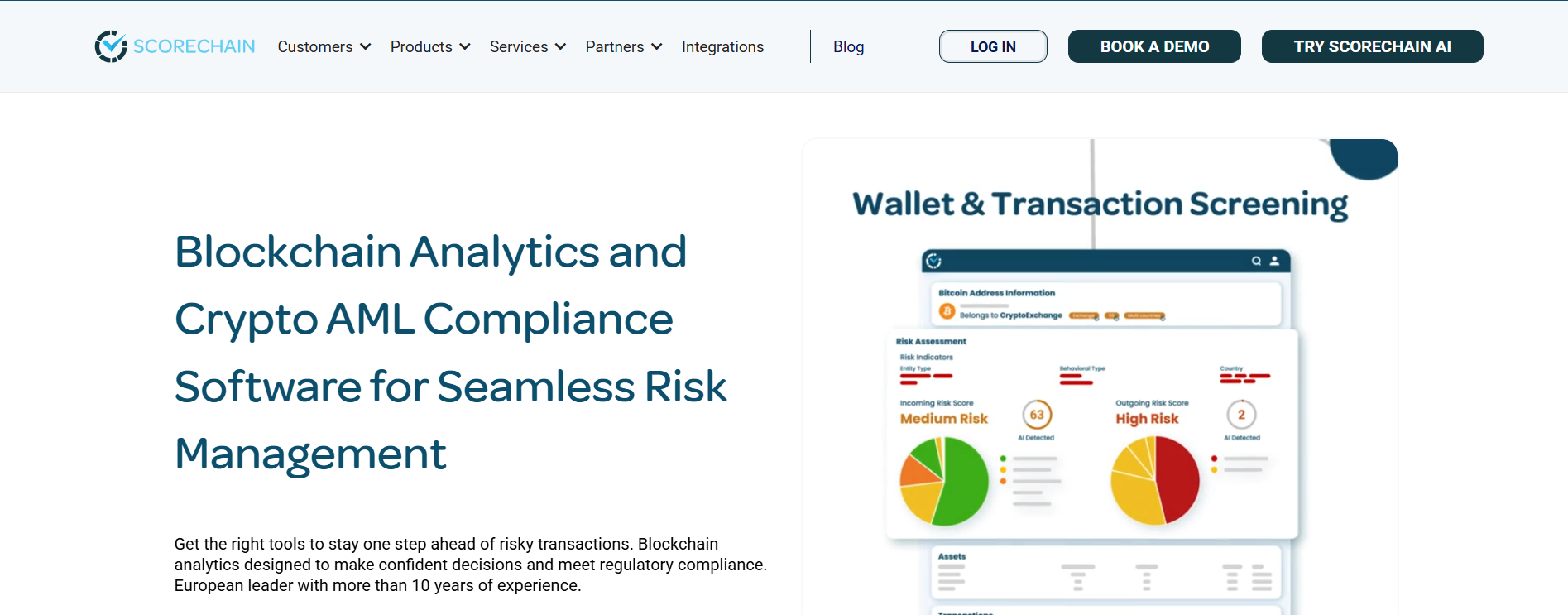
Scorechain is positioned as a real-time transaction monitoring and wallet screening platform with broad chain coverage, with particular emphasis on European hosting and GDPR posture.
Stablecoin Compliance Features That Matter In 2026
- Vendor homepage positioning: real-time monitoring, wallet screening, and risk scoring across 100+ blockchains.
- Vendor privacy positioning: hosted in Europe, fully GDPR-compliant, and does not analyze, share, or monetize customer data.
- Third-party profile notes Scorechain has been building crypto compliance tools since 2015 and references customer footprint and availability via UI and API (useful for vendor maturity signals).
Best For
EU-heavy compliance teams that want broad chain coverage with strong data residency and privacy positioning.
2026 Setup Tip
If you operate across multiple jurisdictions, align your monitoring policy library with jurisdictional requirements and keep a versioned audit log of policy changes. That matters as Travel Rule and sanctions expectations keep evolving.
Comparison Table
| Tool | Best For | Cross-Chain Tracing | Sanctions Screening | Travel Rule Support | Investigations / Case Mgmt | Typical Role In Stack |
|---|---|---|---|---|---|---|
| Chainalysis KYT | KYT at scale | Yes | Yes | Partner-based | Strong | Core monitoring engine |
| TRM Labs | Monitoring + forensics | Yes | Yes | Partner-based | Strong | Monitoring + investigations |
| Elliptic Lens | Unified analyst workflow | Yes | Yes | Partner-based | Strong | Screening + monitoring UI |
| Merkle Science | Behavior-based monitoring | Yes | Yes | Varies | Medium-Strong | Predictive risk monitoring |
| Crystal Intelligence | Visual tracing + evidence | Yes | Varies | Varies | Strong | Investigations and evidence packs |
| Mastercard CipherTrace | Enterprise FCRM alignment | Varies | Yes | Varies | Strong | Enterprise governance fit |
| Notabene | Travel Rule operations | N/A | Counterparty-focused | Yes | Medium | Pre-transaction decisioning |
| ComplyAdvantage | Screening + risk data | N/A | Yes | N/A | Medium | Screening layer |
| Sardine | Fraud + AML for ramps | N/A | Varies | N/A | Strong | Fraud + AML operations |
| Scorechain | AML + Travel Rule path | Varies | Varies | Yes (integration options) | Medium | AML monitoring + Travel Rule enablement |
Recommended Compliance Stacks By Use Case
Exchange / VASP (High Volume)
Blockchain analytics (KYT + tracing) + sanctions screening + Travel Rule + investigation workflows
Use FATF-aligned Travel Rule expectations as the baseline for your operating model.
Stablecoin Payments / Payout Platforms
Wallet screening pre-payout + transaction monitoring post-settlement + fraud signals for account abuse
This is where tooling like Notabene-style pre-authorization and Sardine-style risk ops can reduce downstream remediation.
Enterprise Treasury / Settlement Teams
Counterparty KYB/screening + allowlists + policy engine + audit bundles for every exception
Sanctions programs should follow OFAC-style expectations around controls, recordkeeping, and reporting.
Implementation Playbook: How To Deploy Stablecoin Compliance In 2026
- Map stablecoin flows end-to-end
Chains, bridges, custodians, CEX/DEX touchpoints, and who initiates each transfer. - Define risk policies that match stablecoin reality
Separate policies for payouts vs customer withdrawals vs treasury movements. - Implement pre-transaction controls where the risk is highest
Screen counterparties before payouts and settlements where you can stop loss early. - Standardize investigations
Triage tiers, evidence capture, escalation criteria, and outcome codes. - Build audit-ready reporting by design
Every decision should be reproducible, explainable, and exportable.
Common Mistakes To Avoid
- Treating stablecoins as low-risk because they are dollar-pegged
- Screening only at onboarding instead of continuously
- Ignoring cross-chain routes and bridge exposure
- Having no consistent audit trail for approvals and blocks

Conclusion
The best stablecoin compliance tools in 2026 are the ones that fit your exact flow, reduce false positives, and produce audit-ready evidence.
In practice, that means building a modular stack: on-chain risk intelligence, sanctions screening, Travel Rule operations where relevant, and disciplined investigation workflows rooted in global standards like FATF and enforcement expectations like OFAC.
Read Next:
- Solana's New Payments.org Just Changed Stablecoin Payments in 2026
- The Machines Are Spending Stablecoins. Here's Where the Money Is Going.
- Tokenized Money Market Funds: Everything you Need to Know for 2026
FAQs:
1. What Are Stablecoin Compliance Tools?
Stablecoin compliance tools are software platforms that help teams monitor stablecoin transactions, screen wallets and counterparties for risk, support sanctions compliance, and document decisions for audits and regulators.
2. Do Stablecoin Transfers Trigger Travel Rule Obligations?
Often, yes, when the transfer is performed by or between regulated virtual asset service providers in jurisdictions that have implemented Travel Rule requirements for virtual assets. FATF guidance and supervisory best practices describe how Travel Rule expectations apply in the virtual asset context.
3. How Do Teams Screen USDC And USDT Wallet Addresses In Practice?
Most teams combine wallet screening (sanctions and risk exposure checks) with transaction monitoring to detect risky provenance, indirect exposure, and typologies over time. Tools like KYT platforms are designed to assess incoming and outgoing transaction risk continuously.
4. What Is The Best Way To Monitor Cross-Chain Stablecoin Activity?
Use tools that support cross-chain tracing and investigations so your analysts can follow stablecoin routes through bridges and multi-hop flows without losing context.
5. What Should A Stablecoin Compliance Stack Look Like For A Payout Or Payroll Company?
A common pattern is pre-payout wallet screening, post-settlement transaction monitoring, and a fraud layer to catch account abuse and payout manipulation. Queue discipline and alert SLAs matter because these flows are frequent and operationally sensitive.
6. How Do Sanctions Expectations Change Stablecoin Compliance Programs In 2026?
Sanctions compliance has rising expectations, and virtual currency guidance emphasizes controls, recordkeeping, and reporting processes suitable for the risk profile of the business. For stablecoins, that typically means stricter pre-transaction screening for high-risk exposure and stronger audit documentation.
Disclaimer:
This content is provided for informational and educational purposes only and does not constitute financial, investment, legal, or tax advice; no material herein should be interpreted as a recommendation, endorsement, or solicitation to buy or sell any financial instrument, and readers should conduct their own independent research or consult a qualified professional.