

Table of Contents
In a significant advancement for decentralized finance (DeFi), StableChain has officially partnered with Euclid Protocol to integrate into a unified USDT liquidity layer, enabling seamless connectivity across more than 50 blockchain networks right from launch.
This collaboration promises faster transaction settlements, enhanced liquidity depth, and bridge-free access to USDT across diverse ecosystems, addressing longstanding fragmentation issues in stablecoin usage.
As StableChain, a USDT-native Layer 1 blockchain backed by major players like Bitfinex and PayPal Ventures, goes live with its mainnet, this tie-up positions it as a key player in the omnichain stablecoin market for 2025 and beyond.
Key Takeaways
- Seamless Cross-Chain Access: Users gain instant USDT settlements without bridging, unifying liquidity across 50+ networks for unprecedented DeFi efficiency.
- Boosted Liquidity and Efficiency: The partnership delivers deeper pools and 100x capital efficiency by treating USDT as a single state across chains.
- Broader Ecosystem Reach: StableChain apps can tap into global liquidity rails, enabling faster transactions and network effects in Web3.
- Imminent Rollout: Deployment is underway, promising live unified USDT in DeFi soon, democratizing stablecoin access for all users.
- Strategic DeFi Advancement: This move positions StableChain and Euclid as leaders in solving liquidity fragmentation, aligning with trends in omnichain stablecoins like USDT0.

The Partnership Details: How It Works
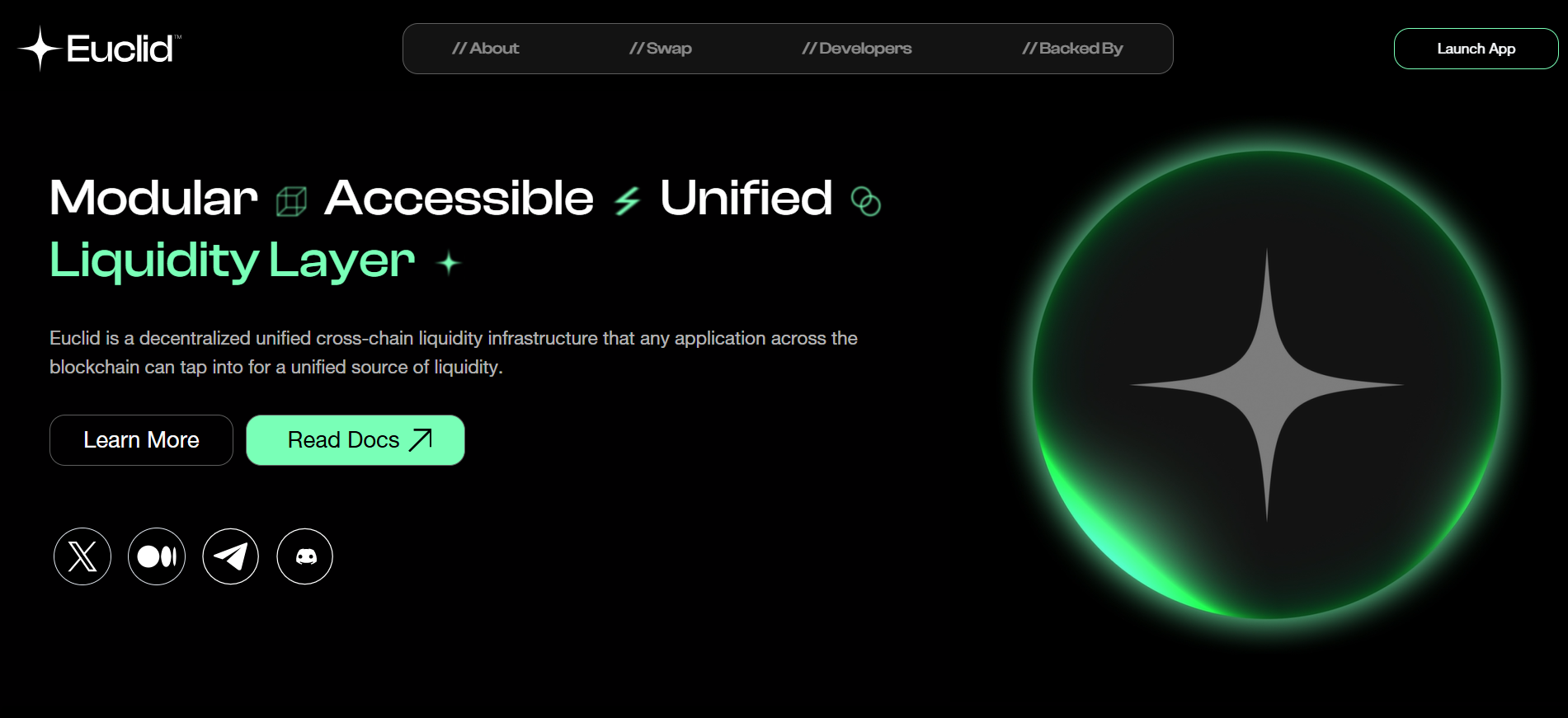
StableChain, a specialized Layer 1 blockchain designed exclusively for stablecoin transactions with USDT as its native gas token, is integrating with Euclid Protocol's Liquidity Consensus Layer to create a cohesive USDT environment.
Euclid's layer acts as a consensus mechanism that unifies liquidity without the need for traditional bridging, which often introduces risks like delays and security vulnerabilities.
Instead, it takes advantage of protocols for cross-chain interoperability, allowing USDT to function as a single, shared state across chains including EVM-compatible ones, Cosmos, Solana, and more.
As per the announcement, StableChain's near-instant settlements, featuring sub-second finality and gas-free peer-to-peer transfers, will now extend to Euclid's ecosystem, spanning over 50 networks.
This integration eliminates wrapped token variants, ensuring direct, secure access and boosting overall capital efficiency by up to 100 times.
Benefits for Users and Developers
For everyday users, the partnership means ultra-fast USDT transactions with reduced costs and no bridging hassles, making stablecoin movements more accessible for payments, remittances, and DeFi activities.
Developers building on StableChain or Euclid can now use deeper liquidity pools for decentralized exchanges (DEXs), yield farming protocols, and real-world asset (RWA) integrations, fostering network effects without ecosystem silos.
In the broader context, this aligns with the surge in omnichain stablecoins like USDT0, which has already facilitated over $50 billion in cross-chain transfers, reducing fragmentation and enhancing security.
Compared to traditional setups, users avoid volatile gas fees and exploit risks, while developers gain guaranteed blockspace and EVM compatibility optimized for USDT.
Industry Implications and Future Outlook
This collaboration tackles one of DeFi's core challenges, liquidity fragmentation, potentially accelerating stablecoin adoption amid a market where USDT's circulating supply exceeds $250 billion and annual transfer volumes top $700 billion.
By unifying USDT across chains, StableChain and Euclid could set a new standard for interoperability, influencing competitors and regulatory discussions on stablecoins.
Experts note parallels with USDT0's omnichain model, which has reshaped stablecoin mobility by eliminating bridges and wrapped assets.
Looking ahead, the rollout could expand to more assets and networks, with deployment already in progress and full unification expected imminently.
As Euclid's Liquidity Consensus Layer continues to integrate projects like this, it may drive broader Web3 efficiency, though stakeholders should monitor regulatory developments in stablecoin governance.

Conclusion
The StableChain-Euclid Protocol partnership marks a pivotal step toward a more interconnected DeFi future, where USDT flows freely and efficiently without barriers.
By combining StableChain's USDT-optimized infrastructure with Euclid's consensus layer, this alliance not only enhances liquidity and speed but also democratizes access to stablecoins for users worldwide.
As the deployment nears completion, industry watchers are encouraged to track the live rollout for its potential to transform cross-ecosystem finance.
Read Next:
- Stablecoins x Tokenized Finance in 2026: Here's What's Coming
- The Neobank Transition Report
- 2025 Stablecoin Spending Report
FAQs:
1. What is the StableChain and Euclid Protocol partnership about?
The partnership integrates StableChain into Euclid Protocol's Liquidity Consensus Layer, creating a unified USDT liquidity pool that connects over 50 networks for seamless, bridge-free settlements and deeper DeFi liquidity.
2. How does the unified USDT liquidity layer benefit users?
It enables ultra-fast USDT transactions across ecosystems without bridging, offering 100x capital efficiency, reduced costs, and access to global liquidity rails from day one.
3. Which networks are connected through this partnership?
The layer spans 50+ networks, including EVM-compatible chains, Cosmos, Solana, and others, allowing USDT to operate as a single, unified state for enhanced interoperability.
4. When will the unified USDT liquidity go live?
Deployment is currently underway, with the rollout expected soon, enabling StableChain and Euclid users to experience fully unified DeFi settlements.
5. How does this differ from traditional cross-chain bridging?
Unlike bridging, which fragments liquidity and adds risks, this solution uses Euclid's shared layer for direct, secure access, eliminating dependencies and boosting overall ecosystem efficiency.