
Table of Contents
Metroblox, a fintech company specializing in transportation financial systems, announced the launch of Ride USD on January 26, 2026.
This new stablecoin is fully backed 1:1 by USDC reserves and built on the Solana blockchain.
Ride USD targets high-frequency payments in the transportation sector, including transit fares, parking, tolls, fuel, and mobility services.
The initiative aims to deliver low-cost, real-time settlements, addressing inefficiencies in legacy payment systems where small transactions incur disproportionate fees.
Key Takeaways
- Metroblox Ride USD launch enables USDC-backed stablecoin for Solana-based transportation payments, cutting fees drastically.
- Ride USD offers instant settlements for high-frequency transit, parking, and toll transactions, optimizing operator cash flow.
- Built on Solana with 1:1 USDC reserves, Ride USD ensures compliance under GENIUS Act for secure mobility adoption.
- Integrates seamlessly with existing hardware, supporting multi-modal services and subsidy programs in urban transport.
- Addresses $30T stablecoin market gap by extending low-cost efficiency to consumer mobility spending sectors.
Background on Metroblox and Market Context
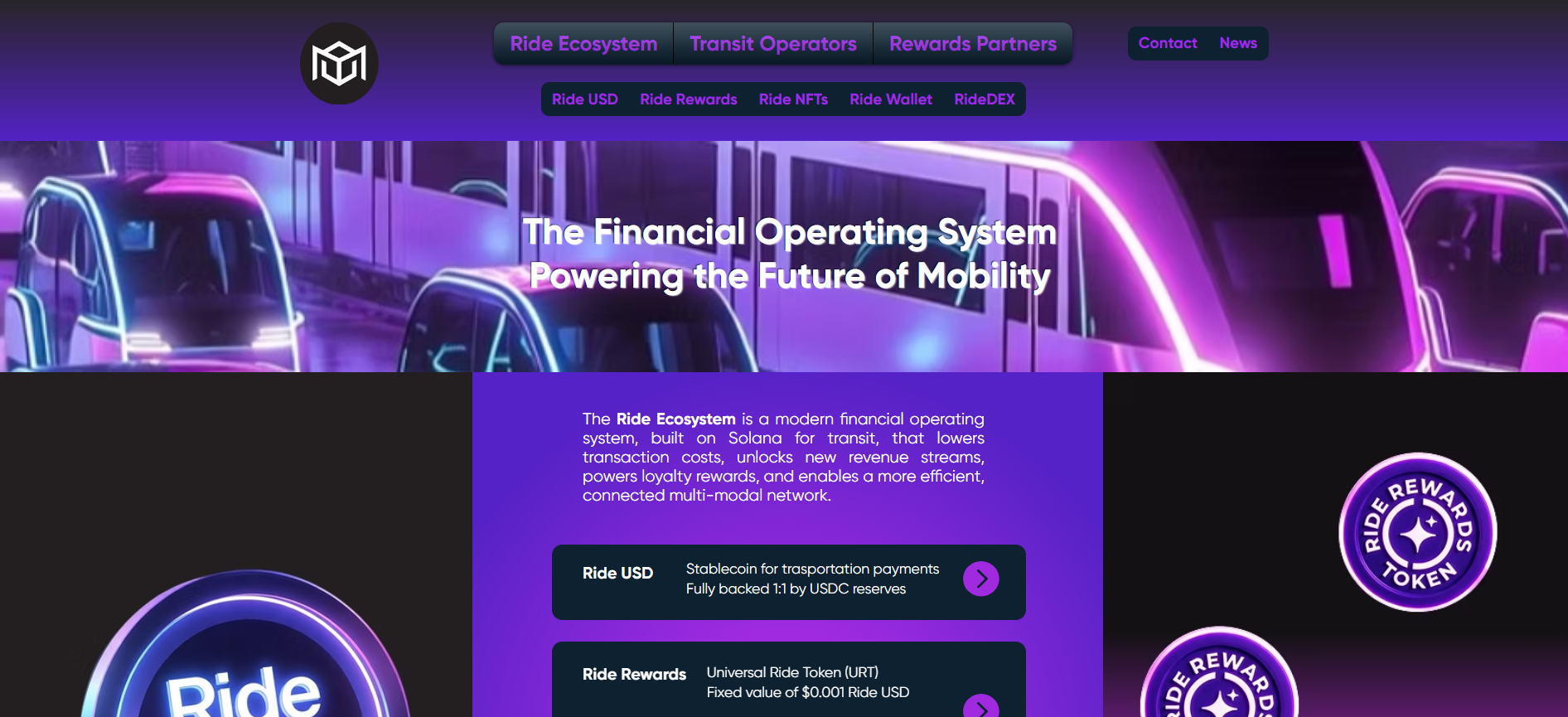
Metroblox develops a modern financial operating system for the transportation industry, focusing on integrating blockchain technology with existing infrastructure.
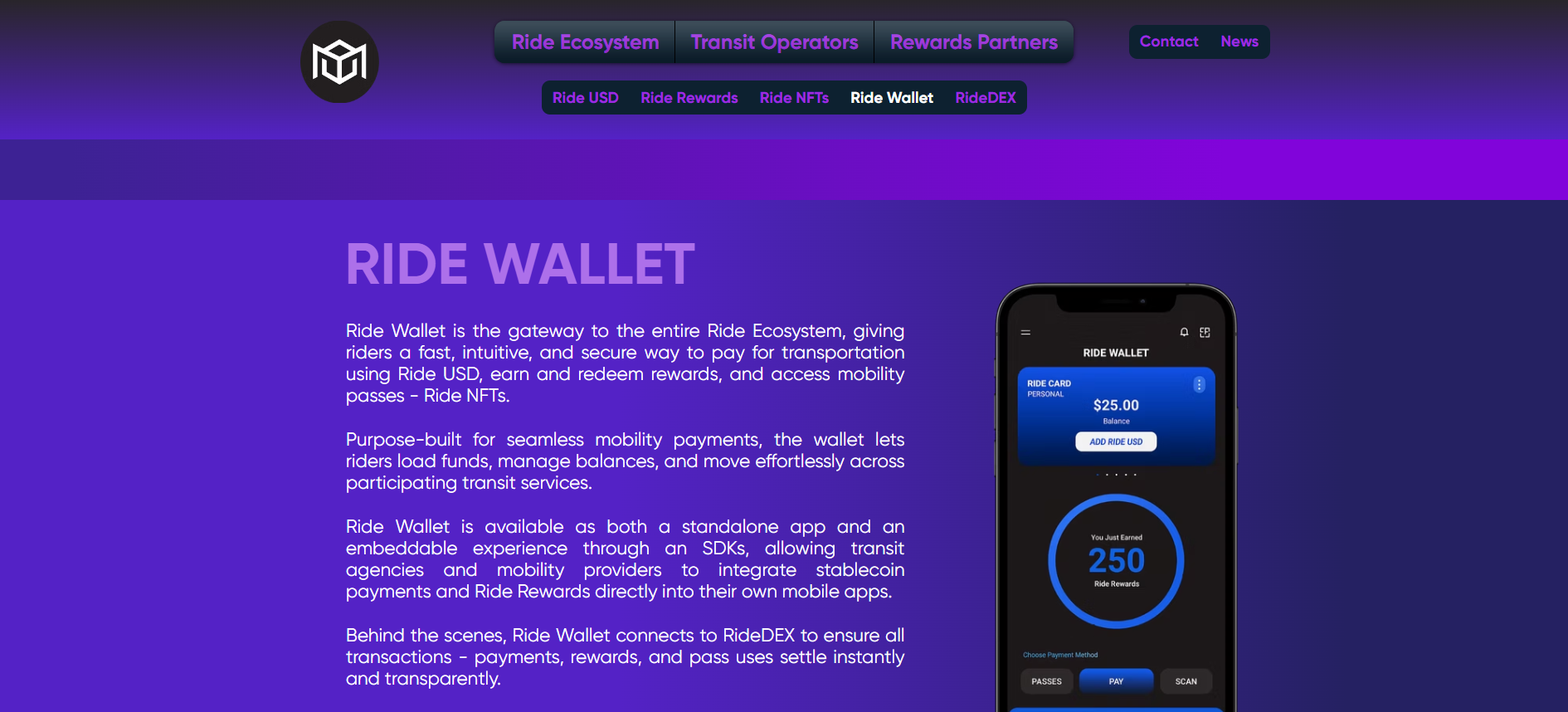
Founded by CEO Josh Squire, the company operates from Miami and emphasizes Web3 solutions for mobility payments, as seen in its associated RideWallet platform.
Stablecoins have seen explosive growth, with global transaction volumes exceeding $30 trillion in 2025, primarily in banking settlements and international transfers.
However, consumer sectors like transportation remain underserved. Traditional merchant fees for frequent, low-value payments, such as a $2 bus fare, can reach 3-5%, eroding operator margins and delaying settlements by days.
Ride USD seeks to bridge this gap by extending stablecoin advantages to everyday mobility, enabling operators to reduce costs without overhauling systems.
Features of Ride USD
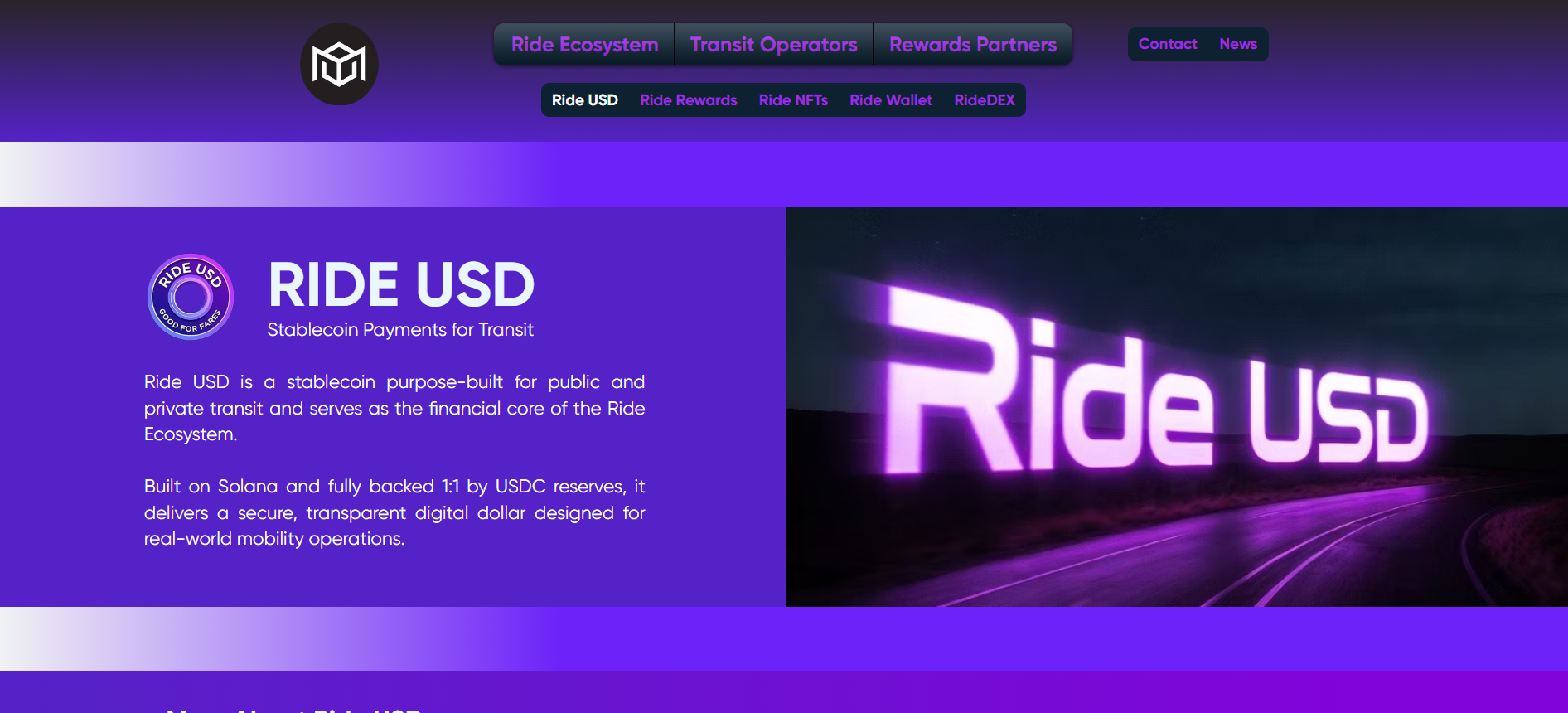
Ride USD operates as a dollar-pegged digital token on Solana, supporting thousands of transactions per second with near-zero fees.
Its 1:1 backing by USDC ensures stability and redeemability, with reserves held in compliant custody.
Key technical attributes include instant settlement, transparency via blockchain ledger, and compatibility with current hardware, access controls, and point-of-sale devices.
As the foundational layer for the Ride Ecosystem, it facilitates revenue sharing among operators and supports multi-modal services, such as combined transit and rideshare payments.
Users can transact without noticing backend changes, maintaining familiar interfaces while benefiting from blockchain efficiency.
Benefits for the Transportation Sector
For transportation operators, Ride USD cuts processing costs by up to 90% compared to credit card networks, improving cash flow through same-day settlements.
Public agencies gain tools for subsidy programs, like discounted fares for low-income riders, executed transparently on-chain.
Commercial partners, including rideshare firms and parking providers, can integrate for seamless cross-operator payments, reducing fragmentation in urban mobility.
Consumers experience faster, more reliable services without added complexity, as payments settle instantly, minimizing delays in high-volume scenarios like rush-hour commuting.
Overall, the stablecoin promotes broader adoption of digital payments in mobility, potentially accelerating Mobility-as-a-Service (MaaS) models where users pay for bundled transport options.
Regulatory and Compliance Aspects
Ride USD aligns with U.S. regulations, including the GENIUS Act, which mandates standards for reserve backing, custody, and oversight.
This framework builds confidence for enterprise and public-sector adoption, ensuring consumer protections and auditability.
Metroblox emphasizes compliance to enable widespread use in regulated environments, such as municipal transit systems.
Future Outlook
Metroblox plans to expand Ride USD integration with existing payment providers, aiming for pilot programs in major cities by mid-2026.
The company envisions scaling to support global transportation networks, Taking advantage of Solana's performance for international mobility payments.
Josh Squire, CEO, stated: "Stablecoins have rapidly gained adoption for banking settlement and global value transfers. It's time to extend those same benefits, low-cost transactions, speed, and efficiency, to the everyday spending that powers how people move through cities."
Conclusion
Ride USD positions Metroblox as a leader in blockchain-enabled transportation finance, delivering tangible cost savings and efficiency gains.
Operators should evaluate integration to capitalize on real-time settlements and regulatory compliance.
Read Next:
- Finery Markets H1 2025 Crypto OTC Review
- Building Stablecoin Insider: The Case for Going Niche
- 50 Fintech Statistics That Matter in 2026
FAQs:
1. What is Ride USD?
Ride USD is a USDC-backed stablecoin launched by Metroblox, built on the Solana blockchain for seamless, low-cost transactions in the transportation sector.
2. How does Ride USD benefit transportation operators and improve payment efficiency?
Ride USD reduces processing fees by up to 90% compared to traditional credit card networks, offers real-time settlements to enhance cash flow, and integrates easily with existing hardware and point-of-sale systems. This allows operators in transit, parking, and rideshare services to cut costs without major infrastructure changes.
3. Is Ride USD compliant with US regulations and stablecoin standards?
Yes, Ride USD complies with U.S. regulations, including the GENIUS Act, which requires strict standards for reserve backing, custody, oversight, and auditability.
4. What are the key use cases for Ride USD in the mobility and transportation industry?
Ride USD supports high-frequency, low-value payments such as bus and train fares, highway tolls, parking fees, fuel purchases, and rideshare services. It also enables multi-modal mobility options, like bundled transit and shared vehicle payments, promoting efficient urban transportation networks.
5. How does Ride USD integrate into the broader Ride Ecosystem and support blockchain adoption in mobility?
As the foundational transactional layer in the Ride Ecosystem, Ride USD facilitates revenue sharing among operators, subsidy programs for low-income users, and transparent on-chain executions. It drives blockchain adoption by providing speed, low fees, and compatibility, accelerating Mobility-as-a-Service (MaaS) models for global transportation.
Disclaimer:
This content is provided for informational and educational purposes only and does not constitute financial, investment, legal, or tax advice; no material herein should be interpreted as a recommendation, endorsement, or solicitation to buy or sell any financial instrument, and readers should conduct their own independent research or consult a qualified professional.