

Table of Contents
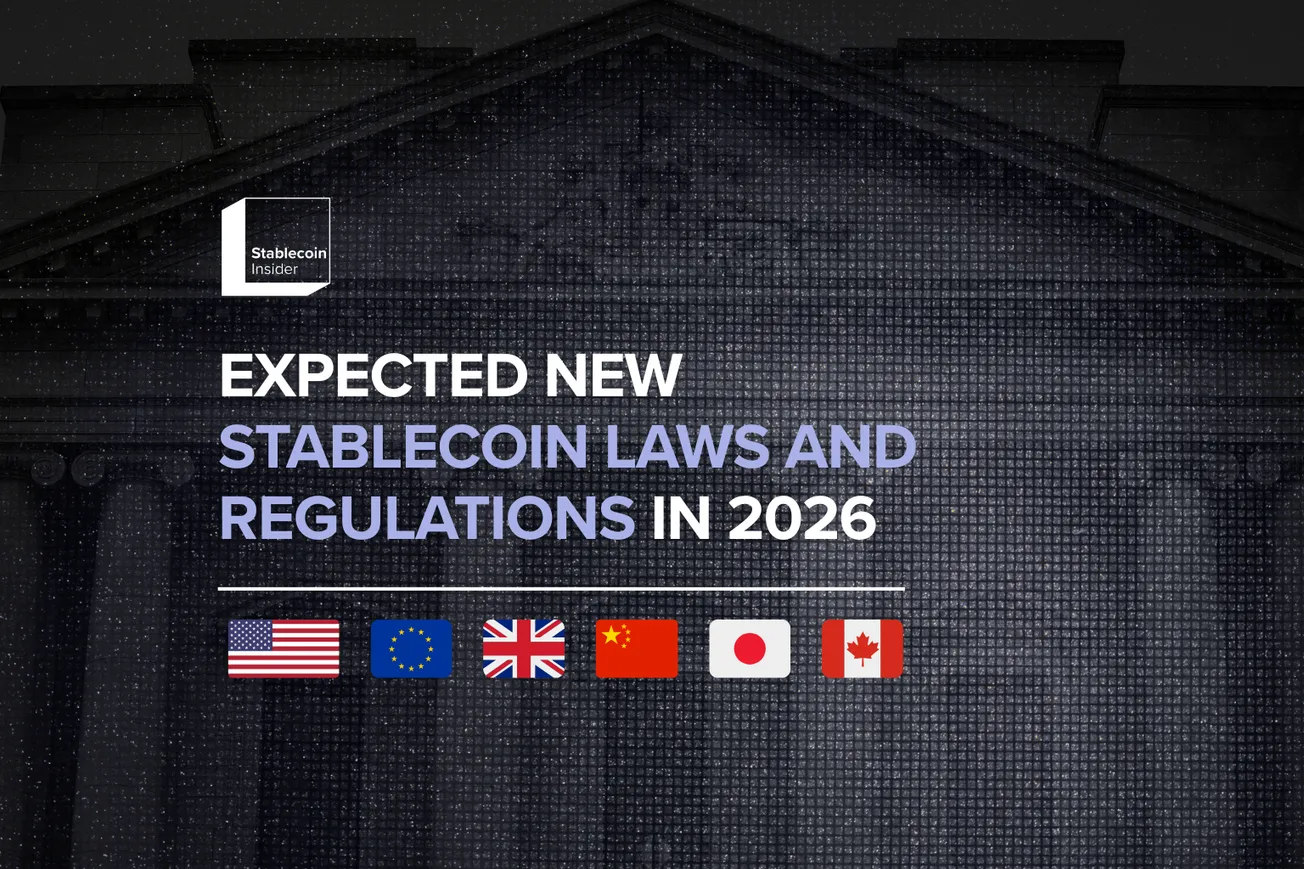
2026 will be another busy year for stablecoin regulation globally, with many frameworks from 2025 entering implementation phases.
This includes detailed rulemaking, enforcement ramps, and new proposals aimed at issuer licensing, reserves, anti-money-laundering (AML), and systemic risk management.
Below is a curated list of key expected changes, focusing on major jurisdictions.
United States
GENIUS Act Full Implementation (July 18, 2026 Deadline):
The Guiding and Establishing National Innovation for U.S. Stablecoins Act, signed into law in July 2025, requires federal banking agencies (including the FDIC, OCC, and Federal Reserve) to finalize a comprehensive regulatory framework by mid-2026.
FDIC Application Rules for Bank-Issued Stablecoins (Early 2026):
Following a December 2025 proposal, the FDIC will finalize procedures for state nonmember banks and savings associations to issue stablecoins via subsidiaries. This includes evaluations on capital, liquidity, and risk management, with a 60-day comment period already underway.
Responsible Financial Innovation Act (RFIA) 2026 (Potential Mid-Year):
Senator Cynthia Lummis's proposed bill could clarify stablecoin rules further, mandating 100% reserves, one-to-one redemption, and drawing lines between securities/commodities oversight (SEC vs. CFTC).
BIS Crypto Framework for Banks (Effective January 1, 2026):
Global standards from the Bank for International Settlements require banks to disclose crypto exposures, hold capital against risks, and favor regulated, fully-backed stablecoins, disqualifying non-compliant ones and pushing banks toward permissioned rails.
European Union
MiCA Full Enforcement and Tighter Stablecoin Phase (Mid-2026 Onward):
The Markets in Crypto-Assets regulation, already in partial effect, enters stricter implementation with the end of grandfathering periods.
This enforces reserve requirements, disclosure rules, redemption rights, and authorization for e-money tokens (EMTs) and asset-referenced tokens (ARTs).
Focus on reducing USD stablecoin dominance and promoting euro-denominated alternatives, with higher compliance costs potentially fragmenting liquidity.
DAC8 Tax Reporting (Effective January 1, 2026):
Expands cross-border data sharing for stablecoin transactions, requiring platforms to upgrade KYC and record-keeping to combat non-compliance.
United Kingdom
Fiat-Backed Stablecoin Framework (Throughout 2026):
Anchored in updates to financial legislation, this brings stablecoins into the regulatory perimeter with rules on issuance, reserves, and usage.
The Bank of England proposes temporary holding caps (£20,000 for individuals, £10M for businesses) to mitigate deposit outflows, with final rules expected after consultations.
FCA Prioritization of Digital Assets (2026 Goals):
The Financial Conduct Authority aims to empower local GBP-issued stablecoins through enhanced regulation, including sandbox expansions for testing.
Asia-Pacific and Other Regions
Hong Kong Licensing Regime Enhancements (Ongoing in 2026):
Building on the August 2025 rollout, the Hong Kong Monetary Authority will refine rules for "specified stablecoins," focusing on reserves, audits, and institutional adoption via sandboxes.
South Korea Won-Stablecoin Legislation (Q1 2026):
Phase 2 roadmap targets issuance rules, reserves, and supervision, potentially stalling if issuer debates persist, pushing activity offshore.
Brazil Central Bank Resolutions (Effective February 2, 2026):
Resolutions 519–521 classify stablecoin payments as foreign-exchange operations, enforcing reserves, redemption, and enforcement.
Canada Stablecoin Law (Potential 2026 Finalization):
Draft from November 2025 mirrors GENIUS Act with 1:1 reserves and custody rules; expected to advance into law.
Australia Licensing Exemptions (Expansion in 2026):
Following 2025 moves to waive dual licensing for some participants, more arrangements to boost stablecoin ecosystems.
Japan Stablecoin Integration (2026 Signals):
Push for regulated stablecoins on traditional stock exchanges rather than crypto-only platforms.
Summary
These changes are expected to drive institutional adoption while raising compliance barriers, potentially consolidating the market around major issuers like USDC and regulated bank tokens.
For issuers and users, key watchpoints include mid-year deadlines and inter-jurisdictional alignments (e.g., US-UK-EU equivalence discussions).
Upcoming Stablecoin Events
- Consensus Hong Kong: Feb 10-12 (Hong Kong)
- ETH Denver: Feb 17-21 (Denver)
- Money Motion: Mar 11-12 (Zagreb)
Related Reports
Partner/Advertise with Stablecoin Insider
Fill out this form to partner and advertise on the only publication, dedicated entirely to the Stablecoin ecosystem.
See you next week,
- The Stablecoin Insider team
)