Table of Contents
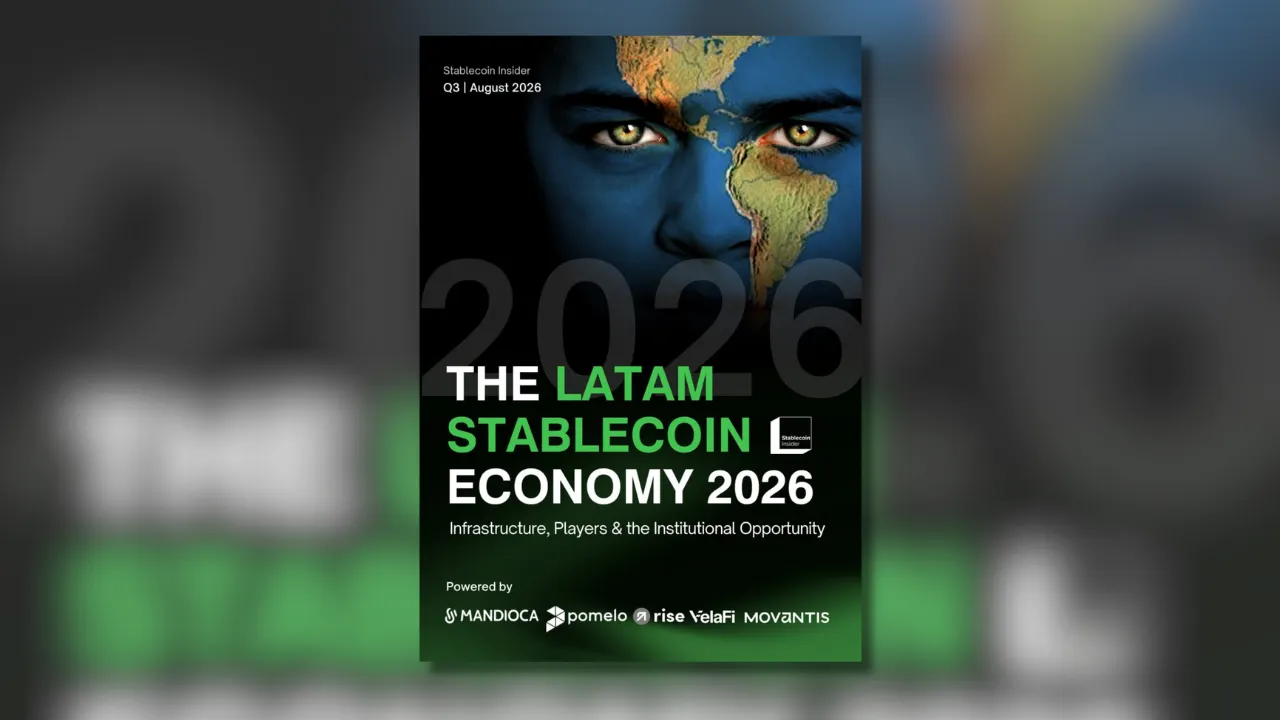
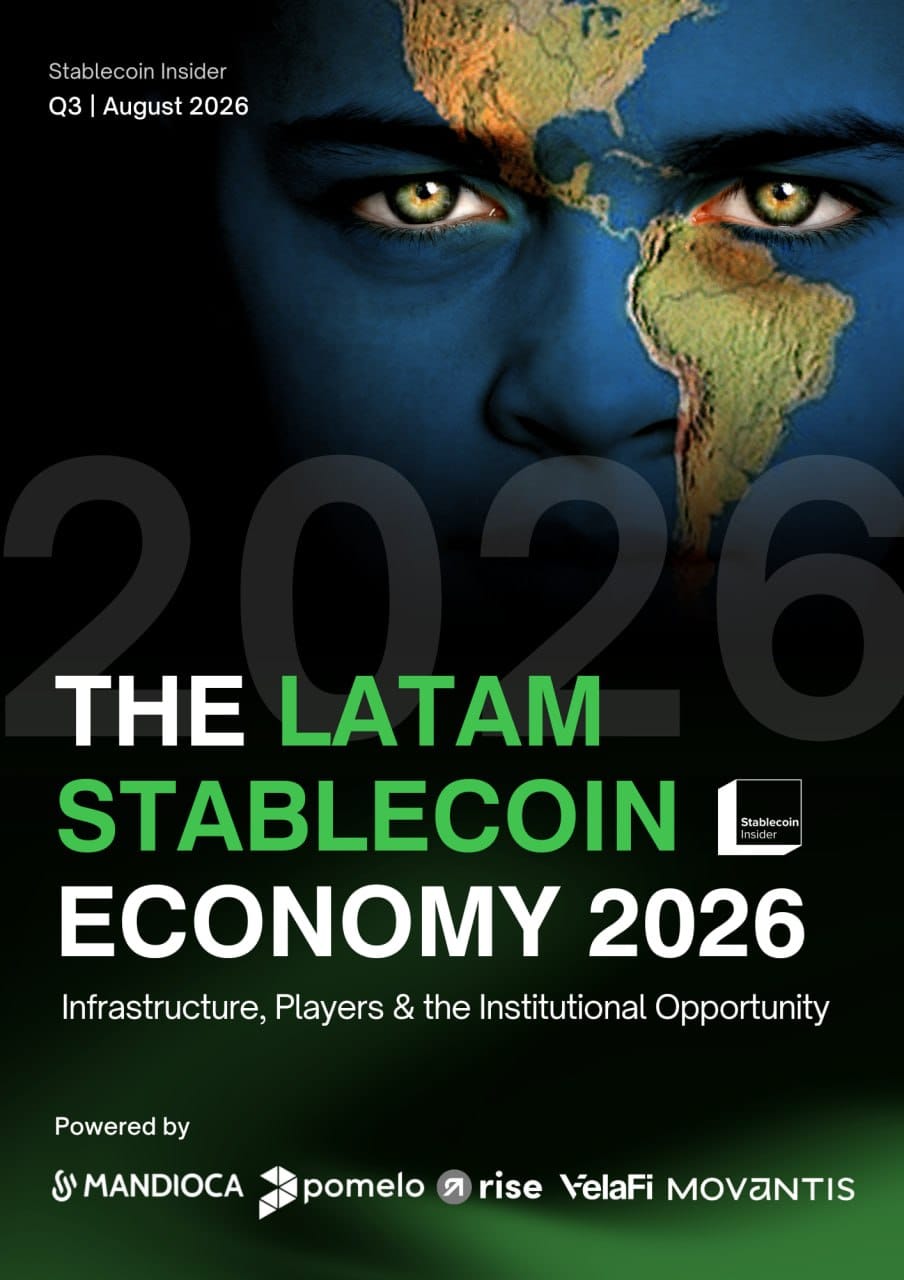
Today, Stablecoin Insider, along with partners Mandioca, Movantis, Pomelo, Rise, and VelaFi announces the release of The LATAM Stablecoin Economy 2026: Infrastructure, Players & the Institutional Opportunity, a new report arguing that Latin America is the world's clearest proof that stablecoins have become settlement infrastructure rather than a crypto asset class.
The report's headline finding is that the region's stablecoin market has crossed from retail hedging into business settlement.
$324 billion moved through stablecoins in LATAM in 2025, an 89% year-over-year increase, out of nearly $1.5 trillion in cumulative regional crypto volume between July 2022 and June 2025, according to Chainalysis data cited in the report.
In Brazil, the region's largest market, more than 90% of crypto flows are now stablecoin-related.
The research places that shift inside a global one: B2B stablecoin payments grew 733% year over year in 2025 to roughly $226 billion, about 60% of all genuine stablecoin payments worldwide, per McKinsey and Artemis Analytics analysis referenced in the report.
"The infrastructure has become invisible, which is how you know it has become infrastructure."
The report maps the market as a five-layer stack issuance, settlement rails, on/off-ramps and liquidity, distribution, and payroll and profiles one operator per critical layer, with each partner contributing proprietary transaction, corridor, and client data.
It also benchmarks the three corridor families (LATAM–US, LATAM–Asia, and intra-LATAM), sets out a practical adoption framework for CFOs and treasurers, and details the regulatory trajectory market by market.
Key Findings
- LATAM stablecoin volume reached $324 billion in 2025, up 89% year over year.
- B2B supplier payments, not retail savings, are now the growth engine.
- Dollar access and speed drive adoption — not lower fees.
- The last mile still runs on regulated local rails, not on-chain.
- Cards and payroll are converting on-chain dollars into everyday spending and income.
- Regulation is formalizing fast, with Brazil writing stablecoins into FX law.
- Operators at opposite ends of the stack have independently converged on rails-agnostic routing.
Industry Perspectives
"Stablecoins are becoming the financial infrastructure behind international trade. Most businesses using our platform do not think about blockchain at all. They simply expect money to move as fast as information." — Leandro Meneses, Founder & CEO, Mandioca
"Stablecoins solved the value movement. They didn't solve landing it in local currency, compliantly, across every market in the region. In LATAM, the last mile is still the hardest mile, and it doesn't run on-chain." — Gustavo Ruiz, Chairman & CEO, Movantis
"Latam operates across multiple payment rails: cards, account-to-account, and now stablecoins. The opportunity isn't about picking a winning rail; it's about combining them intelligently." — Gastón Irigoyen, CEO & Co-Founder, Pomelo
"The biggest misconception about stablecoin payroll is that it's only for crypto companies. What we're seeing today is agencies, startups, and global businesses adopting stablecoin payroll because it simply works better for international teams." — Hugo Finkelstein, CEO, Rise
"Everyone assumes this corridor will be won on technology: speed, APIs, blockchain rails. It won't. It'll be won by whoever understands both sides well enough to make compliance and local knowledge invisible to the customer." — Maggie Wu, CEO & Co-Founder, VelaFi
Download the Report
Download HereAbout Stablecoin Insider
Stablecoin Insider is the leading source for news, data and expert insight on stablecoins and the future of blockchain-based finance.
It delivers independent reporting on the technologies, platforms, policies and real-world use cases driving stablecoin adoption worldwide. Stablecoin Insider also works with companies across the stablecoin and digital-payments stack on research, interviews, reports and events.
About the Report Partners
Mandioca facilitates cross-border B2B payments for importers and exporters across Latin America, Asia and the United States, using stablecoin infrastructure as the settlement layer between local-currency legs.
Movantis is a regulated financial infrastructure platform connecting money transmitters, banks, and payout locations across the Americas. Routes traditional and stablecoin rails through a single integration, processing $63B+ in annual volume across 90,000+ payout locations.
Pomelo is an API-first card issuing and payments platform for banks and fintechs worldwide, issuing across 150+ countries with deep roots in Latin America. Clients include BBVA, Santander, and Binance.
Rise operates hybrid fiat-crypto payroll for international teams, letting employers fund payroll in fiat or stablecoins while each worker selects their own payout mix.
VelaFi is a stablecoin-powered financial infrastructure platform for global businesses, operating through regulated entities across Latin America, Asia and other key markets.