Table of Contents
For years, global exchanges operated in a "regulatory gray zone" in Europe. With the full implementation of MiCA (Markets in Crypto-Assets), that era is over.
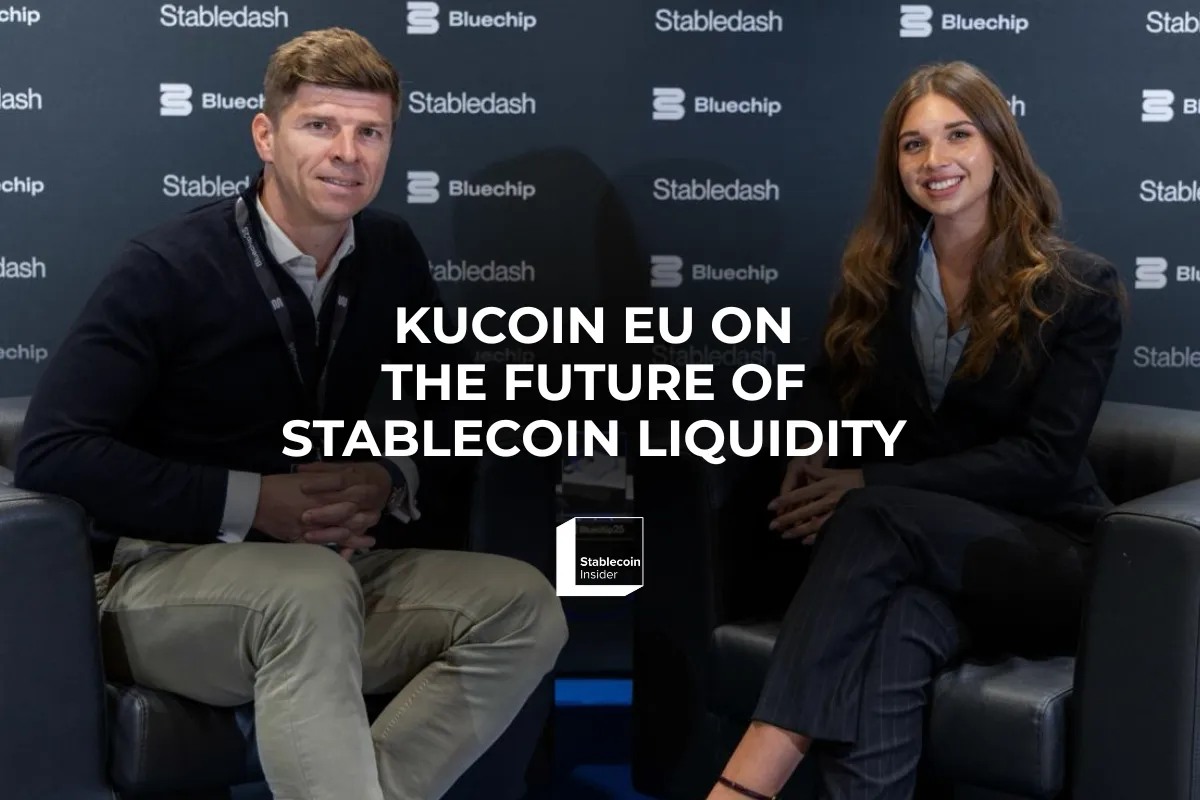
In a wide-ranging interview, Christian Niederlueller, COO of KuCoin EU, explains why KuCoin chose Austria as its regulatory base, why they are launching as a broker rather than a full exchange, and how the "Travel Rule" is finally making on-chain money move faster than the traditional banking system.
The "Broker" Strategy: Why KuCoin Isn't Building a New Exchange
One of the most tactical revelations in the interview is KuCoin EU’s decision to apply for a broker license rather than a full exchange license under MiCA.
- The Liquidity Problem: Building a fragmented European order book from scratch often leads to high "slippage" for users.
- The Solution: As a broker, KuCoin EU can tap into the massive global liquidity pools of KuCoin Global. This allows European users to get "best execution" prices while staying within a fully compliant, regulated European framework.
- Efficiency: Niederlueller argues that in 2026, the value is not in building more parallel order books, but in providing the most efficient on-and-off ramps for the European ecosystem.
The Austrian Advantage: Tax Laws and Regulatory Expertise
Why did a global giant like KuCoin settle in Vienna? Christian points to two specific factors:
The "BitPanda Effect":
Because BitPanda has been in Vienna for over a decade, the Austrian regulators (FMA) are among the most crypto-literate in the world. They understand the tech, which makes the MiCA application process rigorous but predictable.
Tax Neutrality:
In Austria, cashing out crypto to Fiat triggers capital gains. However, swapping one digital asset for a stablecoin is often treated as a tax-neutral event until the point of withdrawal. This creates a massive incentive for institutional and retail traders to "stay in the ecosystem" using stablecoins as their primary store of value.
The Travel Rule: From Headache to Rocket Fuel
The "Travel Rule" (Transfer of Funds Regulation) is often viewed as a compliance burden, but Christian frames it as a breakthrough for speed.
- Instant Verification: By implementing standardized Travel Rule protocols, exchanges can now verify the origin and destination of funds in seconds.
- Beating the Banks: Christian notes that while a traditional bank transfer might be "checked" for 24 hours by a compliance officer, an on-chain stablecoin transfer with Travel Rule data attached is cleared almost instantly. For the first time, "compliant" money is moving faster than "traditional" money.
The Euro Stablecoin Pipeline: Coming in 2026
Currently, the market is dominated by USD tokens like USDT and USDC. However, Christian reveals that KuCoin EU is preparing for a major shift:
- 2026 Listings: KuCoin EU plans to prioritize the listing of Euro-backed E-Money Tokens (EMTs) in 2026.
- Settlement Efficiency: These tokens won't just be for trading; they will be used for internal treasury management and 24/7 settlements between KuCoin’s European entity and its global liquidity providers.
Too Many Stablecoins? The Consolidation Theory
Echoing the sentiment of other industry leaders, Christian predicts a "Great Consolidation."
- Infrastructure over Brands: He notes that while we’ve seen an explosion of new stablecoin projects in the last 18 months, most will fail to find liquidity.
- The Winners: The market will eventually settle on 3-4 dominant Euro stablecoins that can prove they have the deepest liquidity and the most seamless integration with major brokers like KuCoin.
The Verdict: The End of the "Wild West"
Christian’s message is clear: MiCA has professionalized the industry. The goal is no longer to bypass the financial system, but to upgrade it.
By operating as a regulated broker in a crypto-friendly hub like Austria, KuCoin EU is betting that the future of finance isn't just "digital", it’s "compliant digital."
Related Interviews: