Table of Contents
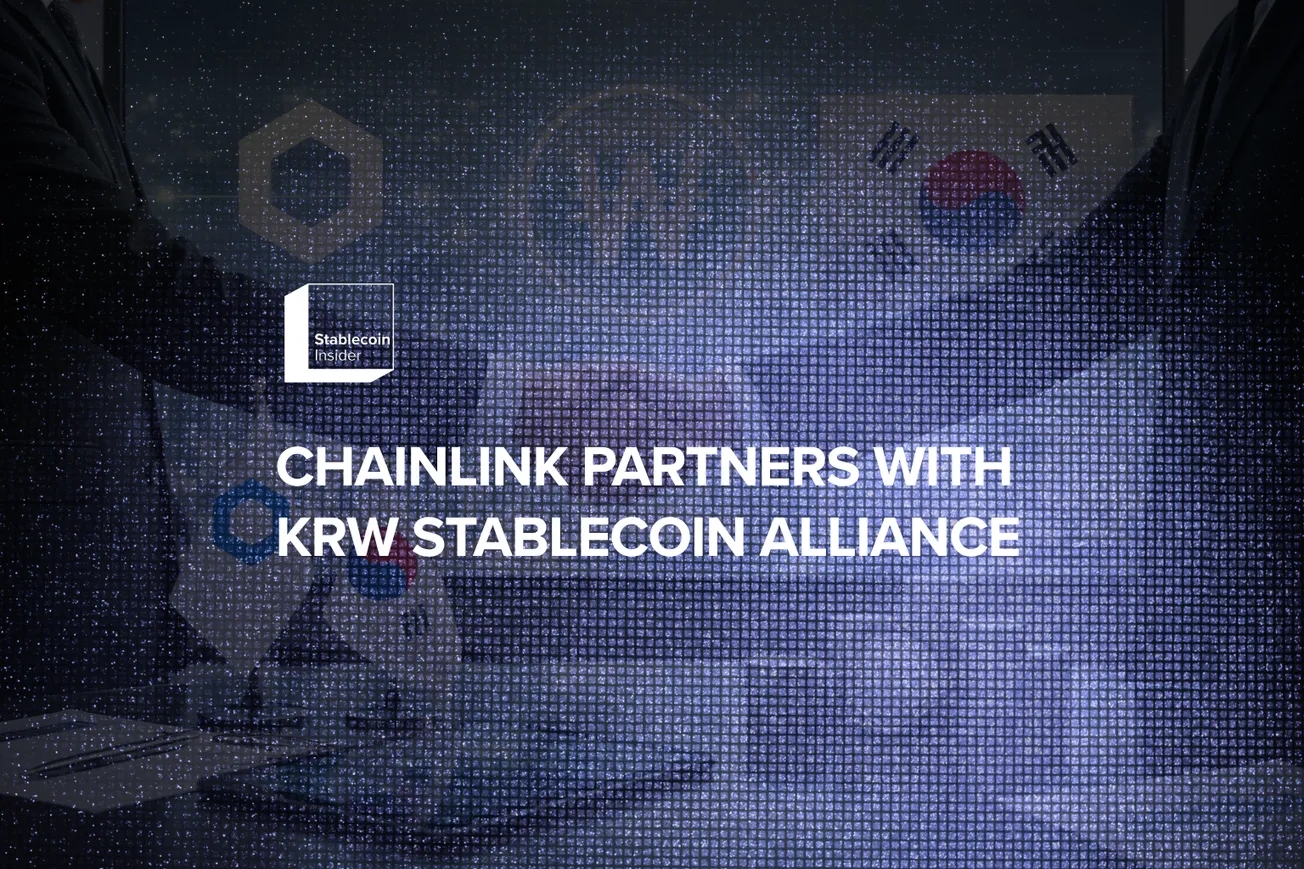
Chainlink Labs has entered a strategic partnership with the Global Alliance for KRW Stablecoins (GAKS), led by South Korean gaming firm WEMADE.
Announced in early 2026, this collaboration focuses on delivering essential infrastructure for KRW-backed stablecoins.
Chainlink will supply oracle data feeds, cross-chain interoperability solutions, and compliance tools to support regulated stablecoin issuance and operations in South Korea's growing digital asset market.
The move aligns with South Korea's regulatory push toward structured virtual asset frameworks. Under the Virtual Asset User Protection Act, effective since July 2024, stablecoins must adhere to strict guidelines, including asset segregation, transparency reporting, and anti-money laundering measures.
GAKS, formed in late 2025, comprises key players like Circle, Tether, and local entities such as Upbit and Bithumb, aiming to standardize KRW stablecoins for broader institutional and retail adoption.
Key Takeaways
- Chainlink supplies oracle feeds for accurate KRW stablecoin pricing, ensuring peg stability in volatile markets.
- Cross-chain tools enable seamless KRW stablecoin transfers across blockchains, boosting DeFi and gaming integrations.
- Compliance features like Proof of Reserve audits meet South Korea's FSC regulations, enhancing issuer transparency.
- Partnership targets $5-10 billion KRW stablecoin market cap by 2028, driven by institutional and retail demand.
- Initiative aligns with 2026 Digital Asset Basic Act, promoting secure, regulated digital asset growth in Asia.
Partnership Details
Chainlink's role centers on three core components: oracle services, cross-chain bridges, and compliance mechanisms. Oracle data feeds will provide real-time, tamper-proof price information for KRW stablecoins, ensuring peg stability against the fiat won.
This is critical in volatile crypto markets, where accurate external data prevents de-pegging events seen in past stablecoin failures.
Cross-chain infrastructure via Chainlink's Cross-Chain Interoperability Protocol (CCIP) will enable seamless transfers of KRW stablecoins across blockchains like Ethereum, Solana, and South Korea's emerging domestic networks.
This facilitates integration with decentralized finance (DeFi) applications, gaming ecosystems, and cross-border payments, reducing fragmentation in the region's blockchain landscape.
Compliance tools include Chainlink's Proof of Reserve (PoR) audits and decentralized identity verification, helping issuers meet South Korean Financial Services Commission (FSC) requirements.
These tools automate reserve attestations, enhancing trust and regulatory alignment. WEMADE, as GAKS lead, leverages its WEMIX blockchain expertise to integrate these features, targeting use cases in gaming, remittances, and e-commerce.
Market Context and Implications
South Korea's crypto market ranks among the world's largest, with daily trading volumes exceeding $10 billion in 2025. However, stablecoin adoption has lagged due to regulatory hurdles and reliance on USD-pegged assets like USDT and USDC.
KRW stablecoins address this by minimizing forex risks and complying with local laws, potentially capturing a share of the $150 billion global stablecoin market.
The partnership supports South Korea's "Digital Asset Basic Act" framework, set for full implementation in 2026, which mandates licensing for stablecoin issuers.
By providing decentralized oracles, Chainlink mitigates centralization risks in traditional data providers, promoting security and scalability.
Analysts project this could accelerate KRW stablecoin issuance, with estimates of $5-10 billion in market cap by 2028, driven by institutional interest from banks like Shinhan and KB Kookmin.
For Chainlink, this expands its Asia-Pacific footprint, following integrations in Japan and Singapore. It builds on prior collaborations, such as with SWIFT for tokenized asset transfers, positioning Chainlink as a key enabler in regulated blockchain environments.
WEMADE benefits by strengthening its WEMIX ecosystem, which already supports over 20 million users in gaming and NFTs, now extending to stablecoin-backed transactions.
Challenges and Future Outlook
Despite optimism, challenges persist. South Korea's strict capital controls and anti-speculation policies could limit stablecoin growth.
Recent FSC audits revealed non-compliance in 15% of virtual asset operators, underscoring the need for robust tools like Chainlink's. Global economic factors, including KRW volatility amid U.S. interest rate shifts, may test peg mechanisms.
Looking ahead, GAKS plans pilot programs in Q2 2026, testing KRW stablecoins in real-world scenarios like micropayments and supply chain finance.
Success could influence regional standards, encouraging similar alliances in ASEAN countries.
Chainlink's involvement signals a shift toward hybrid on-chain/off-chain systems, blending DeFi innovation with regulatory compliance to drive mainstream adoption.
Conclusion
Chainlink's partnership with GAKS positions KRW stablecoins as a regulated bridge between traditional finance and blockchain, targeting scalable adoption in South Korea.
Focus on execution will determine long-term impact.
Read Next:
- Complete Guide to Smart Contract Managed Lending in 2026
- Best Options for Yield-Bearing Stablecoin Accounts in 2026
- How to Earn Stablecoin Yield with Coinbase Prime as an Institution in 2026
FAQs:
1. What is the Global Alliance for KRW Stablecoins (GAKS)?
A WEMADE-led consortium including Circle and local exchanges to standardize regulated KRW-backed stablecoins.
2. How does Chainlink contribute to KRW stablecoins?
By providing oracle data, cross-chain bridges, and compliance tools for stability, interoperability, and regulatory adherence.
3. Why focus on KRW stablecoins in South Korea?
To reduce forex risks, comply with local laws, and capture part of the $150 billion global stablecoin market amid high crypto trading volumes.
4. What are the main challenges?
Regulatory hurdles, currency volatility, and ensuring non-speculative use under FSC oversight.
5. When will pilots begin?
GAKS plans testing in Q2 2026 for applications in payments, gaming, and finance.
Disclaimer:
This content is provided for informational and educational purposes only and does not constitute financial, investment, legal, or tax advice; no material herein should be interpreted as a recommendation, endorsement, or solicitation to buy or sell any financial instrument, and readers should conduct their own independent research or consult a qualified professional.