
Table of Contents
Stablecoins are now used like digital cash:
For treasury storage, cross-border transfers, on-chain settlement, and moving value between exchanges and DeFi.
That makes wallet choice a first-order decision, because stablecoins are typically held in meaningful amounts, moved frequently, and stored across multiple networks (Ethereum and L2s, TRON for TRC-20 USDT, Solana for USDC, and more).
The best stablecoin wallet is not the one with the most features, it is the one that matches your stablecoin rails, your transaction cadence, and your risk tolerance, while minimizing the two biggest failure modes: online compromise and user error.
Key Takeaways
- The best stablecoin wallet depends on how you use stablecoins (savings vs daily transfers vs DeFi).
- For serious balances, hardware wallets are the default due to offline key custody.
- For active on-chain usage, use a hot wallet paired to a hardware wallet (convenience + strong signing).
- Choose wallets that match your stablecoin rails: Ethereum/L2s, TRON (TRC-20), Solana, BNB Chain.
- In 2026, MetaMask also supports native TRON accounts, which changes multichain wallet shortlists.
The Best Stablecoin Wallets in 2026
A. Best Hardware Wallets for Stablecoins (Cold Storage)
Hardware wallets are best when stablecoins function as savings, treasury, or “do not touch” reserves. They reduce online attack exposure because signing happens on-device.
1) Ledger Nano X: Best overall for most users (balanced security + mobility)
Why it’s one of the best: Strong security architecture with a certified secure element and broad ecosystem support; practical for people who manage stablecoins on desktop and mobile.
Best for
- Long-term USDT/USDC storage with occasional transfers
- Users who need mobile access without giving up hardware signing
Pros
- Mature device + app workflow
- On-device confirmation reduces “blind sending”
- Widely compatible with EVM stablecoins
Cons
- Any convenience feature increases user responsibility (you still must verify addresses and approvals)
- Not the simplest option for first-time self-custody
Stablecoin use cases
- USDC/USDT on Ethereum and L2s
- Savings wallet paired with a hot wallet for day-to-day
2) Ledger Nano S Plus: Best vault device value (simple USB cold storage)
Why it’s one of the best: Similar security design principles to higher-tier devices, with a simpler, wired-only posture. Ledger’s platform details secure element certification across devices.
Best for
- Cold storage that stays at home/in a safe
- Users who want fewer wireless surfaces
Pros
- Simple, wired workflow
- Strong security-per-dollar conceptually
Cons
- Less convenient for frequent signers
- Desktop-oriented usage for many setups
Stablecoin use cases
- USDT/USDC long-term storage
- Backup hardware wallet in a two-device strategy
3) Ledger Stax: Best premium clear signing experience
Why it’s one of the best: Designed for improved transaction visibility and review on-device, which is a real advantage when approving stablecoin transfers and smart contract interactions.
Best for
- Power users signing often (transfers, DeFi, treasury ops)
- People who want maximum readability before approving
Pros
- Better on-device review UX (helps reduce approval mistakes)
- Hardware-signing workflow remains the security anchor
Cons
- Premium cost tier relative to basic models
- Still requires disciplined seed/passphrase handling
Stablecoin use cases
- Frequent stablecoin movements across EVM networks
- On-chain operations where reviewing details matters
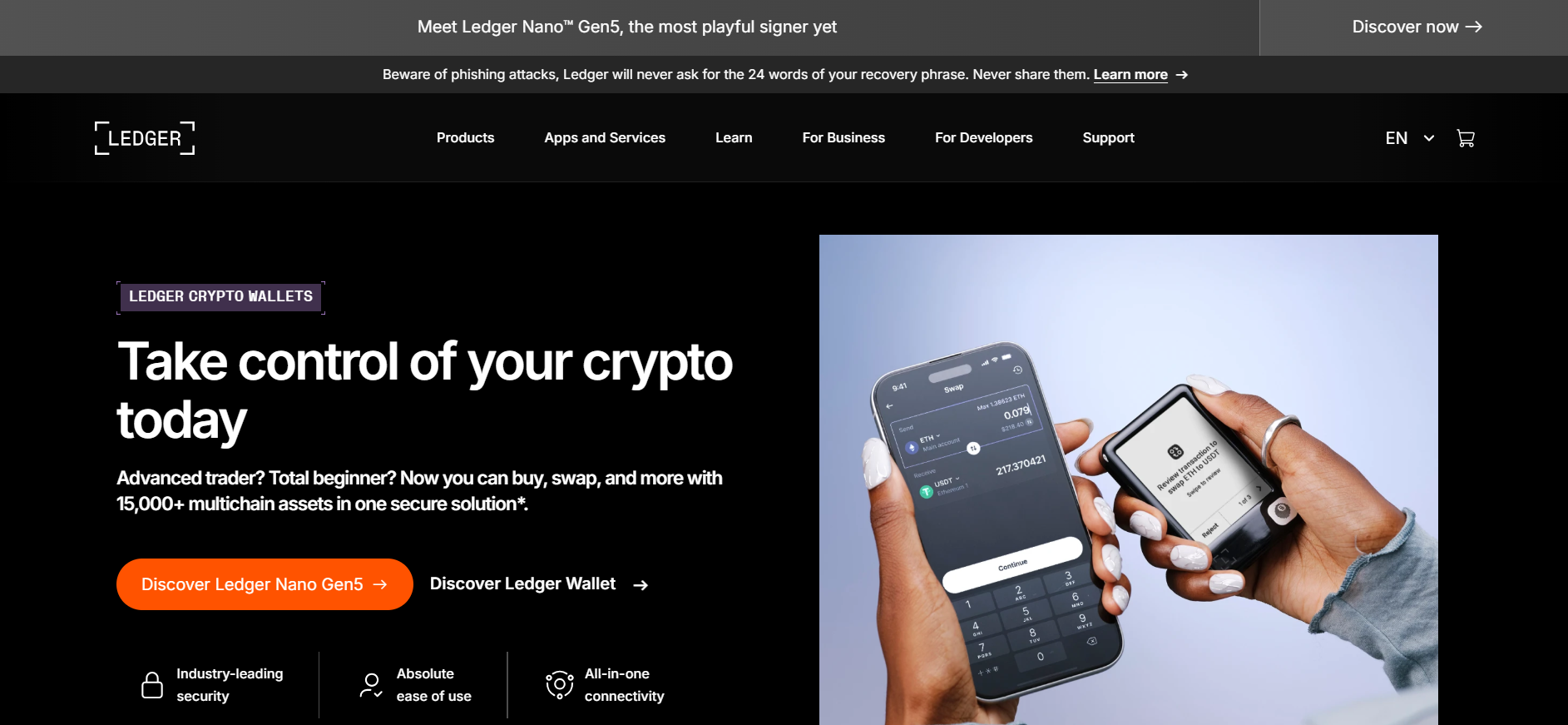
4) Trezor Safe 5: Best Trezor touchscreen option (successor path)
Why it’s one of the best: Trezor positions Safe 5 as the modern touchscreen device; the official Trezor page notes Model T is no longer sold and Safe 5 carries that lineage forward.
Best for
- Users who prefer Trezor’s ecosystem and touchscreen confirmation
- Security-focused holders who want a modern device line
Pros
- Strong on-device interaction for confirming transfers
- Clear product direction (current-generation device)
Cons
- Touchscreen devices are typically higher cost
- Requires the same operational rigor as any cold wallet
Stablecoin use cases
- Long-term stablecoin custody with occasional signing
- “Primary hardware” for an EVM-heavy stablecoin stack
5) Trezor Safe 3: Best straightforward, modern baseline (non-touchscreen)
Why it’s one of the best: Safe 3 is positioned as a current-generation Trezor hardware wallet option, suited for users who want a modern device without a touchscreen-first workflow.
Best for
- Users who want a clean, current Trezor baseline
- Long-term stablecoin storage with periodic transfers
Pros
- Simple operational flow
- Current product family alignment
Cons
- Less “review comfort” than touchscreen models
- Still not “set and forget” unless backups are handled properly
Stablecoin use cases
- Stablecoin reserves and treasury-style custody
- Hardware pairing for a hot wallet
6) SafePal S1: Best air-gapped QR signing (offline-by-design workflow)
Why it’s one of the best: SafePal emphasizes air-gapped signing via QR communication, explicitly designed to keep signing isolated from networks.
Best for
- Users who want QR-based offline signing
- People who prefer a workflow that avoids cable/wireless signing
Pros
- Air-gapped model is easy to understand conceptually
- Strong separation between online broadcasting and offline signing
Cons
- QR workflow can be slower for frequent transactions
- Operational steps are more “manual” than USB-style devices
Stablecoin use cases
- Long-term stablecoin storage with occasional transfers
- Users prioritizing isolation over speed
B. Best Software Wallets for Stablecoins (Hot Wallets)
Hot wallets are best when stablecoins are used actively: payroll, swaps, bridging, DeFi, and on-chain spending.
The rule of thumb:
Keep only working capital amounts here.
7) MetaMask: Best for Ethereum + L2 stablecoins, now also strong for TRON
Why it’s one of the best: MetaMask is a dominant EVM wallet and now offers native TRON accounts (TRX + TRC-20) in its multichain wallet experience.
Best for
- USDC/DAI on Ethereum + L2s
- Users who also need TRC-20 stablecoins (USDT on TRON) in the same wallet UI
Pros
- Deep dApp compatibility for stablecoin DeFi workflows
- Broad ecosystem integrations (bridges, swaps, on-ramps depending on region)
- TRON support reduces the need for separate TRON-only wallets in some setups
Cons
- Prime phishing target category (operational risk is high)
- Users can accidentally approve malicious contracts if they rush
Stablecoin use cases
- USDC across L2s for low fees
- USDT (TRC-20) management inside one multichain interface
8) Trust Wallet: Best mainstream multi-chain mobile wallet (broad coverage)
Why it’s one of the best: Trust Wallet positions itself as a self-custody, multi-chain platform supporting 100+ blockchains and millions of assets.
Best for
- Mobile-first stablecoin users
- People holding stablecoins across multiple networks
Pros
- Broad chain coverage in one consumer-friendly app
- Good for “receive and send” stablecoin workflows across networks
Cons
- Mobile device security matters (OS hygiene, app install discipline)
- Not ideal as a sole vault for large balances
Stablecoin use cases
- Multi-chain stablecoin holding for everyday transfers
- Travel/remittance-style stablecoin usage where speed matters
9) Phantom: Best for USDC on Solana and a growing multi-chain stack
Why it’s one of the best: Phantom’s documentation describes support across multiple networks (including Solana and Ethereum, plus others), making it a strong stablecoin wallet when Solana is part of your rails.
Best for
- Solana-first stablecoin activity (USDC on Solana)
- Users who want one wallet spanning multiple ecosystems
Pros
- Strong Solana UX and ecosystem adoption
- Multi-chain direction supports broader stablecoin needs
Cons
- If you are mostly EVM-only, MetaMask-style tooling may still feel more native
- Multi-chain increases complexity for new users
Stablecoin use cases
- USDC on Solana for fast transfers
- Cross-ecosystem stablecoin users who want one primary wallet
10) TronLink: Best TRON-native wallet for USDT (TRC-20)
Why it’s one of the best: TronLink explicitly supports TRX and TRC-20 tokens and emphasizes deep TRON integration.
Best for
- USDT (TRC-20) power users on TRON
- TRON staking/resource management users
Pros
- TRON-first UX that matches how TRC-20 stablecoin users operate
- Strong compatibility with TRON dApps and token standards
Cons
- Narrower focus if your stablecoin stack is primarily EVM + L2
- You may still want an EVM wallet alongside it
Stablecoin use cases
- High-frequency USDT transfers on TRON
- TRON-based stablecoin activity and integrations
11) Exodus: Best for user-friendly portfolio management (hot wallet comfort)
Why it’s one of the best: Exodus remains popular for UI clarity and “all-in-one” wallet convenience (best treated as a hot wallet, not a vault).
Best for
- Users who value clean UX and visibility
- Smaller stablecoin balances used for swaps and transfers
Pros
- Strong consumer UX reduces mistakes
- Multi-platform experience is often a differentiator
Cons
- Hot wallet risk profile remains
- Less ideal for advanced, dApp-heavy stablecoin operations
Stablecoin use cases
- Holding and transferring stablecoins with minimal complexity
- Secondary wallet for convenience funds
12) Hot + Hardware Pairing (Strategy, not a brand): Best real-world setup for most serious users
Why it’s one of the best: For stablecoins, the most resilient approach is usually:
- Hot wallet for daily usage
- Hardware wallet for reserves
- Clear rules for what lives where
Best for
- Anyone holding meaningful stablecoin balances
- Users doing both transfers and long-term storage
Pros
- Strong security without sacrificing usability
- Limits exposure if the hot wallet is compromised
Cons
- Requires organization and discipline
- Slightly more setup time up front
Stablecoin use cases
- Contractors/teams receiving stablecoins + saving a portion
- Treasury workflows and “operating cash vs reserves” separation
Download our "2025 Stablecoin Year-End Report"
How to Choose the Best Stablecoin Wallet in 2026
- You mainly hold stablecoins as savings (high balance): Choose Ledger / Trezor / SafePal hardware + keep a small hot wallet.
- You frequently use stablecoins on Ethereum and L2s (DeFi, swaps, on-chain ops): Choose MetaMask paired with a hardware wallet.
- You primarily move USDT on TRON (TRC-20): Choose TronLink, or MetaMask if you want one multichain UI with TRON support.
- You primarily use Solana for USDC transfers: Choose Phantom.
- You need broad multi-chain support on mobile: Choose Trust Wallet.
Security Checklist for Stablecoin Wallets
- Never store your seed phrase digitally (notes app, screenshots, cloud drives).
- Use a passphrase for larger balances (treat it as a second factor for the seed).
- Separate wallets: daily spending vs long-term storage.
- Verify chain + token standard before sending (ERC-20 vs TRC-20 vs SPL).
- For DeFi: review approvals and avoid signing unknown prompts.

Conclusion
The best stablecoin wallets in 2026 match how stablecoins are actually used on today’s dominant rails.
With stablecoin circulation now commonly reported above $270B, the correct approach is to pick a wallet based on your network (EVM/L2, TRON, Solana), then use a security model that matches your balance (hot wallet for activity, hardware wallet for reserves).
Read Next:
- A Tactical Guide of Global Stablecoin Accounts (GSAs)
- Savings GHO (sGHO) from Aave: Full 2026 Review
- Tether (USDT) January 2026 Reserves Report
FAQs:
1. What is the best wallet for holding USDC on Ethereum L2s in 2026?
MetaMask paired with a hardware wallet is typically the best combination for frequent usage plus safer signing.
2. What is the best wallet for USDT on TRON (TRC-20)?
TronLink is the TRON-native choice. MetaMask is also relevant now because it supports native TRON accounts.
3. Which wallet is best for USDC on Solana?
Phantom is the most commonly recommended user-first option for Solana-centric stablecoin usage.
4. Are hardware wallets worth it if I only hold stablecoins?
Yes, stablecoins can be high-value, long-duration holdings. Hardware wallets reduce online attack exposure regardless of whether the asset is stable.
5. What is the safest practical setup for stablecoins?
A two-tier system: a hot wallet for working balances, and a hardware wallet for reserves, plus strict seed phrase handling and address verification.
Disclaimer:
This content is provided for informational and educational purposes only and does not constitute financial, investment, legal, or tax advice; no material herein should be interpreted as a recommendation, endorsement, or solicitation to buy or sell any financial instrument, and readers should conduct their own independent research or consult a qualified professional.