
Table of Contents
Last updated: October 5, 2026. Refreshed with October 5, 2026 DefiLlama DEX and bridge aggregator volumes, plus a new section on DEX vs cross-chain aggregators for stablecoin flows.
Transferring stablecoins across various blockchain networks can be challenging.
You're looking for the leading stablecoin aggregators that simplify the process and keep costs low.
This piece examines several prominent choices for directing your stablecoin liquidity and performing exchanges.
We'll explore the functions of each and how they assist in transferring your funds through the cryptocurrency ecosystem smoothly.
Key Takeaways
- Changelly stands out as a leading option for transferring stablecoins between numerous blockchains effortlessly.
- 1inch excels at discovering optimal exchange rates by scanning various decentralized exchanges, though it's not accessible to all users.
- OpenOcean enables asset exchanges across multiple chains and incorporates certain centralized exchanges into its searches.
- Jumper Exchange is effective for identifying the top paths for your cryptocurrencies, but it isn't solely dedicated to stablecoins.
- Portal Bridge (Wormhole) allows the transfer of USDC across various chains, although it may be somewhat slower compared to alternatives.
Stablecoin Aggregators in 2026: The Market by the Numbers
Stablecoin supply keeps growing, which means more volume needs efficient routing. Total dollar stablecoin supply was about $313.9 billion on October 5, 2026, with USDT at about $184.0 billion and USDC at about $74.0 billion, per DefiLlama stablecoins data.
DEX aggregators routed about $72.6 billion in the 30 days to October 5, 2026, according to DefiLlama DEX aggregator data (excluding one anomalous outlier). Thirty-day volume for widely used platforms:
- Jupiter Aggregator: about $14.58 billion (DefiLlama)
- 0x Aggregator (powers Matcha): about $8.99 billion (DefiLlama)
- KyberSwap Aggregator: about $7.59 billion (DefiLlama)
- CoW Swap: about $3.51 billion (DefiLlama)
- 1inch Swap: about $2.97 billion (DefiLlama)
- Velora (formerly ParaSwap): about $1.27 billion (DefiLlama)
Cross-chain routing is a separate market: bridge aggregators handled about $5.35 billion over the same 30 days (DefiLlama bridge aggregators). LI.FI alone routed about $1.20 billion of bridge-aggregator volume in that window. More aggregators, from KyberSwap and CoW Swap to Jupiter on Solana, are covered in the list below and in our DEX aggregator ranking and cross-chain aggregator guide.
1. Changelly
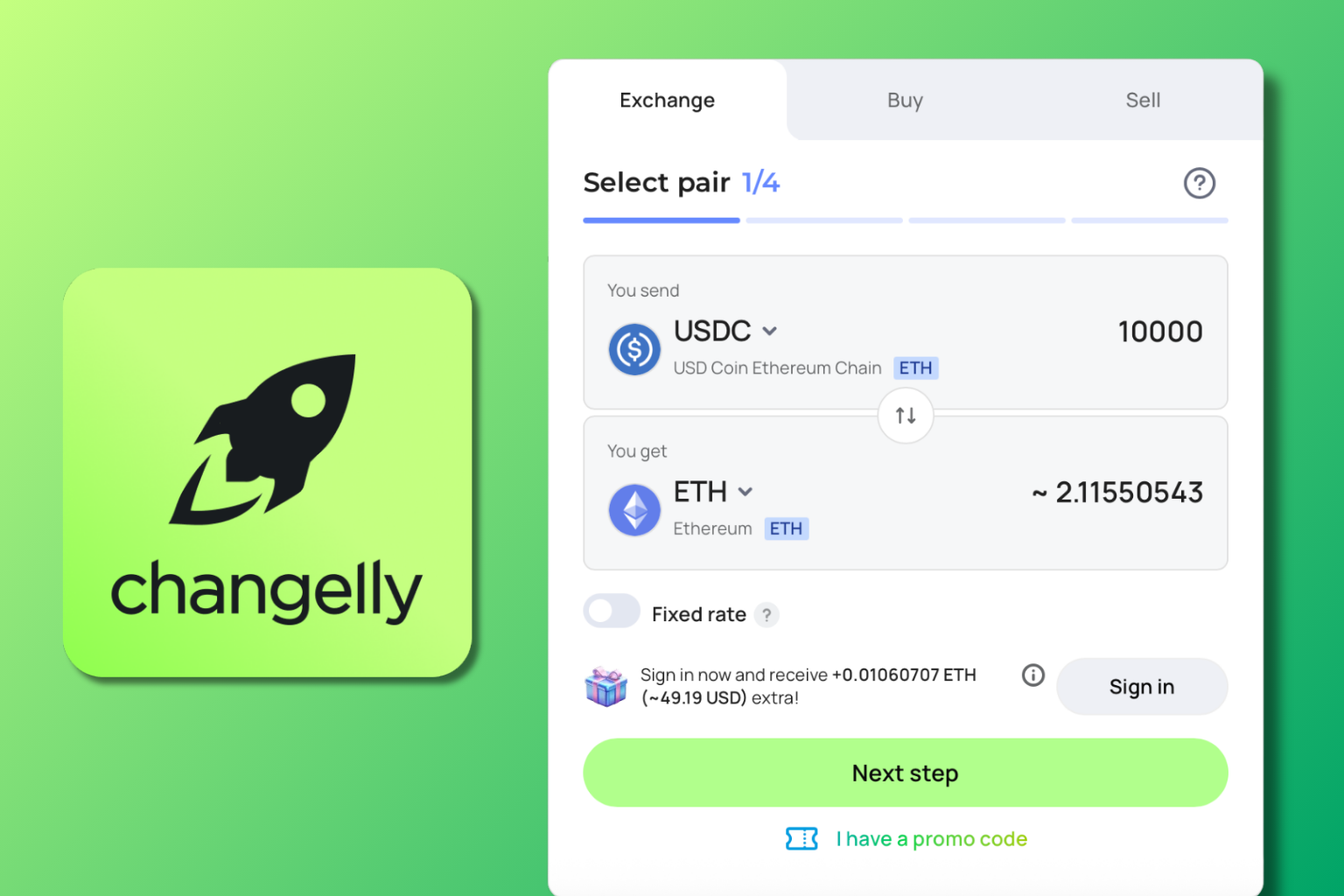
Changelly is among the longest-standing cryptocurrency exchange services, introduced in 2015 and relied upon by millions of global users.
In contrast to aggregators limited to DEXs, Changelly functions as a hybrid aggregator and immediate exchange, drawing liquidity from both centralized and decentralized sources. This positions it uniquely in the industry, combining user-friendliness, extensive asset support, and attractive pricing.
What draws stablecoin traders to Changelly is its straightforwardness and ease of access. Users avoid dealing with intricate liquidity directing or bridging.
Changelly automatically identifies the most favorable rate from its collaborators and carries out exchanges right away.
For beginners or those who value rapidity and ease, it's one of the simplest methods to trade USDT, USDC, DAI, and other stablecoins.
Supported Assets & Chains
Changelly handles over 500 cryptocurrencies and all primary stablecoins, with exchanges possible across:
- Ethereum (ERC-20 stablecoins)
- BNB Chain (BEP-20 USDT/USDC/DAI)
- Tron (TRC-20 USDT)
- Polygon
- Avalanche
- Optimism
- Arbitrum
- Fantom
Additional chains incorporated periodically via collaborations. It remains one of the longest-running instant-swap services in crypto.
Fees & Costs
Changelly’s pricing model:
- Instant Swaps: A flat 0.25% service fee on crypto-to-crypto swaps, per Changelly's fee page.
- Floating vs Fixed Rates: Users may select floating rates (less expensive but prone to price fluctuations) or fixed rates (secured at the time of order).
- No Hidden Fees: Solely the 0.25% service charge plus blockchain network fees (Changelly fees).
- API & White Label: Offered at no cost, allowing companies to embed Changelly exchanges into wallets, platforms, and payment systems.
Key Features
Changelly incorporates various notable capabilities:
- Instant Swap Engine: Completes trades in mere seconds, perfect for rapid stablecoin transformations.
- Broad Asset Coverage: Over 500 coins and tokens, surpassing most DEX-exclusive aggregators.
- Fiat On-Ramp & Off-Ramp: Purchase stablecoins using credit cards, Apple Pay, or bank transfers; convert them back to fiat in over 30 currencies.
- Cross-Platform Access: Operates through web applications, mobile apps, and API connections.
- Custodial & Non-Custodial Options: Users can exchange directly into their wallets, retaining control.
- Affiliate & Partner Programs: Changelly provides profit-sharing for platforms that incorporate its exchanges.
Speed & Performance
- The majority of stablecoin exchanges finish in 5–10 minutes (varying with blockchain validation periods).
- Price estimates update in real time.
- Immediate rate securing is offered for fixed-rate exchanges.
Developer & Business Tools
Changelly supplies a full API and white-label option utilized by wallets, payment services, and exchanges.
Key integrations feature Exodus Wallet, Ledger, and Trezor Suite. Companies can integrate Changelly’s liquidity and fiat access points with little technical effort.
Start using Changelly today.

2. Symbiosis.Finance
Symbiosis.Finance functions as a cross-chain liquidity aggregator, designed to deliver the best rates for any-to-any token exchanges across diverse blockchain networks. It accommodates networks such as Avalanche, BNB Chain, and Boba. This positions it as a strong candidate for effective stablecoin exchanges.
Symbiosis goes beyond being merely a bridge or DEX; it's akin to a cross-chain liquidity mechanism. It merges routing, bridging, and exchanging into a single system, which is highly practical. It gathers liquidity from DEXs and manages secure cross-chain communications, streamlining operations for users.
Symbiosis accommodates major stablecoins, including USDC, USDT, DAI, FRAX, and BUSD (where supported). You can exchange these across compatible blockchains like Ethereum, BNB Chain, Polygon, Arbitrum, zkSync, Avalanche, and TON.Symbiosis is constructed with adaptability as a priority.
It doesn't restrict you to Ethereum and a handful of L2s. The platform actively endorses and merges with emerging ecosystems like TON, zkSync, Scroll, Linea, and others, ideal for users exploring newer DeFi spaces.
A major benefit of Symbiosis is its non-custodial and open-access nature. No registration or KYC is required. Simply link your wallet and begin exchanging, which is excellent for maintaining privacy and decentralization.
Transactions via Symbiosis typically conclude in under a minute. Charges are minimal and clear, eliminating surprise expenses. You see the costs upfront before approving the exchange. For individuals centered on stablecoin transfers, Symbiosis delivers comprehensive cross-chain exchanges.
3. 1inch

2026 update: 1inch Swap has processed $797.90 billion in all-time volume and $2.55 billion in the last 30 days, per DefiLlama (September 27, 2026). In September 2026, 1inch Business added API support for Monad, Cronos, HyperEVM and Arc (1inch blog).
1inch is a renowned DEX aggregator that seeks to offer users the most advantageous token exchange rates by gathering liquidity from several decentralized exchanges. It has been operational for some time and remains a preferred selection for numerous DeFi participants.
1inch's primary capability is dividing orders among various DEXs to pinpoint the most effective trading paths. This reduces slippage and enhances profits.
1inch employs the Pathfinder Routing Algorithm to improve trades in terms of effectiveness and quickness. It can also shield users from price fluctuations, which is crucial for substantial trades and high-volume exchanges.
1inch provides multiple features that contribute to its popularity:
- Multi-DEX Integration: It collects liquidity from diverse DEXs, encompassing key platforms like Uniswap and SushiSwap.
- Advanced Trade Routing: The system utilizes an algorithm that detects and directs trades via exchanges providing the optimal rates with the least slippage.
- Limit Orders: Users can establish limit orders to purchase or sell tokens at a designated price or superior.
1inch emphasizes gas optimization as well, applying methods such as transaction batching to cut expenses. It features an intuitive interface and accommodates various chains, rendering it available to a broad audience.
Consensys Diligence has reviewed 1inch’s smart contracts, highlighting its gas-efficient programming. Nonetheless, the code is intricate, and 1inch lacks support for cross-chain exchanges, necessitating manual token bridging between chains.
4. OpenOcean

2026 update: OpenOcean has rebranded to De1, which folded OpenOcean liquidity and execution tech into its new stack (De1 announcement, August 3, 2026). DefiLlama lists $251.3 million in 30-day aggregator volume under De1 as of September 27, 2026. Existing OpenOcean widgets and APIs keep working during the migration (OpenOcean docs).
OpenOcean distinguishes itself as a DEX aggregator that strives to secure the optimal prices from both decentralized and centralized exchanges. It's crafted to grant users entry to an extensive array of liquidity providers.
OpenOcean's intelligent order directing is a core attribute, aiding users in obtaining the finest prices with reduced slippage. This holds significant importance in the stablecoin sector.
It also facilitates cross-chain exchanges, which is advantageous for transferring stablecoins among distinct blockchains.
Here are some strengths of OpenOcean:
- Cross-chain aggregation: It draws liquidity from various blockchains, enabling trading and asset transfers across networks. This allows you to secure the best prices irrespective of asset locations.
- Integrated wallet support: Connect wallets such as MetaMask and Trust Wallet, simplifying access to DeFi prospects on different blockchains.
- Smart order routing: The algorithm identifies the most streamlined approach to perform trades, ensuring optimal prices with minimal slippage.
OpenOcean is a reliable option for those seeking a system capable of managing cross-chain stablecoin exchanges and locating the best prices across numerous exchanges. While not flawless, it effectively aggregates liquidity and offers intelligent order directing.
OpenOcean additionally provides limit orders and safeguards against slippage. This affords greater command over trades and assists in preventing unforeseen losses due to price shifts. Cross-chain aggregation is a significant advantage for those handling stablecoins on several chains.
5. Jumper Exchange
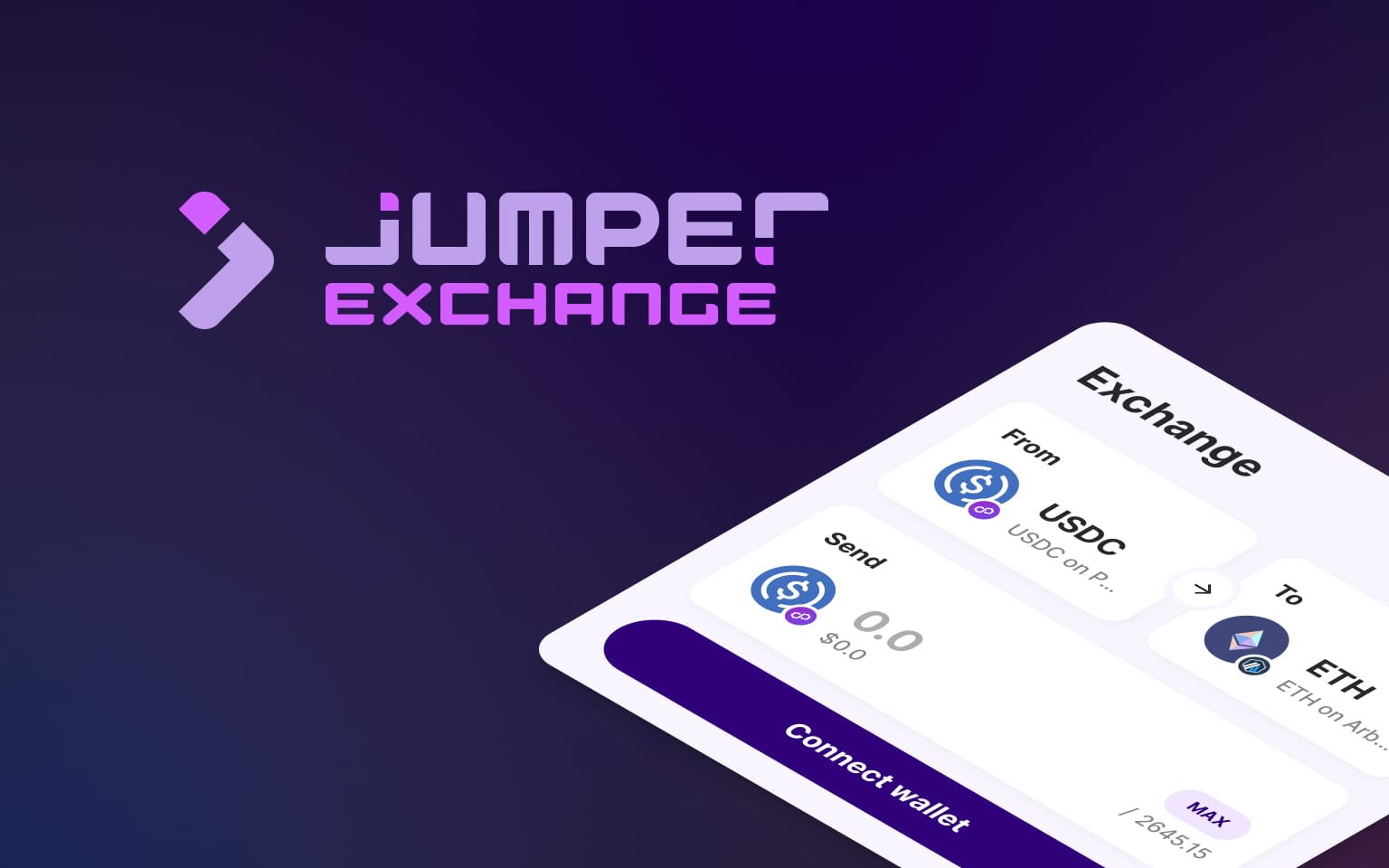
2026 update: Jumper, the LI.FI-powered app, routed $994.2 million in 30-day bridge-aggregator volume and $210.3 million in same-chain swap volume as of September 27, 2026, per DefiLlama.
Jumper Exchange represents another dependable choice for directing stablecoin exchanges across diverse chains. It's engineered to identify the optimal paths for your transactions, factoring in elements like charges and slippage. This enables you to maximize benefits from cross-chain stablecoin exchanges.
Jumper Exchange seeks to streamline the procedure of transferring stablecoins between networks. It focuses on facilitating participation in DeFi operations on multiple chains.
A notable aspect of Jumper is its emphasis on gas efficiency. It endeavors to discover paths that reduce expenditures on transaction fees. This can be particularly impactful, especially for smaller stablecoin transfers.
Jumper Exchange employs a real-time analytics tool to depict liquidity paths and current gas statuses, emphasizing protocols according to gas efficiency.
Jumper Exchange compiles liquidity from various origins to secure the best exchange rates. It accommodates a broad selection of stablecoins and networks, rendering it a flexible instrument for cross-chain exchanges.
It's advisable to explore if you're in search of a platform that emphasizes efficiency and usability. It's an effective means to transfer stablecoins without entanglement in complex procedures.
Here's a brief overview of some advantages:
- Optimized routing for improved rates
- Support for numerous chains and stablecoins
- Emphasis on gas efficiency
6. Portal Bridge (Wormhole)
Portal Bridge, commonly known as Wormhole, remains a leading bridge for moving assets between Solana, Ethereum and other chains, and a common choice for shifting stablecoins. DefiLlama tracks $1.89 billion in TVL on Portal as of September 27, 2026.
It employs an innovative hybrid mechanism. This integrates liquidity pools for swift exchanges with conventional bridging techniques. This strategy intends to deliver users both velocity and dependability during stablecoin exchanges.
Portal Bridge is engineered to enable the conveyance of tokens and data across multiple blockchain networks. It accommodates a diverse array of chains, positioning it as a adaptable tool for those operating in various ecosystems.
Portal Bridge handles numerous different chains. This renders it a versatile selection for managing varied blockchain settings. It extends beyond mere token transfers; it also involves data movement, which unlocks intriguing opportunities for cross-chain apps.
7. ParaSwap (Velora)
ParaSwap (now rebranded as Velora) is a robust DEX aggregator operational since 2019, establishing it as one of the more veteran entities in the field. It's recognized for its MultiPath capability, which divides your trade among several exchanges concurrently to achieve the most favorable rate.
What renders ParaSwap especially appealing for stablecoin traders is its dedication to enhancement. The platform not only identifies the optimal single path but also evaluates whether dividing your order across multiple DEXs yields a superior outcome. This proves particularly beneficial for larger stablecoin exchanges where slippage can diminish gains.
Supported Chains
ParaSwap accommodates 10 blockchains:
- Ethereum Mainnet
- Binance Smart Chain (BSC)
- Avalanche
- Polygon
- Gnosis (xDai)
- Arbitrum
- Optimism
- Base
- Sonic
- Unichain
ParaSwap, now rebranded as Velora, reported over $100 billion in all-time transactions at the rebrand. DefiLlama now tracks $100.57 billion in all-time volume and $1.45 billion over the last 30 days for Velora (September 27, 2026).
Fees & Costs
ParaSwap's pricing model:
- Platform fees: Any fee is shown in the quote before you sign, and Delta intent swaps are gasless for the user, per the Velora Delta docs.
- Gas optimization: Employs CHI and GST2 tokens to lower expenses
- Smart contract fees: Only fees from underlying DEXs are applicable
- API access: Complimentary for developers
Key Features
ParaSwap encompasses various prominent capabilities:
- MultiPath Routing: Divides orders among multiple DEXs for prime pricing, especially potent for substantial trades.
- Gas Token Integration: Utilizes CHI and GST2 tokens to substantially cut gas expenses.
- Private Market Makers: Entry to exclusive liquidity reserves for improved rates via Velora RFQ (Request for Quote).
- Positive Slippage: Users retain any beneficial slippage if the ultimate price exceeds the quote, a user-oriented trait absent in many rivals.
- PSP Token Rewards: Participants can receive PSP tokens as cashback on exchanges, aiding in compensating trading expenses.
- Delta Trading Mode: Fresh capability using Portikus Infrastructure for enhanced execution and reduced MEV threats.
Speed & Performance
- Most exchanges finalize in 30-60 seconds
- Intelligent routing algorithm operates in milliseconds
- Real-time price refreshes from all linked DEXs
Developer Tools
ParaSwap supplies an extensive API enabling developers to embed trading features into their platforms. Prominent wallets like MetaMask, Ledger, and Argent have already incorporated ParaSwap's APIs.
8. Matcha
Matcha, developed by 0x Labs, introduces a distinct method to DEX aggregation. It merges the robust 0x protocol's liquidity compilation with a user interface that resembles a professional trading system rather than a standard DeFi setup.
Matcha compiles liquidity from more than 130 varied sources, encompassing both AMMs (Automated Market Makers) and expert market makers. This vast network frequently yields competitive rates for stablecoin exchanges, particularly for larger transactions where liquidity depth is critical.
Supported Chains
Matcha presently accommodates 14 blockchains:
- Ethereum
- Polygon
- Arbitrum
- Optimism
- Avalanche
- BNB Chain
- Fantom
- Celo
- Base
- Mode
- Unichain
- Plus additional chains
The platform supports a very long tail of tokens across these networks.
Fees & Costs
Matcha's pricing model:
- Stablecoin-to-stablecoin swaps: no Matcha swap fee in either Standard or Auto mode, per Matcha fees (September 2026).
- Matcha Auto and Standard (most other pairs):
- Most non-stable pairs: 0.25% swap fee (Matcha fees)
- Cross-chain swaps: 0.04% for stablecoin-to-stablecoin, 0.40% for other pairs; limit orders on stablecoin pairs: 0.02% (Matcha fees)
- Gas fees: Incorporated in Matcha Auto transactions
- 0x protocol fee: Minor charge only when 0x liquidity is utilized
Notable Features
The platform shines in its straightforwardness. Whereas many aggregators overwhelm with intricate routing details, Matcha maintains a clean and direct approach. You enter your desired exchange, and it manages the intricacies discreetly.
Key attributes of Matcha include:
- 0x Protocol Integration: Access to the full 0x liquidity network, which routed $10.46 billion in the 30 days to September 27, 2026 per DefiLlama.
- Gasless Trading: On specific networks, trading is possible without possessing native tokens for gas via Matcha Auto.
- Cross-Chain Swaps: Fluid multi-chain trading without exiting the platform.
- Professional Trading Tools: Sophisticated charting via TradingView, limit orders, and live analytics.
- Matcha OTC: Direct quotes from professional market makers for larger transactions, designed to avoid slippage.
- MEV Protection: Integrated safeguards against sandwich attacks and front-running.
Speed & Performance
- Sub-second quote creation, with gasless execution available through Matcha Auto (Matcha help center)
Unique Advantages
A prominent attribute is Matcha's gas-efficient framework. By utilizing the 0x protocol's setup, transactions often use less gas than direct interactions with individual DEXs. This can result in notable savings, particularly in times of elevated network traffic.
The platform also supplies limit orders without additional charges, which is especially handy for stablecoin arbitrage or capturing de-pegging occurrences. Combining deep liquidity, professional attributes, and a tidy interface, Matcha serves as a strong option for both occasional and dedicated stablecoin traders.
9. Curve Finance

Curve Finance is a dedicated decentralized exchange that has emerged as the primary venue for stablecoin trading in DeFi. Unlike versatile DEXs, Curve is tailored specifically for exchanging assets of comparable worth, rendering it highly effective for stablecoin-to-stablecoin transactions with negligible slippage.
Curve utilizes a distinctive StableSwap algorithm, an adapted Automated Market Maker (AMM) crafted expressly for assets trading at similar values. This algorithm sustains very narrow spreads among stablecoins, permitting large transactions with minimal price effects. The protocol arranges liquidity into targeted pools, with the renowned 3pool (USDT, USDC, DAI) acting as the foundation of DeFi stablecoin liquidity.
Supported Chains
Curve has grown to accommodate over 20 blockchains:
- Ethereum (mainnet)
- Arbitrum
- Optimism
- Polygon
- Fantom
- Avalanche
- BNB Chain
- Gnosis
- Base
- Sonic
- Fraxtal
- Hyperliquid L1
- X Layer
- Kava
- Taiko
- Celo
- Ink
- Moonbeam
- Aurora
- Plume
- Mantle
- Harmony
Fees & Costs
Curve's pricing model:
- Trading fees: Set per pool; the classic 3pool example in Curve's docs charges 0.04% (Curve StableSwap docs)
- Admin fees: On classic StableSwap pools, 50% of the swap fee goes to veCRV holders (Curve docs)
- Gas optimization: Efficient smart contracts reduce transaction expenses
- No protocol fees: Direct pool-to-pool exchanges
The minimal fee setup paired with low slippage frequently yields superior net prices than competitors, even for trades in the millions.
Key Features
Curve Finance presents several distinct benefits:
1. StableSwap Algorithm: Custom-built for pegged assets, preserving 1:1 ratios with little variation.
2. Metapools: Creative pool structure permitting new stablecoins to utilize existing liquidity via virtual balances.
3. Liquidity Depth: Curve DEX held $1.31 billion in TVL and processed $3.28 billion in 30-day volume as of September 27, 2026, per DefiLlama.
4. Yield Opportunities: Connections with lending systems like Compound and Yearn for boosted returns.
5. veCRV Governance: Secure CRV tokens for voting influence to guide liquidity rewards through gauge weights.
Impermanent Loss Protection: Tailored design reduces IL risk for liquidity contributors.
Speed & Performance
- Transactions generally confirm in 1-2 blocks
- Designed for large stable-to-stable swaps with minimal slippage in deep pools
- Steady liquidity depth guarantees dependable execution
- Cross-chain implementations uphold identical efficiency norms
Unique Advantages for Stablecoins
Curve's targeted emphasis on stablecoins delivers unparalleled effectiveness:
- Capital Efficiency: Focused liquidity for similarly priced assets
- Low Risk: Limited volatility exposure for LPs
- DeFi Infrastructure: Employed as a foundational layer by protocols such as Frax, MIM, and others
- Composability: Profound integration with yield compilers and lending platforms
10. Uniswap
Uniswap is the biggest and most impactful decentralized exchange worldwide, originating the Automated Market Maker (AMM) framework that transformed DeFi. Although not dedicated solely to stablecoins, Uniswap's enormous liquidity and recent cross-chain additions render it a potent choice for stablecoin exchanges.
Uniswap functions via several protocol editions (V2, V3, and the novel UniswapX), each delivering varied attributes. V3's concentrated liquidity permits LPs to supply liquidity in designated price brackets, making it extremely capital effective for stablecoin pairs. The fresh UniswapX protocol brings cross-chain exchanges and gasless trading via an intent-oriented structure.
Supported Chains
Uniswap is implemented across various networks:
- Ethereum
- Arbitrum
- Optimism
- Polygon
- Base
- BNB Chain (Binance Smart Chain)
- Avalanche
- Celo
- Zora
- Blast
- World Chain
- ZKsync
- Unichain (native chain)
Fees & Costs
Uniswap's pricing model:
- V2 pools: 0.30% flat fee on every pool (Uniswap fee docs)
- V3 pools: Fee tiers of 0.01%, 0.05%, 0.30% and 1% (Uniswap fee docs)
- Stablecoin pairs: Frequently use the 0.01% or 0.05% tier; V4 pools can set custom or dynamic fees through hooks (Uniswap docs)
- UniswapX: Gasless exchanges with MEV safeguards
- Limit orders: Offered without additional platform charge
Key Features
Uniswap introduces multiple advancements to stablecoin trading:
1. Concentrated Liquidity (V3): LPs can concentrate capital in narrow ranges for stablecoin pairs, optimizing efficiency.
2. UniswapX Protocol: Novel cross-chain exchanging with gasless transactions and MEV protection via Dutch auctions.
3. Universal Router: Intelligent directing across V2, V3, and UniswapX for prime execution.
4. In-App Bridging: Built-in bridging driven by Across Protocol for effortless cross-chain conveyances.
5. Permit2 Integration: Enhanced token authorizations and security for exchanges.
6. Auto Router: Automatically detects the optimal path across all Uniswap editions.
Cross-Chain Capabilities
Uniswap's newest advancements heavily prioritize multi-chain operations:Native bridging for ETH and stablecoins across 9 networksCross-chain swaps arriving via UniswapXIntent-based structure for streamlined user interactionFiller network for competitive pricing and fulfillment
Speed & Performance
- Swaps on Layer-2 networks usually cost a small fraction of Ethereum mainnet gas
- V3 and V4 concentrated liquidity tightens slippage on stable pairs
- UniswapX removes failed transactions through intent-based setup
- Cross-chain swaps finalize in seconds (forthcoming)
Advantages for Stablecoin Traders
- Deep Liquidity: $3.98 billion TVL and $91.13 billion in 30-day DEX volume as of September 27, 2026 (DefiLlama)
- Multiple Fee Tiers: Select ideal level for trade volume
- Security: Most reviewed and proven DEX protocol
- Innovation: Ongoing protocol enhancements and fresh attributes
11. Eco Portal

Eco Portal is an advanced stablecoin transfer system that concentrates solely on simplifying and economizing cross-chain stablecoin movements. Constructed on the Eco Protocol, it embodies a novel strategy for stablecoin framework with its "one-click stablesend" approach.
Eco Portal employs the Eco Routes mechanism, which uses intent-based architecture to conceal the intricacies of cross-chain transfers. Users merely indicate their intended result, and the protocol manages all directing, bridging, and optimization covertly. The system utilizes both Native Routes and Hyperlane Routes to offer adaptable transfer choices.
Supported Chains & Stablecoins
Presently accommodates 10+ blockchains with 20+ stablecoin varieties:
Supported chains include:
- Ethereum
- Arbitrum
- Optimism
- Base
- Polygon
- Avalanche
- BNB Chain
- Gnosis
- And extending to additional chains
Supported stablecoins:
- USDC (native and bridged forms)
- USDT
- DAI
- USDC.e
- USDe
- And 15+ other stablecoin types
Fees & Costs
Eco Portal's attractive pricing model:
- Markedly lowered fees relative to conventional bridges
- Zero fee transfers forthcoming for chosen paths
- Dynamic fee enhancement based on route choice
- No concealed expenses or unexpected charges
- Gas abstraction under development
Key Features
Eco Portal presents various creative attributes:
1. One-Click Transfers: Streamlined UX that manages all intricacies discreetly.
2. Eco Routes SDK: Developers can embed stablesend features in only 30 minutes.
3. Multi-Route Optimization: Assesses Native and Hyperlane Routes for optimal fulfillment.
4. Intent-Based Design: Users define desired results instead of execution routes.
5. Eco Accounts: Forthcoming - enduring cross-chain accounts for fluid transfers.
6. Crowd Liquidity: Upcoming attribute to compile liquidity from diverse sources.
Technical Architecture
The Eco Protocol comprises three fundamental elements:
- Routes: Adaptable routing mechanism for prime path selection
- Accounts: Cross-chain account abstraction (forthcoming)
- Crowd Liquidity: Decentralized liquidity compilation (forthcoming)
Speed & Performance
- Rapid transfers with route-optimized fulfillment
- Instant quote production
- Reduced waiting periods compared to traditional bridges
- Real-time route choice based on present conditions
Developer Integration
Eco Portal is designed with developers in focus:
- Straightforward SDK embedding (30-minute configuration)
- Permissionless system permitting custom applications
- Adaptable parameters for priorities in speed, cost, and security
- Universal stablecoin acceptance irrespective of chain or type
Unique Advantages
- Stablecoin-first design: Constructed expressly for stablecoin transfers
- Future-proof structure: Engineered to accommodate upcoming advancements
- User-centric method: Removes the necessity for users to grasp bridge operations
- App integration emphasis: Transforms any onchain activity into a simple stablesend
More Stablecoin Aggregators Worth Knowing
These aggregators were covered in our earlier "12 Best Stablecoin Aggregators" roundup, which is now part of this guide. They are strong picks for specific needs: concentrated-liquidity routing, MEV protection, multi-step swaps, Solana, and simple cross-chain moves.
KyberSwap: Aggregation Plus Native Concentrated Liquidity
Website: kyberswap.com
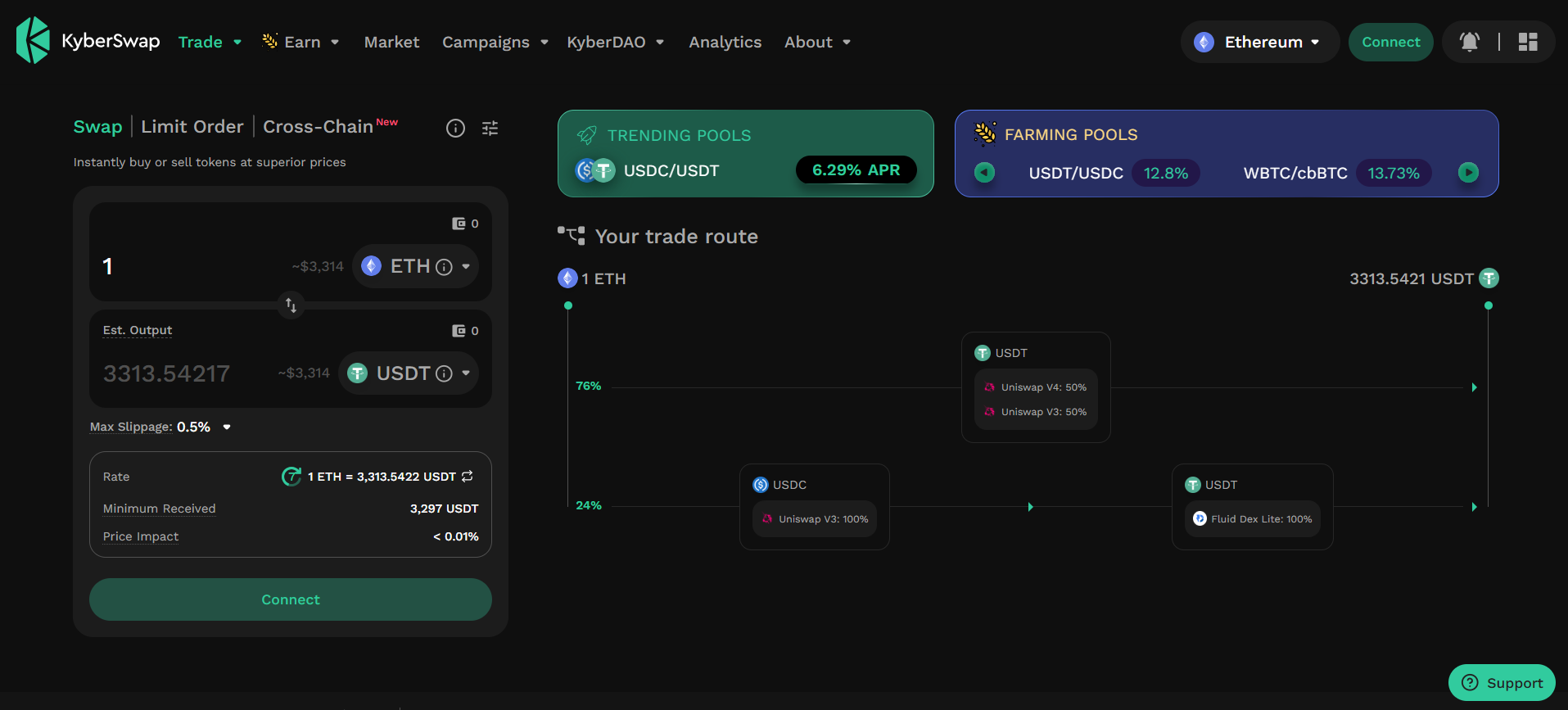
2026 update: KyberSwap Aggregator routed $8.37 billion over the 30 days to September 27, 2026, the third-largest total among DEX aggregators tracked by DefiLlama.
KyberSwap combines aggregation with its own concentrated-liquidity pools, which can improve stablecoin execution when internal liquidity is favorable. That dual approach can be useful if you want one interface that covers swapping, analytics, and (where relevant) liquidity/earn features.
KyberSwap documentation states 420+ liquidity sources across 17 chains
Its swap UI also tends to surface more context and tooling than minimal aggregators, which some users prefer for decision support.
Key features & use cases:
- Hybrid aggregation: Routes across external DEXs plus KyberSwap Elastic pools.
- Limit orders: Set target pricing for stablecoin execution.
- Broad chain support: Strong coverage across EVM networks.
- Built-in analytics: Useful for users who want more than a simple quote screen.
CoW Swap: Batch Auction Execution for MEV Resistance
Website: swap.cow.fi
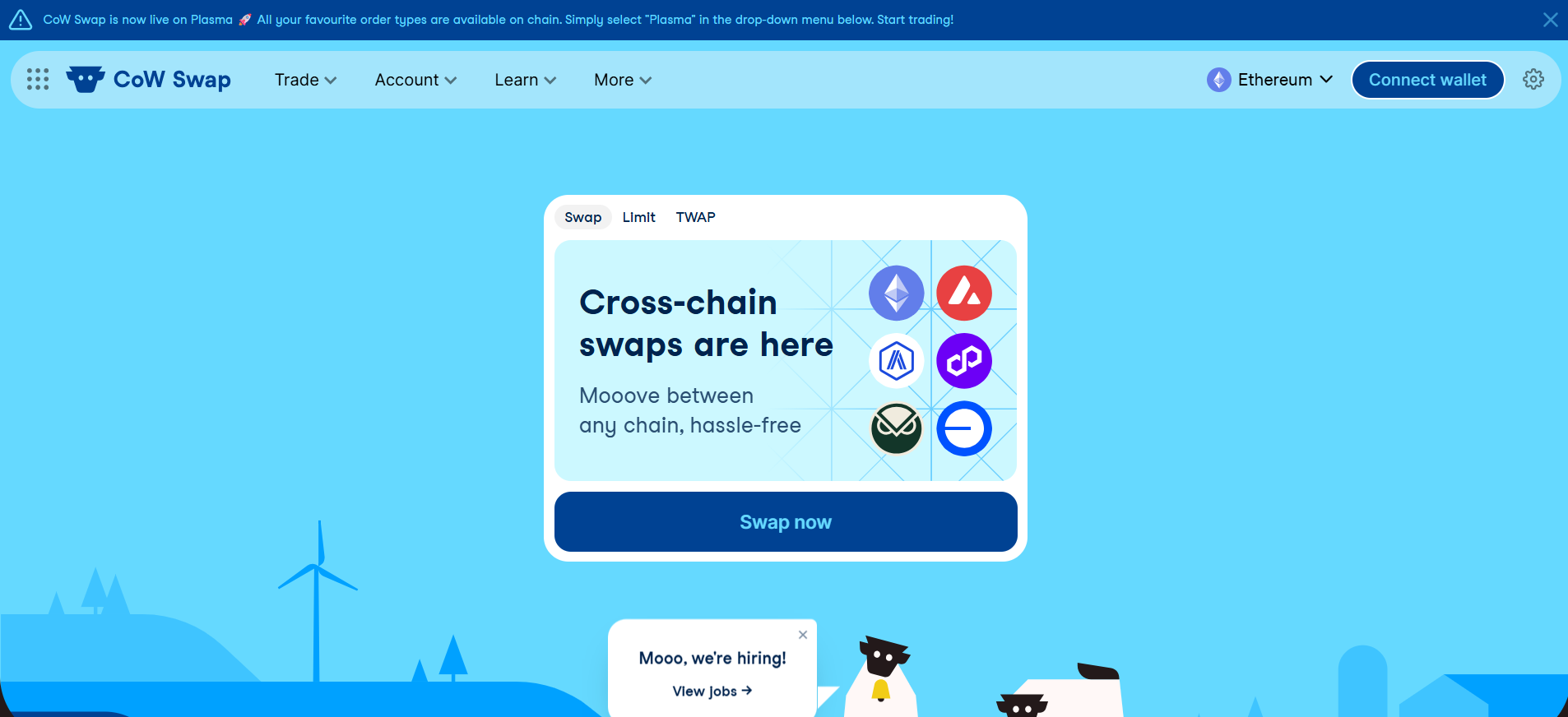
2026 update: CoW Swap launched on Plasma in January 2026 and Ink in February 2026, and its affiliate program referred more than $170 million in volume by July (CoW DAO update). The core team has proposed a Solana launch at a 0 bps volume fee for 12 months (CoW DAO forum). DefiLlama shows $3.38 billion in 30-day volume (DefiLlama).
CoW Swap stands out because it does not operate like a standard “route and submit” DEX swap. Instead, it collects user intents and settles them in batches using competing solvers. That structure is specifically designed to reduce MEV issues like sandwiching, which can be especially painful on larger stablecoin trades.
The tradeoff is that settlement can be less “instant” than a direct swap, but the net execution can be more consistent for MEV-sensitive flows.
Key features & use cases:
- Batch auctions with solvers: Competitive settlement improves net pricing and reduces front-running.
- Gas-abstracted flow: Users sign an intent; solvers handle settlement gas.
- P2P matching: Can bypass AMMs entirely when orders match.
- Uniform clearing price: Same pair in a batch clears at the same price.
Odos: Advanced Routing for Complex, Multi-Step Swaps
Website: odos.xyz
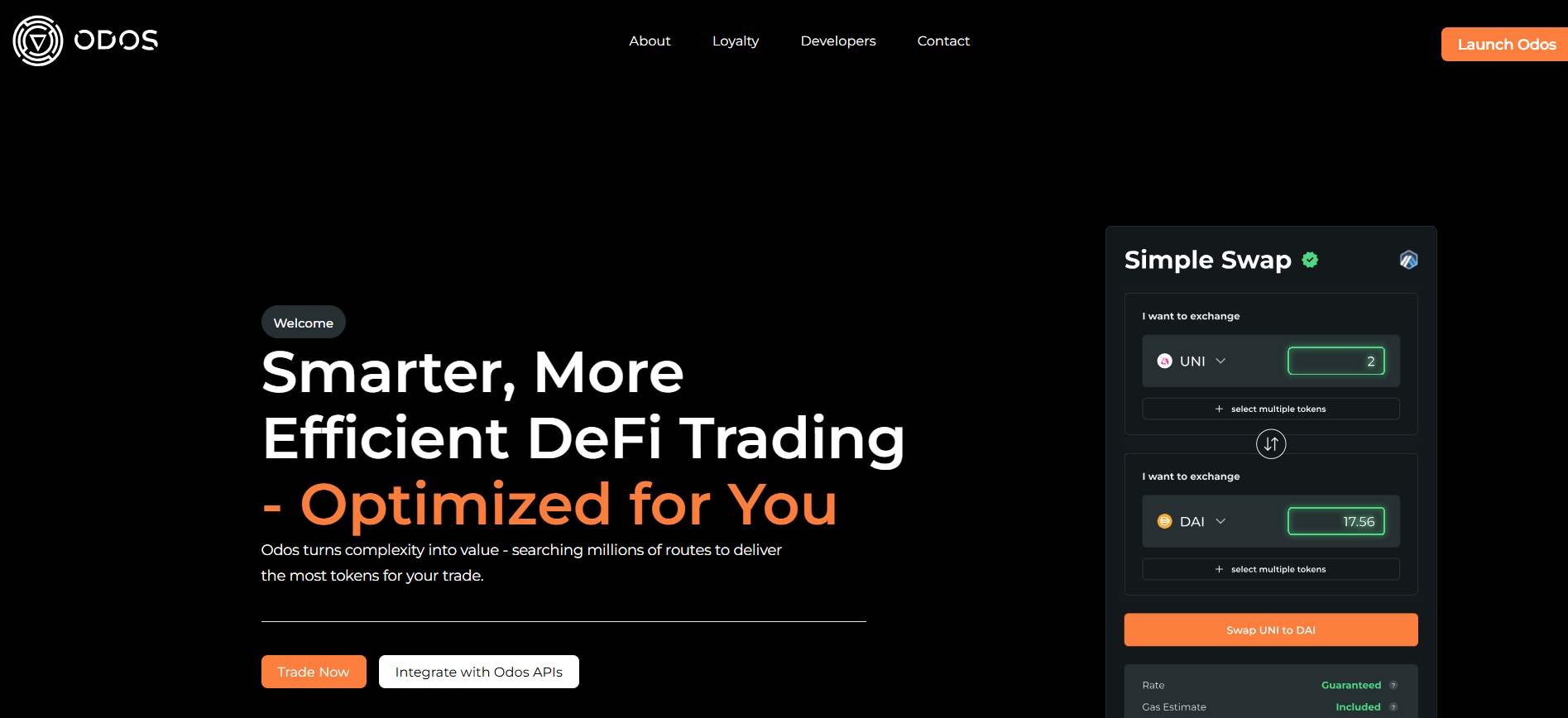
Odos differentiates through route exploration: it looks beyond simple direct paths and can use intermediate steps when that improves net execution. For stablecoin routing, this matters most when size is large or liquidity is fragmented.
Its multi-token input feature is also operationally valuable: you can consolidate multiple assets into one stablecoin in a single atomic transaction.
Key features & use cases:
- Non-linear pathfinding: Finds complex routes that can reduce slippage.
- Multi-asset swaps: Convert up to several input tokens into one output stablecoin in one go.
- Route visualization: Clear transparency into how execution is achieved.
- Developer orientation: Documentation and integration support for dApps.
Jupiter: The Default Stablecoin Router on Solana
Website: jup.ag
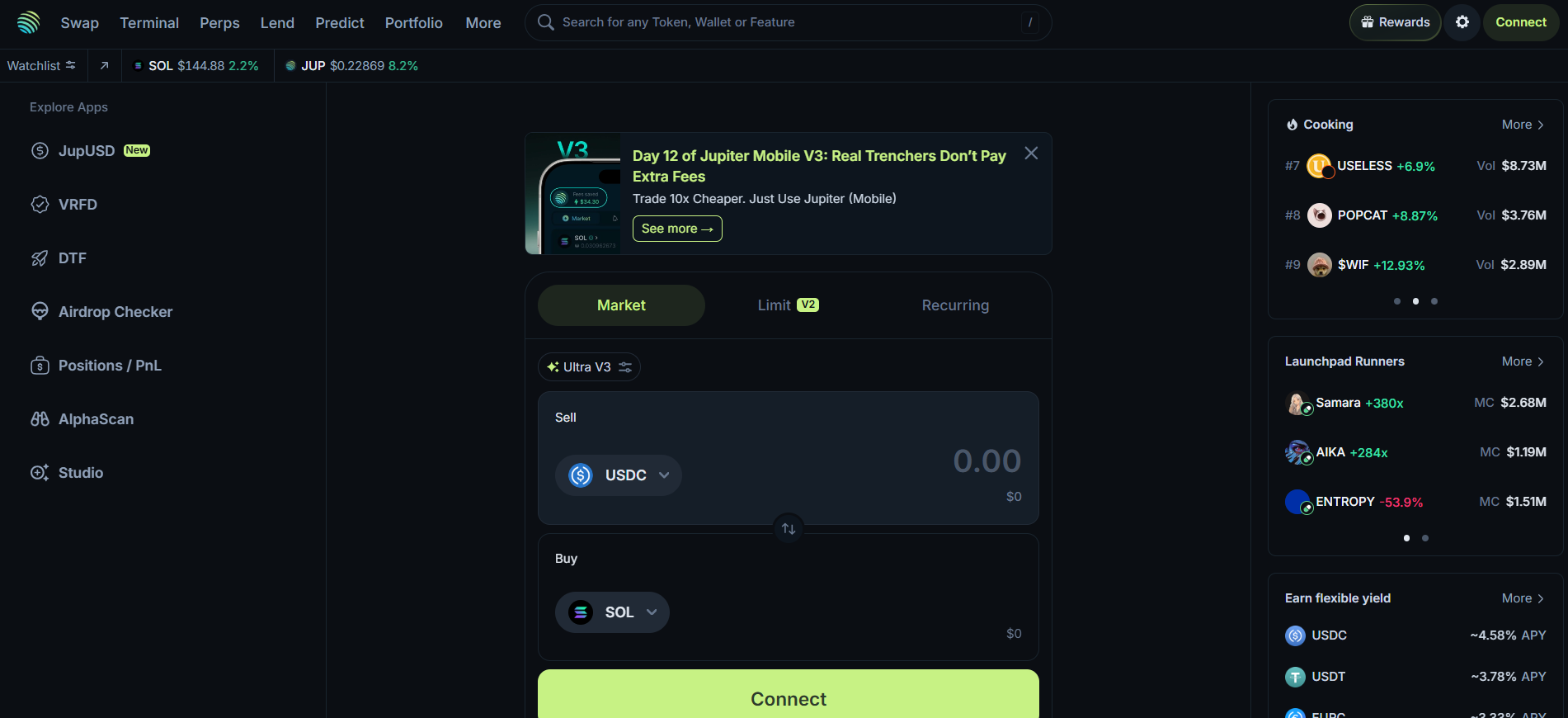
2026 update: Jupiter Aggregator was the largest DEX aggregator by 30-day volume on September 27, 2026, with $15.09 billion routed, per DefiLlama.
Jupiter remains the primary aggregation layer for Solana swaps in 2026. It routes across Solana liquidity venues to find best execution, which is especially valuable for stablecoin pairs where small differences matter.
Solana’s low fees and fast confirmations make stablecoin management feel closer to “consumer-grade” execution, and Jupiter is typically the front door.
Key features & use cases:
- Best-route routing: Splits across pools to minimize slippage.
- Limit orders and DCA: Execution tools built into the interface.
- Perps access: For advanced users using stablecoins as margin/collateral.
- Strong ecosystem support: Docs and integrations across Solana apps.
Bungee (Socket): Simple Cross-Chain Routing With Gas Refuel
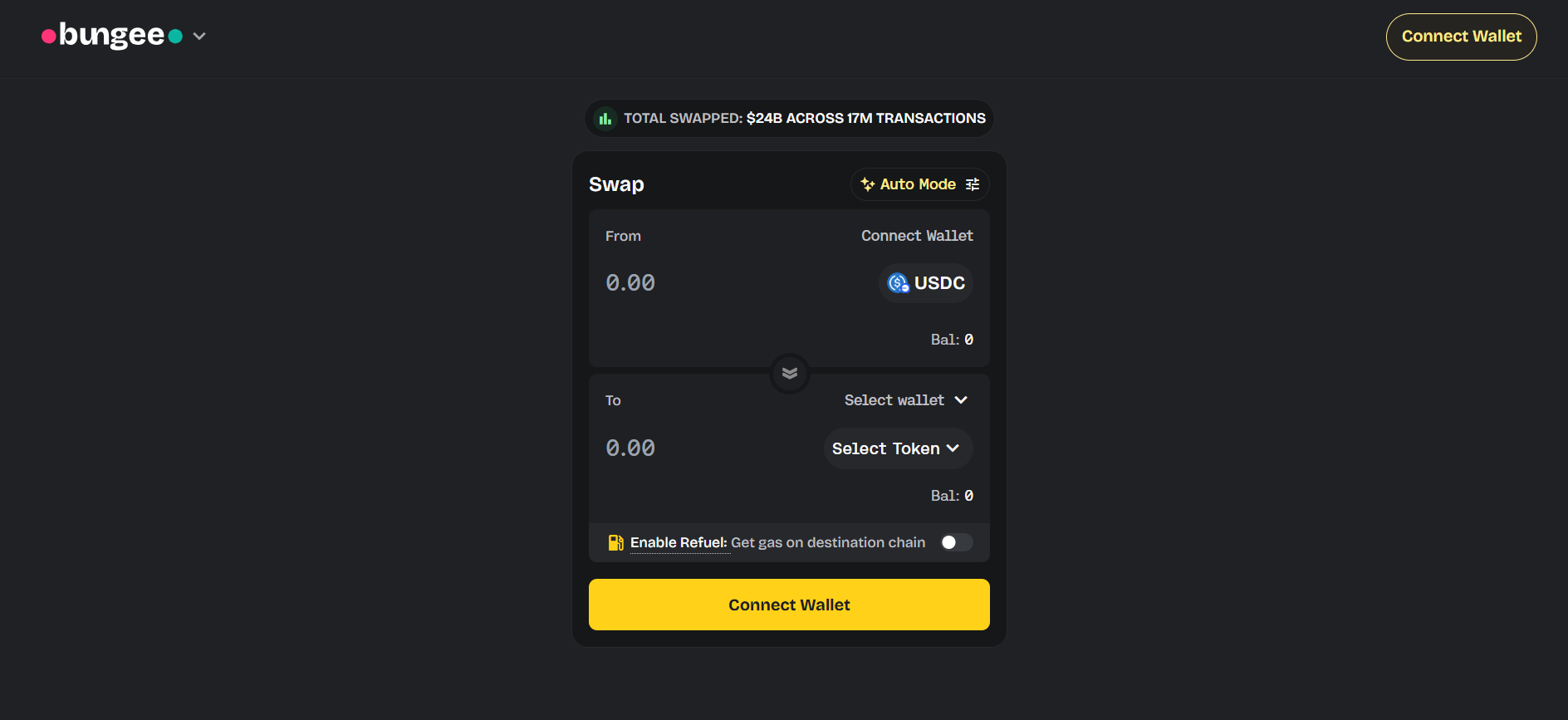
Website: bungee.exchange
2026 update: DefiLlama tracks SOCKET Protocol, the infrastructure behind Bungee, at $1.47 billion in 30-day bridge-aggregator volume as of September 27, 2026 (DefiLlama).
Bungee is designed for usability: it presents cross-chain routing like a navigation problem, reducing the cognitive load of choosing bridges and routes. For stablecoin users who frequently move between L2s and major chains, this “one-step” experience is the main value.
Its refuel option is operationally important: landing on the destination chain with zero gas is a common failure mode that this feature helps avoid.
Key features & use cases:
- Cross-chain route comparison: Auto-select or manual route selection.
- Refuel: Receives a small amount of destination gas token.
- Widget/SDK: Commonly embedded in dApps and wallets.
- Security visibility: Helps users understand route tradeoffs.
Rhino.fi: Bridge-and-Swap Focus With Developer Tooling

Website: rhino.fi
Rhino.fi positions itself as a cross-chain DeFi application with a strong emphasis on moving stablecoins efficiently. Its value is operational: fewer steps, simplified deposit addressing, and developer-friendly access for programmatic routing.
If your core need is moving USDC/USDT between environments cleanly, rather than advanced trading features, Rhino.fi is typically evaluated as a specialist option.
Key features & use cases:
- Bridge-and-swap flows: Combine steps into a single guided transaction.
- Smart deposit addresses: Simplify cross-chain transfer initiation.
- APIs and developer portal: Programmatic routing for products and services.
- Multi-ecosystem support: Coverage across EVM chains and L2s.
Related Stablecoin Aggregator Guides
- 12 Best Stablecoin Aggregators to Use in 2026: a 12-pick shortlist with a feature comparison table.
- 9 Best Stablecoin Swap Aggregators for Zero Slippage (2026): how each router handles slippage.
- Best DEX Aggregators for Stablecoin Swaps in 2026
- Best Cross-Chain Aggregators for 2026
- How to Use a Cross-Chain Aggregator Without Losing Money to Slippage
DEX Aggregator vs Cross-Chain Aggregator: Which Do Stablecoin Flows Need?
Searchers often ask whether a DEX aggregator or a cross-chain aggregator is the right tool for stablecoins. The short answer: use a DEX aggregator when you stay on one chain, and a cross-chain aggregator when the destination chain differs.
On a single chain, a DEX aggregator (1inch, Jupiter, CoW Swap, KyberSwap) splits and routes across pools to cut slippage on USDC/USDT pairs. DefiLlama shows Jupiter alone clearing about $14.58 billion of aggregator volume over the last 30 days, which is why Solana stablecoin flow usually starts there.
When you need Ethereum USDC on Solana or an L2, a cross-chain aggregator such as LI.FI or Jumper evaluates multiple bridges and DEX legs in one quote. Bridge aggregators as a class did about $5.35 billion over 30 days on DefiLlama. For bridge-only comparisons (CCTP, Wormhole, Stargate), see our cross-chain bridges guide.
Practical rule: same-chain swap → DEX aggregator. Different chain → cross-chain aggregator or a stablecoin-native path like Circle CCTP. Many teams use both: aggregate on the source chain, bridge, then aggregate again on the destination.
Conclusion
There you go. Stablecoin aggregators play a crucial role for anyone transferring funds in the crypto space. They assist in securing the best offers and simplifying operations.
We reviewed several choices, and it's evident that certain ones are more prominent.
Selecting the appropriate one hinges on your requirements. Consider the number of chains you utilize, the desired speed, and the types of stablecoins involved.
The objective is to streamline and economize your crypto activities, and these instruments certainly contribute to that.
Read Next:
- 9 Best Stablecoin Swap Aggregators for Zero Slippage (2026)
- 12 Best Stablecoin Aggregators to Use in 2026
- How to Generate High Yield with USDT: Leading 3 Platforms
- How to Bridge Tokens Using LayerZero: Full Step-by-step Process for 2025
- How to Earn Yield on Stablecoins as an Institution by Using Compound
FAQs:
1. What is a stablecoin aggregator?
A stablecoin aggregator acts like an intelligent purchasing aide for digital currency. It scans numerous locations (known as exchanges or liquidity pools) to locate the optimal deal when exchanging stablecoins or shifting them between blockchains. It aids in maximizing your trade value and evading elevated charges.
2. What are stablecoins?
Stablecoins are unique cryptocurrencies crafted to sustain a consistent value, typically linked to a tangible currency such as the US dollar. This implies 1 stablecoin ought to consistently equal about $1. This renders them practical for routine dealings and for sidestepping the substantial fluctuations common in other cryptocurrencies. Total stablecoin supply stood at about $312.89 billion on September 27, 2026, led by USDT and USDC, per DefiLlama.
3. What does it mean to swap stablecoins cross-chain?
Exchanging stablecoins across distinct blockchains involves transferring your stablecoin (such as USDC) from one network (like Ethereum) to another (like Polygon). It's similar to moving funds from one bank account to another, but within digital currency. This proves beneficial if you wish to employ your stablecoins on a different network with potentially reduced fees or more applications.
4. Why should I use a stablecoin aggregator?
Employing an aggregator assists in conserving funds by pinpointing the most economical trading method. It also conserves time as you avoid manually checking various sites. Moreover, it can simplify intricate cross-chain exchanges, frequently enabling completion in a single step.
5. Are there any risks when using these aggregators?
Although aggregators aim to secure the best offers, minor charges may still apply, or the price could shift slightly during the transaction (known as slippage). Additionally, certain aggregators might not accommodate all desired blockchains or stablecoins. It's wise to review specifics prior to trading.
6. How do I choose the best stablecoin aggregator for my needs?
When selecting an aggregator, seek one that supports your utilized blockchains and stablecoins. Examine its trade processing speed and fee reasonableness. An excellent user interface, meaning ease of use, is also advantageous, particularly for novices. Consulting user reviews can be useful too.




)