
Table of Contents
In a quiet but decisive move this week, the Solana Foundation launched payments.org, a sleek, purpose-built hub that lays bare the network's emergence as a serious contender in global payments infrastructure.
Announced on February 26 and already drawing attention from fintech circles, the platform doesn't just tout potential; it showcases production-scale reality, complete with live transaction simulators, institutional case studies, and hard metrics that underscore why major players are routing real money through Solana.
The timing couldn't be more pointed.
As broader crypto markets grapple with volatility, stablecoin usage, particularly for cross-border transfers, treasury management, and merchant settlements, has proven remarkably resilient.
Solana's new portal arrives at the exact moment when enterprises need clear, accessible proof that blockchain can handle payments at scale without the friction of legacy rails.
The Numbers That Matter Most
Payments.org puts Solana's credentials front and center with data that's difficult to ignore:
- Quarterly stablecoin transfer volume: Over $2 trillion, reflecting high-velocity, real-world flows rather than speculative trading.
- Monthly payments volume: Exceeding $300 million, driven by B2B, B2C, P2P, and cross-border activity.
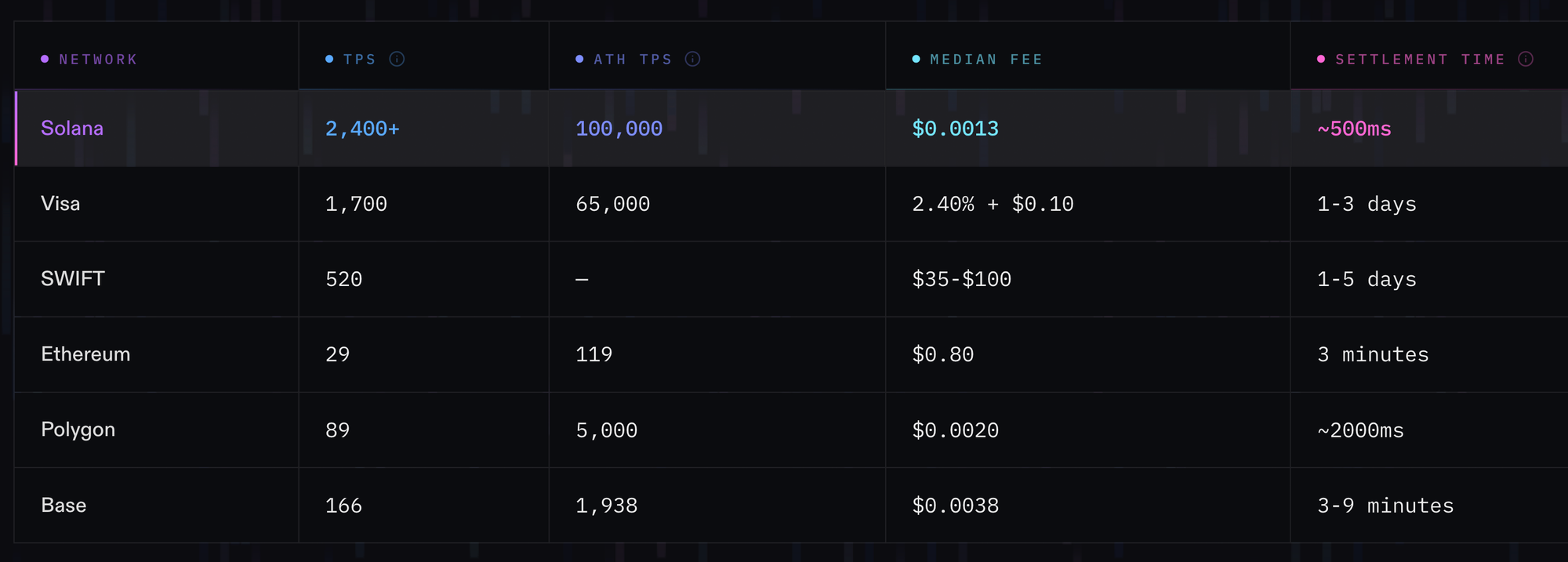
- Transaction economics: Median fees at fractions of a penny (around $0.0004), with block confirmations in roughly 395-500 milliseconds which are much faster and cheaper than traditional networks like Visa (which averages 1-3 day settlements and fees of 2.4% + $0.10).
These figures position Solana as the fastest-growing chain for USD-denominated settlements, having processed over $1 trillion in stablecoin volume in 2025 alone and continuing its momentum into 2026.
What Payments.org Actually Delivers
Far more than a marketing site, payments.org functions as a practical toolkit for developers, fintechs, and institutions:
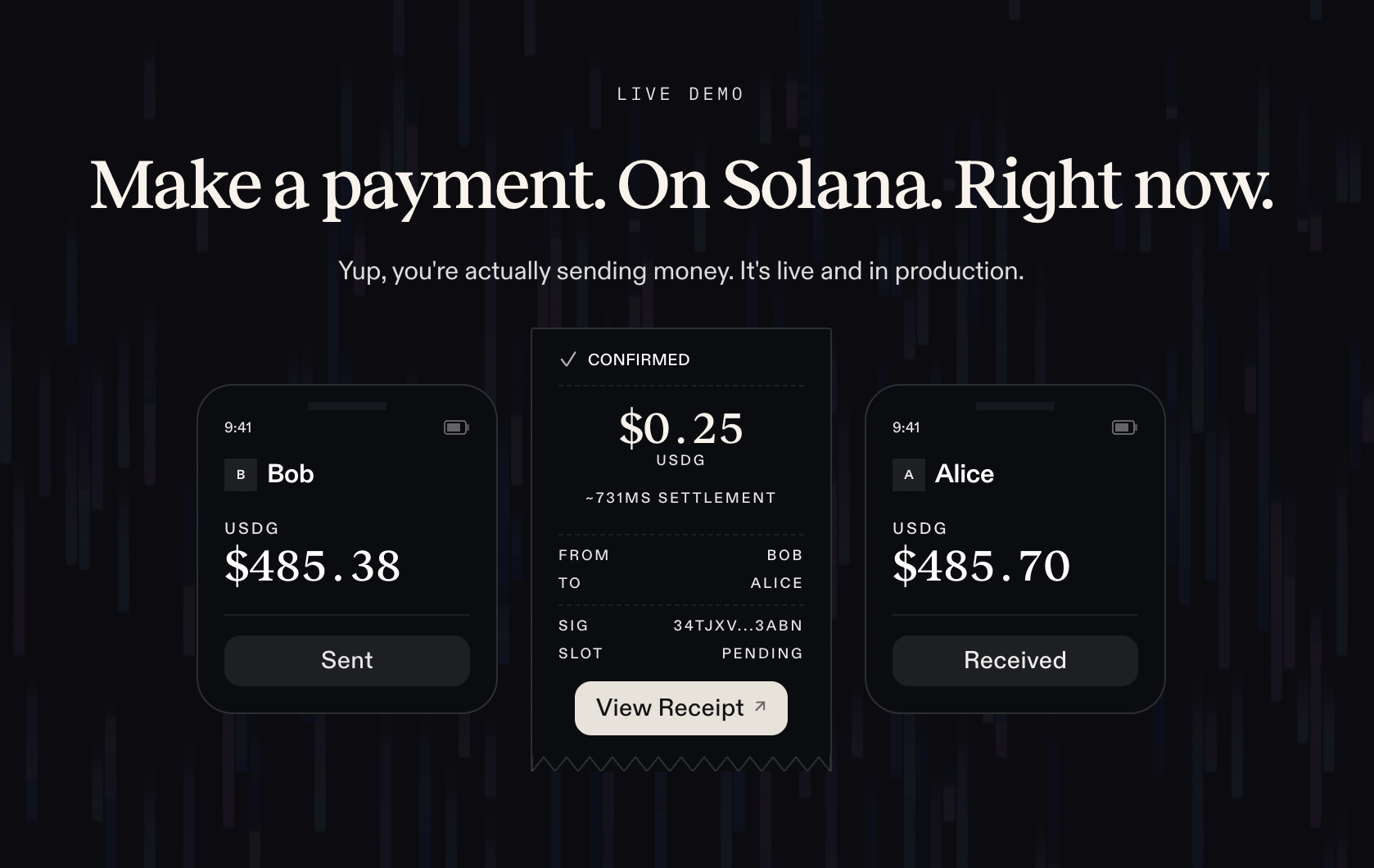
Live USDC transaction simulator
Users can experience real-time mainnet transfers, not sandbox demos, watching instant settlements unfold before their eyes.
Developer resources
Comprehensive docs, API references, and integration guides tailored for production workflows.
- Institutional case studies: Profiles of live implementations by Visa (USDC treasury settlements), PayPal (PYUSD expansion), Stripe, Western Union (exploring USDPT issuance), Fiserv, Worldpay, and others already running operational flows for remittances, neobanking, payouts, and merchant settlement.
Sheraz Shere, General Manager of Payments and Commerce at the Solana Foundation, emphasized in recent commentary that the launch reflects a broader shift:
"We’re at the point in the innovation cycle where real actual use cases are taking form."
The hub bridges the information gap for traditional finance professionals, explaining stablecoin mechanics, Solana's compliance-friendly features (including Token Extensions), and why adoption is accelerating.
Why This Launch Matters in 2026
Stablecoins have evolved from niche experiments to regulated financial tools, and Solana is capitalizing on that maturation.
The network's advantages with near-instant finality, deep liquidity across the top 10 global stablecoins, and sub-cent costs make it particularly suited for micropayments, AI-agent transactions, and high-frequency enterprise use cases where legacy systems falter.
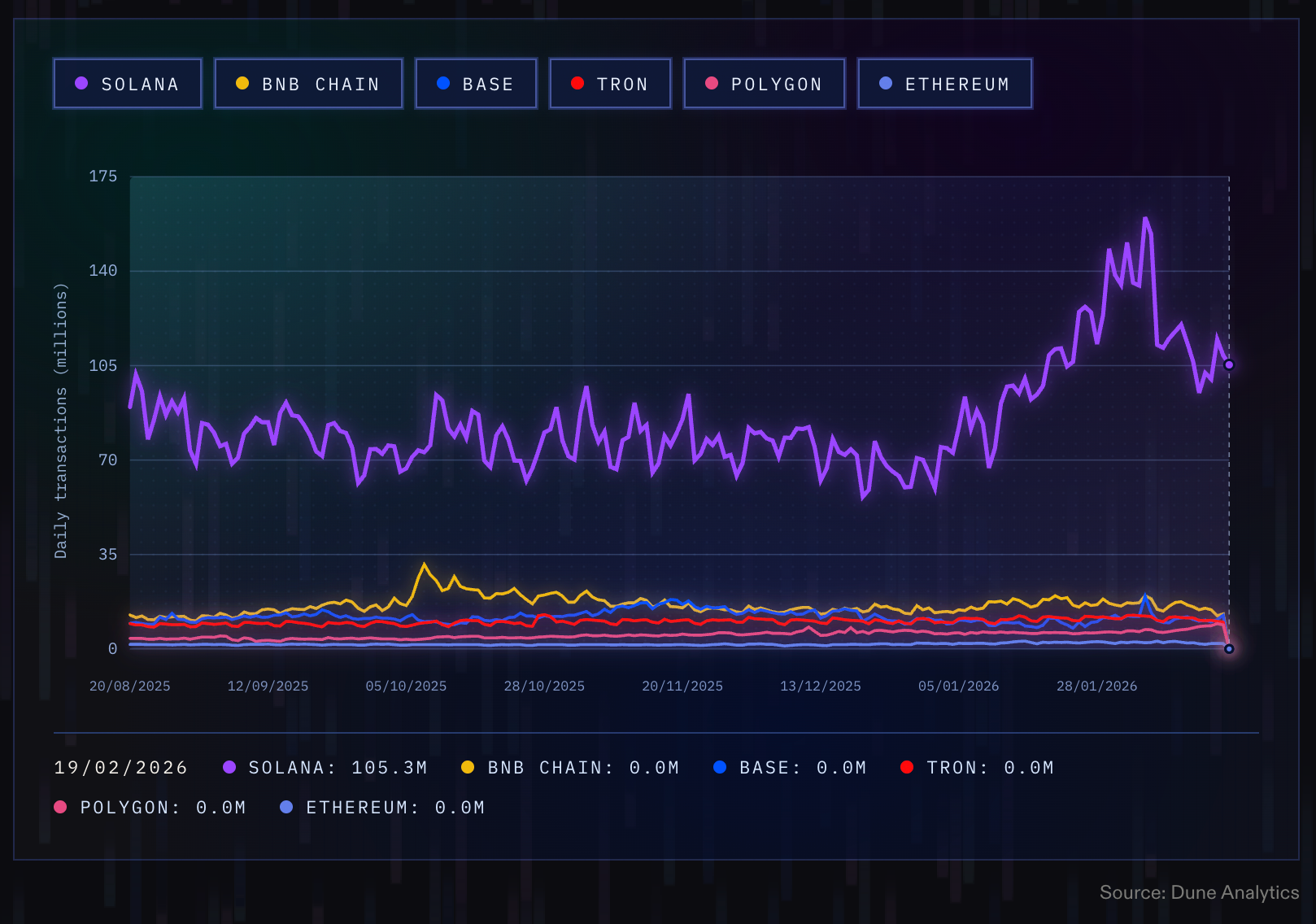
By consolidating scattered resources into one authoritative portal, payments.org lowers barriers for enterprises to move financial operations onto blockchain rails. It signals confidence: Solana isn't pitching pilots; it's highlighting battle-tested infrastructure that's already trusted by payments giants and processing trillions in quarterly volume.
Of course, challenges persist.
Ethereum and Tron still command the lion's share of global stablecoin supply, and regulatory clarity (including frameworks like the U.S. GENIUS Act) will continue shaping adoption.
Yet Solana's focus on measurable utility (rather than speculation) sets it apart in a year when real-world integration could define the next phase of crypto infrastructure.
For fintech leaders and developers watching the space, it's worth a visit, and perhaps a test drive via the simulator.
Data and insights drawn from payments.org, Solana Foundation announcements, DefiLlama, Token Terminal, Artemis, Dune Analytics, and industry reports.
Related Reports
- The Machines Are Spending Stablecoins. Here's Where the Money Is Going.
- Tokenized Money Market Funds: Everything you Need to Know for 2026
Partner/Advertise with Stablecoin Insider
Fill out this form to partner and advertise on the only publication, dedicated entirely to the Stablecoin ecosystem.
See you next week,
- The Stablecoin Insider team