
Table of Contents
Stablecoins have become one of the most visible pillars of digital finance: dollar-pegged tokens moving value globally, enabling liquidity, payments, treasury operations and more.
Yet despite their “stable” name, they carry a paradox: most stablecoins trade on public blockchains, meaning every transaction is visible to on-chain watchers.
That transparency creates benefits (auditability, forensics) but also drawbacks: for many users privacy is essential.
In contrast, traditional money (cash, bank wires) often offers substantial confidentiality.
Real-world users increasingly demand stablecoins with privacy built in: rails where payments shouldn’t expose salary size, supplier lists, vendor terms or treasury strategies to public visibility.
That’s the space of private stablecoins, or privacy-stablecoins.
By 2025-26 we are at an inflection point: regulators are turning up the pressure on stablecoins, zero-knowledge proofs and privacy-enhancing protocols are maturing, and a new wave of “privacy-first stablecoin” projects are emerging.
These aim to bridge the gap between the regulatory-compliance world and the privacy-demanding end-user.
In this article, we’ll explore why this matters, classify the types of privacy stablecoins, dig into how they’re built, review major projects, highlight regulatory/trade-offs, adoption cases, risks and then look ahead to 2030 scenarios.
Why Stablecoin Privacy Matters
Public ledgers as financial surveillance machines
On a typical chain, stablecoin transfers reveal sender and recipient addresses, amounts, timestamp, asset type. While pseudonymous, linkage analysis can often de-anonymize flows. For companies, this means exposing supplier lists, payroll volumes, treasury movements. For individuals, it means salary size, vendor purchases, cash-flows become public knowledge.
Real-world users who need privacy
- Migrant workers sending remittances to jurisdictions with tight controls may prefer privacy-preserving rails rather than fully public ones.
- SMEs paying global suppliers or contractors don’t want competitor firms or counterparties to infer pricing, volume or counterparties based on on-chain flows.
- High net-worth individuals, DAOs, funds may want payments or treasury moves discreet while still leveraging blockchain rails.
Today’s workaround stack, and why it’s broken
Many users currently rely on pseudo-private solutions: centralized exchanges internal transfers, OTC desks, mixers, or privacy-coins for payment. These come with friction (KYC, slow, audit risk), legal uncertainty (mixers get sanctioned) and capital inefficiency (wrapped assets, bridging). Stablecoins with native privacy aim to fix that.
The institutional angle
Enterprises in treasury, payroll, settlement have three emerging requirements:
- Confidential vendor/supplier payments (not publicly visible).
- Auditability and compliance (they must still satisfy regulators, auditors).
- Seamless rails (global, programmable, smart-contract ready).
A private stablecoin stack that meets all three could be transformative.
Taxonomy: Types of Privacy for Stablecoins
Asset-level vs network-level vs wallet-level privacy
- Asset-level: The stablecoin itself is built as a privacy asset, where transfers hide sender, recipient, amount, balance by design. Example: Freedom Dollar (fUSD) on the ZANO privacy chain.
- Network-level: The blockchain or layer on which transfers happen provides privacy (shielded addresses, rollups) and stablecoins (even public ones) can ride atop.
- Wallet‐level: Tools like stealth addresses, mixers, shielded pools wrap existing assets for privacy; stablecoin transfers can happen via these wrappers.
Data dimensions of privacy
Privacy isn’t all or nothing. The design space includes: hiding the sender, hiding the recipient, hiding the amount, hiding the asset type, hiding the balance. Some implementations hide all; others only partial. Some allow selective disclosure(view keys) for audit/compliance.
Compliance spectrum
On one axis, from fully anonymous (like cash) to fully transparent (current public stablecoins). On the other axis, from uncontrolled (no KYC) to compliance‐enabled (KYC/AML built in). A “regulated privacy” stablecoin might allow shielded transfers but still enable view‐keys for audit by regulators or issuers.
On/off‐chain visibility
Who sees what:
- Public observer: sees nothing (if fully private) or limited (if network hides certain fields).
- Counterparty: may see their side of transfer.
- Issuer: may see full ledger or some encrypted subset.
- Regulator/auditor: may be granted a view‐key or threshold access.
Designing that balance is key for institutional adoption.
How Private Stablecoins Are Built: Core Design Patterns
ZK shielded pools for existing stablecoins
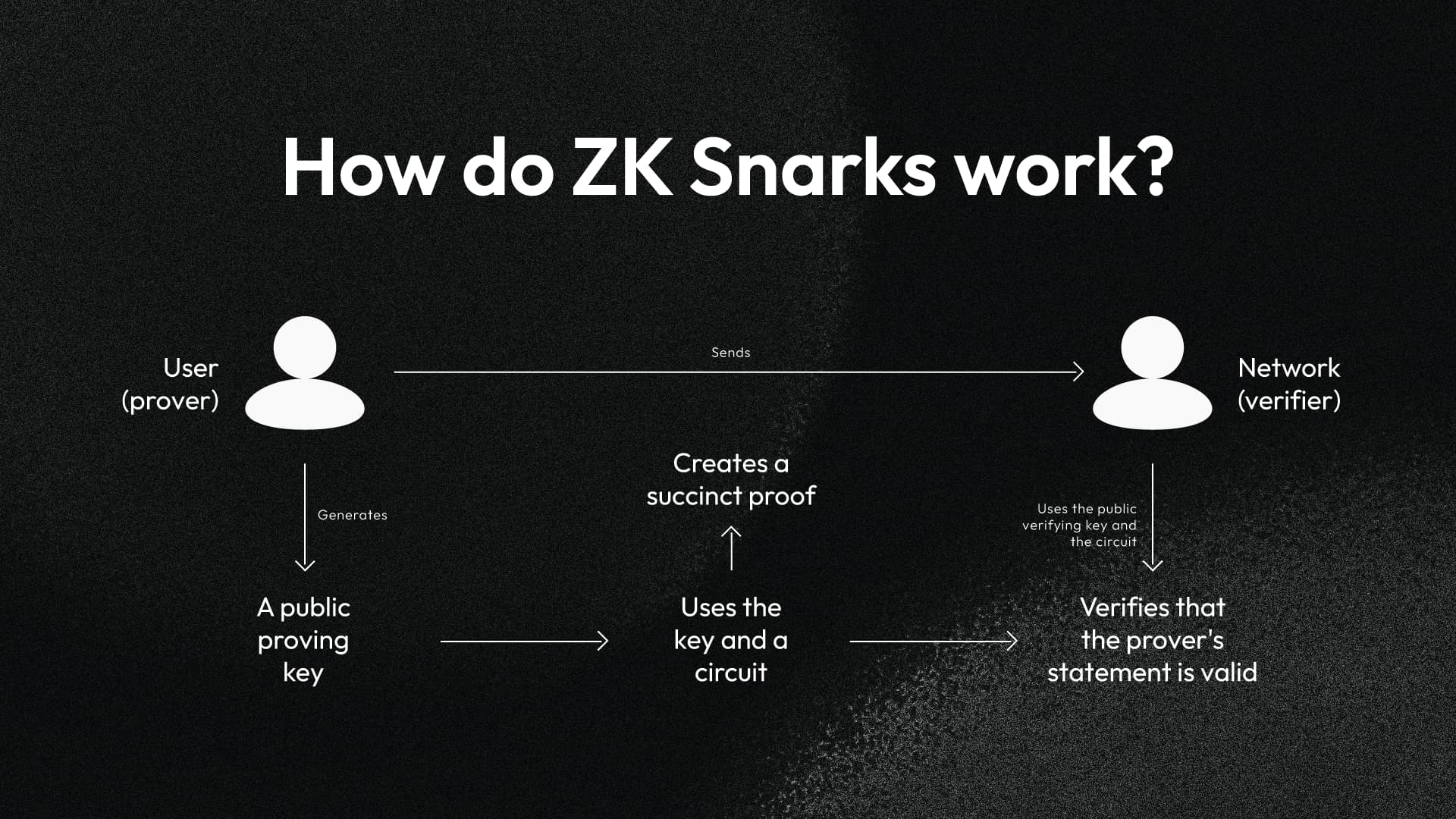
One route is to take a mainstream stablecoin (e.g., USDC/USDT) and wrap it into a privacy pool (via zkSNARKs, stealth addresses) so that deposit, transfer and withdrawal hide key metadata.
This preserves liquidity and access to existing stablecoin infrastructure while adding privacy. Trade‐offs: liquidity fragmentation, UX complexity (need deposit/shield/unshield), regulatory risk if wrapper is deemed mixer.
Private rollups and L2s
Another is to build a privacy-optimized layer (or rollup) where transfers (including stablecoins) are shielded by design. Example: ZK rollups with confidential transfers (note: not always stablecoins themselves). These layers reduce fees, improve throughput and support full programmable privacy—even private smart contracts.
Native privacy stablecoins
Here the stablecoin itself is built with privacy baked in (not just wrapped). Let’s see a few examples later. These designs handle minting/redeeming, collateralization, governance, and privacy in one architecture.
Permissioned/enterprise privacy ledgers
Another axis: networks designed for institutions (banks/finance). These may provide private stablecoins on permissioned DLTs (or hybrid blockchains) where only participating nodes see transactions but still provide audit logs. These are more like “private rails” than public crypto networks.
ZK privacy layers for mainstream stablecoins
Emerging solutions aim to bolt on privacy to large issuers (e.g., stablecoins like USDC). For example, privacy layers built by infrastructure providers for regulated markets, so major stablecoin issuers can offer “private rails” to institutions.
Hybrid models & future experiments
Increasingly we’ll see models where privacy is programmable: per‐transaction privacy rules, tiered visibility (small payments are private, large ones visible), optional view‐keys, smart contract engines enforcing compliance via ZK logic. These give user-choice: trade privacy for convenience or compliance.
Case Studies: Projects Shaping the Privacy Stablecoin Landscape

1. USAD (via The Aleo Network Foundation + Paxos Labs)
USAD is a recent entrant: a U.S. dollar-pegged stablecoin built on Aleo’s zero-knowledge L1 blockchain and issued via Paxos Labs infrastructure. The project touts “shielded balances”, encrypted transactions, programmability for enterprises (payroll, B2B, treasury) and aims to fill the privacy gap institutional users face.
Key points:
- Private by design: addresses and amounts encrypted.
- Enterprise focus: global payments, payroll, treasury use-cases.
- Compliance stack: regulated stablecoin issuance via Paxos + ZK cryptography from Aleo.
2. Freedom Dollar (fUSD) (on ZANO)
Freedom Dollar is billed as “the first fully private, censorship-resistant USD-pegged stablecoin” built on Zano, a privacy L1 using ring signatures, stealth addresses, confidential transactions. It uses algorithmic over-collateralization and is designed to be peer-to-peer, trustless, permissionless.
Key points:
- True privacy: sender, recipient, amount and asset type obscured at protocol level.
- No KYC, no bank custodians, no freeze keys (according to project).
- Target use: censorship resistance, digital cash, emerging markets.
3. DJED + Private DJED (via COTI)
DJED is originally an algorithmic stablecoin built on the Cardano ecosystem (via IOG/COTI). In 2025 it went open-source and introduced Private DJED: a version with native privacy features (via garbled circuits) deployed on multiple chains (Cardano, COTI, Midnight sidechain) with cross-chain interoperability.
Key points:
- Multi-chain private stablecoin: wrapped versions across chains, shielded transactions.
- Enterprise and cross-chain use-cases: supply-chain finance, private DeFi, asset tokenization.
- Open-source, so developers can build custom front-ends, integrate into wallets.
4. Institutional rails & privacy layers (brief mention)
While not a specific token, the concept of large issuers embedding privacy layers is worth noting. For example, regulated stablecoin issuers may adopt ZK privacy overlays or enterprise privacy rails so that large value transactions (treasury, corporate) aren't publicly exposed. These architectures illustrate the trade-offs between transparency, privacy and compliance.
Regulation, Compliance, and the “Not Too Private” Problem
The regulators’ core objections
Regulators (e.g., Bank for International Settlements – BIS) and national agencies emphasise that stablecoins raise integrity concerns: AML/CFT, sanctions evasion, terrorist financing. Privacy features must not undermine those obligations.
For example, the U.S. “GENIUS Act” (July 2025) introduced federal standards for stablecoin issuance and auditability. Some regulators argue that entirely anonymous stablecoins may be non-compliant.
Why blanket anonymity is a non-starter
If every transaction is invisible, regulators or law-enforcement may lack sight of illicit flows. Fully anonymous stablecoins may trigger blanket bans or severe limitations. Many projects therefore seek “regulated privacy”: encryption of amounts/addresses, but selective disclosure or view‐keys for audit.
Compliance-by‐design for private stablecoins
New architectures build in: KYC’d issuance and redemption; zero-knowledge proofs of compliance (proof that KYC done, reserves held) without revealing identities; optional view keys or threshold disclosures. For example, USAD emphasises enterprise rails + encrypted transactions with oversight possibilities.
Designs also allow tiered privacy: small value payments are private, large ones may be visible or require extra disclosure.
Jurisdictional fragmentation
The regulatory landscape isn’t uniform: EU’s MiCA, U.S. federal bills (GENIUS Act), Asia/LatAm sandbox regimes. This means a privacy-stablecoin design that is compliant in one jurisdiction may be non-compliant in another. Global issuers must navigate this.
Auditing private stablecoins
How to verify reserves, flows, risk exposures when transactions are encrypted? Auditors may rely on zero‐knowledge proofs of reserve, view keys, partial transparency or trusted-third-party attestations. Projects must demonstrate they are not just «private-coin» masquerades.
Technical Design Challenges and Trade-Offs
Performance and scalability
Shielding amounts, addresses, balances via ZK proofs adds computational cost. For stablecoin use (high volume payments, micropayments, payroll), latency, gas/fee cost, throughput matter. Some designs may struggle at scale.
UX friction
Privacy adds complexity: key management (spending key, view key), shield/unshield flows, recovery. Users accustomed to “send” in public blockchains may face steeper UX. Education and wallet tooling are critical.
Composability vs privacy
One advantage of stablecoins is composability (DeFi, AMMs, lending). When privacy is added, integration with public protocols may become harder (public funds flows, AMM pricing, auditing). Designs must reconcile privacy and interoperability.
Emergency unmasking and governance
If view-keys exist, who controls them? What if a multisig is compromised? Governance must include who can unmask, under what conditions, audit trails of disclosures. Risk: Capture by malicious actors or states making “selective privacy” a loophole for surveillance.
Security assumptions
Privacy tech often uses advanced cryptography (zkSNARKs, garbled circuits). These carry assumptions (trusted setups, circuit bugs, cryptographic break). Protocol upgrades, backward compatibility, security audits are essential.
Adoption: Where Private Stablecoins Find Product–Market Fit
Retail & remittances
In emerging markets with capital controls or censorship risks, private stablecoins provide “digital cash” where amounts, counterparties and flows remain hidden. For migrant workers, cross-border payroll and remittance may benefit.
B2B payments and trade finance
Companies can pay suppliers, vendors, contractors globally without exposing volumes or counterparties. Private stablecoins allow confidentiality in treasury flows, supplier pricing and settlement terms.
On-chain payroll and DAOs
Projects paying contractors, workers, DAOs distributing grants may prefer shields so individuals’ compensation (which may reflect business strategy) isn’t publicly visible. A privacy-stablecoin means salaries, vesting, reimbursements don’t expose internal data.
Institutions and tokenised finance
Banks, fintechs issuing stablecoins for FX settlement, repo markets, securities settlement may leverage privacy rails so counterparties and amounts remain confidential, while regulators/auditors still have view-capability. This extends tokenised deposits and institutional value flows.
AI agents and machine-to‐machine payments
In the era of connected devices and autonomous agents paying for compute, bandwidth or APIs, private stablecoins can enable payments without revealing underlying business strategy or sponsor entity.
Competitive Landscape: Privacy Coins vs Privacy Stablecoins
Why not “just use” privacy coins like Monero (XMR) or Zcash (ZEC)?
Privacy coins have strong anonymity, but they suffer from price volatility, lower liquidity, limited on- and off-ramps, regulatory risk (often black-listed by exchanges). A stablecoin pegged to fiat solves value stability, onboarding, compliance, liquidity concerns.
Stablecoins as “private dollars” vs privacy coins as “private assets”
A privacy stablecoin offers a digital dollar (value stable, familiar), but privacy rails. That’s a different value proposition than “store of value anonymity.” It better aligns with payments, payroll, treasury. Privacy coins remain stronger for speculative or store-of-value anonymity.
Convergence?
Some projects blur lines: e.g., Zcash-based stablecoin protocols seek stable value with shielded transfers. Over time, we may see privacy coins adding stable‐pegged variants and stablecoins borrowing stronger privacy tech. For example, some stablecoins may embed optional privacy layers (wrapper, shield pool) to capture both sides.
Risks, Critiques and Failure Modes
Regulatory backlash scenarios
If regulators decide that privacy stablecoins pose systemic risks (e.g., sanctions evasion, terrorist financing), they may ban or heavily regulate them, e.g., restrict on-ramps, forced partner disclosure, freeze keys. Projects operating in grey zones risk enforcement action.
Liquidity fragmentation
Multiple private stablecoin designs (native assets, wrapped versions, cross‐chain variants) could fragment liquidity, reduce interoperability, increase slippage and cost. Private rails may emerge as “dark pools” outside major markets, limiting usability.
UX and key management failures
Privacy often means complex key management (view key, spending key, shielding/unshielding). User errors (lost keys, mixed addresses) could result in lost funds, or unintentional exposure of data. Onboarding must be frictionless.
Governance capture and censorship risk
Paradoxically, a privacy-stablecoin might be forced to implement freeze-keys or back-doors for regulators. If governance is concentrated (multisigs controlled by a few), privacy may degrade into “selective privacy” – where only certain flows are hidden. Critics may argue that privacy is an illusion or compromised.
Technological obsolescence
Privacy tech is evolving rapidly. A system built today may become outdated (e.g., new attacks on ZK proofs, quantum risk). If project design lacks upgrade path, or collateral fails (over-collateralization risk – e.g., dependence on volatile assets), the peg or privacy could fail.
The Road to 2030: Scenarios for Private Stablecoins
Scenario A: Regulated privacy becomes the default
Stablecoins embed privacy by default for many flows: small-value payments shielded, large‐value flows visible; view-keys for regulator oversight; enterprise rails adopt shielded amounts + addresses. Privacy becomes a standard, not a fringe feature. Institutions use private stablecoins for payroll, B2B, treasury. Compliance frameworks mature globally.
Scenario B: Fragmented grey‐market privacy
In jurisdictions with capital controls or censorship risk, private stablecoins proliferate in a parallel economy. They remain outside mainstream regulated rails, creating risk of disconnection from regulated finance, regulatory crackdowns, exchange delistings. Adoption remains niche, useful for remittances, censorship-resistance, but not mainstream.
Scenario C: CBDC + tokenised deposits outcompete private stablecoins
Central bank digital currencies (CBDCs) introduce tiered anonymity: e.g., small transactions are anonymous, large ones visible. Tokenised deposits from banks offer near‐instant settlement. Private stablecoins find themselves squeezed between regulated CBDCs and legacy stablecoins, relegated to specialized niches (DeFi privacy, black-box flows). In this scenario, privacy stablecoins may struggle to scale.
Metrics & signals to watch
- TVL (total value locked) and volume of private-rail stablecoins vs public stablecoins.
- Number of enterprise issuers adopting privacy-stablecoin solutions.
- Regulatory actions specifically targeting private stablecoins.
- Integration of privacy stablecoins into payroll, global remittance and B2B payments.
- Multi-chain adoption: are private stablecoins used cross-chain?
- Liquidity and pricing spreads compared to public stablecoins.
Conclusion: The Stablecoin Privacy Trilemma
Private stablecoins sit at the intersection of three important axes: Privacy, Compliance, and Composability. Achieving all three is hard. Many solutions yield two while compromising the third:
- If you prioritise privacy + compliance, you might sacrifice open composability (public DeFi integration).
- If you prioritise privacy + composability, you might risk compliance (lack of oversight).
- If you prioritise composability + compliance, you might sacrifice true privacy (transparent flows).
Key takeaway: The next major wave in stablecoins isn’t about who can issue the most coins, it’s about who can issue the most useful coins under the radar. Privacy is the hidden dimension of value flows and treasury data; the winner will enable stable value rails where data is shielded, but risk is managed, compliance built in, and usability seamless.
Read Next
Stablecoin Insider is the best source for all stablecoin news, insights, and updates.