
Table of Contents
As more businesses look beyond simply accepting USDC or USDT and begin exploring branded, programmable, and fully controlled digital dollars, the real question is no longer whether stablecoins matter.
It is which infrastructure provider can make issuance practical, compliant, and scalable.
Brale has emerged as one of the more interesting answers to that question in 2026. The company positions itself as a stablecoin infrastructure platform that lets businesses create, manage, and move fiat-backed stablecoins without building the licensing, reserve management, banking connectivity, and token operations stack from scratch.
Its pitch is simple: stablecoin issuance should not require years of legal setup, custom smart contract work, or a nine-figure balance sheet.
In this Brale review, the platform stands out less as a retail-facing brand and more as financial plumbing. That makes it easier to overlook than consumer stablecoin brands, but it also explains why Brale is gaining traction with fintechs, blockchain ecosystems, and institutions that want custom issuance, embedded bank rails, and multi-chain orchestration in one stack.
Key Takeaways
- Brale is a stablecoin infrastructure platform focused on custom fiat-backed issuance, on/off-ramps, custody flows, and multi-chain orchestration.
- The company operates as a regulated U.S. money services business and licensed money transmitter, which reduces the compliance burden for customers launching stablecoins.
- Brale’s pricing starts at $10 per month, with higher tiers for custom issuance, revenue programs, listing management, and custom blockchain integrations.
- Its ecosystem page lists 95 integrations, including 24 blockchains, 28 wallets, 12 exchanges, and 20 stablecoins, showing broad network reach for a relatively young platform.
- Brale’s strongest advantage is that it combines issuance, reserve operations, banking connectivity, and programmable stablecoin workflows in one product rather than forcing enterprises to stitch providers together.
What Is Brale?
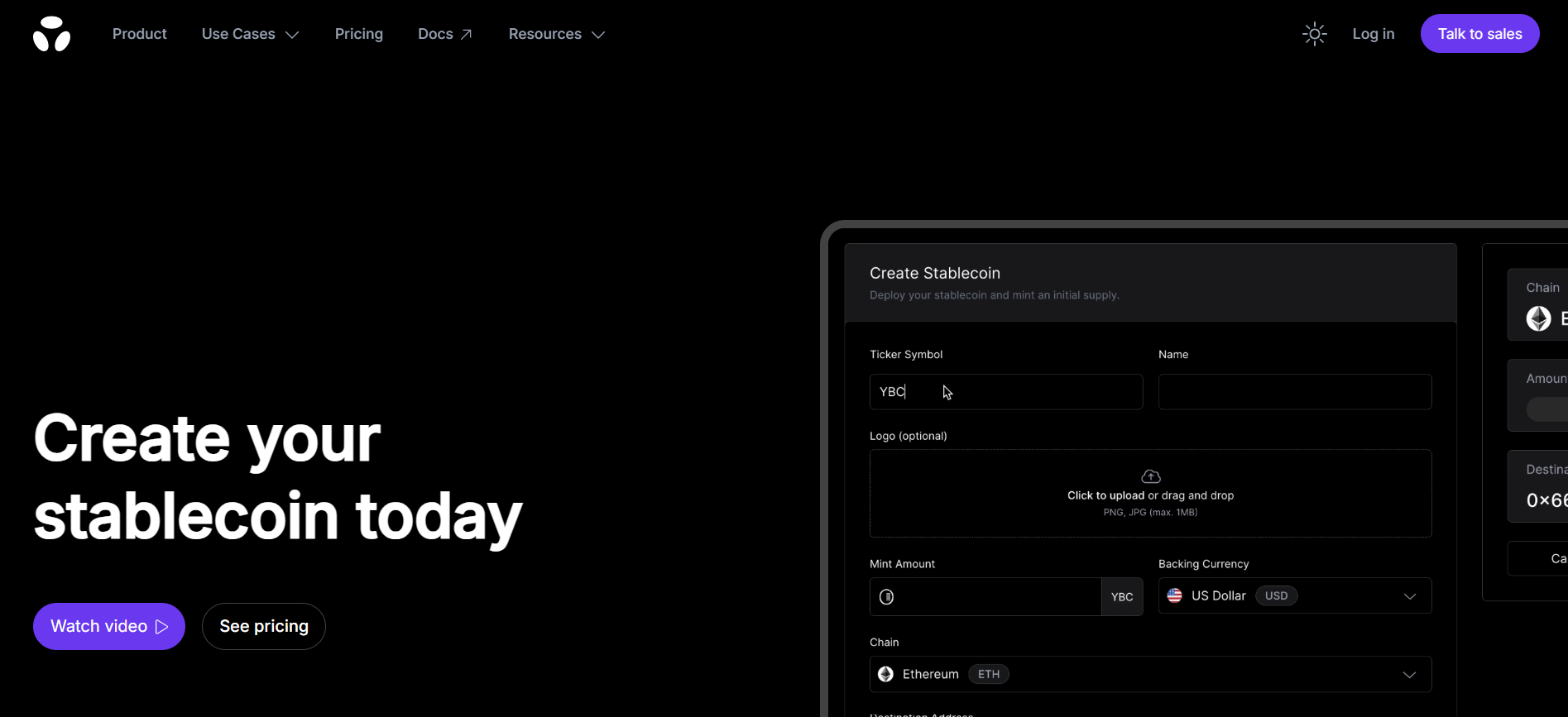
Brale is a stablecoin issuance and orchestration platform built for businesses that want to create or operationalize digital dollars and other fiat-backed stablecoins. Instead of positioning itself as a single-token issuer competing directly for retail market share, Brale sells infrastructure:
- APIs
- Reserve-backed issuance
- Treasury connectivity
- Custody integrations
- Bank rails
- Cross-network stablecoin operations
The company was founded by Ben Milne, who previously built Dwolla, and Brale’s founder story matters because the platform is clearly shaped by payments infrastructure thinking rather than token-first marketing.
In interviews and company materials, Brale frames stablecoins as a better money rail for programmable finance, faster settlement, and embedded financial products.
That positioning is important. Many stablecoin companies focus on circulation, exchange listings, or ecosystem branding. Brale focuses on making custom stablecoin programs operational for fintechs, ecosystems, and enterprises that want to control issuance while outsourcing the hardest parts of the stack.
How Brale Works
At a product level, Brale combines two main ideas: stablecoin issuance and stablecoin orchestration.
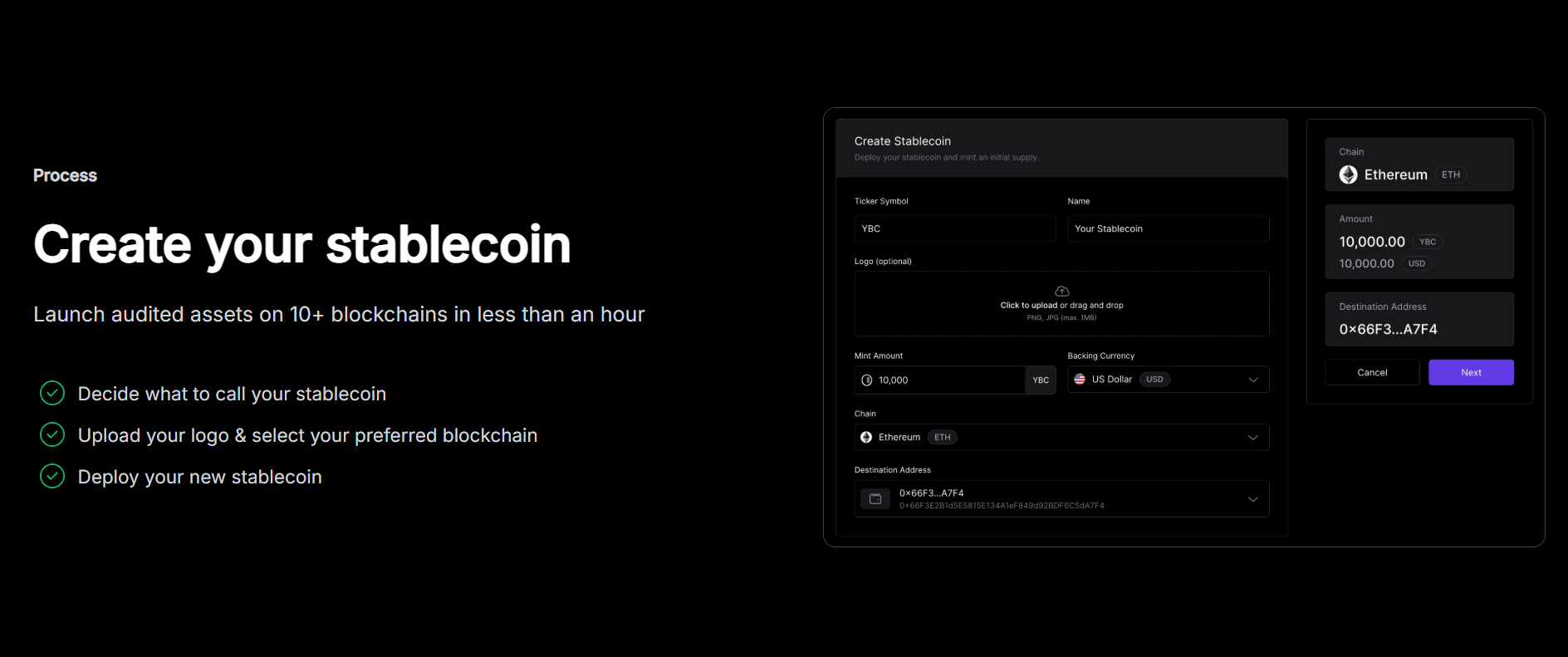
Its documentation describes a platform where users can issue their own stablecoin, move between fiat and stablecoins, swap across supported assets and chains, and manage flows through a unified API.
- For issuance, Brale says businesses can create their own fully backed stablecoins in minutes and earn program revenue on reserves managed by Brale. The reserve model is built around cash, money market funds, and short-duration U.S. Treasury bills held in segregated accounts, with daily reconciliation and monthly independent attestations.
- For orchestration, the API supports workflows such as fiat-to-stablecoin onramps, stablecoin-to-fiat offramps, chain and asset swaps, and branded stablecoin management.
Brale also supports bank-linked flows through Plaid and external account creation for ACH, RTP, and related payment rails, which makes it more useful for real business workflows than a pure on-chain issuance tool.
This is one of Brale’s clearest strengths in 2026: it is not just a token factory. It is trying to be the operational layer that connects bank accounts, treasury actions, reserve management, compliance controls, and blockchain settlement into one programmable system.
Why Brale Matters in 2026
The biggest reason Brale matters is timing. Stablecoins have moved from a crypto-native tool into a real payments and treasury rail, and infrastructure providers now have an opportunity to become the backend for the next wave of issuance.
In that environment, Brale’s regulated-first model is a serious advantage. Its docs state that Brale operates as a FinCEN-registered money services business and a licensed money transmitter, with licenses or exemptions across U.S. jurisdictions.
That matters because issuing a stablecoin is not just a smart contract problem. It is also a reserve, compliance, custody, payments, and reporting problem.
Brale’s core value proposition is that customers do not need to assemble that stack themselves. The company’s own materials repeatedly emphasize that it abstracts issuance complexity, reserve operations, attestations, and banking infrastructure into a managed platform.
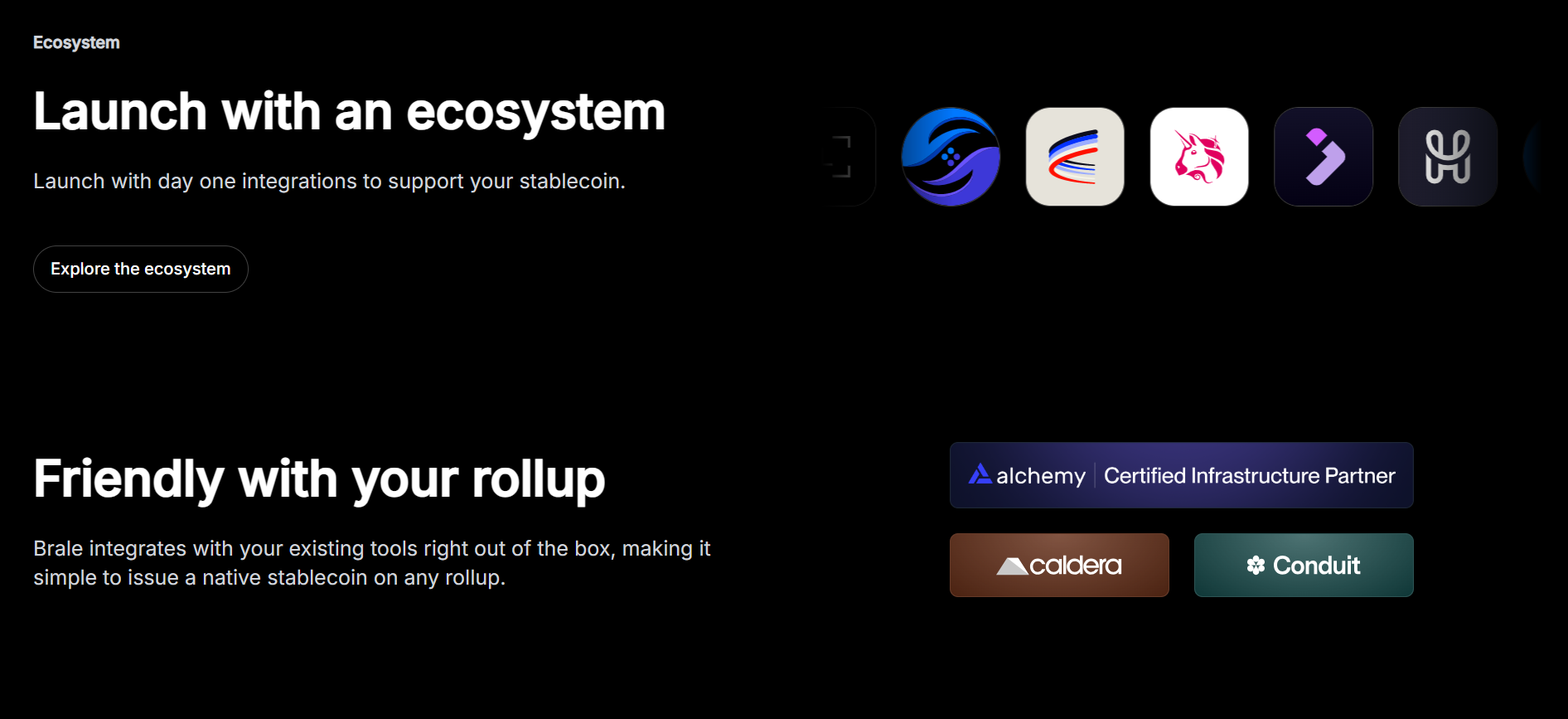
The second reason Brale matters is breadth. Its ecosystem page currently lists:
- 95 total partners and integrations
- 24 blockchains
- 28 wallets
- 12 exchanges
- 6 payments providers
- and a growing set of stablecoins and financial applications
That does not automatically make it the market leader, but it does show that Brale has moved well beyond a narrow pilot-stage product.
Brale’s Product Strengths
1. Custom Stablecoin Issuance Is the Core Differentiator
Brale is strongest when a business wants to launch a stablecoin it controls rather than simply integrate an existing one. The platform homepage and docs focus heavily on creating bespoke stablecoins, managing mint and burn operations, and monetizing issuance through reserve-linked program revenue.
That makes Brale especially relevant for fintech apps, blockchain ecosystems, payment products, and treasury platforms that want a branded dollar or local-currency stablecoin instead of building around someone else’s asset.
2. Banking Rails Are Built In
Brale is not purely on-chain. It supports ACH, wire, and bank-linked workflows, including Plaid-based account connectivity. That dramatically improves its usefulness for enterprise finance teams, since moving between bank accounts and stablecoins is where many real implementations stall.
3. Multi-Chain and Multi-Asset Flexibility
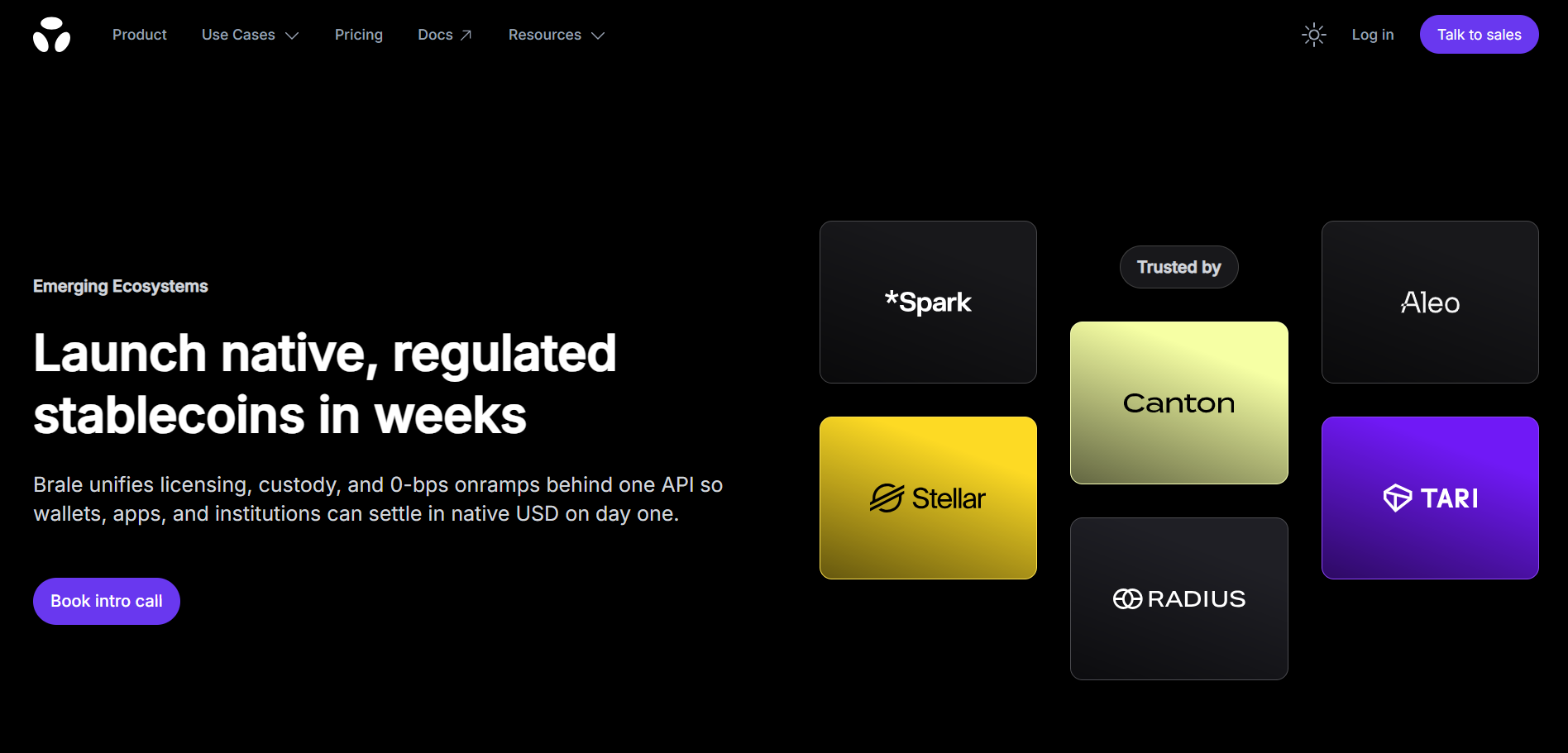
Brale supports EVM and non-EVM chains and keeps expanding network coverage. Official materials and ecosystem pages show support across public and private networks including Ethereum, Solana, Base, Optimism, Arbitrum, XRPL, Algorand, Canton, and others.
That is valuable for issuers that do not want to commit to one network too early or that need to serve multiple ecosystems at once.
4. Transparent Reserve and Attestation Design
Reserve credibility is one of the most important parts of any stablecoin stack. Brale’s reserve documentation says reserve assets are held in segregated accounts, reconciled daily, and independently attested monthly. Brale has also publicly discussed reserve attestations and publishes monthly reports for some of its stablecoins.
For enterprise buyers, that matters more than marketing language about decentralization or scale.
Partnerships, Integrations, and Momentum
Brale has spent the last two years building credibility through integrations rather than hype cycles.
Its partnership with Modern Treasury brought stablecoin payouts into a treasury and payments operations environment that enterprises already understand. That is a meaningful signal because it places Brale closer to mainstream financial operations rather than only crypto-native workflows.
Its expansion to Algorand in January 2026 reinforced the multi-chain strategy and showed Brale still has momentum in adding regulated issuance infrastructure to additional networks. The company also went live on XRPL in October 2025, enabling regulated stablecoin issuance and RLUSD settlement use cases through the same platform.
Brale has also highlighted custody support through BitGo, Plaid-linked banking flows, and a compliance-oriented relationship with Ledgible around attestation and reconciliation.
Taken together, these integrations suggest Brale is building a serious enterprise infrastructure stack rather than a narrow API wrapper.
Real Adoption and Use Cases
One of the better signals in Brale’s favor is that the company can point to real projects, not just a theoretical platform.
The launch of litUSD with LitFinancial and Stably in September 2025 showed Brale being used in a regulated mortgage-fintech context, with the token designed to support treasury modernization and mortgage finance workflows.
Brale has also supported projects like MXNe with Etherfuse and legacy ecosystem-specific assets such as USC and USDGLO, while its ecosystem and case-study materials show a broader push into payments, remittances, treasury, and chain-native liquidity.
The user-provided data pack also notes platform-level traction such as active issuer accounts, processed transaction volume, and a growing stablecoin ecosystem, which aligns directionally with Brale’s public positioning even where every internal metric is not independently published on the homepage.
Pricing and Commercial Model
Brale’s pricing is one of its more surprising advantages.
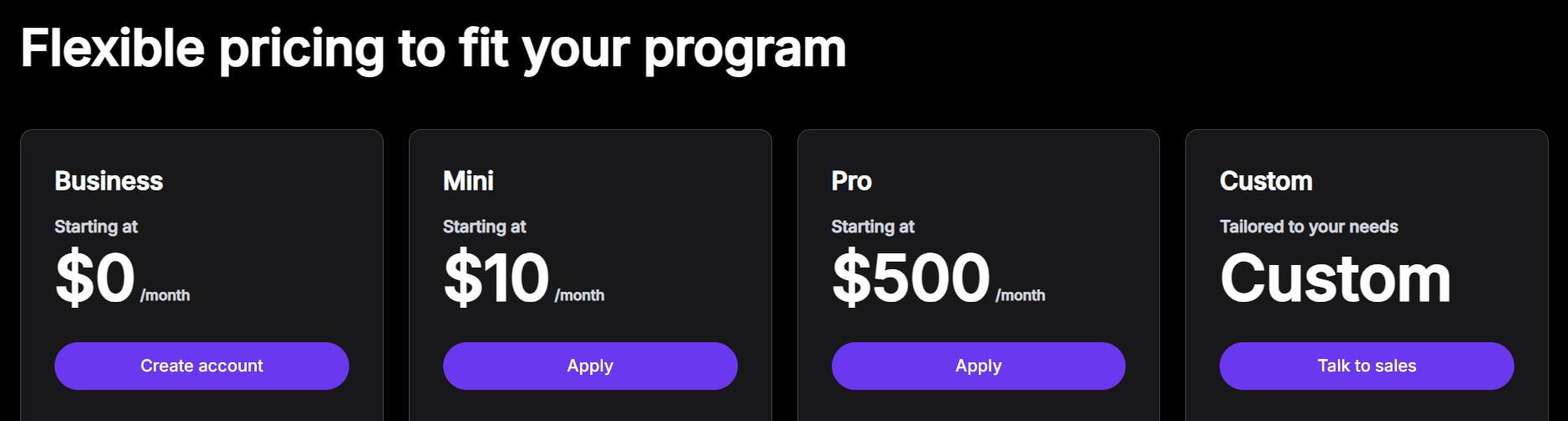
The higher tiers add features such as stablecoin creation, built-in on/off-ramps, daily transparency reports, revenue program participation, token listing management, custom blockchain integrations, and custom reserve infrastructure.
- For smaller teams, that low entry point makes Brale unusually accessible compared with the historical complexity of stablecoin issuance.
- For larger teams, the real value is not the sticker price but the reduction in integration, compliance, and operational overhead.
Where Brale Still Faces Challenges
Brale looks strong, but it is not without risks.
The first challenge is competition:
Businesses evaluating stablecoin infrastructure may also consider providers and issuers tied to larger balance sheets, stronger brand recognition, or more established institutional distribution.
Brale’s product may be differentiated, but it still competes in a market where trust, liquidity, and ecosystem gravity matter.
The second challenge is visibility:
Because Brale is infrastructure, not a consumer stablecoin brand, it will not appear in market-cap leaderboards the way USDT, USDC, or PYUSD do. That can make it seem smaller than it is, even if its B2B relevance is rising.
The third challenge is execution at scale:
Reserve management, partner onboarding, custom issuance, and compliance operations become much harder as issuer count and transaction volume grow.
Brale’s architecture appears designed for that problem, but long-term proof will come from how many successful stablecoin programs it can support over time.
Final Verdict: Is Brale Worth Watching in 2026?
Brale is one of the more compelling stablecoin infrastructure companies in 2026 because it solves the real bottlenecks behind custom issuance:
- Regulation
- Reserve operations
- Bank connectivity
- Multi-chain deployment
- Programmable money movement
It is not the loudest name in stablecoins, but it may be one of the more strategically important ones if the market continues shifting from generic token adoption toward branded and embedded stablecoin programs.
For buyers that want a turnkey way to launch and manage custom stablecoins, Brale looks like a serious platform with strong product-market fit.
Its regulated posture, growing ecosystem, API-led design, and expanding partner network all support that conclusion.
The bigger question is not whether Brale has a credible product. It does.
The bigger question is how much of the next issuance wave it can capture before larger infrastructure players move deeper into the same category.
Read Next:
- Coinbase Rejects Latest CLARITY Act Draft
- USDC Officially Launches in Japan via SBI VC Trade
- Tether's First Full Independent Audit of USDT Reserves
FAQs:
1. Is Brale better for issuing a stablecoin or just using one?
Brale is most compelling for companies that want to issue and operate their own stablecoin rather than just plug into an existing token like USDC or USDT. Its real value is in helping businesses control issuance, redemption, reserve structure, and distribution while also giving them the payment rails needed to move between fiat and on-chain assets. That makes it more strategic than a simple payments integration.
2. Who is Brale best for?
Brale is best suited for fintechs, payment platforms, treasury products, blockchain ecosystems, and enterprise platforms that want a branded or use-case-specific stablecoin. If a company only needs to accept stablecoin payments, Brale may be more infrastructure than necessary. But if the goal is to launch a stablecoin program with compliance, reserves, bank connectivity, and multi-chain reach already built in, Brale becomes much more relevant.
3. How strong is Brale’s compliance edge?
Brale’s compliance advantage is significant because stablecoin issuance is not just a token deployment problem. It also requires regulated money movement, reserve oversight, reporting, and operational controls. By operating as the issuer and compliance layer, Brale removes a major amount of legal and operational friction for clients. For many businesses, that shortens time to market far more than any technical shortcut alone.
4. Does Brale lower costs or just complexity?
It does both, but the bigger win is complexity reduction. The direct platform pricing is relatively accessible, especially compared with the historical cost of building licensing, reserve management, banking relationships, smart contracts, and reporting from scratch. The larger savings usually come from reduced legal coordination, faster deployment, fewer vendors, and less internal infrastructure to maintain.
5. Why does Brale’s multi-chain support matter?
It matters because many companies do not want to lock their stablecoin strategy to one ecosystem too early. Multi-chain support gives issuers more flexibility in distribution, payments, liquidity access, and ecosystem partnerships. In practice, that means Brale is better positioned for businesses that expect their stablecoin to serve more than one network, region, or product environment over time.
Disclaimer:
This content is provided for informational and educational purposes only and does not constitute financial, investment, legal, or tax advice; no material herein should be interpreted as a recommendation, endorsement, or solicitation to buy or sell any financial instrument, and readers should conduct their own independent research or consult a qualified professional.