Table of Contents
Stablecoins have traditionally served as a safe harbor in the volatile crypto market, offering a reliable store of value pegged to fiat currencies like the U.S. dollar. However, simply holding them in a wallet means your capital remains idle, missing out on potential returns. The evolution of decentralized finance (DeFi) and innovations from centralized exchanges have transformed these assets from passive holdings into active, income-generating instruments. This guide is designed to navigate the growing ecosystem of the best yield-bearing stablecoins and the platforms that support them.
This article moves beyond theoretical discussions to provide a practical, hands-on roundup of top-tier options for earning a return on your digital dollars. We will explore a curated selection of both centralized and decentralized platforms, each offering unique mechanisms for generating yield. For every entry, we will analyze how the yield is produced, typical APYs, and critical risk factors such as collateralization, smart-contract vulnerabilities, and peg stability.
Our goal is to equip you with the knowledge to make informed decisions tailored to your risk tolerance and financial objectives. We will detail the specific steps required to start earning, complete with direct links and illustrative screenshots for platforms like Coinbase, Kraken, Aave, and Compound Finance. You'll also discover more advanced strategies with protocols like Frax Finance (sFRAX) and aggregators such as Yearn Finance. This comprehensive overview will help you identify which platforms align with your needs, whether you prioritize simplicity and security or are seeking to maximize returns through sophisticated DeFi protocols.
1. Coinbase: The Simplest On-Ramp to Stablecoin Yield
For many investors, especially those new to decentralized finance (DeFi), the complexity of on-chain protocols can be a significant barrier. Coinbase, a publicly-traded and regulated US-based exchange, offers a straightforward and highly accessible entry point into earning yield on stablecoins like USD Coin (USDC), making it one of the best starting points for those seeking yield-bearing stablecoins without navigating complex DeFi interfaces. Its primary advantage is trust, simplicity, and a user-friendly experience backed by a well-known brand.
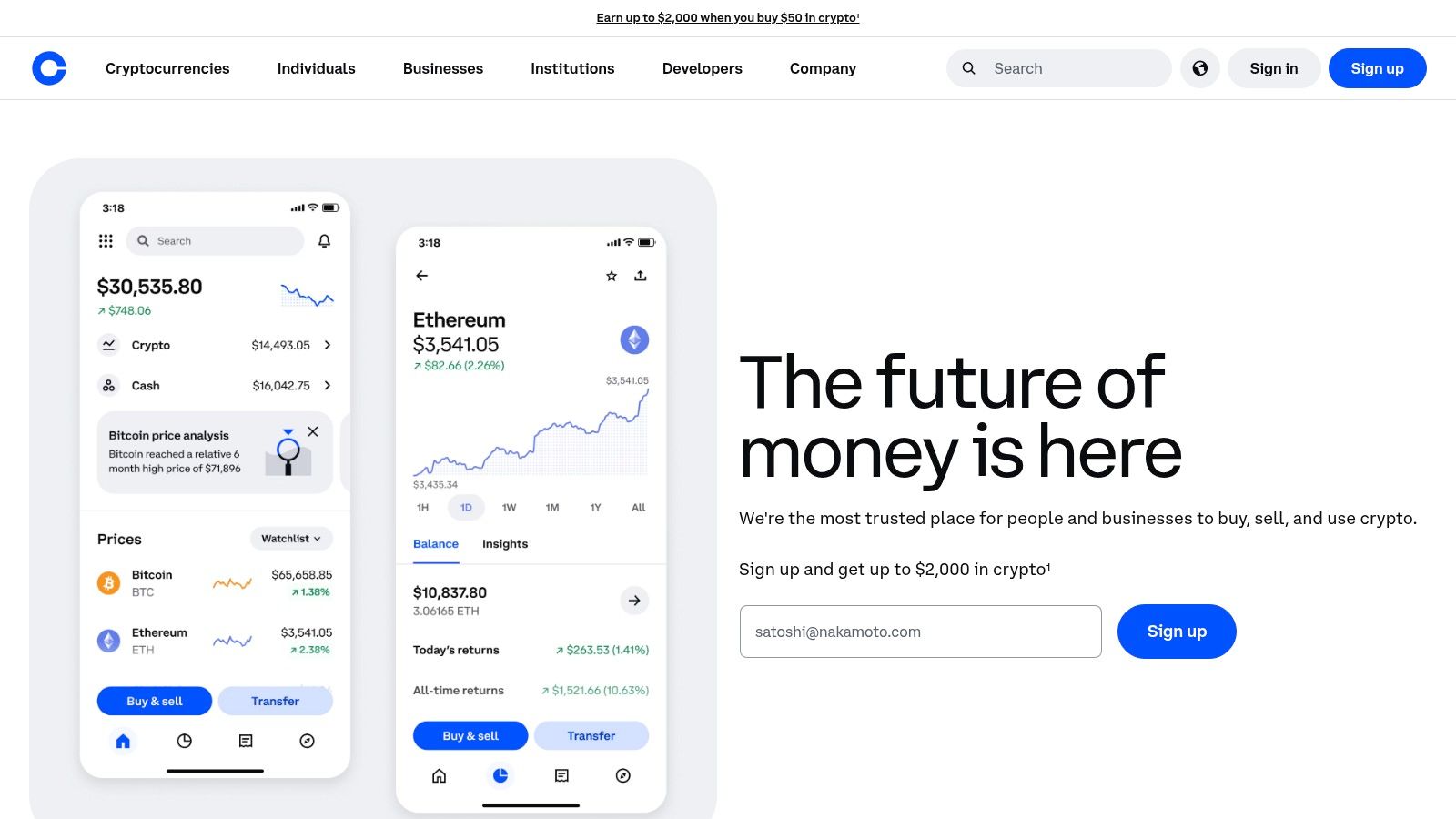
The platform's core offering, "USDC Rewards," allows eligible users to automatically earn yield simply by holding USDC in their Coinbase account. This removes the need for self-custody wallets, bridging assets, or interacting directly with smart contracts, dramatically lowering the technical skill required.
How the Yield is Generated
Unlike purely on-chain protocols, the yield from Coinbase's USDC Rewards is generated through the platform's broader operations. Coinbase states that it may use the USDC held by customers for its corporate purposes and shares a portion of the earnings with its users. This is conceptually similar to how a traditional bank uses customer deposits for lending and other activities, then pays interest on savings accounts. The yield is not sourced from a specific, transparent DeFi protocol but from the centralized operations of Coinbase itself.
Key Insight: The yield on Coinbase is a centralized finance (CeFi) product, not a DeFi one. This trade-off prioritizes simplicity and security over the higher potential returns and transparency of on-chain protocols.
Risks and Considerations
While simpler, this model introduces its own set of risks, primarily centered on centralization and counterparty risk.
- Counterparty Risk: Your funds are held by Coinbase, not in your own self-custodial wallet. You are trusting Coinbase to manage these funds securely and honor its reward commitments.
- Regulatory Scrutiny: As a regulated entity, Coinbase's offerings are subject to changes based on evolving regulations. The USDC Rewards program has faced scrutiny from regulators like the SEC in the past.
- Lower APYs: For the convenience, users typically receive a lower annual percentage yield (APY) compared to what can be found in DeFi. Rates are variable and can change based on market conditions and Coinbase's business decisions.
Practical Steps to Earn Yield
Getting started on Coinbase is exceptionally easy:
- Create an Account: Sign up for a Coinbase account and complete the required identity verification (KYC).
- Acquire USDC: Purchase USDC directly on the platform with fiat currency or deposit it from an external wallet.
- Hold and Earn: Simply hold the USDC in your primary Coinbase balance. For eligible users in approved jurisdictions, rewards are automatically calculated and distributed monthly.
Coinbase is an ideal choice for beginners or risk-averse investors who value ease of use and the security of a regulated platform over maximizing APY. For institutions and high-net-worth individuals, Coinbase Prime offers more sophisticated yield-generating opportunities. You can find more details in this deep dive on how to leverage Coinbase for stablecoin yield.
2. Kraken: Flexible Yield with a Trusted Exchange
For investors seeking more options and slightly higher returns than a basic hold-to-earn model, Kraken presents a compelling and reliable solution. As one of the oldest and most respected cryptocurrency exchanges, Kraken provides a secure, US-accessible environment to not only purchase stablecoins but also to actively opt into yield-bearing programs. It strikes a balance between the simplicity of a centralized platform and the more engaging yield options typically found in DeFi, offering both flexible and locked "bonded" rewards on USDC, USDT, and even fiat USD.
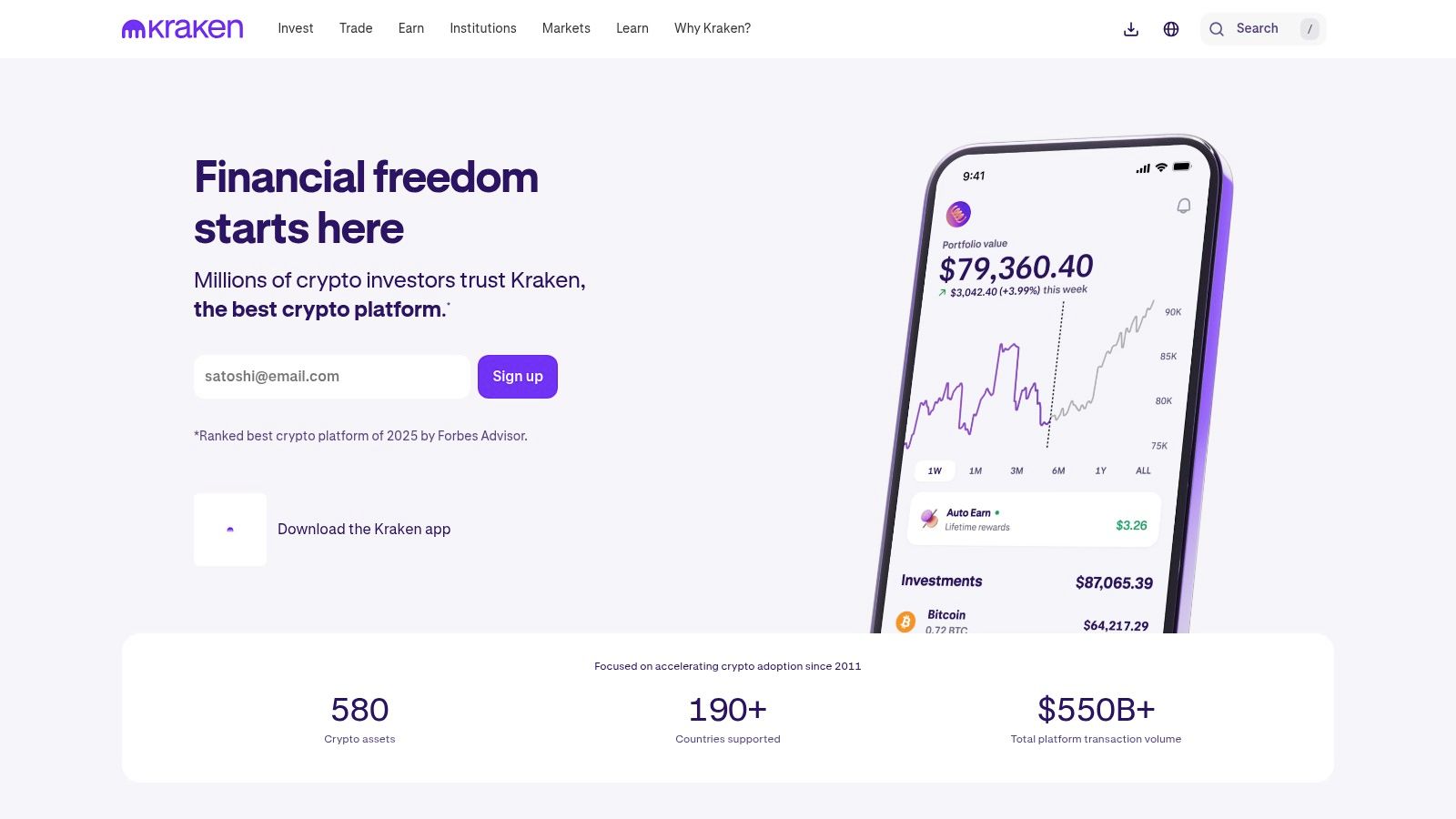
The platform’s "Earn" feature allows users to easily allocate their stablecoins to generate yield directly within their exchange account. This is ideal for those who want to earn on idle assets without the complexities of moving funds off-exchange, managing private keys, or interacting with third-party protocols.
How the Yield is Generated
Kraken’s yield is primarily generated through its on-chain staking services and other internal treasury operations. When a user opts into the Earn program, they are essentially lending their assets to Kraken. Kraken then pools these assets and may use them for various purposes, including participating in proof-of-stake (PoS) network validation or other institutional strategies. It then shares a portion of the revenue generated from these activities back with the users as rewards. The rates are transparent, though Kraken takes a commission from the gross yield.
Key Insight: Kraken's model is a hybrid CeFi approach that leverages on-chain activities. It offers more transparency and choice (flexible vs. bonded) than simpler models, serving as an excellent bridge for users graduating from basic earning to more involved yield strategies.
Risks and Considerations
While Kraken is known for its strong security and reputation, users should be aware of the associated risks before participating in its Earn program.
- Counterparty Risk: Similar to other centralized exchanges, you are entrusting your assets to Kraken. Your ability to access your funds and receive rewards depends on the platform's operational and financial health.
- Lockup Periods: The higher-yield "bonded" options require a 30-day lockup. During this time, your assets are illiquid and cannot be withdrawn or traded, exposing you to market risk if you need sudden access.
- Variable APYs and Restrictions: The advertised APYs are not guaranteed and can change based on market dynamics and Kraken's business needs. Furthermore, eligibility and asset caps may apply based on your geographic location.
Practical Steps to Earn Yield
Engaging with Kraken’s Earn program is a straightforward process within the platform:
- Create and Fund an Account: Sign up for a Kraken account, complete the identity verification, and fund it by purchasing or depositing stablecoins like USDC or USDT.
- Navigate to the "Earn" Section: Find the "Earn" or "Staking" tab within your Kraken dashboard.
- Select a Stablecoin and Term: Choose the stablecoin you wish to earn yield on and select either the "Flexible" or "Bonded" option, noting the different APYs.
- Confirm and Earn: Enter the amount you want to allocate and confirm the transaction. Rewards typically accrue daily and are paid out weekly directly into your account.
Kraken is an excellent platform for users who want to actively manage their yield-bearing stablecoins within a single, trusted ecosystem. Its support for multiple stablecoins and transparent reward structures makes it a standout choice. You can learn more about its expanding asset support in this piece on Kraken's listing of new stablecoins.
3. Aave: The Blue-Chip DeFi Lending Market
For those ready to step beyond centralized platforms, Aave represents one of the oldest and most trusted decentralized finance (DeFi) protocols. As a non-custodial lending market, it allows users to supply stablecoins like USDC, USDT, and DAI directly from their Web3 wallets to earn a variable, on-chain interest rate. Its key advantages are its battle-tested security, transparent mechanics, and deep liquidity, making it a cornerstone for earning with yield-bearing stablecoins in DeFi.
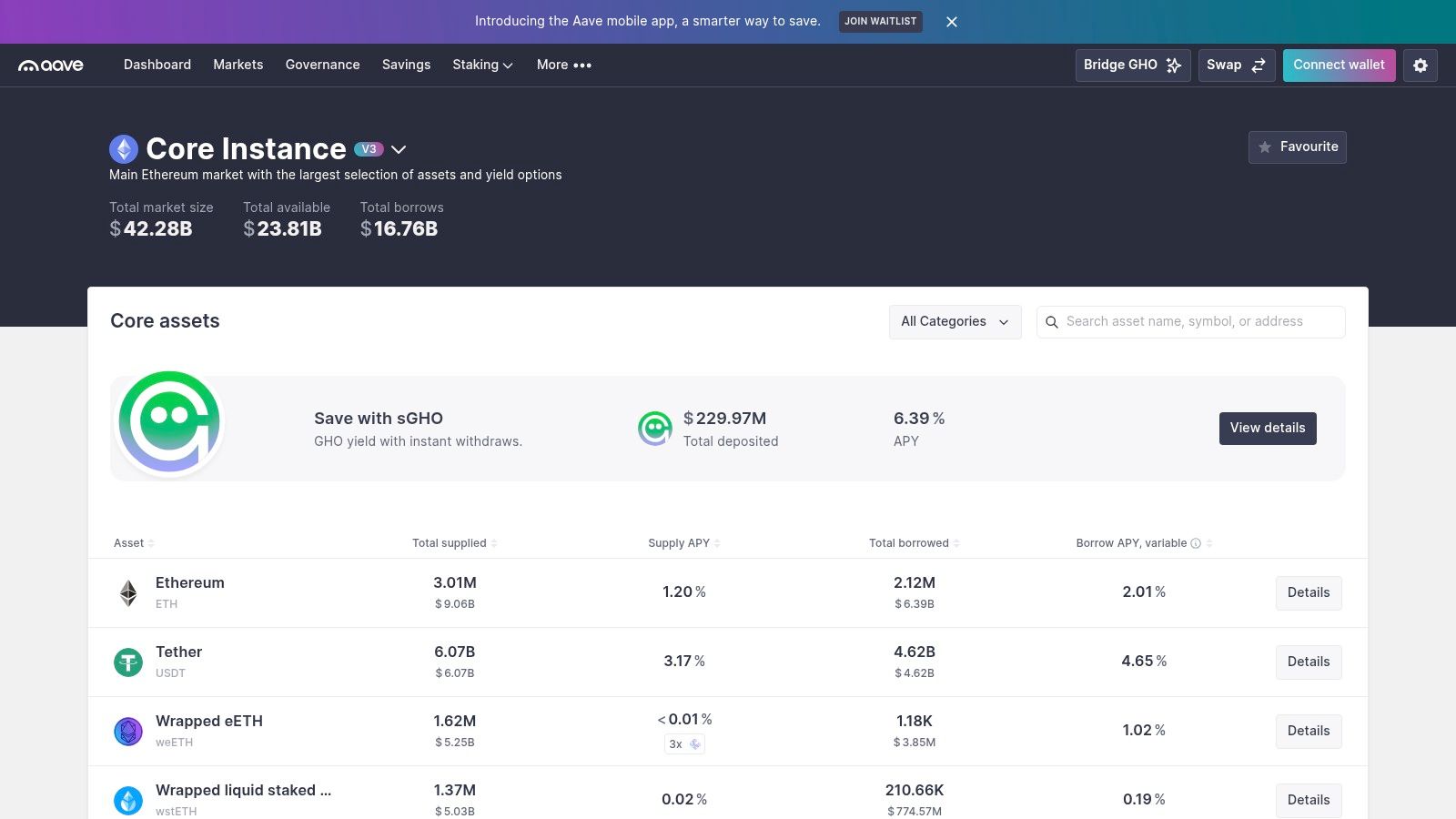
Unlike a centralized service, Aave operates entirely through smart contracts on various blockchains like Ethereum, Polygon, and Avalanche. Users supply their assets to a liquidity pool, which is then made available for others to borrow. This direct, peer-to-protocol interaction ensures users retain full custody of their funds via their private keys.
How the Yield is Generated
The yield on Aave is generated purely from borrower demand. When users borrow stablecoins from a pool, they pay a variable interest rate. A portion of this interest is paid out to the suppliers who provided the liquidity, while a small fraction is allocated to the protocol's treasury.
The interest rate is determined algorithmically based on the utilization rate of the pool. If demand for borrowing a specific stablecoin is high (high utilization), the interest rate for both borrowers and lenders increases to incentivize more supply. Conversely, if demand is low, the rate decreases. This creates a transparent and real-time market-driven APY.
Key Insight: Aave offers a native on-chain yield generated from real economic activity (lending and borrowing), not from a platform's corporate treasury. This provides high transparency but also introduces rate volatility.
Risks and Considerations
Interacting with a DeFi protocol like Aave involves a different set of risks compared to centralized platforms.
- Smart Contract Risk: Your funds are held in audited smart contracts. While Aave's contracts are among the most rigorously tested in the industry, the risk of a bug or exploit, however small, always exists.
- Variable APYs: The yield is not fixed. It fluctuates constantly with market supply and demand, meaning your returns can decrease significantly if borrowing demand falls.
- Network Fees: All interactions (depositing, withdrawing) require a transaction on the blockchain, which incurs network gas fees. These fees can be substantial on networks like Ethereum during periods of high congestion.
Practical Steps to Earn Yield
Earning on Aave requires a non-custodial wallet and some familiarity with Web3 concepts:
- Set Up a Wallet: Use a Web3 wallet like MetaMask and ensure it is funded with the network's native token (e.g., ETH for Ethereum) to pay for gas fees.
- Acquire Stablecoins: Purchase or bridge stablecoins like USDC or DAI to your wallet on your chosen network (e.g., Polygon for lower fees).
- Connect to Aave: Visit the Aave app, connect your wallet, and select the appropriate market.
- Supply Assets: Navigate to the stablecoin you wish to supply, enter the amount, approve the transaction, and then confirm the supply deposit. You will receive aTokens (e.g., aUSDC) in your wallet, which represent your share in the pool and accrue interest in real time.
Aave is an excellent choice for users seeking transparent, on-chain yield while maintaining self-custody of their assets. You can find a comprehensive guide on how to earn stablecoin yield with Aave for more detailed instructions.
4. Compound Finance: A DeFi Lending Pioneer for Stablecoin Yield
As one of the original and most reputable DeFi "money market" protocols, Compound Finance provides a battle-tested, on-chain environment for earning yield. The protocol's latest version, Compound v3, is specifically architected around USDC as the primary base asset, making it a premier destination for users seeking transparent, variable-rate returns on their stablecoins directly within the DeFi ecosystem. Its core strength lies in its long-standing history, open-source code, and straightforward lending mechanism.
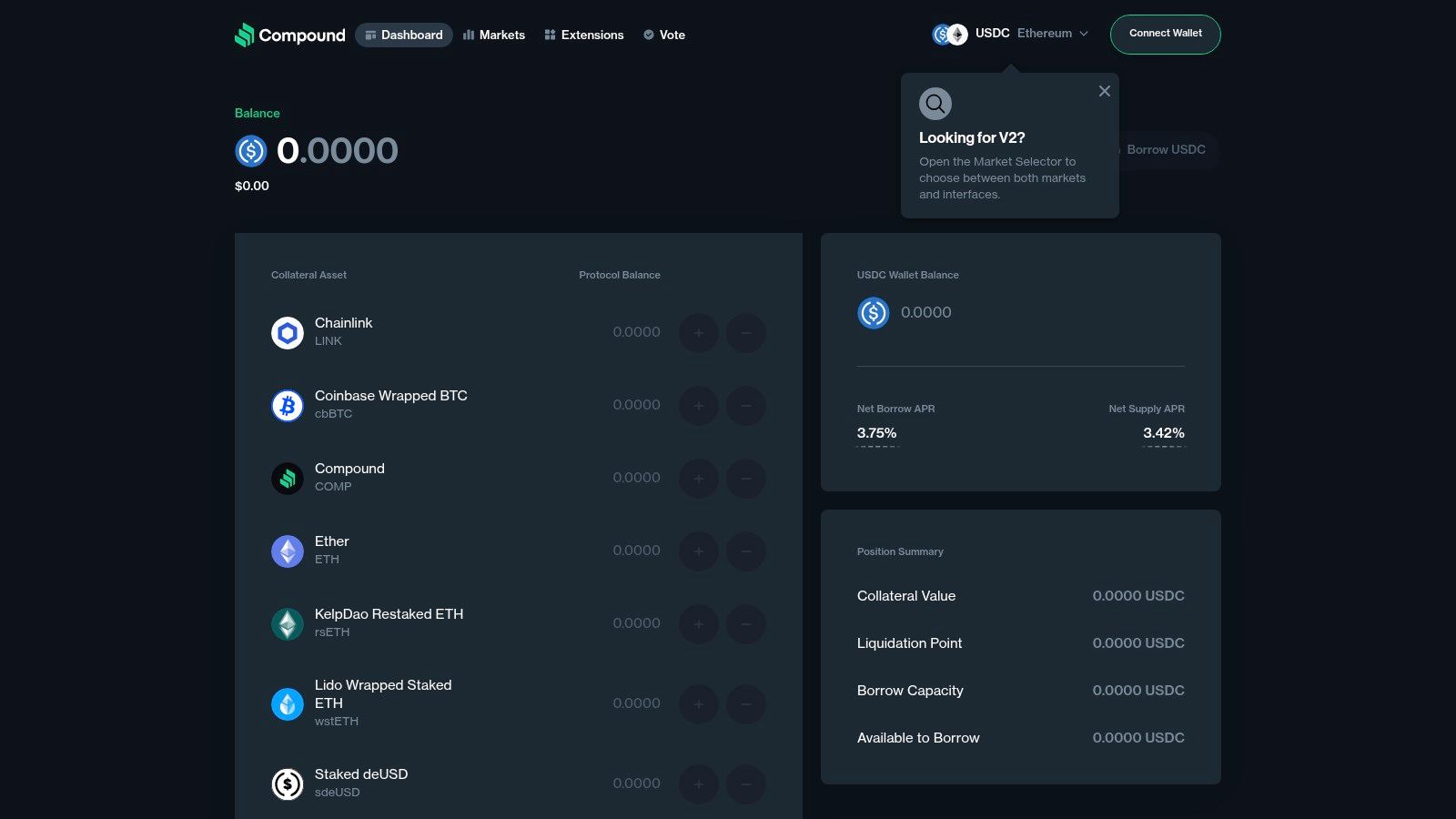
On Compound, users supply USDC to a liquidity pool, which is then available for other users to borrow against their own deposited collateral (like ETH or WBTC). In return for providing this liquidity, suppliers earn a variable interest rate paid by the borrowers. The entire process is governed by smart contracts, eliminating the need for centralized intermediaries.
How the Yield is Generated
The yield on Compound is purely organic and driven by on-chain market dynamics. It is generated from the interest paid by borrowers who take out loans from the USDC pool. The interest rate, and therefore the APY for suppliers, is determined algorithmically based on the utilization rate of the pool. When demand for borrowing USDC is high and the pool is highly utilized, the APY for suppliers increases to incentivize more deposits. Conversely, when borrowing demand is low, the APY falls. This creates a transparent and self-regulating system for interest rates.
Key Insight: Compound offers a purely decentralized yield source. Your returns are directly tied to on-chain supply and demand, providing a transparent alternative to the opaque, centralized yield models.
Risks and Considerations
Interacting with a DeFi protocol like Compound involves a different set of risks compared to centralized platforms.
- Smart Contract Risk: Although audited and time-tested, all smart contracts carry inherent risks of bugs or exploits. You are interacting directly with code on the blockchain.
- Self-Custody Responsibility: You are in full control of your funds via a self-custody wallet (like MetaMask). This means you are solely responsible for managing your private keys and signing transactions securely.
- Variable APYs: The yield is not fixed. APYs can fluctuate significantly based on market-wide borrowing demand, which can be unpredictable.
- Gas Fees: All interactions with the protocol (supplying, withdrawing) require transactions on the Ethereum blockchain, which incur gas fees that vary with network congestion.
Practical Steps to Earn Yield
Earning yield on Compound requires interacting with the DeFi protocol using a web3 wallet.
- Set Up a Wallet: You will need a self-custody wallet like MetaMask, Trust Wallet, or Ledger.
- Acquire USDC: Obtain USDC on an exchange and transfer it to your self-custody wallet. Ensure it is on a network supported by Compound (e.g., Ethereum, Polygon).
- Connect to Compound: Visit the Compound Finance app, connect your wallet, and select the desired USDC market.
- Supply USDC: Enter the amount of USDC you wish to supply, approve the transaction in your wallet, and then confirm the supply transaction. You will begin earning interest immediately.
Compound is an excellent platform for users comfortable with self-custody who want to participate in one of DeFi’s most foundational protocols. For a more detailed guide, you can learn more about how to earn stablecoin yield with Compound.
5. Frax Finance (sFRAX): A Hybrid DeFi & Real-World Yield Engine
Frax Finance has established itself as a major innovator in decentralized finance, and its Staked Frax (sFRAX) vault represents a sophisticated evolution of yield-bearing stablecoins. It is a purpose-built, on-chain product designed to offer a sustainable yield on the FRAX stablecoin. sFRAX achieves this by blending earnings from both DeFi protocols and real-world assets (RWAs), creating a dynamic yield that aims to mirror broader macroeconomic interest rates.
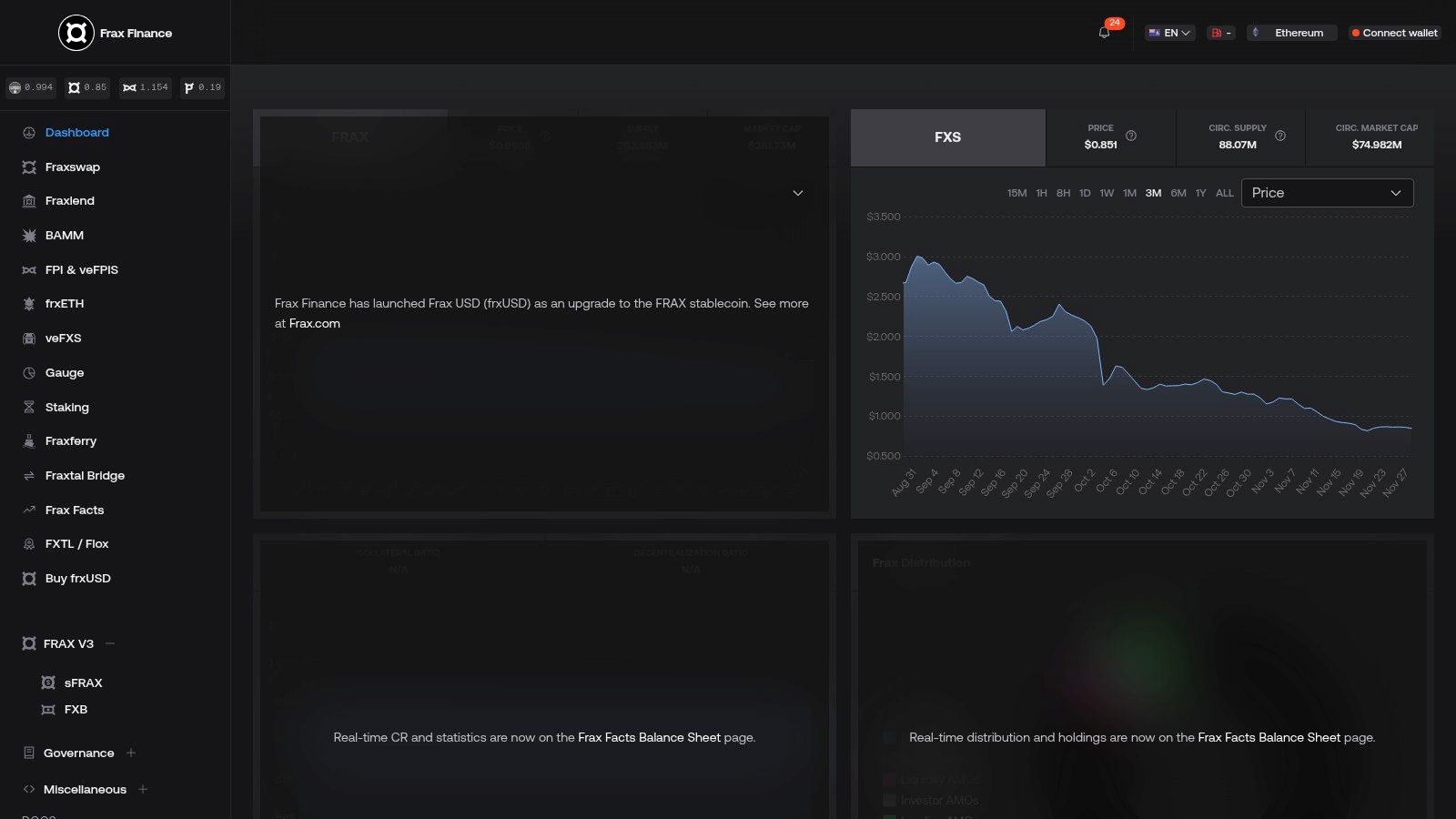
The sFRAX vault acts as a staking contract where users deposit FRAX to receive sFRAX tokens. These tokens then accrue value from the protocol's revenue streams, which is distributed to holders weekly. This structure provides direct, on-chain exposure to a professionally managed yield strategy without requiring users to actively manage positions themselves.
How the Yield is Generated
The yield for sFRAX is sourced from a diversified pool of assets managed by Frax's Automated Market Operations (AMOs). These smart contracts deploy FRAX's collateral into various strategies. A significant portion of the yield comes from Frax's partnership with FinresPBC, which allows the protocol to invest in low-risk, real-world assets like short-term U.S. Treasury bills. This is supplemented by on-chain earnings from lending protocols and other DeFi activities. The goal is for the sFRAX APY to track the Interest on Reserve Balances (IORB) rate set by the Federal Reserve, making it a powerful on-chain proxy for the risk-free rate.
Key Insight: sFRAX is a hybrid yield product that bridges TradFi and DeFi. It combines the stability of government debt (RWAs) with the efficiency of on-chain protocols, offering a yield that is both competitive and grounded in real-world economic conditions.
Risks and Considerations
Interacting with sFRAX involves navigating the typical risks associated with decentralized finance protocols, along with some unique to its hybrid model.
- Smart Contract Risk: As a DeFi protocol, Frax Finance is built on complex smart contracts. An exploit or bug in the sFRAX vault or its underlying AMOs could lead to a loss of funds.
- Counterparty Risk (RWA): The yield generated from real-world assets relies on off-chain partners. Any operational failures or issues with these partners could impact the protocol's ability to generate and distribute yield from that source.
- Variable APY: The yield is not fixed. It fluctuates based on the performance of its underlying strategies and changes in macroeconomic rates like the IORB.
Practical Steps to Earn Yield
Earning yield with sFRAX requires a Web3 wallet and some familiarity with DeFi interactions on platforms like Ethereum or other supported chains.
- Set Up a Web3 Wallet: Use a self-custody wallet like MetaMask or Rabby.
- Acquire FRAX: Purchase FRAX stablecoins on a decentralized exchange (like Curve or Uniswap) or a centralized exchange that lists it.
- Stake on Frax Finance: Navigate to the official Frax application, connect your wallet, and deposit your FRAX into the sFRAX vault. You will receive sFRAX in return.
- Hold and Accrue: Hold the sFRAX tokens in your wallet. The value will increase over time as yield is distributed. You can unstake and redeem your sFRAX for the underlying FRAX (plus accrued yield) at any time.
sFRAX is best suited for DeFi-native users seeking a competitive, transparent, and macro-aligned stablecoin yield. You can explore a detailed comparison of its performance against other options in this guide to the highest paying yield-bearing stablecoins.
6. MetaMask – Stablecoin Earn
For the millions who use MetaMask as their primary self-custody wallet, accessing decentralized finance (DeFi) traditionally means navigating to various dApp websites. The MetaMask Stablecoin Earn feature changes this by integrating a yield-generating mechanism directly into the wallet's mobile interface, creating an exceptionally low-friction path to one of the best yield-bearing stablecoin opportunities powered by a blue-chip protocol. It bridges the gap between holding assets and putting them to work.

This feature allows users to deposit stablecoins like USDC, USDT, and DAI with just a few taps inside the app. Instead of building its own yield product, MetaMask integrates with Aave, one of DeFi’s most established and audited lending protocols. This provides a familiar, self-custodial workflow combined with the robust, market-driven rates of a major on-chain money market.
How the Yield is Generated
The yield comes directly from the Aave v3 protocol. When you deposit stablecoins through MetaMask Earn, your funds are supplied to Aave's liquidity pools. Borrowers on the Aave platform take out loans from these pools and pay interest. A portion of this interest is then distributed to liquidity providers, including you. The Annual Percentage Yield (APY) is variable and determined by the real-time supply and demand for stablecoins within the Aave market.
Key Insight: MetaMask Earn is not a new yield source; it is a simplified user interface for Aave. This approach leverages the security and battle-tested infrastructure of a leading DeFi protocol while dramatically improving user experience.
Risks and Considerations
While the process is simplified, the underlying DeFi risks remain. Users should be aware of the following factors.
- Smart Contract Risk: Your funds are deposited into Aave's smart contracts. Although Aave is heavily audited, the risk of a bug or exploit, however small, is inherent to all DeFi protocols.
- Variable APYs: The yield is not fixed. It fluctuates based on borrowing demand on Aave and can decrease significantly during periods of low market activity.
- On-Chain Gas Fees: Every deposit and withdrawal is an on-chain transaction that requires network gas fees. These fees can impact the net return, especially for smaller deposit amounts.
- Mobile-First Limitation: The feature was initially launched on mobile and is gradually rolling out to other platforms, so availability may vary.
Practical Steps to Earn Yield
Earning yield through MetaMask is designed for simplicity:
- Open MetaMask Mobile: Ensure you have the latest version of the MetaMask mobile app.
- Navigate to Earn: Find the "Earn" or similar feature within the wallet's main interface.
- Select a Stablecoin: Choose to deposit USDC, USDT, or DAI from your wallet balance.
- Deposit and Approve: Follow the on-screen prompts to approve the token and deposit your desired amount into the Aave protocol. You will need to pay gas fees for these transactions.
- Track and Withdraw: Monitor your earnings directly within the MetaMask interface and withdraw your funds and accumulated interest back to your wallet at any time (subject to gas fees).
MetaMask Earn is an excellent option for existing MetaMask users who want a convenient, self-custodial way to access DeFi yield without leaving their trusted wallet environment. Learn more about the feature on the official MetaMask website.
7. Yearn Finance: The Automated DeFi Yield Aggregator
For DeFi users who want to optimize their returns without constantly monitoring and moving funds, Yearn Finance provides an elegant, automated solution. As one of DeFi's original yield aggregators, Yearn specializes in creating "Vaults" that execute complex, auto-compounding strategies. By depositing a stablecoin like USDC into a Yearn Vault, users tap into a sophisticated system that automatically allocates capital across multiple protocols to find the best risk-adjusted yield, making it a top choice for passive, set-and-forget exposure to yield-bearing stablecoins.
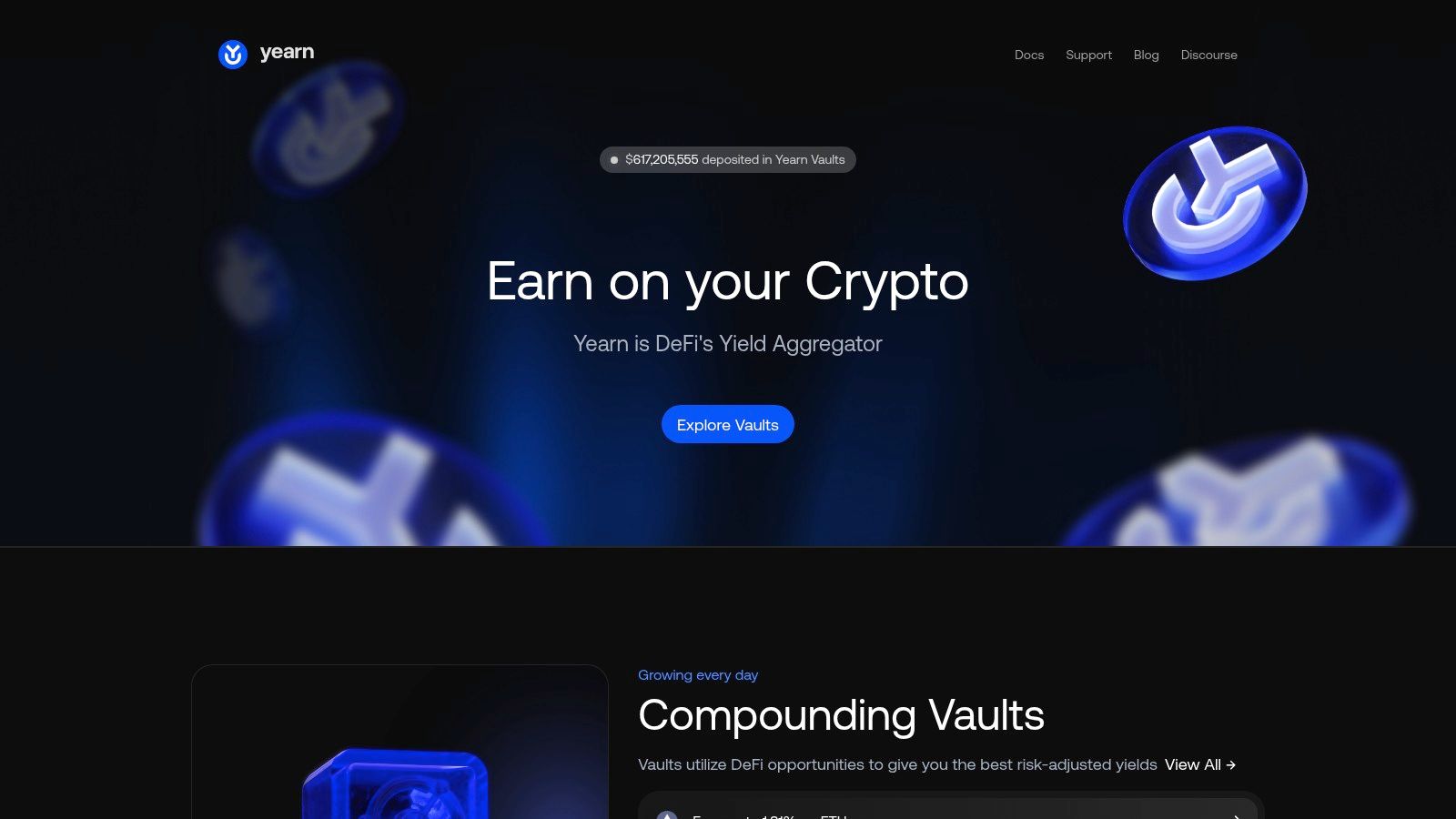
The platform's core value is its ability to abstract away the complexity of active yield farming. Instead of manually chasing the best lending rates on platforms like Aave or Morpho, users can deposit their funds into a Yearn Vault, and the underlying smart contract strategy handles all the rebalancing and compounding automatically. This approach is particularly powerful as Yearn expands to low-fee Layer-2 networks like Base, where frequent transactions for compounding become economically viable.
How the Yield is Generated
Yearn's yield is sourced entirely from on-chain DeFi protocols. Each Vault is programmed with a specific strategy that seeks out the most efficient sources of yield for a particular asset. For a USDC Vault, the strategy might involve:
- Lending: Supplying USDC to top-tier lending protocols like Aave or Morpho to earn variable interest.
- Liquidity Provision: Using the stablecoin in certain liquidity pools, though this is less common for pure stablecoin vaults to avoid impermanent loss.
- Incentive Farming: Automatically claiming and selling reward tokens (like OP or ARB) from underlying protocols to boost the base APY.
The strategy constantly monitors conditions and rebalances assets to maximize returns. For example, if Morpho offers a temporarily higher rate on USDC than Aave, the Vault will automatically shift a portion of its capital to capture that opportunity. All earnings are then reinvested, creating a powerful compounding effect.
Key Insight: Yearn is a "yield optimizer." Its value is not in creating new yield but in intelligently and efficiently capturing existing yield across the DeFi ecosystem, saving users time and gas fees.
Risks and Considerations
As a fully on-chain protocol, Yearn carries inherent DeFi risks, though its long track record provides a degree of confidence.
- Smart Contract Risk: Your funds are subject to the security of Yearn's smart contracts and the smart contracts of every protocol the Vault interacts with (e.g., Aave, Morpho). A bug in any underlying protocol could put funds at risk.
- Strategy Risk: A Vault's performance depends entirely on its pre-programmed strategy. While these are typically conservative, a poorly designed or exploited strategy could lead to underperformance or loss.
- Fees: Yearn Vaults typically charge a performance fee (a percentage of the profits generated) and sometimes a small management fee. These fees reduce the net APY paid to the user.
Practical Steps to Earn Yield
Using Yearn requires a Web3 wallet like MetaMask and some familiarity with DeFi interactions.
- Set Up a Wallet: Ensure your Web3 wallet is funded with the desired stablecoin (e.g., USDC) and the native token for gas fees (e.g., ETH on Base).
- Connect to Yearn: Visit the Yearn Finance website, connect your wallet, and navigate to the "Vaults" section.
- Select a Vault: Choose the stablecoin vault on your preferred network (e.g., "USDC" on Base). Review its strategy, historical performance, and current APY.
- Deposit Funds: Enter the amount of the stablecoin you wish to deposit, approve the transaction in your wallet, and then confirm the deposit. You will receive "yVault" tokens representing your share in the pool.
- Hold and Monitor: Your deposit will automatically start earning and compounding yield. You can track your earnings directly on the Yearn dashboard and withdraw at any time.
Comparison of Top 7 Yield-Bearing Stablecoin Providers
| Platform | Implementation complexity | Resource requirements | Expected outcomes | Ideal use cases | Key advantages |
|---|---|---|---|---|---|
| Coinbase | Low — centralized UI, simple flows | Fiat on‑ramps, KYC/ID, Coinbase account | Variable USDC rewards paid weekly; easy liquidity | Users wanting simple fiat→stablecoin yield with custodial convenience | Regulated US platform, easy fiat purchases, clear tax/KYC guidance |
| Kraken | Low — centralized exchange with opt‑in flows | Fiat on‑ramps, KYC, account setup | Variable APRs; flexible or 30‑day bonded payouts, weekly accrual | Users who want buy/earn/withdraw in one account with optional lockups | Supports multiple stablecoins, transparent payout schedules |
| Aave (app.aave.com) | Medium — Web3 interface, on‑chain interactions | Self‑custody wallet, network gas, token approvals | Real‑time variable on‑chain interest; flexible withdrawals (gas dependent) | Users preferring non‑custodial lending and transparent rates | Widely integrated DeFi protocol, high transparency and liquidity |
| Compound Finance | Medium — on‑chain lending protocol | Self‑custody wallet, gas fees, token management | Utilization‑driven variable APYs; supply/borrow primitives | Users seeking programmatic, open‑source DeFi yields on USDC | Long track record, open documentation, simple supply UX |
| Frax Finance (sFRAX) | Medium — vault/staking flows on chain | Web3 wallet, gas, interaction with vault token | Yield-bearing sFRAX with weekly distributions tied to protocol/RWA income | Users wanting a purpose‑built stablecoin yield vault with FRAX liquidity | Vault designed to mirror cash yields, combines DeFi + RWA sources |
| MetaMask – Stablecoin Earn | Low — in‑wallet one‑tap flow | MetaMask wallet, gas fees, supported chain | Aave‑driven variable yield accessible inside wallet | Mobile users wanting low‑friction DeFi yield without visiting dApps | Extremely low friction, self‑custody, integrated Aave access |
| Yearn Finance | High — vault strategy complexity abstracted to user | Web3 wallet, gas (preferably L2 for lower fees) | Auto‑compounded, auto‑rebalanced yields; performance/management fees possible | Users wanting set‑and‑forget, diversified DeFi yield strategies | Aggregates protocols, auto‑optimization and compounding of returns |
Crafting Your Stablecoin Strategy for 2025 and Beyond
Navigating the landscape of yield-bearing stablecoins requires a blend of diligence, strategic thinking, and a clear understanding of your own risk tolerance. As we've explored, the "best yield-bearing stablecoins" are not a one-size-fits-all solution. Your ideal choice depends heavily on your goals, whether you prioritize ease of use, the highest possible APY, or ironclad security.
From the regulatory clarity and user-friendliness of centralized exchanges like Coinbase and Kraken to the decentralized, on-chain autonomy of protocols like Aave and Compound, the options are diverse. For those seeking innovative, capital-efficient yield, Frax Finance's sFRAX presents a compelling model tied to real-world rates. Meanwhile, aggregators like Yearn Finance and integrated wallet solutions like MetaMask – Stablecoin Earn simplify the process, abstracting away complexity to help you find competitive returns with less hands-on management.
Key Takeaways: Your Stablecoin Yield Checklist
The journey to earning sustainable yield is ongoing. As you formulate your strategy for the coming years, keep these core principles at the forefront of your decision-making process:
- Risk is Not Uniform: The risk associated with a centralized exchange's custody is fundamentally different from the smart contract risk of a DeFi lending protocol or the de-pegging risk of an algorithmic stablecoin. Never assess APY in isolation. Always weigh it against the underlying mechanisms and potential failure points.
- Yield Source Matters: Understand how your yield is generated. Is it from overcollateralized lending (Aave, Compound), real-world asset tokenization (sFRAX's RWA strategy), or institutional lending programs (Coinbase)? The source dictates the yield's sustainability and risk profile.
- Diversification is Essential: Just as you wouldn't put all your capital into a single stock, avoid concentrating your entire stablecoin portfolio in one asset or on one platform. Spreading your holdings across different stablecoins (e.g., USDC, DAI) and platforms (e.g., a portion on Kraken, some in a Yearn vault, and some on Aave) can mitigate platform-specific and asset-specific risks.
Actionable Next Steps: Building Your Portfolio
Armed with this knowledge, your next move is to translate theory into action. A prudent approach involves a methodical, phased implementation rather than a single, impulsive allocation.
- Define Your Profile: Are you a "set-and-forget" investor who values simplicity and security above all? A centralized option like Kraken might be your starting point. Are you a DeFi native comfortable with managing your own keys and interacting with smart contracts? Exploring Aave or a Yearn Finance vault could be your next step.
- Start Small and Test: Before committing significant capital, begin with a small, manageable amount. Deposit funds into your chosen platform, go through the process of earning yield, and practice withdrawing. This "test run" builds familiarity and confidence with the user interface and transaction flow.
- Track and Re-evaluate: The DeFi space evolves rapidly. APYs fluctuate, new protocols emerge, and risk parameters change. Set a recurring calendar reminder (e.g., monthly or quarterly) to review your stablecoin positions. Ask yourself: Is the yield still competitive? Has the protocol's security posture changed? Does this allocation still align with my goals?
Ultimately, the power of yield-bearing stablecoins lies in their ability to provide a relatively stable foundation for capital growth within the volatile crypto ecosystem. By choosing wisely, diversifying thoughtfully, and remaining vigilant, you can harness these innovative tools to build a more resilient and productive digital asset portfolio. The journey into decentralized finance is a marathon, not a sprint, and a well-crafted stablecoin strategy is your key to maintaining a steady pace.
To stay ahead in the rapidly evolving world of stablecoins, you need access to expert analysis and real-time data. Stablecoin Insider is a dedicated platform that provides deep dives, risk assessments, and performance tracking on the best yield-bearing stablecoins and protocols. Visit Stablecoin Insider to arm yourself with the professional-grade insights needed to make smarter, more confident investment decisions.