Table of Contents
Stablecoins are the bedrock of the digital asset economy, providing a reliable bridge between volatile cryptocurrencies and stable fiat currencies like the U.S. dollar. But not all stablecoins are created equal. They differ profoundly in their underlying collateral, transparency, regulatory oversight, and the platforms that support them. Choosing the right one is critical for everything from high-frequency trading and decentralized finance (DeFi) to simple cross-border payments.
This guide cuts through the complexity to help you find the best stablecoins for your specific needs. We evaluate the top options and their associated platforms based on what matters most: security, accessibility, and transparency. You will get a detailed breakdown of each stablecoin, including its backing mechanism, audit frequency, and primary use cases. For those operating in specific regions, understanding the local landscape is equally important; for instance, many users also need to evaluate regional hubs like South Africa Cryptocurrency Exchange Platforms to access these assets effectively.
Whether you're a developer integrating digital payments, a treasurer managing corporate assets, or an individual looking for a safe haven asset, understanding these nuances is your first step toward making informed decisions. We'll explore leading fiat-backed coins like USDC (Circle) and PYUSD (PayPal), the decentralized DAI (via Summer.fi), and the best platforms like Coinbase and Kraken to access them. Each entry includes direct links and key details, ensuring you have the knowledge to select the asset that best fits your risk tolerance and financial goals.
1. Coinbase
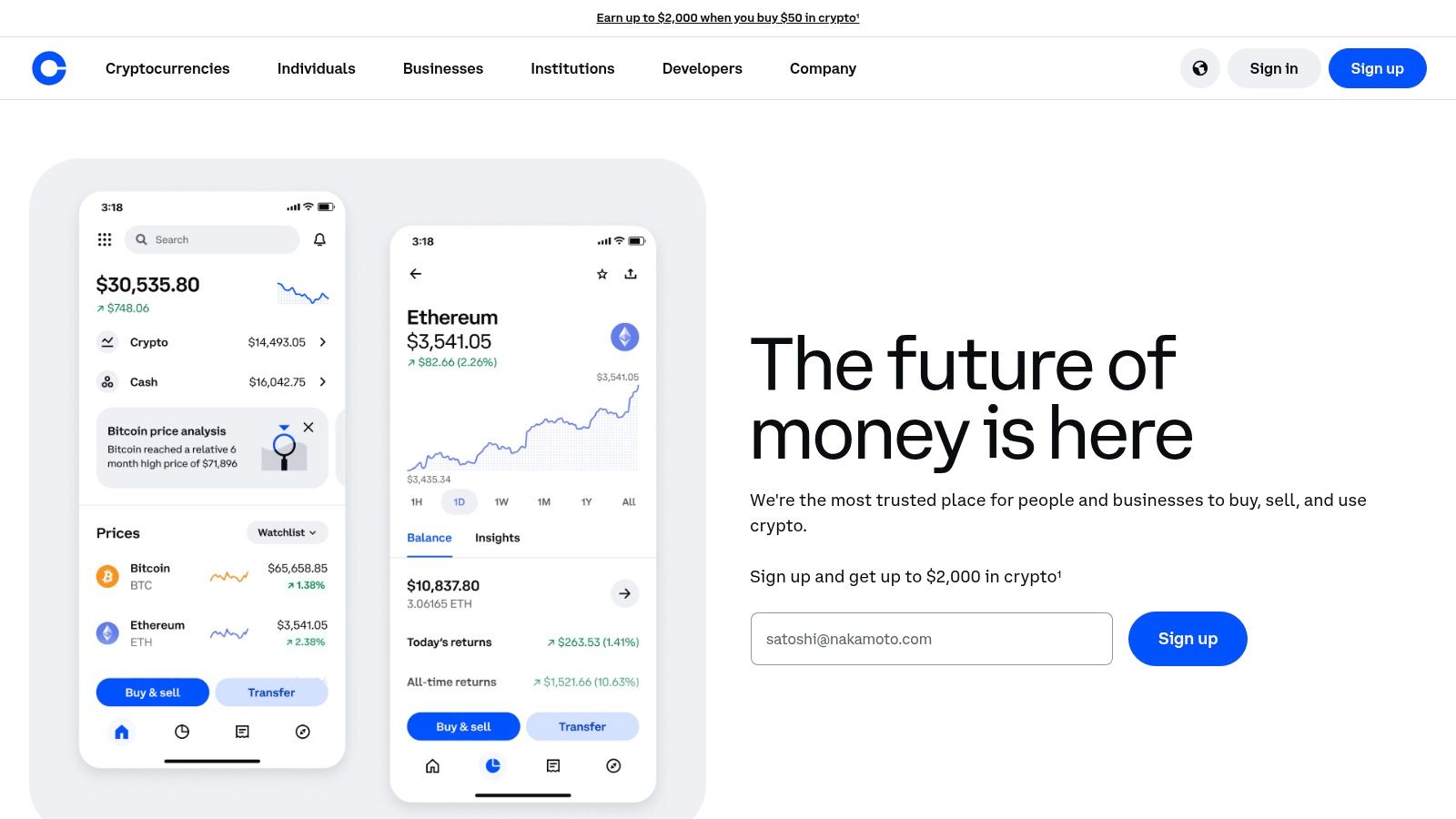
Coinbase serves as a primary gateway for U.S.-based users to access some of the best stablecoins on the market, offering a secure, regulated, and user-friendly environment. While it isn't a stablecoin issuer itself, it is the co-founder of USD Coin (USDC) through the Centre Consortium and acts as a major hub for acquiring, holding, and transacting with leading dollar-pegged assets. Its reputation for strong compliance and a simple user interface makes it an ideal starting point for beginners entering the stablecoin ecosystem.
The platform excels at simplifying the fiat-to-crypto conversion process. Users can easily link a bank account or debit card to purchase stablecoins like USDC or the PayPal-backed PYUSD directly with U.S. dollars. This accessibility removes a significant barrier to entry often found on more complex, crypto-native exchanges.
Key Features and User Experience
Coinbase’s main strength lies in its seamless integration of USDC. The platform features a "USD/USDC unification" system, allowing users to hold a USD balance that can be used interchangeably as USDC for trading or sending on-chain, all with a guaranteed 1:1 conversion rate and no fees for the swap.
- Simple Fiat On-Ramps: Easily fund your account via ACH, wire transfer, or debit card to buy stablecoins instantly.
- USDC Rewards: Eligible U.S. customers can earn rewards on their USDC holdings, providing a passive yield just for storing the asset on the platform. Availability and rates vary by location and are subject to change.
- Broad Network Support: When withdrawing USDC, Coinbase supports multiple blockchains, including Ethereum, Polygon, Solana, and Base, giving users flexibility and the option to choose networks with lower transaction fees.
- PYUSD Integration: Through a partnership with PayPal, Coinbase supports PYUSD trading and has offered incentives like fee waivers to encourage its adoption.
Pros and Cons of Using Coinbase for Stablecoins
| Pros | Cons |
|---|---|
| High Security and U.S. Regulation: A trusted, publicly traded company in the U.S. | Varying Feature Availability: Rewards programs and specific services are geo-restricted. |
| User-Friendly Interface: Ideal for beginners new to digital assets. | Fees on Purchases: While USD-to-USDC conversion is free, buying with a card incurs fees. |
| Strong Liquidity for Major Stablecoins: Deep order books ensure minimal slippage. | Custodial Risk: As with any centralized exchange, you don't control your private keys. |
| Transparent USDC Information: Direct access to attestations and reserve details. | Limited Advanced Features: Power users may find the basic interface restrictive. |
For those looking to understand the platform's full capabilities, including its advanced trading interface and security protocols, our team has prepared an in-depth analysis. You can find out more in our complete breakdown of Coinbase. Ultimately, Coinbase secures its spot as a top destination for its unmatched blend of accessibility, security, and deep integration with premier stablecoins like USDC.
Website: https://www.coinbase.com
2. Kraken
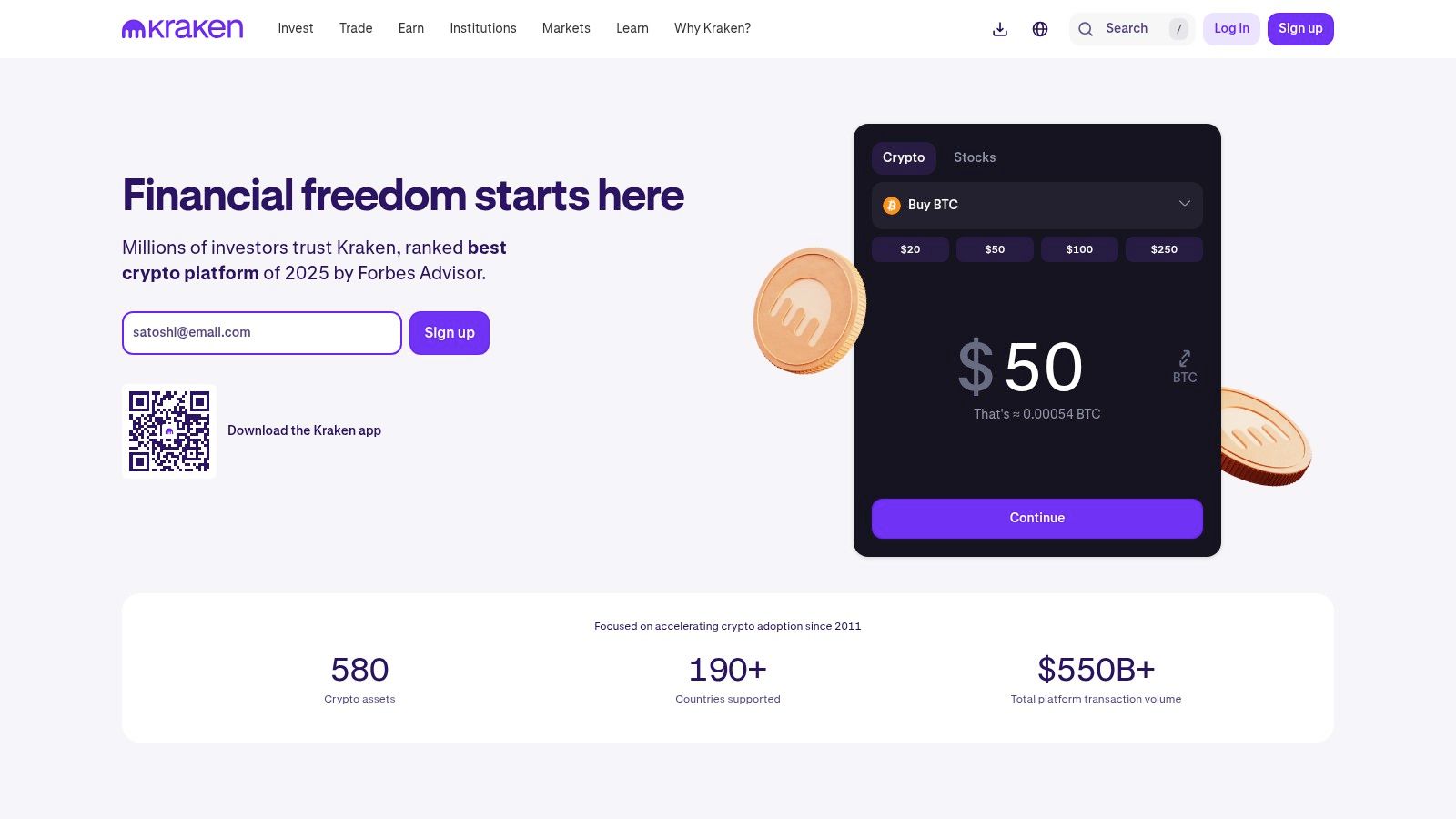
Kraken stands out as a veteran cryptocurrency exchange, offering a robust and secure platform for users seeking a diverse selection of the best stablecoins. Established in 2011 and accessible in the U.S., it has built a reputation for reliability, security, and transparency. For users who need more than just one type of stablecoin, Kraken provides a comprehensive marketplace to trade, hold, and transfer leading assets like USDT, USDC, DAI, and PYUSD across multiple blockchain networks.
The platform is particularly known for its explicit guidance on network compatibility, a crucial detail that helps users avoid costly mistakes. This clarity makes it a trusted choice for both intermediate users managing multi-chain assets and beginners who need straightforward instructions for deposits and withdrawals.
Key Features and User Experience
Kraken’s primary advantage for stablecoin users is its combination of choice and clarity. The platform provides dedicated support pages that detail which blockchain networks are available for each specific stablecoin, removing ambiguity and reducing the risk of sending funds to an incompatible address. This transparency is a cornerstone of its user experience.
- Wide Stablecoin Selection: Access a broad range of USD-pegged tokens, including Tether (USDT), USD Coin (USDC), Dai (DAI), and PayPal USD (PYUSD).
- Transparent Network Support: Before depositing or withdrawing, users can easily view a clear table listing all supported networks (e.g., Ethereum, Polygon, Solana, Arbitrum) for each stablecoin.
- Multiple Trading Interfaces: Kraken offers everything from a simple "Instant Buy" feature for beginners to advanced spot trading on Kraken Pro for experienced traders, ensuring deep liquidity.
- Robust Security: The exchange is widely recognized for its strong security practices, having never suffered a major hack, which provides peace of mind when holding assets.
Pros and Cons of Using Kraken for Stablecoins
| Pros | Cons |
|---|---|
| High Transparency on Network Support: Greatly reduces the risk of user error during transfers. | Network Availability Varies by Coin: Users must double-check that their desired network is supported for a specific stablecoin. |
| Excellent Selection of Stablecoins: Supports a wider variety than many U.S.-based competitors. | Fees Can Be Complex: Costs vary based on the transaction type, network, and market conditions. |
| Mature and Secure Platform: One of the oldest and most trusted exchanges in the industry. | Interface Can Be Intimidating: The advanced trading options may overwhelm new users. |
| Deep Liquidity: Ensures efficient trading with minimal price slippage for major pairs. | Fiat On-Ramp Options Are Limited: Fewer instant deposit methods compared to some rivals. |
For users interested in how Kraken expands its asset offerings, it's worth noting its support for non-USD stablecoins as well. For example, our team has covered its listing of a UK-based, pound-sterling-pegged asset; you can read more about it in our coverage of Kraken’s tokenised GBP listing. Overall, Kraken earns its spot by providing a secure, transparent, and versatile environment for anyone looking to engage with a wide array of stablecoins.
Website: https://www.kraken.com
3. PayPal (PYUSD)
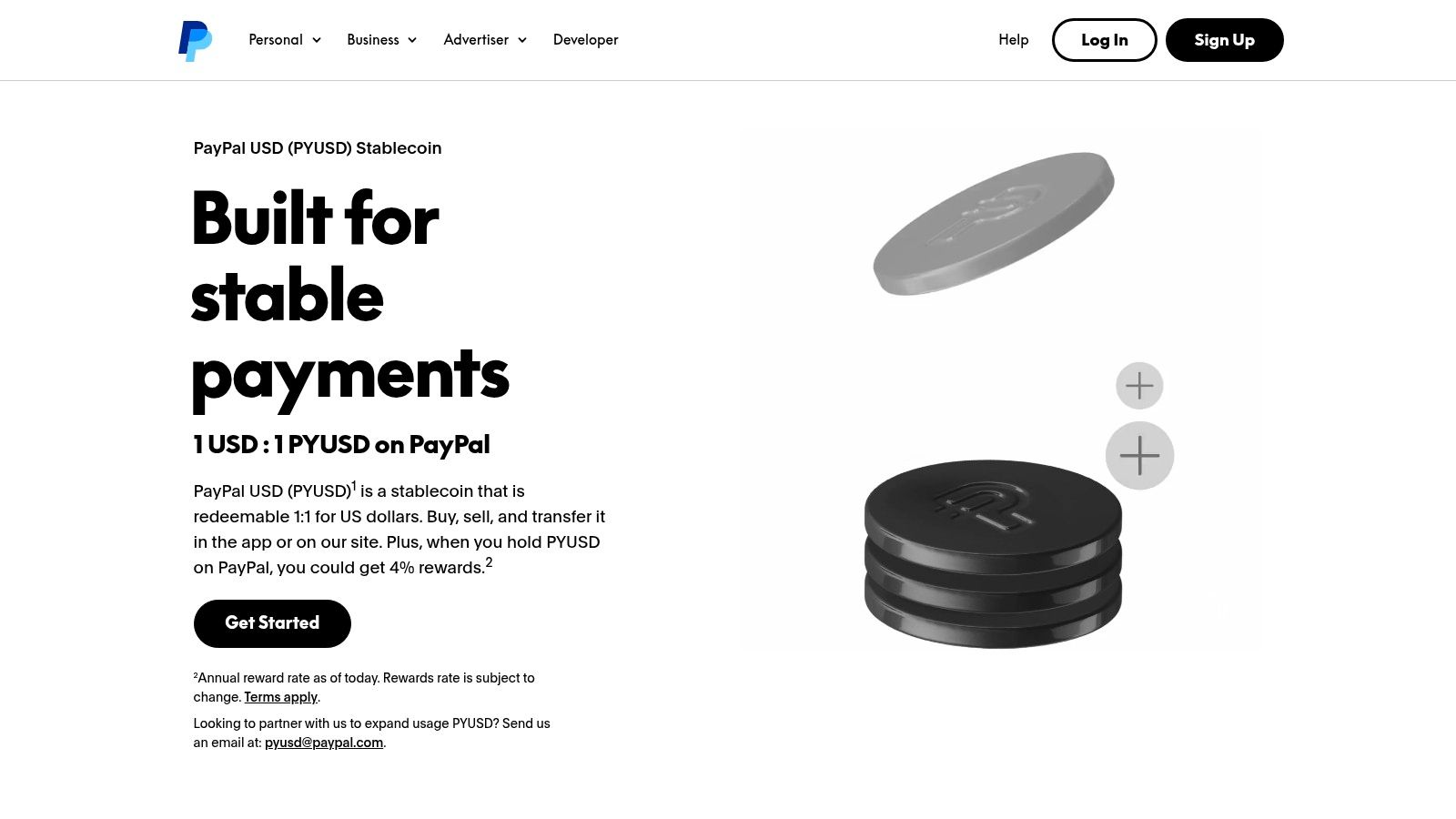
PayPal has made a landmark entry into the stablecoin arena by integrating its own branded stablecoin, PayPal USD (PYUSD), directly into its vast digital wallet ecosystem. This move positions PayPal not just as a payment processor but as a major access point for one of the best stablecoins designed for mainstream consumer and merchant adoption. Issued by the regulated financial institution Paxos Trust Company, PYUSD is a U.S. dollar-pegged stablecoin built for payments, and PayPal provides an exceptionally low-friction environment for its millions of U.S. users to acquire, hold, and use it.
The platform's core advantage is its deep integration within an existing, trusted financial network. Users can buy, sell, or hold PYUSD directly in their PayPal or Venmo wallets, converting it to and from U.S. dollars seamlessly. This integration aims to bridge the gap between traditional finance and the digital asset world, making stablecoins accessible to an audience that may have never interacted with a crypto exchange.
Key Features and User Experience
PayPal’s user experience is designed for simplicity, abstracting away much of the complexity typically associated with blockchain transactions. The focus is on utility: sending money, making payments, and earning rewards.
- In-App Accessibility: Buy, sell, and hold PYUSD directly within the PayPal app, with easy conversion to a USD balance.
- On-Chain Transfers: Users can send PYUSD from their PayPal wallet to external compatible cryptocurrency wallets on supported networks like Ethereum and Solana.
- Rewards Program: Eligible customers holding PYUSD in their PayPal or Venmo accounts can earn rewards, providing an incentive to use the platform as a primary wallet. Rates and availability are subject to change and may vary by state.
- Merchant Integration: PYUSD can be selected as a payment method at checkout with millions of online businesses that accept PayPal, automatically converting to fiat for the merchant.
Pros and Cons of Using PayPal for Stablecoins
| Pros | Cons |
|---|---|
| Effortless Mainstream Access: Leverages PayPal's huge user base in the U.S. for simple adoption. | Redemption Path Nuances: Direct 1:1 redemption with the issuer (Paxos) is not guaranteed for all holders. |
| Growing Ecosystem Integration: Increasing use cases for payments within the PayPal/Venmo network. | Changing Rewards: The availability and rates of the PYUSD rewards program can be altered at any time. |
| High Trust and Familiarity: Built on a platform millions of people already use and trust for payments. | Limited Crypto Features: Lacks the advanced trading tools and broad asset support of a dedicated exchange. |
| Clear Risk Disclosures: PayPal provides transparent information on the nature and risks of PYUSD. | Geo-Restricted: PYUSD features are primarily available to eligible U.S. customers at present. |
The integration of PYUSD into PayPal is a significant step toward using stablecoins for everyday transactions, especially for cross-border payments. To explore how this can simplify international transfers, discover more in our guide on how to use stablecoins for overseas payments. By embedding a stablecoin into one of the world's largest payment networks, PayPal has created a powerful, accessible, and user-friendly on-ramp for the digital dollar.
Website: https://www.paypal.com/us/digital-wallet/manage-money/crypto/pyusd
4. Circle (USDC issuer)
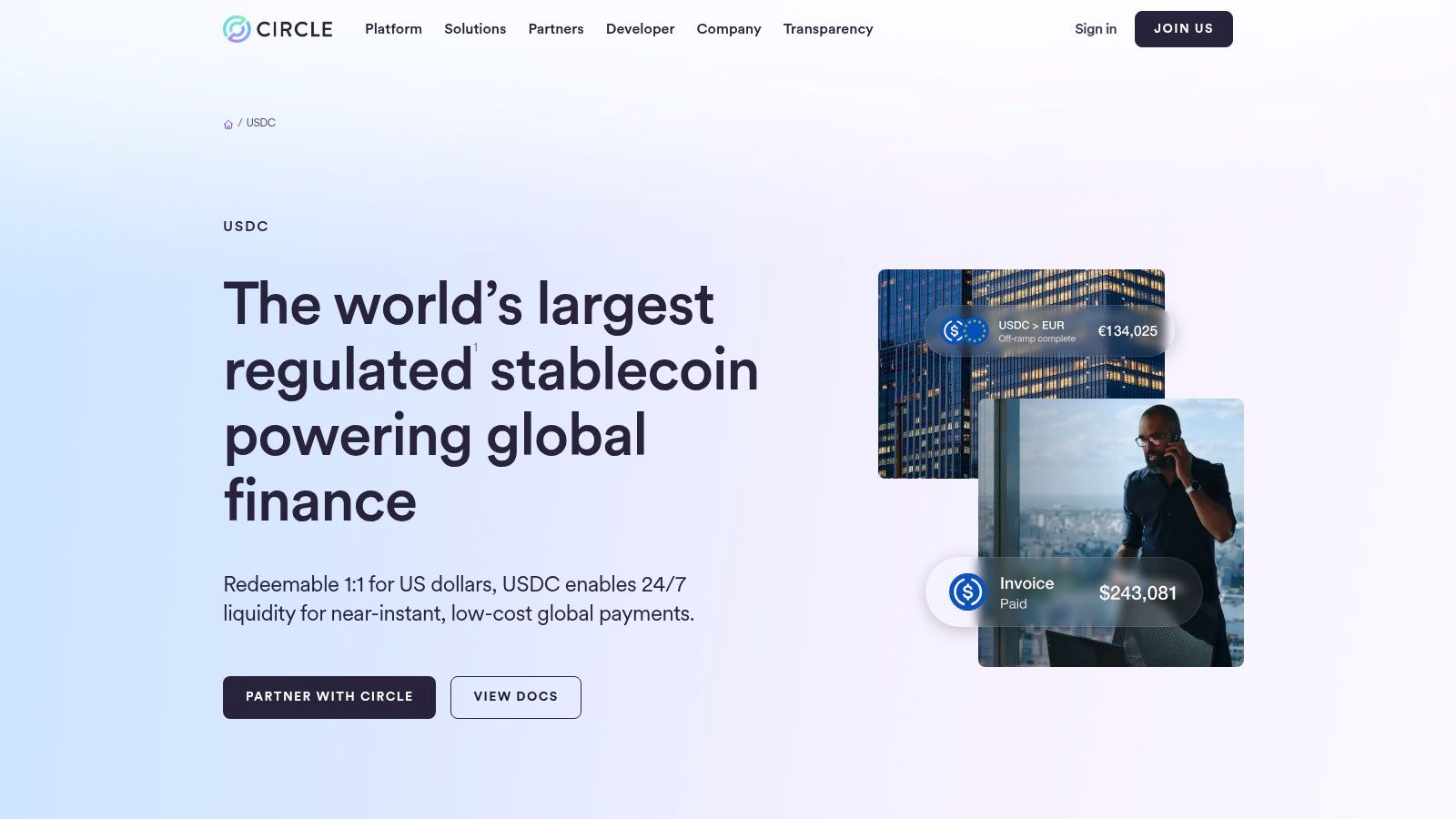
Circle serves as the foundational source of truth for USD Coin (USDC), one of the industry's best stablecoins. As the principal developer and issuer, Circle's platform is the authoritative hub for transparency, reserve attestations, and institutional-grade access. While retail users typically acquire USDC on exchanges, Circle's website provides the critical underlying information and direct minting/redemption services for businesses, ensuring the stablecoin's integrity and 1:1 redeemability with the U.S. dollar.
The platform is designed to offer unparalleled clarity into USDC's operations. It provides direct access to monthly reserve reports, which are audited by third-party accounting firms. This level of disclosure is essential for institutional users and developers who need to verify the asset's backing and stability, establishing Circle as the ultimate resource for due diligence on USDC.
Key Features and User Experience
Circle's main offerings are geared toward businesses and institutions through the Circle Mint, a platform for minting and redeeming large volumes of USDC directly. This service integrates with traditional banking rails, allowing qualified customers to wire U.S. dollars and receive newly minted USDC on their chosen blockchain, and vice-versa.
- USDC Transparency Reports: Direct and easy access to monthly reserve disclosures and attestation reports from independent auditors.
- Multi-Chain Availability Details: Authoritative information on all the native blockchains that support USDC, including Ethereum, Solana, Polygon, and more.
- Circle Mint: An institutional-grade service for minting and redeeming USDC at a 1:1 ratio with the U.S. dollar, complete with powerful APIs for programmatic integration.
- Official Documentation: Comprehensive resources explaining the issuance mechanics, redemption processes, and compliance frameworks governing USDC.
Pros and Cons of Using Circle for Stablecoins
| Pros | Cons |
|---|---|
| Source-of-Truth: The most reliable source for USDC issuance and reserve data. | Business-Focused: Circle Mint is not designed for individual retail users. |
| High Transparency: Direct access to detailed audits and compliance information. | Geographic Restrictions: On/off-ramp options and service availability can vary by jurisdiction. |
| Institutional-Grade Services: Business-grade APIs and global banking support. | Not an Exchange: It is not a platform for trading various crypto assets. |
| Direct 1:1 Mint/Redeem: Guarantees peg stability for institutional participants. | High Minimums: Minting/redeeming directly often has high minimum transaction requirements. |
For those who want a deeper dive into USDC's market dynamics and performance, our latest analysis provides extensive details. You can explore our complete USDC November 2025 market report for more insights. Ultimately, Circle is an indispensable resource for anyone seeking to understand the foundational mechanics and verify the trustworthiness of USDC, cementing its role as a pillar of the stablecoin ecosystem.
Website: https://www.circle.com/usdc
5. Gemini (GUSD issuer and exchange)
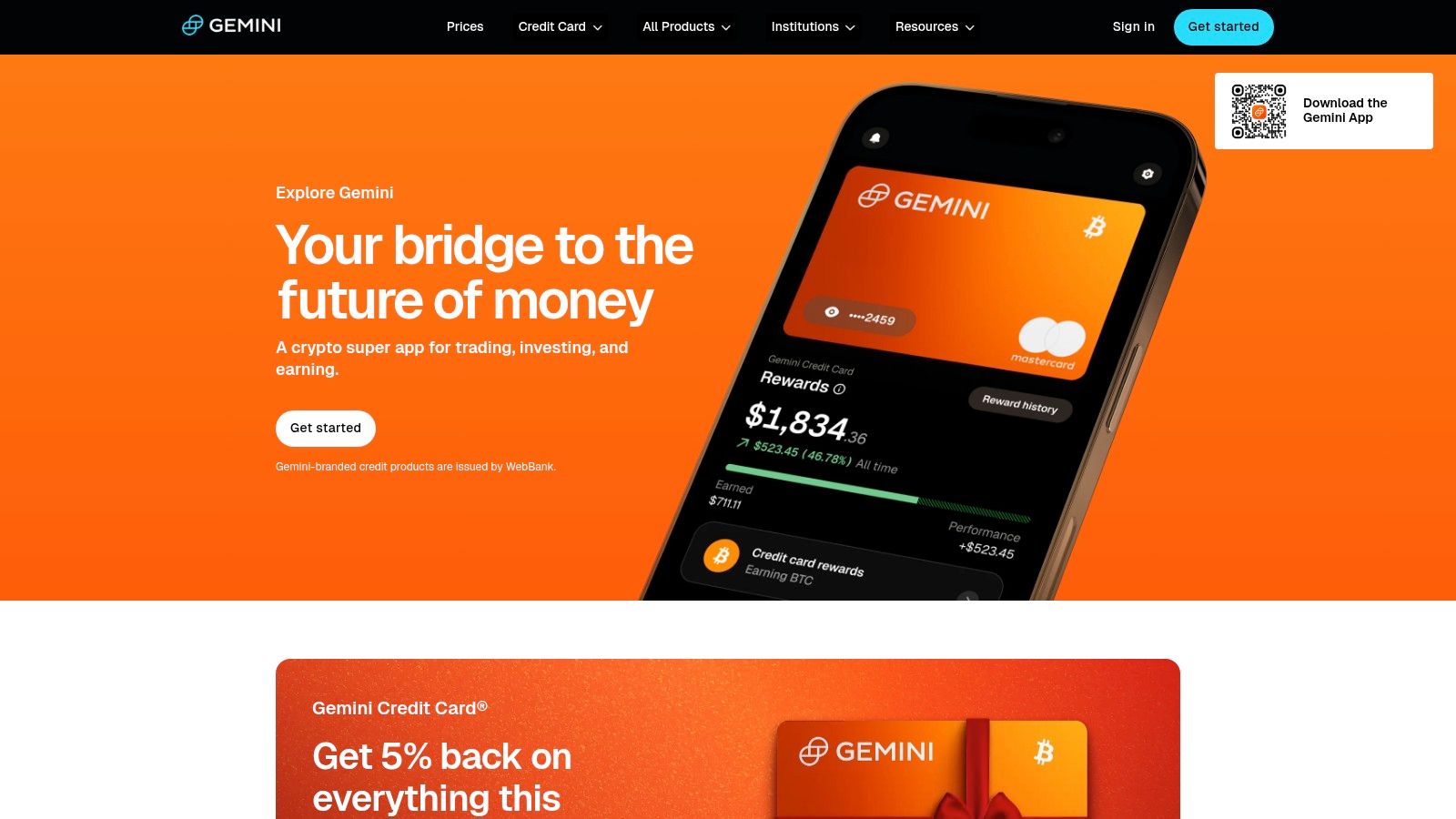
Gemini stands out as a U.S.-regulated exchange and the issuer of its own stablecoin, the Gemini Dollar (GUSD). This dual role provides a highly integrated and transparent ecosystem for users seeking some of the best stablecoins, with a particular focus on regulatory compliance. Operating as a New York trust company, Gemini offers a secure platform where users can seamlessly convert U.S. dollars into GUSD and other major stablecoins, all within a framework built on trust and security.
Its primary advantage is the native support and promotion of GUSD. The platform is designed to make acquiring and using its proprietary stablecoin as frictionless as possible. U.S. customers can buy, sell, and redeem GUSD on a 1:1 basis with the U.S. dollar with no fees charged by Gemini for the conversion, creating a cost-effective on-ramp into the stablecoin market.
Key Features and User Experience
Gemini’s platform is engineered for both simplicity and regulatory assurance, especially concerning GUSD. The exchange provides monthly, publicly available attestations for GUSD reserves, giving users a high degree of confidence in its 1:1 backing. This transparency is a core part of the user experience.
- Native GUSD Integration: Users can instantly convert USD to GUSD and back with no Gemini fee, making it an efficient fiat-to-stablecoin gateway.
- Complimentary Withdrawals: Gemini does not charge withdrawal fees for on-platform GUSD transfers, which is a significant cost-saving benefit for active users.
- High Regulatory Standards: As a New York trust company, Gemini adheres to strict capital reserve and cybersecurity requirements set by the New York State Department of Financial Services (NYDFS).
- Multi-Stablecoin Support: In addition to GUSD, the platform supports other leading stablecoins like USDC and USDT, offering users a choice of assets.
Pros and Cons of Using Gemini for Stablecoins
| Pros | Cons |
|---|---|
| Regulated New York Trust Company: Operates under one of the strictest U.S. licenses. | Regional Restrictions: Feature and coin availability can be limited in certain jurisdictions like the EU. |
| Transparent GUSD Policies: Monthly attestations provide clear evidence of reserves. | Lower GUSD Liquidity: GUSD may have thinner liquidity on third-party exchanges compared to USDC/USDT. |
| No-Fee USD↔GUSD Conversions: Cost-effective way to enter and exit stablecoin positions. | Slower Innovation Pace: A focus on regulation can sometimes mean a more cautious product rollout. |
| Complimentary On-Platform Withdrawals: Reduces costs for frequent GUSD transfers. | Interface Can Be Basic: While clean, some advanced traders may seek more sophisticated tools. |
For users prioritizing regulatory oversight and transparency, especially those interested in GUSD, Gemini presents a compelling and secure option. Its commitment to compliance and the seamless, fee-free integration of its native stablecoin solidify its position as a top-tier platform for stablecoin transactions. The platform’s robust security protocols and clear reserve reporting offer peace of mind for both new and experienced crypto users.
Website: https://www.gemini.com
6. Paxos (USDP issuer)
Paxos provides the foundational infrastructure and official documentation for Pax Dollar (USDP), one of the best stablecoins for users prioritizing regulatory clarity and transparency. As a New York-regulated trust company, Paxos operates at the intersection of traditional finance and blockchain technology, offering a stablecoin backed 1:1 by U.S. dollars held in cash and U.S. Treasury bills. Its website serves as the primary hub for transparency reports, attestations, and direct institutional access for minting and redeeming USDP.
While most retail users acquire USDP through exchanges, the Paxos platform is the authoritative source for verifying its reserves and understanding its operational mechanics. It provides businesses and institutional clients with a direct, regulated pathway to convert between fiat and digital dollars, making it a critical piece of infrastructure for the broader digital asset ecosystem. The company's commitment to compliance sets a high standard for safety and reliability.
Key Features and User Experience
The Paxos website is less of a retail trading platform and more of a trust and transparency portal. It is designed to provide institutional-grade assurance and developer-focused resources, ensuring all stakeholders can verify the integrity of USDP's backing.
- Official Documentation and Transparency: The site provides direct access to monthly attestation reports from third-party auditors, which detail the composition and value of the reserves backing USDP.
- 1:1 Redeemability: Paxos guarantees that eligible institutional customers can mint and redeem USDP directly on its platform at a stable 1:1 ratio with the U.S. dollar, providing a reliable anchor for the stablecoin's value.
- Developer and Institutional Services: Offers comprehensive API documentation for businesses looking to integrate USDP minting, redemption, and payment flows directly into their applications.
- High-Quality Reserves: All USDP reserves are held in cash and U.S. Treasury bills, minimizing credit and market risk associated with more complex or lower-quality assets.
Pros and Cons of Using Paxos for Stablecoins
| Pros | Cons |
|---|---|
| High Regulatory Oversight: Regulated by the New York State Department of Financial Services (NYDFS). | Not for Retail Users: Direct minting/redemption is primarily for institutional clients. |
| Exceptional Transparency: Publishes clear, regular, and audited reserve reports. | Varying Exchange Liquidity: USDP liquidity can be lower than competitors on some exchanges. |
| Programmatic Access for Businesses: Strong API support for direct stablecoin operations. | Limited On-Platform Features: The website is a resource hub, not a full-featured exchange. |
| Conservative Reserve Policy: Reserves are among the safest in the stablecoin industry. | Slower Innovation Pace: Focus on regulation can mean a more deliberate feature rollout. |
For those interested in the operational intricacies of a major stablecoin issuer, it is worth noting that even the most robust systems can face challenges. You can read our analysis of a past Paxos stablecoin incident to better understand the complexities involved. Ultimately, Paxos stands out as a pillar of regulatory compliance and transparency, making its USDP a top choice for risk-averse users and institutions.
Website: https://paxos.com/stablecoin/usdp
7. Summer.fi (formerly Oasis) – MakerDAO/DAI front end
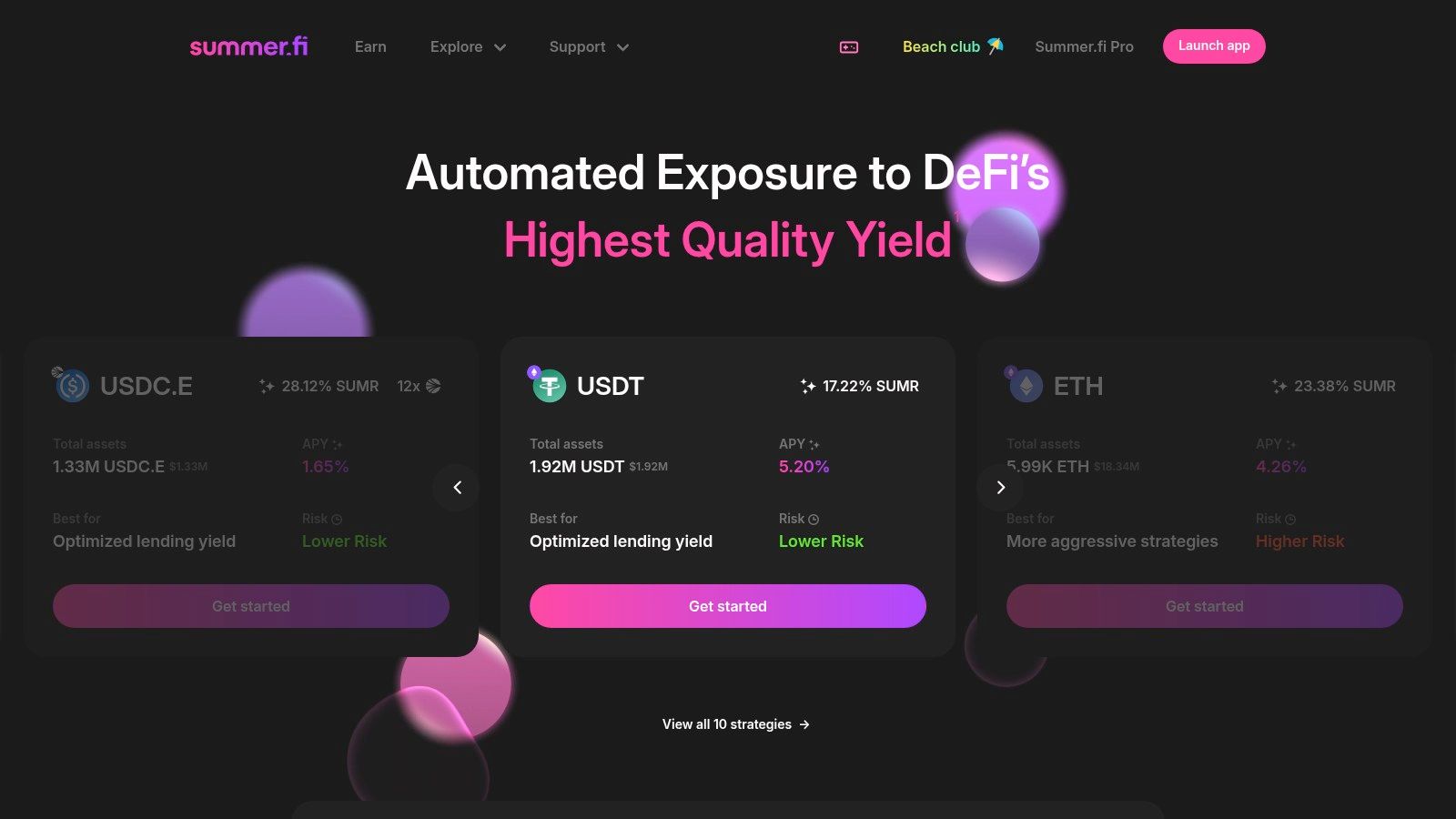
Summer.fi, formerly known as Oasis, offers a specialized gateway for advanced users to interact directly with the Maker Protocol, the engine behind the DAI stablecoin. Instead of simply buying DAI on an exchange, Summer.fi provides a sophisticated DeFi front end to generate DAI by locking up collateral in Maker Vaults. This makes it one of the best stablecoins platforms for users who want on-chain leverage, yield farming, and direct control over their decentralized borrowing positions.
The platform is designed for those who want to do more than just hold a stable asset. It empowers users to mint DAI against a wide range of cryptocurrencies, manage their collateralized debt positions with precision, and access integrated DeFi protocols like Spark. This direct, on-chain approach is ideal for DeFi natives looking to unlock the full potential of their digital assets while interacting with one of the most resilient decentralized stablecoins.
Key Features and User Experience
Summer.fi's core value lies in its advanced tools for managing Maker Vaults, which are essential for protecting positions from liquidation in volatile markets. The user experience is tailored for DeFi strategists rather than passive holders, offering granular control over borrowing and lending activities.
- Generate DAI On-Chain: Directly create DAI by depositing supported collateral (like ETH, wBTC) into a Maker Vault, giving you direct access to liquidity without selling your assets.
- Integrated Automation Tools: Set up automated actions such as stop-loss to automatically repay debt or take-profit to close positions when a specific price target is met, helping to manage risk effectively.
- Access to Spark Protocol: The platform integrates with other DeFi protocols, including Spark, providing users with more options for DAI-centric money markets and lending strategies.
- Educational Resources: Summer.fi provides extensive documentation and tutorials that guide users through the complexities of borrowing, managing collateral, and implementing various DeFi strategies.
Pros and Cons of Using Summer.fi for Stablecoins
| Pros | Cons |
|---|---|
| Direct On-Chain Access to DAI: Generate stablecoins directly from the source protocol. | Requires Self-Custody Wallet: Users must be comfortable managing their own wallet and private keys. |
| Advanced Position Management: Automation tools like stop-loss and take-profit enhance risk control. | No Fiat On-Ramp: You must fund your wallet with crypto from another exchange or bridge first. |
| Capital Efficiency: Unlock liquidity from your crypto holdings without needing to sell them. | DeFi Complexity and Fees: Involves smart contract risk, gas fees, and potential protocol fees. |
| Comprehensive DeFi Strategy Hub: Integrates multiple protocols for expanded yield opportunities. | Steep Learning Curve: The interface and concepts are best suited for experienced DeFi users. |
For DeFi users who want to move beyond centralized exchanges and engage directly with the mechanics of decentralized finance, Summer.fi is an indispensable tool. It provides a powerful, feature-rich environment for generating and managing DAI, positioning it as a top-tier platform for sophisticated stablecoin strategies. By giving users direct control over their borrowing, it embodies the core principles of on-chain finance.
Website: https://summer.fi
Top 7 Stablecoin Providers Comparison
| Platform | Implementation complexity | Resource requirements | Expected outcomes | Ideal use cases | Key advantages |
|---|---|---|---|---|---|
| Coinbase | Low — user friendly fiat on‑ramp | KYC, bank/card for fiat | Fast USD↔USDC purchases and withdrawals | U.S. retail users entering crypto | Easy funding, strong liquidity, USDC transparency |
| Kraken | Low–Medium — spot markets and network choices | KYC, knowledge of networks, fiat options | Access to many stablecoins across networks | Traders needing multiple stablecoins and network clarity | Wide selection, transparent network support |
| PayPal (PYUSD) | Very low — in‑app experience | PayPal/Venmo account, U.S. residency | Seamless PYUSD use in PayPal with on‑chain transfers | Mainstream consumers and merchant integrations | Low friction, strong ecosystem integration, rewards (eligible) |
| Circle (USDC issuer) | Medium–High for integration; low for info access | Banking rails, compliance, API integration for Mint | Authoritative USDC issuance and institutional mint/redeem | Businesses and institutions issuing or redeeming USDC | Source‑of‑truth transparency, business‑grade mint/redeem |
| Gemini (GUSD issuer & exchange) | Low — exchange + issuer services | KYC, regional eligibility | Regulated GUSD trading with on‑platform redemption | Users wanting regulated stablecoin with attestations | Regulated trust company, no‑fee on‑platform conversions, attestations |
| Paxos (USDP issuer) | Medium–High for direct mint/redeem | Institutional onboarding, banking rails | 1:1 redeemability with regular disclosures | Institutions needing programmatic USDP operations | Clear disclosures, U.S. trust oversight |
| Summer.fi (MakerDAO/DAI front end) | High — DeFi workflows and self‑custody | Self‑custody wallet, collateral, gas fees | On‑chain DAI generation, borrowing, advanced strategies | DeFi users minting DAI and managing vaults/strategies | Direct on‑chain access, automation and advanced position tools |
Making Your Choice: Key Takeaways for Selecting a Stablecoin
Navigating the landscape of stable digital assets can feel complex, but as we've explored, the market offers a diverse toolkit designed for specific needs. The quest for the "best stablecoins" doesn't yield a single answer; instead, it reveals a spectrum of solutions, each with distinct advantages tailored to different users, from individual investors to large-scale enterprises. Your final choice hinges on a clear understanding of your own priorities regarding security, transparency, decentralization, and intended application.
This article has dissected the industry's leading options, from highly regulated, fiat-backed tokens issued by giants like Circle and Paxos to the decentralized, crypto-collateralized model of MakerDAO's DAI. We've seen how user-friendly platforms like Coinbase and PayPal are lowering the barrier to entry for acquiring assets like USDC and PYUSD, while exchanges such as Kraken provide robust, multi-chain access to a wide variety of stablecoins. The key is to map your requirements to the right tool.
Your Personal Stablecoin Selection Framework
To distill this information into an actionable plan, consider these final guiding principles. This framework will help you confidently select the stablecoin that aligns perfectly with your goals and risk tolerance.
Define Your Primary Use Case: Are you simply seeking a stable store of value to hedge against crypto volatility? Or are you a developer needing a reliable unit of account for a DeFi protocol? A trader might prioritize liquidity and low slippage, while a business focused on cross-border payments will value regulatory compliance and settlement finality above all else. Your purpose is the most critical filter.
Assess Your Risk Tolerance: The fundamental divide between centralized, fiat-collateralized stablecoins (USDC, PYUSD, USDP) and decentralized, crypto-collateralized ones (DAI) represents a trade-off. Centralized options carry counterparty and censorship risk, while decentralized alternatives introduce smart contract and oracle risks. There is no risk-free option, only different risk profiles. Be honest about which model gives you greater peace of mind.
Verify the Reserves (Don't Trust, Verify): For any fiat-backed stablecoin, the strength of its peg is directly tied to the quality and transparency of its reserves. Scrutinize attestations and audit reports from reputable firms. Look for clear breakdowns of reserve assets. Issuers like Circle and Paxos have set a high bar for transparency, and you should use their standards as a benchmark when evaluating any of the best stablecoins on the market.
Evaluate Ecosystem and Multi-Chain Support: A stablecoin's utility is magnified by its integration across different blockchain networks and dApps. Before committing significant capital, confirm that your chosen stablecoin is supported on the blockchains you use most frequently. Check for its liquidity on major decentralized exchanges (DEXs) and its acceptance as collateral on lending platforms.
By methodically applying these four steps, you move from a passive observer to an informed decision-maker. Once you've chosen your preferred stablecoins, you can begin exploring how to deploy them in more advanced financial strategies. For users looking to integrate their chosen stablecoins into advanced trading strategies, exploring a resource like a complete guide to AI trading in 2025 can provide valuable insights into automating and optimizing your approach.
The world of stablecoins is not static; it is a dynamic arena of innovation, regulation, and technological evolution. The best stablecoin today may be challenged by a new contender tomorrow. Your commitment to continuous learning and due diligence is your most valuable asset in this space. Choose wisely, stay informed, and you will be well-equipped to leverage the power of stable digital currency.
The stablecoin market moves fast, with new regulations, audits, and innovations emerging weekly. To stay ahead of the curve, consider subscribing to Stablecoin Insider. We provide in-depth analysis, data-driven reports, and breaking news to help you navigate the evolving world of the best stablecoins with confidence.