
Table of Contents
The global financial landscape is shifting, with Asia at the forefront of the stablecoin revolution. Beyond dominant USD-pegged tokens, a new wave of digital currencies tied to the Singapore Dollar, Japanese Yen, and Hong Kong Dollar are emerging as critical infrastructure. These assets are vital for cross-border payments, regional remittances, and decentralized finance (DeFi), offering a direct gateway to some of the world's most dynamic economies.
Navigating this ecosystem requires a clear understanding of the key issuers, their regulatory standing, and unique value propositions. Choosing the right asset is crucial for anyone looking to transact, invest, or build within the region. This guide cuts through the noise to provide an authoritative roundup of the best Asian stablecoins available today. We provide an in-depth analysis of each option, covering everything from peg mechanics and reserve transparency to on-chain liquidity and practical accessibility for users.
Inside this comprehensive review, you will find:
- Detailed Issuer Profiles: Learn about the companies behind each stablecoin, including First Digital Labs, StraitsX, and GMO-Z.com Trust.
- Actionable Use Cases: Discover how these tokens are used in real-world scenarios, from enterprise payments to DeFi yield farming on platforms like Uniswap.
- Direct Links and Analysis: Each entry includes screenshots and direct links to help you get started immediately.
We’ve structured this article to deliver actionable insights for investors, developers, and businesses looking to leverage these powerful financial tools. Our goal is to equip you with the information needed to confidently select the most suitable stablecoin for your specific objectives.
1. First Digital Labs (FDUSD): The Hong Kong-Based Contender
First Digital Labs, based in Hong Kong, issues FDUSD, a fully reserved US dollar-pegged stablecoin that has rapidly become a significant force in the global crypto market. While pegged to the USD, its strategic Asian issuance and multi-chain architecture make it one of the best Asian stablecoins for traders and DeFi users seeking deep liquidity and regulatory clarity.
The platform distinguishes itself through a focus on transparency and institutional-grade access. Its primary offering is a direct minting and redemption portal for qualified clients, ensuring a robust 1:1 redemption framework. This institutional-first approach has fostered trust and helped establish deep liquidity pools on secondary markets.
Key Features and On-Chain Presence
FDUSD provides a clear and transparent framework for its operations, emphasizing security and accessibility across major blockchain networks.
- Transparent Reserves: First Digital Labs publishes regular third-party attestations of its reserves, which are held in cash and cash equivalents. This provides users with verifiable proof that each FDUSD is backed 1:1 by US dollars.
- Multi-Chain Support: FDUSD is natively available on several key networks, including Ethereum, BNB Chain, Sui, and Solana. This cross-chain functionality allows users to leverage the unique advantages of each ecosystem, from Ethereum's established DeFi landscape to Solana's high-speed, low-cost transactions.
- Deep DeFi Integration: The stablecoin is deeply integrated into major decentralized exchanges (DEXs) and automated market makers (AMMs), especially on Solana. You can find significant liquidity pools on platforms like Raydium, Kamino, and Meteora, making it easy to swap or use as collateral.
- Institutional Access: Qualified institutions can directly mint and redeem FDUSD through the issuer's portal, providing a secure on-ramp and off-ramp that anchors the stablecoin's peg.
Actionable Insight: For retail users, the most effective way to acquire FDUSD is through secondary markets. Using a DEX on a low-fee network like Solana or BNB Chain is often more cost-effective than acquiring it on a centralized exchange, especially for smaller trade sizes.
Navigating the FDUSD Ecosystem
Understanding FDUSD's operational model is key to using it effectively. Its issuance from a major Asian financial hub provides a unique regulatory and strategic advantage. To fully grasp the environment FDUSD operates in, a deeper dive into Hong Kong's cryptocurrency landscape provides essential context.
| Aspect | Details |
|---|---|
| Issuer | First Digital Labs (via FD121 Limited) |
| Peg | 1 FDUSD = 1 US Dollar |
| Primary Access | Direct mint/redeem for qualified clients only |
| Retail Access | Available on major centralized and decentralized exchanges |
| Pros | Strong liquidity, transparent reserve reports, multi-chain |
| Cons | Direct retail access to the issuer is restricted |
Website: https://firstdigitallabs.com
2. StraitsX (XSGD & XIDR): Pioneering Southeast Asian Fiat On-Chain
StraitsX, operated by Singapore-based Fazz, is a key player in the regional digital asset space, issuing the Singapore Dollar-pegged stablecoin (XSGD) and the Indonesian Rupiah-pegged stablecoin (XIDR). These offerings represent some of the best Asian stablecoins for users seeking direct exposure to Southeast Asian fiat currencies on the blockchain, bypassing the need for a USD-centric intermediary.
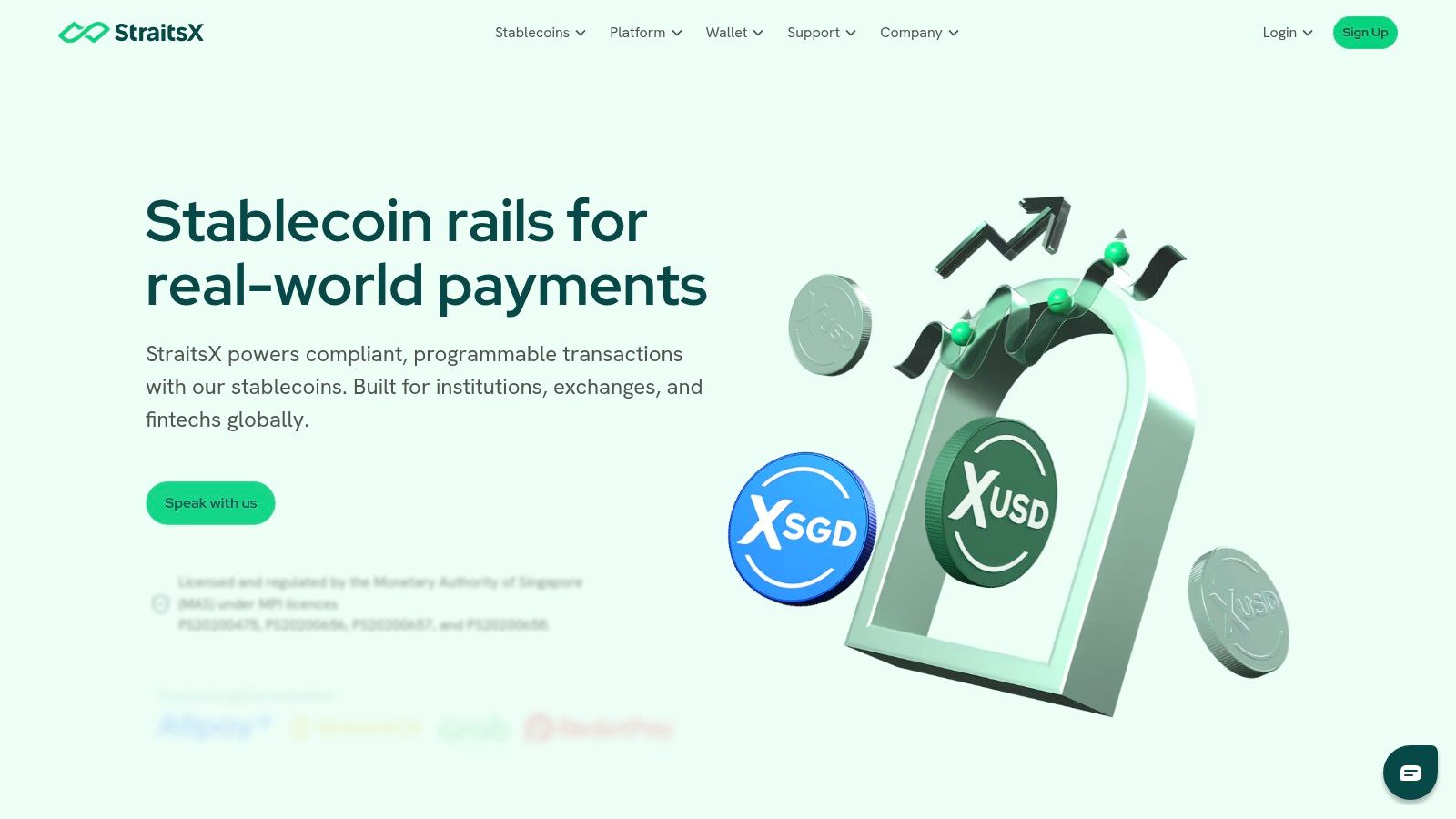
The platform is designed to be a direct bridge between traditional banking and the digital asset world for its target markets. StraitsX provides a dedicated portal for verified users in Singapore and Indonesia to mint and redeem XSGD and XIDR on a 1:1 basis with their respective fiat currencies. This focus on local on-ramps and off-ramps establishes a high degree of trust and utility within the region.
Key Features and On-Chain Presence
StraitsX emphasizes transparency and accessibility, providing a clear framework for users to interact with its fiat-backed stablecoins across different blockchains.
- Audited Reserves: The issuer publishes monthly attestations of its reserve assets, conducted by a third-party accounting firm. This confirms that every circulating XSGD and XIDR is fully backed by an equivalent amount of fiat currency held in segregated bank accounts.
- Multi-Chain Support: XSGD and XIDR are available on several blockchain networks, including Ethereum, Polygon, and Zilliqa. This multi-chain strategy allows users to access DeFi, payments, and other applications on their preferred network.
- Direct Fiat On/Off-Ramps: For users in Singapore and Indonesia, the StraitsX platform offers a seamless way to convert SGD to XSGD and IDR to XIDR, often with zero fees. This is a significant advantage for local users entering the crypto ecosystem.
- Published Token Contracts: To enhance security and prevent users from interacting with fraudulent tokens, StraitsX publicly lists the official smart contract addresses for its stablecoins on all supported chains.
Actionable Insight: For users outside of Singapore or Indonesia, the easiest way to acquire XSGD is through decentralized exchanges on Polygon, such as Quickswap. Liquidity is often deeper and transaction fees are significantly lower compared to Ethereum's mainnet.
Navigating the StraitsX Ecosystem
Leveraging StraitsX stablecoins effectively means understanding their regional focus. They are exceptionally powerful for local remittances, cross-border payments, and DeFi within Southeast Asia. For those interested in the broader applications of such assets, this guide to using stablecoins for overseas payments offers valuable context.
| Aspect | Details |
|---|---|
| Issuer | StraitsX (by Fazz) |
| Peg | 1 XSGD = 1 SGD; 1 XIDR = 1 IDR |
| Primary Access | Direct mint/redeem for verified Singapore/Indonesia users |
| Retail Access | Available on select centralized and decentralized exchanges |
| Pros | Strong regional on-ramps, transparent monthly attestations, non-USD pegs |
| Cons | Direct fiat access is region-limited, global liquidity can be thin |
Website: https://www.straitsx.com
3. GMO‑Z.com Trust (stablecoin.z.com)
GMO-Z.com Trust, the issuer of the Japanese Yen-pegged GYEN and the US dollar-pegged ZUSD, represents a unique fusion of Japanese financial technology leadership and robust US regulatory oversight. Operated by a New York-regulated limited-purpose trust, it offers a compliance-first framework that makes it one of the best Asian stablecoins for users prioritizing institutional-grade security and regulatory certainty.
The platform is distinguished by its commitment to transparency and adherence to strict regulatory standards set by the New York Department of Financial Services (NYDFS). Its core offering is a stablecoin issuance and redemption service for eligible customers, ensuring that both GYEN and ZUSD are fully backed 1:1 by fiat reserves held in insured banking institutions. This approach provides a high level of trust and assurance for users navigating the often-complex world of stablecoins.
Key Features and On-Chain Presence
GMO-Z.com Trust provides a meticulously documented and regulated ecosystem, focusing on security, multi-chain access, and verifiable reserves.
- NYDFS-Regulated Issuer: As a New York limited-purpose trust, GMO operates under one of the most stringent digital asset regulatory frameworks globally. This ensures high standards for custody, reserves, and anti-money laundering (AML) compliance.
- Multi-Chain Support: Both GYEN and ZUSD are available on multiple blockchains, including Ethereum, Stellar, and Solana. This gives users the flexibility to choose a network that best suits their needs, whether for DeFi on Ethereum, fast payments on Solana, or low-cost transactions on Stellar.
- Transparent Reserves: The company provides monthly attestation reports from independent, third-party accounting firms. These reports verify that the fiat reserves held in segregated accounts are sufficient to back every stablecoin in circulation 1:1.
- Documented Access: The platform's website clearly outlines the purchase and redemption process for eligible institutional and corporate clients, providing a direct and secure pathway to acquire or redeem its stablecoins at par value.
Actionable Insight: For retail users, accessing GYEN and ZUSD is primarily through secondary markets. While centralized exchange listings exist, liquidity can sometimes be thin. Using a decentralized exchange on a network like Solana can often provide better access and deeper liquidity for swapping into GYEN.
Navigating the GMO Ecosystem
Understanding GMO-Z.com Trust's regulatory standing is crucial to leveraging its stablecoins effectively. Its position as a US-regulated entity issuing an Asian currency-pegged stablecoin (GYEN) is a significant differentiator. To explore how Japanese financial giants are collaborating in this space, you can learn more about Japan's fintech landscape and its key players.
| Aspect | Details |
|---|---|
| Issuer | GMO-Z.com Trust Company, Inc. |
| Peg | 1 GYEN = 1 Japanese Yen; 1 ZUSD = 1 US Dollar |
| Primary Access | Direct purchase/redemption for eligible clients |
| Retail Access | Available on select centralized and decentralized exchanges |
| Pros | High regulatory assurance (NYDFS-regulated), multi-chain support, monthly reserve attestations |
| Cons | GYEN liquidity can be thinner than major USD stablecoins; some centralized exchanges have had trading suspensions |
Website: https://stablecoin.z.com
4. JPYC Inc. (JPYC): Japan's Regulated Yen Stablecoin
JPYC Inc. is the issuer of JPYC, the first and most prominent yen-pegged stablecoin fully compliant with Japan's revised Payment Services Act. Headquartered in Tokyo, the company provides a crucial on-ramp for bringing the Japanese yen onto the blockchain. As a licensed Funds Transfer Service Provider, JPYC Inc. offers one of the best Asian stablecoins for users seeking a regulated, transparent, and yen-denominated digital asset for payments, DeFi, and cross-border transactions.
The platform's core offering is the JPYC stablecoin, which is backed 1:1 by Japanese yen held in domestic bank deposits and Japanese Government Bonds (JGBs). This conservative reserve structure, combined with its regulatory status, positions JPYC as a trusted bridge between Japan's traditional financial system and the global blockchain economy. Its direct issuance and redemption platform, JPYC EX, ensures a reliable peg mechanism for authorized users.
Key Features and On-Chain Presence
JPYC Inc. prioritizes regulatory compliance and transparency, providing a secure framework for its yen-backed stablecoin across multiple networks.
- Regulated Issuance: JPYC operates under a license as a Funds Transfer Service Provider in Japan, making it one of the few stablecoins globally issued under a specific, comprehensive regulatory framework. This provides a high degree of user protection and legal clarity.
- Transparent Reserves: The company maintains a transparent reserve structure composed of Japanese yen held in trust accounts and JGBs. This ensures every JPYC is fully backed by highly liquid, low-risk assets denominated in the same currency as the peg.
- Multi-Chain Support: JPYC is available on several blockchains, including Ethereum, Polygon, and Avalanche. This enables users to transact with JPYC in different DeFi ecosystems, choosing the network that best fits their needs for speed and cost.
- Direct Access for Japanese Users: Through its JPYC EX platform, users who complete Japan's Know Your Customer (KYC) process, often requiring a My Number card, can directly mint and redeem JPYC. This provides a secure and compliant primary market.
Actionable Insight: For international users without Japanese KYC, acquiring JPYC is primarily done through decentralized exchanges (DEXs) on networks like Polygon or Ethereum. Using a DEX allows access to JPYC liquidity pools without needing direct access to the issuer, making it the most practical method for global participants.
Navigating the JPYC Ecosystem
JPYC's strength lies in its regulatory legitimacy within a major G7 economy, making it a unique asset in the stablecoin landscape. To explore its development and applications in more detail, you can stay updated with the latest news about JPYC Inc. and its stablecoin.
| Aspect | Details |
|---|---|
| Issuer | JPYC Inc. |
| Peg | 1 JPYC = 1 Japanese Yen (JPY) |
| Primary Access | Direct mint/redeem via JPYC EX (Requires Japan-specific KYC) |
| Retail Access | Available on decentralized exchanges and select centralized platforms |
| Pros | First fully regulated JPY stablecoin, transparent yen-based reserves |
| Cons | Direct issuer access is restricted to Japan KYC'd users, lower liquidity compared to major USD stablecoins |
Website: https://jpyc.co.jp
5. Tether (CNH₮): The Yuan-Pegged Giant
Tether, the company behind the world's most dominant stablecoin (USDT), also issues CNH₮, a stablecoin pegged 1:1 to the offshore Chinese Yuan (CNH). While Tether is a global entity, its CNH₮ offering and deep-rooted presence in Asian markets make it a critical player and one of the best Asian stablecoins for those seeking exposure or settlement in a Yuan-denominated digital asset.
The platform leverages its extensive, battle-tested infrastructure to provide a stable, liquid, and widely integrated CNH-pegged asset. Its primary advantage lies in the trust and network effects built by its USD-pegged sibling, offering users a familiar and reliable ecosystem for transacting with an Asia-centric currency peg. This is particularly valuable for cross-border trade and remittances involving Chinese counterparties.
Key Features and On-Chain Presence
CNH₮ benefits from Tether’s established technology stack, providing users with a robust and accessible stablecoin backed by a transparent reserve policy.
- Established Issuer Infrastructure: Tether's robust issuance and redemption framework supports CNH₮. The company publishes daily consolidated reserves reports, offering a high degree of transparency into the assets backing its stablecoins.
- Multi-Chain Support: CNH₮ is available on efficient blockchain networks like Tron and Ethereum. The Tron deployment is particularly popular in Asia for its low transaction fees, making it ideal for high-frequency payments and smaller transfers.
- Wide Exchange Integration: As part of the Tether family, CNH₮ is listed on numerous global and regional exchanges. This ensures liquidity and provides accessible on-ramps and off-ramps for traders and businesses.
- Asia-Focused Use Cases: CNH₮ serves as a crucial bridge for capital flows and settlement in markets where the Yuan is a primary currency. It facilitates arbitrage, hedging, and cross-border payments without exposure to USD volatility.
Actionable Insight: For users looking to minimize transaction costs, acquiring and using CNH₮ on the Tron network is the most efficient method. Its low gas fees make it superior for everyday transactions compared to the Ethereum-based version.
Navigating the Tether Ecosystem
Tether's official website is the central hub for understanding its reserve composition, supported blockchains, and official contract addresses. While direct minting and redemption are reserved for verified institutional clients, the site provides crucial transparency data for all users. For a comprehensive overview of Tether's market dynamics and reserve health, a detailed analysis in the USDT November 2025 Market Report offers valuable context.
| Aspect | Details |
|---|---|
| Issuer | Tether Operations Limited |
| Peg | 1 CNH₮ = 1 Offshore Chinese Yuan (CNH) |
| Primary Access | Direct mint/redeem for verified corporate and institutional clients |
| Retail Access | Available on major centralized and decentralized exchanges |
| Pros | Backed by a major issuer, strong infrastructure, offers a liquid CNH digital equivalent |
| Cons | CNH₮ liquidity is significantly lower than USDT, direct access is restricted for US retail users |
Website: https://tether.io
6. Uniswap (app.uniswap.org): The Gateway to On-Chain Stablecoins
Uniswap is not an issuer but a critical decentralized exchange (DEX) that provides permissionless, self-custodial access to a wide array of Asian stablecoins. As a premier automated market maker (AMM) on Ethereum and its Layer-2 networks, it serves as an indispensable tool for users globally, especially those looking to acquire tokens like XSGD, XIDR, and JPYC that may not be available on their local centralized exchanges.
The platform’s core strength lies in its decentralized nature. Unlike centralized exchanges that require KYC and have jurisdictional restrictions, anyone with a self-custody wallet can connect to Uniswap and swap tokens. This makes it one of the best access points for a diverse range of on-chain Asian stablecoins, empowering users to manage their assets directly without intermediaries.
Key Features and On-Chain Presence
Uniswap provides a trust-minimized framework for accessing Asian fiat-pegged tokens directly on the blockchain, with a focus on user control and broad token availability.
- Permissionless Swapping: Uniswap allows any user to swap between thousands of ERC-20 tokens, including numerous Asian stablecoins. If a liquidity pool exists, you can trade.
- Broad Token Coverage: Users can find liquidity pools for stablecoins that are rarely listed on major US or European exchanges. For example, the XSGD/USDC pool on Polygon is a popular gateway for acquiring the Singapore dollar-pegged stablecoin.
- Multi-Chain Support: Uniswap is deployed on Ethereum, Polygon, Arbitrum, Optimism, and other Layer-2 networks. This allows users to trade with significantly lower gas fees compared to the Ethereum mainnet, making small swaps economically viable.
- Self-Custody Access: All transactions are conducted directly from your personal crypto wallet (like MetaMask or Trust Wallet). You retain full control over your funds at all times, eliminating counterparty risk associated with centralized platforms.
Actionable Insight: Always verify the token contract address before swapping on Uniswap. Scammers often create fake tokens with similar names. Obtain the official contract address from the issuer's website (e.g., StraitsX for XSGD) and paste it into the Uniswap search bar to ensure you are trading the correct asset.
Navigating the Uniswap Ecosystem
Successfully using Uniswap requires understanding its on-chain mechanics and security practices. Its role as a non-custodial gateway is paramount for global users seeking exposure to the growing market of Asian stablecoins. For a deeper understanding of how Uniswap facilitates multi-chain transactions, exploring its cross-chain aggregation capabilities offers valuable context on its evolving technology.
| Aspect | Details |
|---|---|
| Platform Type | Decentralized Exchange (DEX) / Automated Market Maker (AMM) |
| Primary Use | Swapping for on-chain Asian stablecoins (e.g., XSGD, XIDR, JPYC) |
| Primary Access | Self-custody wallet (e.g., MetaMask) |
| Retail Access | Open and permissionless for all users |
| Pros | Self-custody access, wide token availability, no KYC required |
| Cons | Risk of token impersonators, variable liquidity, and on-chain gas fees |
Website: https://app.uniswap.org
7. Jupiter: The Premier Gateway to Solana's Stablecoin Liquidity
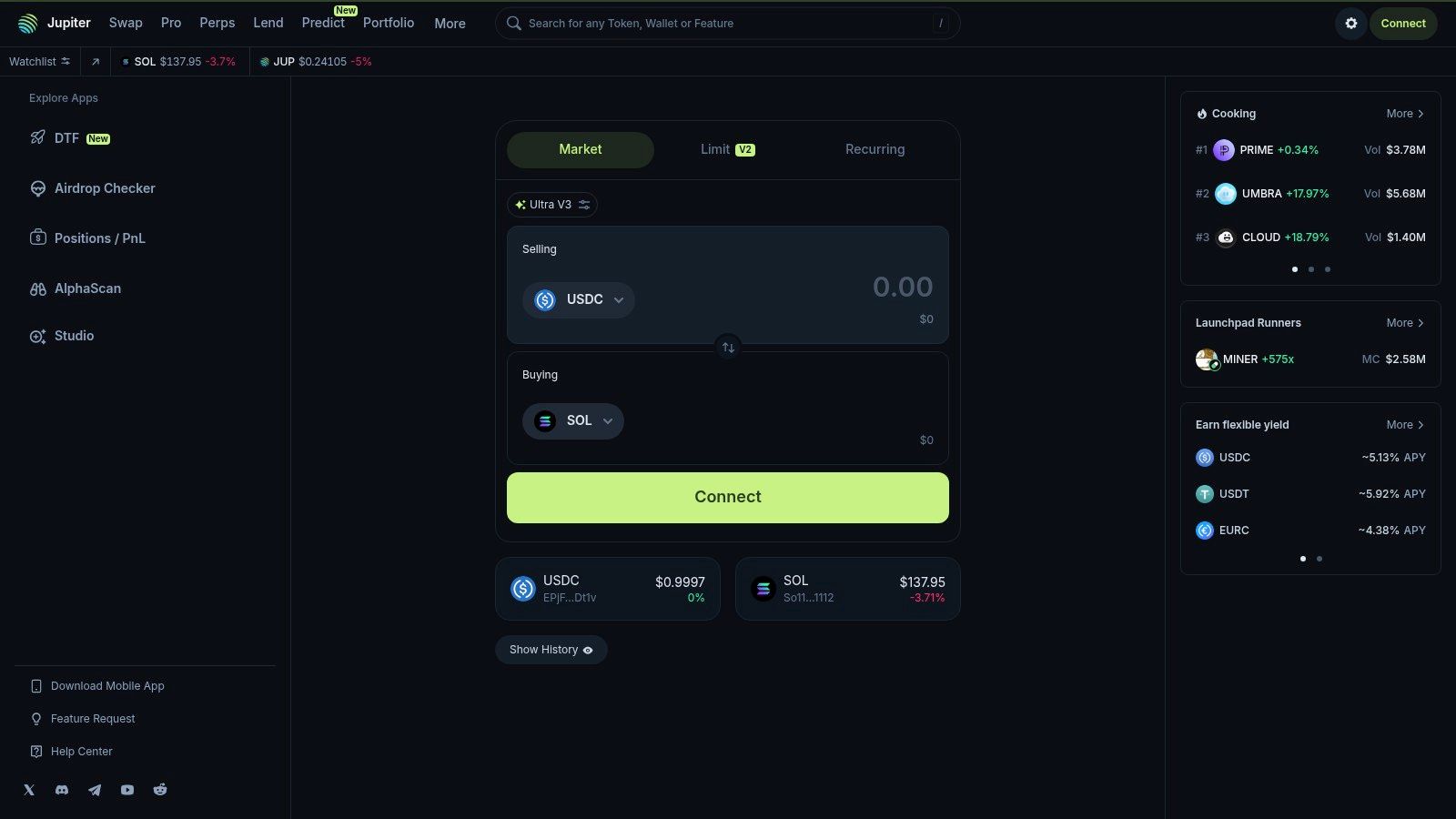
Jupiter is not an issuer but a critical piece of infrastructure for any user interacting with stablecoins on the Solana network. As Solana's leading DEX aggregator, it provides the most efficient front-end for trading Solana-native assets, making it an indispensable tool for accessing the deep liquidity of Asian stablecoins like FDUSD. By routing trades across multiple decentralized exchanges, Jupiter ensures users get competitive execution for stablecoin swaps.
Its role is paramount for anyone looking to acquire or utilize Asian-issued, Solana-native stablecoins without relying on a centralized exchange. By aggregating liquidity from platforms like Raydium and Meteora, Jupiter simplifies the process of finding the best price for pairs like FDUSD/USDC or FDUSD/SOL, making it a cornerstone of Solana's DeFi ecosystem.
Key Features and On-Chain Presence
Jupiter offers a suite of tools designed to optimize on-chain trading, particularly for stablecoins where even small price differences matter at scale.
- Best-Price Execution: The platform aggregates nearly all major Solana AMMs, scanning multiple liquidity sources to find the most capital-efficient route for any given trade. This is crucial for minimizing slippage when swapping between stablecoins.
- Seamless Wallet Integration: It connects effortlessly with popular Solana wallets like Phantom, Solflare, and Backpack, allowing for direct, self-custodial trading. Users maintain control of their assets throughout the entire process.
- Low-Cost Swaps: By leveraging Solana's high-speed, low-fee architecture, Jupiter facilitates stablecoin-to-stablecoin swaps that are significantly cheaper and faster than on most other networks. This makes it ideal for arbitrage and frequent rebalancing.
- Advanced Trading Tools: Beyond simple swaps, Jupiter offers limit orders, dollar-cost averaging (DCA), and a perpetuals exchange, providing a comprehensive trading experience directly on-chain.
Actionable Insight: When swapping stablecoins on Jupiter, always double-check the "Token Mint" address to verify you are trading the legitimate asset. The platform includes a "Strict" list by default to help users avoid impostor tokens, but vigilance is key in a decentralized environment.
Navigating the Jupiter Ecosystem
Using Jupiter effectively means leveraging its aggregation engine to your advantage. For users of the best Asian stablecoins on Solana, this platform serves as the primary on-ramp and off-ramp for decentralized liquidity. It’s the de facto standard for on-chain swaps within the ecosystem.
| Aspect | Details |
|---|---|
| Platform Type | DEX Aggregator |
| Primary Function | Finds best-price execution for on-chain swaps on Solana |
| Access | Connect a self-custodial Solana wallet (e.g., Phantom) |
| Primary Use Case | Acquiring/swapping stablecoins like FDUSD on-chain |
| Pros | Low on-chain costs, fast settlement, wide AMM coverage for better prices |
| Cons | Network congestion can cause transaction failures; users must verify token mints |
Website: https://jup.ag
Top 7 Asian Stablecoins Comparison
| Item | Implementation complexity | Resource requirements | Expected outcomes | Ideal use cases | Key advantages |
|---|---|---|---|---|---|
| First Digital Labs | Moderate — multi‑chain issuance and institutional issuer portal | Qualified client onboarding for mint/redeem; public users use self‑custody/DEXs | Fully reserved USD stablecoin with DeFi liquidity across chains (Solana, Ethereum, BNB, Sui) | On‑chain USD transfers, DeFi liquidity routing and Solana native trading | Transparent attestations, multi‑chain support, published Solana AMM integrations |
| StraitsX | Low–moderate — regional rails plus multi‑chain token deployment | Regional fiat rails and KYC for mint/redeem (SG/ID); standard wallets for swaps | 1:1 SGD/XIDR stablecoins with monthly attestations and published contracts | Southeast Asia fiat on/off‑ramp, local payments and FX conversions | Clear attestations, fee‑free conversions for supported users, issuer‑published contracts |
| GMO‑Z.com Trust (stablecoin.z.com) | Moderate — regulated trust framework and multi‑chain issuance | NYDFS regulatory compliance, insured custody, KYC for eligible purchasers | Regulated JPY/USD stablecoins with institutional compliance assurances | Compliance‑sensitive on‑chain USD/JPY flows and institutional custody needs | US‑regulated issuer, insured reserves, multi‑chain settlement options |
| JPYC Inc. | Moderate — domestic licensing under Japan Payment Services Act | Japan KYC (My Number) required for direct minting; multi‑chain token support | Yen‑pegged stablecoin compliant with Japan’s regulator and domestic rails | Compliant JPY payments, Japan domestic on‑chain settlements | Japan‑licensed issuer, transparent local reserve structure |
| Tether | Low — widely deployed, established issuer infrastructure | Large issuer infrastructure and extensive exchange/DEX listings | Broadly available multi‑currency stablecoins with deep market integrations | Global liquidity needs and Asia‑centric settlement where allowed (e.g., CNH₮) | Wide integration, deep liquidity/infrastructure |
| Uniswap (app.uniswap.org) | Low — permissionless DEX front end | Self‑custody wallet, gas/tx fees; must verify token contracts | Access to ERC‑20/Polygon regionally issued stablecoins without CEX accounts | Acquiring non‑CEX listed stablecoins and self‑custodial swaps | Permissionless access, broad token coverage and tooling |
| Jupiter | Low–moderate — DEX aggregator on Solana | Solana wallet and SOL for fees; connectivity to AMMs | Aggregated best‑price execution for Solana native stablecoin pairs | Trading Solana‑native stablecoins (e.g., FDUSD) with low fees | Aggregates multiple AMMs for competitive routing and low costs |
Choosing the Right Stablecoin for Your Asian Market Strategy
Navigating the dynamic landscape of Asian stablecoins requires moving beyond a one-size-fits-all approach. The era of relying solely on a single USD-pegged asset is giving way to a more nuanced, region-specific strategy. As this comprehensive analysis of the best asian stablecoins has demonstrated, the optimal choice is deeply intertwined with your specific objectives, geographical focus, and risk tolerance.
The key takeaway is that each stablecoin offers a specialized value proposition. For developers and businesses targeting the highly regulated and sophisticated Japanese market, the choice between GMO-Z.com's GYEN and JPYC Inc.'s JPYC is critical. GYEN provides a trust-based, regulated on-ramp for institutional players, while JPYC offers a more decentralized, prepaid instrument model appealing to DeFi and retail users. Similarly, in Southeast Asia, StraitsX has carved out a powerful niche with XSGD, leveraging its deep integration with regional banking rails to facilitate seamless, low-cost cross-border payments and remittances.
Distilling Your Strategy: Key Decision Factors
Your selection process should be a deliberate exercise in matching a stablecoin's strengths to your operational needs. To move from analysis to action, consider these pivotal factors:
- Jurisdictional Focus: Are you building a payment gateway for Singaporean merchants? XSGD is the clear leader. Are you creating a DeFi protocol for Japanese users? JPYC or GYEN are non-negotiable considerations. The regulatory and banking infrastructure of your target market is the primary filter.
- Primary Use Case: Your goal dictates the tool. For high-frequency trading and yield farming within vibrant DeFi ecosystems like Solana, the deep liquidity found on aggregators like Jupiter for assets like FDUSD is paramount. For enterprise-level treasury management requiring regulatory certainty, a New York-regulated trust like GMO-Z.com is more appropriate.
- Liquidity and Accessibility: Where does your user base operate? While XSGD excels in its home market, a globally distributed user base may be better served by the ubiquitous presence of Tether (USDT) on nearly every centralized and decentralized exchange, including Uniswap. The growing footprint of First Digital Labs' FDUSD, particularly its integration with major global exchanges, presents a compelling alternative for those seeking deep, multi-chain liquidity.
A Practical Framework for Selection
To put this into practice, map your requirements against the options we've explored. An e-commerce business looking to hedge against local currency volatility in Hong Kong might prioritize the audited reserves and regulatory compliance of FDUSD. A fintech company building a remittance corridor between Japan and the Philippines would analyze the on/off-ramp efficiency of GYEN versus the DeFi composability of JPYC for the Japanese leg of the transaction.
Key Insight: The "best" Asian stablecoin is not a static title but a contextual one. It is defined by its utility within a specific financial, regulatory, and technological framework. Your strategy must be equally dynamic.
Ultimately, the rise of diverse, regionally-focused stablecoins signifies a maturation of the digital asset market in Asia. It reflects a shift from speculative trading towards genuine utility in payments, trade finance, and decentralized applications. As this ecosystem evolves, staying informed about regulatory shifts, new technological integrations, and changing liquidity dynamics will be crucial for success. The journey into Asian digital finance is just beginning, and with the right tools, the opportunities are immense.
The world of Asian stablecoins is constantly evolving with new regulations and innovations. To stay ahead of the curve with expert analysis, deep dives into reserve reports, and timely market intelligence, subscribe to Stablecoin Insider. Our platform provides the specialized insights you need to confidently navigate and capitalize on the future of digital currency in Asia. Find out more at Stablecoin Insider.