Table of Contents
April 2026 was one of the most consequential months in stablecoin history, with the market hitting new all-time highs, a wave of GENIUS Act rulemaking from multiple federal agencies, and Meta officially reentering crypto payments.
From Treasury and FDIC proposed rules reshaping how issuers operate, to Meta paying creators in USDC via Stripe, the month demonstrated that stablecoins have moved well beyond speculation and into core financial infrastructure.
This report covers everything that happened in the stablecoin space in April 2026, including market performance, major announcements, regulatory developments, and the broader adoption trends shaping the second half of the year.
Key Takeaways
- Stablecoin market cap hit a new all-time high of $321 billion in April 2026.
- The FDIC, Treasury, and FinCEN all issued GENIUS Act proposed rules this month.
- Meta began paying creators in USDC via Stripe on Solana and Polygon.

Market Performance: Record Highs and Steady Inflows
The stablecoin market opened April already riding momentum from a record-breaking Q1 and did not slow down. By April 21, total stablecoin market cap surpassed $321 billion, setting a new all-time high for the sector.
Dollar-backed tokens now represent over $320 billion in circulating supply, a figure that has grown by tens of billions since early 2026 based on aggregated on-chain data.
USDT continues to lead by a significant margin. Tether's flagship stablecoin holds approximately $188 billion in market cap, accounting for 58.29% of total stablecoin supply.
Circle's USDC holds second position at roughly $78 billion. Together, Tether and Circle control just over 80% of the entire market, with DAI and newer entrants collectively accounting for less than a quarter of total supply.
Liquidity remains heavily concentrated across a small number of chains. Ethereum holds approximately $170 billion in stablecoins, representing roughly 60% of global supply.
Tron ranks second with approximately $87 billion, of which over 97% is USDT, making it the dominant network for USDT settlements.
Solana holds around $16 billion in stablecoin supply, with USDC leading at just over 50% share.
BNB Chain holds approximately $14 billion, again dominated by USDT at roughly two-thirds of supply.
The growth is particularly notable in context. The broader cryptocurrency market shed more than 20% of its value during Q1 2026, yet stablecoins expanded throughout that period, reinforcing their growing role as a defensive asset class and a practical payments layer rather than a speculative vehicle.
Total supply climbed from approximately $315 billion at the end of Q1 to over $321 billion by late April.
Stablecoins now capture approximately 75% of all crypto trading volume. Yield-bearing products continue to drive a disproportionate share of net inflows, with USDe, sUSDS, and similar instruments attracting capital from both DeFi protocols and institutional treasury managers seeking on-chain returns.
Circle's stock, traded publicly following its IPO last summer, is up 12% year-to-date as of April, reflecting sustained investor confidence in the regulated issuer model.
Major Announcements: Meta's Creator Payouts and Infrastructure Partnerships
Meta and Stripe Launch USDC Creator Payouts
The headline announcement of the month came on April 29-30, when Meta confirmed it had begun offering USDC stablecoin payouts to a select group of creators on its platforms. The feature is currently available to creators in Colombia and the Philippines, with no official timeline yet announced for broader expansion.
According to a post in Meta's Business Help Center: "Meta now offers USDC stablecoin payouts via supported crypto wallets on the Solana and Polygon blockchain networks. To receive these payouts, you must use a wallet that accepts USDC on one of these networks."
The infrastructure is powered by Stripe, which provides crypto-related reporting for users through its Link wallet product.
Jay Shah, who leads Stripe's Link checkout service, confirmed the arrangement directly: "Businesses can now send stablecoin payouts directly to customers using Link. We're already partnering with Meta so their creators can receive stablecoins in their Link wallets in countries like the Philippines and Colombia."
Creators who opt in must connect a compatible crypto wallet that supports USDC on Solana or Polygon. Both networks are known for fast settlement times and low transaction fees, making them practical choices for cross-border payouts at scale. Creators may receive tax documentation from both Meta and Stripe tied to their earnings and digital asset transactions.
The significance of this announcement extends beyond the feature itself. Meta had in 2019 launched a stablecoin project named Libra, later rebranded as Diem, which was cancelled three years later following significant regulatory opposition.
The new rollout takes a deliberately different approach: using an existing stablecoin rather than a proprietary one, building on established blockchain rails, and partnering with a regulated third-party payments layer. It is a more measured strategy that sidesteps the friction that ultimately brought down Libra, and it positions Meta as a significant real-world USDC distribution channel if the pilot expands.
Other Major Infrastructure Announcements
Beyond Meta, April saw several other notable infrastructure developments that reflect the pace at which stablecoins are being embedded into existing financial systems.
dLocal launched Stablecoin Full, a product offering seamless stablecoin collections, payouts, and treasury management across 44 emerging markets via a single API. The product is aimed at businesses that need to move money across borders in regions where traditional banking infrastructure is slow or expensive.
In Europe, the Qivalis consortium, comprising 12 major European banks, selected Fireblocks to provide the infrastructure for a MiCA-compliant euro stablecoin launch planned for H2 2026. This is one of the most significant coordinated bank-led stablecoin initiatives in Europe to date and reflects the effect of MiCA regulatory clarity on institutional willingness to build in the space.
Broader industry context reinforces the trend. Western Union is planning a USDPT launch on Solana in 2026. Visa's pilot for settling transactions in USDC is ongoing. Interactive Brokers has enabled USDC brokerage account funding via zerohash, with plans to include PayPal's PYUSD and Ripple's RLUSD.
Monthly crypto card volume reached a new high of $607 million in March 2026, driven in part by newer stablecoin card issuers, carrying momentum into April.
Regulatory and Compliance Highlights
April 2026 was the busiest single month for stablecoin regulation in U.S. history, with the Treasury, FDIC, and FinCEN all issuing proposed rules implementing the GENIUS Act within the space of eight days.
1. Treasury NPRM: State Regime Principles (April 3)
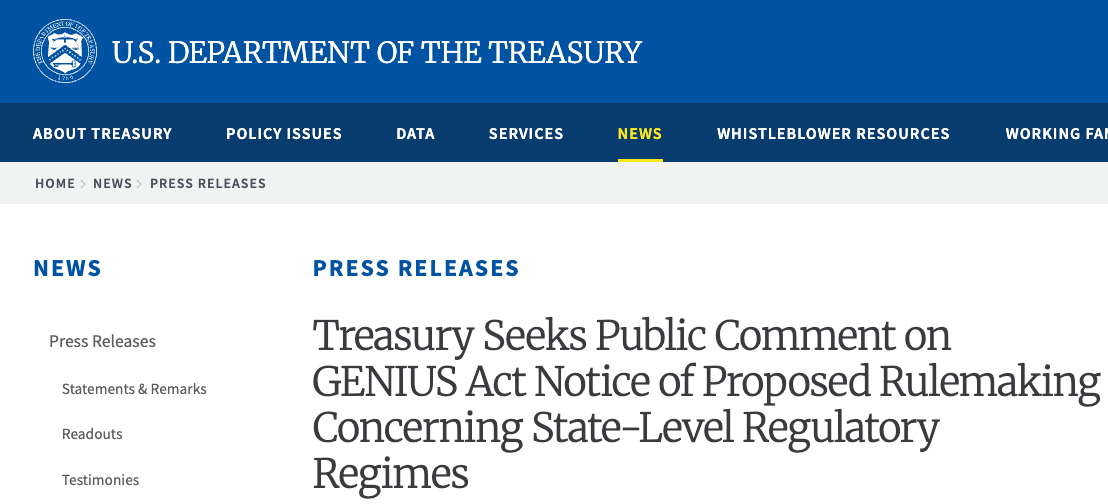
The U.S. Department of Treasury published its first proposed rule under the GENIUS Act on April 3, establishing broad-based principles for evaluating when a state-level regulatory regime is substantially similar to the federal framework.
The rule creates a pathway for smaller stablecoin issuers to operate under qualifying state oversight, provided those regimes meet or exceed federal standards on reserve assets, redemption mechanics, and rehypothecation. A 60-day public comment period was opened alongside the proposal.
2. FDIC Proposed Rule: Prudential Framework for Issuers (April 7)
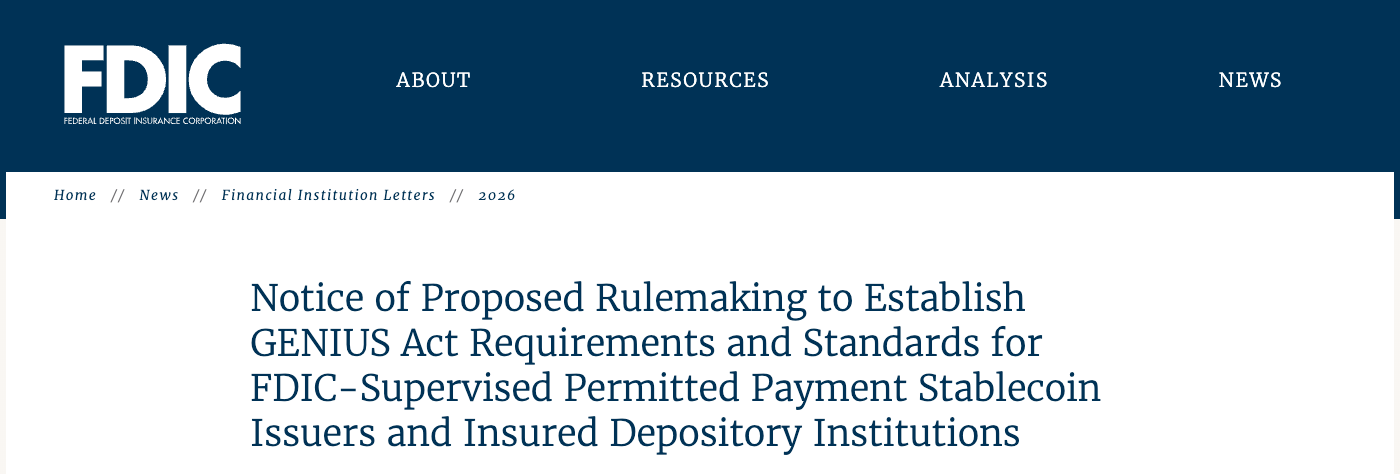
The FDIC Board of Directors approved a notice of proposed rulemaking on April 7 implementing GENIUS Act requirements for FDIC-supervised permitted payment stablecoin issuers (PPSIs).
The proposed rule establishes a prudential framework covering reserve asset quality, capital requirements, risk management standards, and custody arrangements. A key provision requires PPSIs to redeem payment stablecoins within two business days.
The rule also addresses tokenized deposits and clarifies that deposits held as stablecoin reserves do not receive pass-through deposit insurance to stablecoin holders.
The April 7 proposal is the FDIC's second stablecoin rulemaking under the GENIUS Act, following an earlier December 2025 proposal covering application procedures for banks seeking to issue stablecoins through subsidiaries.
3. FinCEN and OFAC Joint Proposed Rule: AML and Sanctions (April 8-10)
The most consequential rulemaking of the month came from the joint proposed rule issued by the Treasury's Financial Crimes Enforcement Network (FinCEN) and the Office of Foreign Assets Control (OFAC) on April 8-10. This rule implements the GENIUS Act's anti-money laundering and sanctions compliance provisions, and it marks a significant shift in how stablecoin issuers will be regulated going forward.
Under the proposed rule, PPSIs would be treated as financial institutions under the Bank Secrecy Act and required to establish risk-based AML and countering-the-financing-of-terrorism (AML/CFT) programs that mirror requirements currently applied to banks. The rule also introduces the first-ever federal mandate explicitly requiring a category of U.S. persons to maintain an effective sanctions compliance program.
PPSIs would be required to have technical capabilities to block, freeze, and reject impermissible transactions on both primary and secondary markets, including those occurring via smart contracts. Comments on the rule are due June 9, 2026, with FinCEN and OFAC proposing that final rules become effective 12 months after issuance to allow issuers time to implement the requirements.
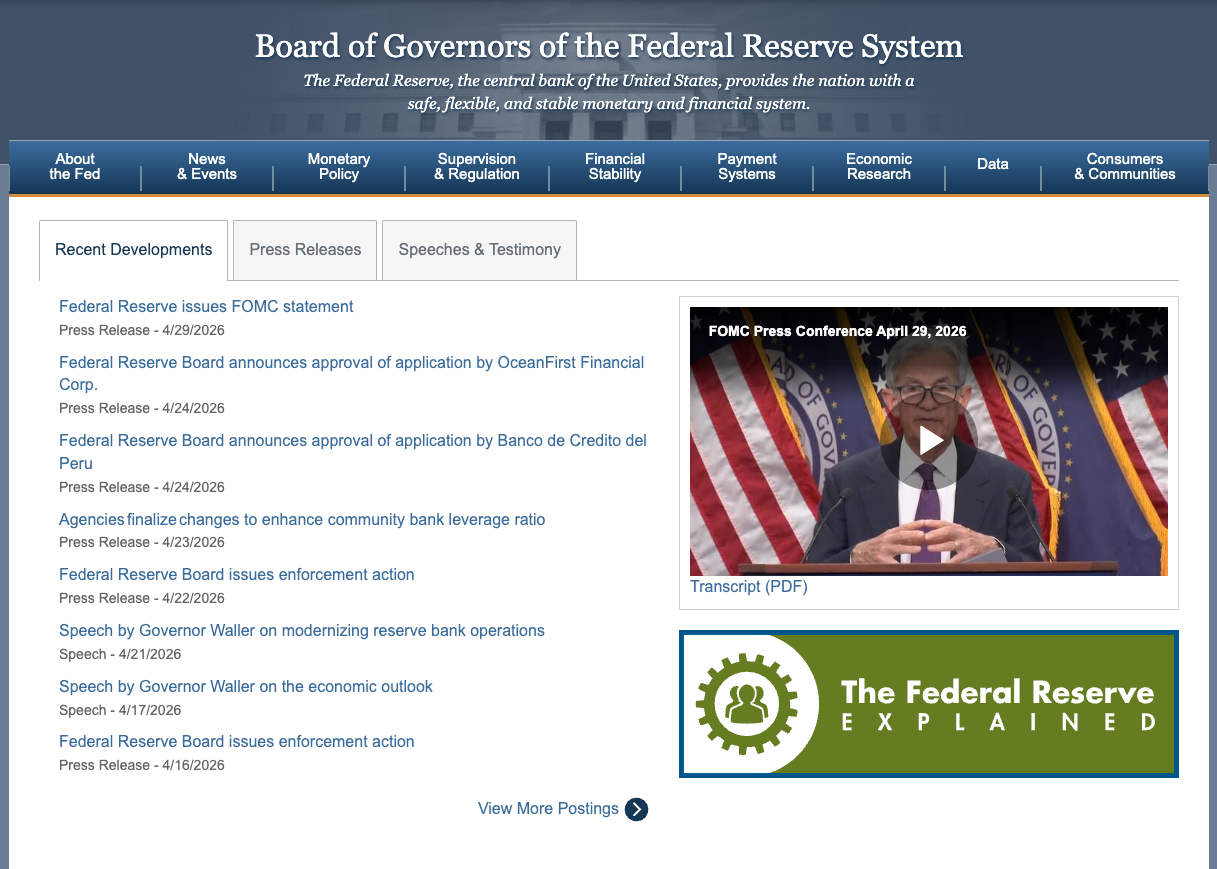
4. Federal Reserve Financial Stability Note (April 8)
The Federal Reserve published a detailed FEDS Notes paper on April 8 examining stablecoin developments and their implications for financial stability.
The paper highlights that stablecoins with safer and more liquid reserve compositions show relatively stronger adoption and lower run risk, while also warning that growing interconnections between stablecoin systems and the traditional financial sector introduce new systemic risks.
The Fed specifically flags the potential for large-scale redemptions to trigger fire sales of reserve assets that could spread stress into broader financial markets.
5. Global Regulatory Context
Outside the United States, MiCA continues to provide a reference framework across the EU, with the Qivalis bank consortium's euro stablecoin initiative being a direct product of that clarity.
France has shifted its approach to stablecoins and tokenized deposits in recent weeks, signalling greater openness from a jurisdiction that had previously been cautious.
Japan's yen-pegged stablecoin market, despite a carefully designed regulatory framework, remains less than 0.01% of the USD stablecoin market cap, illustrating that regulation alone does not create demand.
Adoption Trends and Broader Ecosystem Shifts
The adoption picture emerging from April 2026 is one of a sector transitioning from early infrastructure buildout to real-world deployment at scale, but with meaningful gaps between stated intent and actual usage still to close.
Stablecoins are projected to represent 3% of all U.S. dollar payments in 2026 and 10% by 2031, according to analysis from Capgemini Invent. Treasury Secretary Scott Bessent has projected the market will reach $3 trillion by 2030, roughly a tenfold increase from where it stands today.
Enterprise adoption data tells a more nuanced story. Research by PYMNTS Intelligence shows that while more than 42% of middle market companies have at least discussed stablecoins, only 13% report actual use.
An EY-Parthenon 2025 survey found that 54% of non-users expect to adopt within six to 12 months, and nearly half of CFOs say integration with major banks would make stablecoins more operationally relevant. Meanwhile, 67% point to regulatory and compliance uncertainty as the primary barrier, a concern that April's rulemaking activity directly begins to address.
The cross-border and emerging market use case is the clearest near-term growth driver. Meta's Colombia and Philippines rollout, dLocal's 44-market API, and Western Union's Solana plans collectively point to stablecoins becoming the default rails for cross-border payments in markets where traditional banking infrastructure is slow, expensive, or inaccessible to large segments of the population.
For creators and gig workers in these markets, receiving earnings in USDC on Solana is meaningfully faster and cheaper than receiving a wire transfer or a payment through a legacy remittance network.
On the institutional side, corporate treasury adoption is growing. Mastercard's acquisition of BVNK reinforces the stablecoins-as-infrastructure thesis within the legacy payments industry. Banks are developing permissioned stablecoin products for wholesale settlement, and the GENIUS Act framework is beginning to provide the legal scaffolding that compliance teams need to greenlight deployment.
Yield-bearing stablecoins continue to attract capital from both DeFi protocols and institutional managers. USDe, sUSDS, and USDY are increasingly present in liquidity pools and treasury strategies, adding a native yield layer that differentiates them from standard dollar-pegged instruments.
On-chain volume metrics remain strong, though analysts continue to note that bot dominance in transaction counts raises questions about the scale of genuine organic demand relative to automated activity.
April 2026 Stablecoin Month in Review
| Category | Key Development | Significance |
|---|---|---|
| Market Cap | Hit $321B+ all-time high by April 21 | Growth continued despite broader crypto weakness in Q1 |
| USDT | ~$188B, 58.29% market share | Retains dominance in emerging market payments and Tron |
| USDC | ~$78B, second largest; Circle IPO stock up 12% YTD | Gaining institutional and DeFi share |
| Meta and Stripe | USDC creator payouts launched in Colombia and Philippines | First major social platform stablecoin payment product |
| Treasury NPRM | April 3: State regime principles under GENIUS Act | Defines path for smaller issuers under state oversight |
| FDIC Rule | April 7: Prudential framework for PPSIs | Reserve, redemption, capital, and custody standards codified |
| FinCEN and OFAC Rule | April 8-10: AML and sanctions requirements | First-ever federal sanctions compliance mandate for stablecoin issuers |
| Federal Reserve | April 8: Financial stability FEDS Note published | Highlights run risk and interconnection risks of growing market |
| Qivalis and Fireblocks | 12 European banks building MiCA-compliant euro stablecoin | Major bank-led euro stablecoin launch expected H2 2026 |
| Adoption Outlook | 3% of USD payments in 2026; $3T market by 2030 (Bessent) | Macro tailwinds aligning for mainstream payment integration |
Conclusion
April 2026 made one thing clear: stablecoins are no longer a crypto-native experiment but an emerging layer of global financial infrastructure, backed by record capital, coordinated federal rulemaking, and some of the world's largest technology and payments companies.
The month delivered a new all-time high market cap above $321 billion, a regulatory sprint from Treasury, FDIC, and FinCEN to implement the GENIUS Act, and Meta's landmark USDC creator payout rollout with Stripe powering the infrastructure.
With stablecoin payments projected to represent 3% of all U.S. dollar transactions in 2026 and the GENIUS Act framework now taking concrete shape across multiple agencies, the foundation for mainstream adoption is more solid today than at any previous point in the sector's history.
Read Next
- 6 Best Stablecoin APIs For Businesses In 2026
- Ethena's USDe Q1 2026 Report
- Best Stablecoin Settlement Tools For Marketplaces in 2026
FAQs:
1. What happened in the stablecoin market in April 2026?
What happened in the stablecoin market in April 2026 is that total market cap surpassed $321 billion to set a new all-time high, Meta launched USDC creator payouts via Stripe on Solana and Polygon, and the FDIC, Treasury, and FinCEN each issued major proposed rules implementing the GENIUS Act within the same eight-day window.
2. What is the GENIUS Act and how did it affect stablecoins in April 2026?
The GENIUS Act is the U.S. federal law enacted in July 2025 that established a regulatory framework for payment stablecoins, and its effect on stablecoins in April 2026 was significant, with the Treasury, FDIC, and FinCEN all issuing proposed rules covering reserve requirements, AML compliance, sanctions programs, and standards for both federal and state-level stablecoin issuers.
3. What is the difference between the FDIC stablecoin rule and the FinCEN stablecoin rule proposed in April 2026?
The difference between the FDIC stablecoin rule and the FinCEN stablecoin rule proposed in April 2026 is that the FDIC rule establishes prudential standards including reserve asset quality, two-day redemption windows, capital requirements, and custody frameworks for FDIC-supervised issuers, while the FinCEN and OFAC joint rule focuses on anti-money laundering and sanctions compliance obligations, requiring stablecoin issuers to be treated as financial institutions under the Bank Secrecy Act.
4. What is Meta's USDC creator payout and when was it announced?
Meta's USDC creator payout is a feature announced on April 29-30, 2026 that allows select creators in Colombia and the Philippines to receive their earnings in USDC via Stripe's Link wallet on the Solana and Polygon blockchain networks, marking the company's return to crypto payments after the cancellation of its Libra project in 2022.
5. What is the difference between USDT and USDC market share in April 2026?
The difference between USDT and USDC market share in April 2026 is that USDT holds approximately $188 billion in market cap representing 58.29% of total stablecoin supply, while USDC holds approximately $78 billion, with both issuers together controlling just over 80% of the entire stablecoin market.
Disclaimer:
This content is provided for informational and educational purposes only and does not constitute financial, investment, legal, or tax advice; no material herein should be interpreted as a recommendation, endorsement, or solicitation to buy or sell any financial instrument, and readers should conduct their own independent research or consult a qualified professional.